Trump campaigned on bringing down the cost of living "starting on day one," and then: started a trade war; deported much of the farm workforce, bombed Iran, allowed healthcare subsidies to expire, cut food assistance, ran an interest-rate boosting deficit, and attacked fed independence.
The Republican-controlled Senate passed a bill to fund TSA without funding ICE, and the Republican-controlled House rejected the measure to fund TSA without funding ICE, so the Republican President just signed an executive order to fund TSA without funding ICE.
https://t.co/eojGw76uAc
Robert Mueller died last night.
He was 81 years old. He had a wife who loved him for sixty years. He had two daughters, one of whom he met for the first time in Hawaii, in 1969, on a few hours of military leave, before he got back on the plane and returned to Vietnam. He had grandchildren. He had a faith he practiced quietly, without performance. He had, in the way of men who have seen real things and survived them, a quality that is increasingly rare and increasingly mocked in the country he spent his life serving.
He had integrity.
And tonight the President of the United States said good!
I have been sitting with that word for hours now. Good. One syllable. The thing you say when the coffee is hot or the traffic is moving. The thing a man who has never had to bury anyone, never had to sit in the specific silence of a room where someone is newly absent, reaches for when he wants the world to know he is satisfied. Good. The daughters are crying and the wife is alone in the house and good.
I want to speak directly to the Americans reading this. Not the political Americans. Just the human ones. The ones who have lost a father. The ones who know what it is to be in that first hour, when you keep forgetting and then remembering again, when ordinary objects become unbearable, when the world outside the window seems obscene in its indifference. I want to ask you, simply, to hold that feeling for a moment, and then to understand that the man you elected looked at it and typed a single word.
Good.
This is not a country having a bad day. I need you to understand that. Countries have bad days. Elections go wrong. Leaders disappoint. Institutions bend. But there is a different thing, a rarer and more terrible thing, that happens when the moral center of a place simply gives way. Not dramatically. Not with a single catastrophic event. But quietly, in increments, until one evening a president celebrates the death of an old man whose family is still warm with grief, and enough people find it acceptable that it becomes the weather. Just the weather.
That is what is happening. That is what has happened.
The world knows. From Tokyo to Oslo, from London to Buenos Aires, people are not angry at America tonight. Anger would mean there was still something to fight for, some remaining faith to be betrayed. What I see, in the reactions from everywhere that is not here, is something older and sadder than anger. It is the look people get when they have waited a long time for someone they love to find their way back, and have finally understood that they are not coming.
America is being grieved. Past tense, almost. The idea of it. The thing it represented to people who had nothing else to believe in, who came here with everything they owned in a single bag because they had heard, somehow, across an ocean, that this was the place where decency was written into the walls. That idea is not resting. It is not suspended. It is being buried, in real time, with 7,450 likes before dinner.
And the church said nothing.
Seventy million people have decided that this man, this specific man who has cheated everyone he has ever made a promise to, who has mocked the disabled and the dead and the grieving, who celebrated tonight while a family wept, is an instrument of God. The pastors who made that bargain did not just trade away their credibility. They traded away the thing that made them worth listening to in the first place. The cross they carry now is a costume. The faith they preach is a loyalty oath with scripture attached. When the history of American Christianity is written, this will be the chapter they skip at seminary.
Now I want to talk about the men who stand next to him.
Because this is the part that actually breaks my heart.
JD Vance is not a bad man. I have to say that, because it is true, and because the truth matters even now, especially now. Marco Rubio is not a bad man. Lindsey Graham is not a bad man. They are idiots, but not bad, as in BAD! These are men with mothers who raised them and children who love them and friends who remember who they were before all of this. They are not monsters. Monsters are simple. Monsters do not cost you anything emotionally because there is nothing in them to mourn.
These men are something more painful than monsters.
They are men who knew better, and know better still, and will get up tomorrow and do it again.
Every small compromise they made had a reason. Every moment they looked the other way had a justification that sounded, at the time, almost reasonable. And now they have arrived here, at a place where a president celebrates the death of an old man and they will find a way, on television, to say nothing that means anything, and they will go home to houses where children who carry their name are waiting, and they will say goodnight, and they will say nothing.
Their oldest friends are watching. The ones who knew Rubio when he still believed in something. Who knew Graham when he said, out loud, on the record, that this exact man would destroy the Republican Party and deserve it. Who sat next to Vance and thought here is someone worth knowing. Those friends are not angry tonight. They moved through anger a long time ago. What they feel now is the quiet, irrecoverable sadness of watching someone disappear while still being present. Of watching a person they loved choose, again and again, to become less.
That is what cowardice costs. Not the coward. The people who loved him.
And in the comments tonight, the followers celebrate. People who ten years ago brought casseroles to grieving neighbours. Who stood in the rain at gravesides and meant the words they said. Who told their children that we do not speak ill of the dead because the dead were someone's beloved. Those people are tonight typing gleeful things about a man whose daughters are not yet done crying. And they feel clean doing it. Righteous. Because somewhere along the way the thing they were given in exchange for their decency was the feeling of belonging to something, and that feeling is very hard to give up even when you can no longer remember what you gave for it.
When Trump is gone, they will still be here.
Standing in the silence where the noise used to be. Without the permission the crowd gave them. Without the pastor who told them their cruelty was holy. They will be alone with what they said and what they cheered and what they chose to become, and there will be no one left to tell them it was righteous.
That morning is coming.
Robert Mueller flew across the Pacific on military leave to hold his newborn daughter for a few hours before returning to the war. He came home. He buried his dead with honour. He served presidents of both parties because he understood that the institution was larger than any one man. He told his grandchildren that a lie is the worst thing a person can do, that a reputation once lost cannot be recovered, and he lived that, every day, in the quiet and unglamorous way of people who actually believe what they say.
He was the kind of American the world used to point to when it needed to believe the story was true.
He died last night. His wife is alone in their house in Georgetown. His daughters are learning what the world is without him in it. And somewhere in the particular hush that falls over a family in the first hours of loss, the most powerful man and the biggest loser on earth sent a message to say he was glad.
The world that loved what America was supposed to be is grieving tonight. Not for Robert Mueller only. For the country that produced him and then became this. For the distance between what was promised and what was delivered. For the suspicion, growing quieter and more certain with each passing month, that the America people believed in was always partly a story, and the story is over now, and there is nothing yet to replace it.
That is all it needed to be.
A man died. His family is broken open with grief.
That is all it needed to be.
Instead the President said good.
And the country that once stood for something looked away 🇺🇸
Gandalv / @Microinteracti1
@AxiosComms@andersoncooper@MarcACaputo@CNN@BarakRavid@axios Should this have been planned out before attacking Iran? Like providing insurance and escorts to maintain tanker traffic thru Hormuz? Anybody else getting the idea the Trump administration thought Iran would fold like Venezuela so they did zero contingency planning?
MTG just went absolutely nuclear on Trump’s war in Iran.
“We’re in another fucking war, and American troops are being killed.”
“We need to have a serious conversation about what the fuck is happening to this country.”
“72% of Americans can’t afford health insurance.”
“58% of Americans can’t afford car insurance.”
“67% of Americans live paycheck to paycheck.”
“31% of Americans can’t afford their back taxes.”
“50% of Americans are in credit card debt.”
“We are nearly $40 trillion in debt.”
“Most Americans are completely against this war.”
“Make America Great Again was supposed to be America first, not Israel first.”
“And our President is saying that the Iranian people are all of a sudden going to topple their regime.”
“Well, I don’t think the Iranian people are going to be toppling their regime when they’re getting blown apart by the US and Israel in an unprovoked attack.”
“I am furious.”
“We have seen enough of our American troops dead and murdered for foreign countries.”
“Now, we have four more dead … for Israel.”
“Trump already said … today that he doesn’t care about the polling.”
“He doesn’t care about what the American people think.”
“And he may put troops on the ground.”
“The man that I supported … denounced what happened in Iraq, said no more foreign wars, no more regime change.”
“JD Vance promised it.”
“Tulsi Gabbard promised it.”
@FmrRepMTG@mtgreenee@megynkelly
@wisingman@TrillerCam@mr_adebayo55 She has very high standards and it sounds like the man she will follow better be very high quality and know what he wants
This is one of my favorite details from the halftime show: the ribbed knit top worn while waving Haiti’s flag was basically a quiet conversation with history.
It echoes photographer Jay Maisel’s Haiti, 1973 series, specifically the picture "Haiti No. 59".
Maisel once said those images came from “a nostalgic view of better times,” and somehow that nostalgia found its way onto one of the biggest stage in the world.
From a street corner in 1973 and a fresko cart to a global halftime show decades later, same colors, same soul, "same" Haiti.
Fashion as memory. Culture as continuity. 🇭🇹✨
Thank you for this ❤️ @_dilemmer
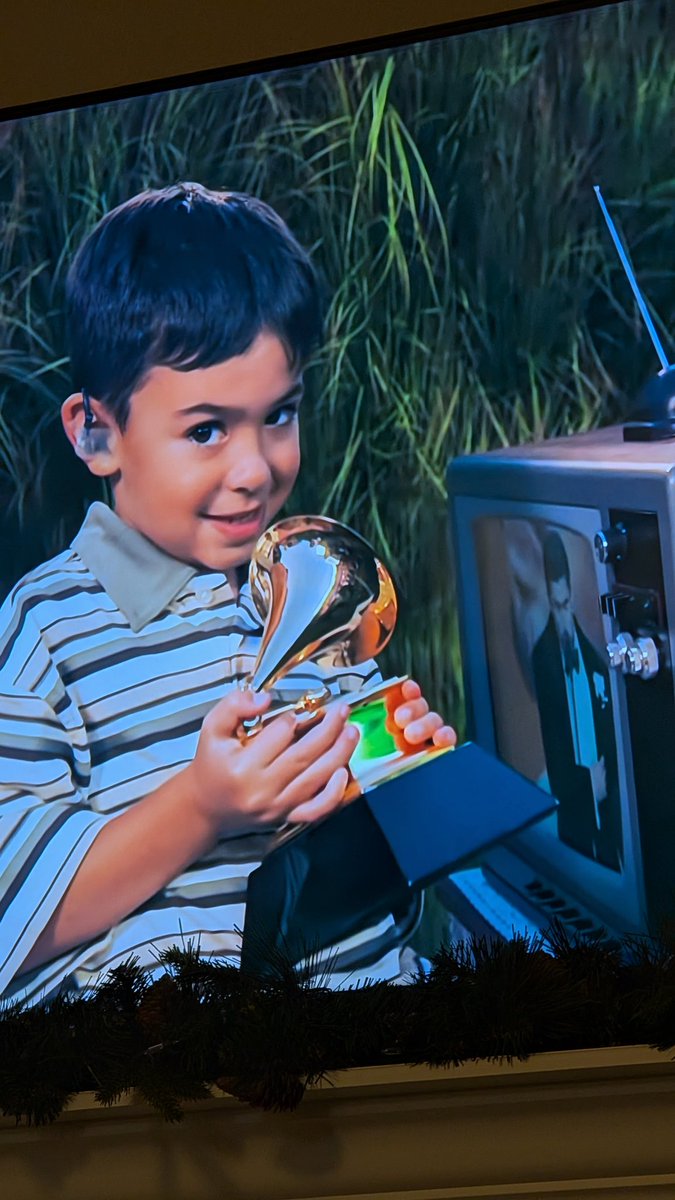
Wait hold up...
Did Bad Bunny just give his Grammy to Liam Conejo Ramos the poor kid who was kidnapped by ICE? If so amazing
The sign beforehand said "Conejo" on it too
Trade policy as middle school cafeteria politics: You can shake kids for quarters… until they decide you don’t get a seat at their table. Then the “tough guy” is just eating alone with mystery meat.
I interviewed Mark Carney for a job.
It was 2021. We were looking to bring in a board member or executive who could help us think about entrepreneurship in the context of the global economy.
I was asked to interview a guy named Mark. I Googled him. He had a decent CV.
In our call after brief introductions, he jumped straight in and said, “I see on Strava that you’re a runner and you live in...” It threw me off a bit. He had clearly done his homework. Borderline stalking. We talked about running for a while. He was good at small talk. He casually mentioned that he runs marathons now and then.
Mental note: he does his homework. Also, is he distracting me so I do not get to my questions? I started worrying he would try to schmooze me instead of getting into anything substantive.
In my defence, I had done some homework too. I had not stalked him on social media, but I had read several articles he had written. I learned that he leaned strongly globalist and believed that most of our challenges do not respect borders and will only be solved collaboratively.
I wanted to see if he could argue against his own position. More specifically, I asked when countries should invest in self-reliance. For context, I explained how, in software, we have learned that purely centralized systems fail in obvious ways. But overly distributed systems fail too, when small issues propagate across too many dependencies.
I asked whether societies behave the same way. Are we sometimes too decentralized? When should countries accept less efficiency and invest in more centralization or self-reliance?
He smiled. I could not tell whether he thought the question was childish or whether I had annoyed him. Then he broke the silence and said, “This is a great parallel. Give me a second to think about it.”
We ended up having a great conversation. That said, it took him a lot of words to make his point. Professional talker.
He liked the exercise. I could tell he had spent so long defending global collaboration that he had not fully prepared for this angle. I did not know it at the time, but he was in the middle of writing Value(s), which is essentially an ode to global cooperation.
We went over time. It did not faze him. He cared about finishing the discussion. At that point he was improvising, and it felt natural and fun. It was a genuinely thoughtful discussion. I learned a lot.
In the end, he did not join us. But we all wanted him to.
When I see him in his current gig, a small part of me laughs that I might have helped warm him up.
The more I think about that conversation, the clearer it becomes that he probably did not want his current Prime Minister role. Not in the way people want promotions or titles. Some people spend a lifetime preparing for problems they hope never arrive. When the moment shows up anyway, they step in. Not because it is appealing, but because it is necessary.
This just happened to be his moment.
Statement from the family of Alex Pretti, Michael and Susan Pretti:
“We are heartbroken but also very angry.
Alex was a kindhearted soul who cared deeply for his family and friends and also the American veterans whom he cared for as an ICU nurse at the Minneapolis VA hospital. Alex wanted to make a difference in this world. Unfortunately he will not be with us to see his impact. I do not throw around the hero term lightly. However his last thought and act was to protect a woman.
The sickening lies told about our son by the administration are reprehensible and disgusting. Alex is clearly not holding a gun when attacked by Trump’s murdering and cowardly ICE thugs. He has his phone in his right hand and his empty left hand is raised above his head while trying to protect the woman ICE just pushed down all while being pepper sprayed.
Please get the truth out about our son. He was a good man. Thank you”
Today, Canada announced its divorce from America. I'm not kidding.
Every January since 1971, thousands of business leaders, politicians, journalists, economists, policy experts, and celebrities have gathered at a mountain resort in Switzerland to discuss the most pressing global issues of the day in hundreds of sessions scheduled over the better part of a week.
The conference, organized by the World Economic Forum, has come to be nicknamed after its Alpine host town: Davos.
The annual gathering in Davos has been criticized in many corners over the years for its exclusive nature, which is somewhat fair and somewhat reductive.
Progress does emerge from these sessions among the assembled players, but so, too, does the feeling of window-dressing for what is mostly supercharged networking.
This weekend, while talking with friends who have attended in the past, I asked if they had experienced anything extraordinary during the scheduled sessions, or if Davos is more of an opportunity to meet influential people and kibitz about preferred projects?
Well, today could not have delivered more of an empathetic answer to that question.
Mark Carney, Prime Minister of Canada, gave a magnificently powerful speech before the gathered elites that will be discussed many years from now. Decades, likely.
It was, essentially, an eloquent and poignant announcement that Canada is divorcing the United States. Over sixteen minutes, Prime Minister Carney called upon the world to recognize that the current global framework in which superpowers run the show is stale, destructive, and unnecessary.
Right out of the gate, early in the speech, he took a direct shot at Trump and Putin and Xi—but mostly directed at Trump—with a searing anecdote from an essay written by Václav Havel, the late president of the Czech Republic (remarks italicized):
In 1978, the Czech dissident Václav Havel, later president, wrote an essay called The Power of the Powerless. And in it, he asked a simple question: How did the communist system sustain itself?
And his answer began with a greengrocer. Every morning, this shopkeeper places a sign in his window: “Workers of the world, unite!” He doesn’t believe it. No one does. But he places the sign anyway to avoid trouble, to signal compliance, to get along. And because every shopkeeper on every street does the same, the system persists.
Not through violence alone, but through the participation of ordinary people in rituals they privately know to be false.
Havel called this “living within a lie.” The system’s power comes not from its truth but from everyone’s willingness to perform as if it were true. And its fragility comes from the same source: when even one person stops performing — when the greengrocer removes his sign — the illusion begins to crack.
Friends, it is time for companies and countries to take their signs down.
This was the first applause break, and the tone was immediately set. You can feel people sitting up in their seats and thinking: Oh, damn, this is gonna be good.
He then briefly outlined the current system of geopolitical power: the strongest nations (United States, Russia, China, etc.) chart the course for the rest of the world, typically through international organizations, and the rest of the world accept this in exchange for security, predictability, and a practical trajectory for their own prosperity.
He pointed out that the rest of the world have always known this is a “partially false” framework and that the strongest nations are never held to the same standards they expect of everyone else.
But still, it’s what they had, and even if frustrating (and infuriating at times), it mostly worked in the past. He then says this:
This fiction was useful. And American hegemony, in particular, helped provide public goods: open sea lanes, a stable financial system, collective security and support for frameworks for resolving disputes. So, we placed the sign in the window. We participated in the rituals. And we largely avoided calling out the gaps between rhetoric and reality.
This bargain no longer works.
Let me be direct: We are in the midst of a rupture, not a transition.
This is the diplomatic equivalent of a wronged spouse telling their partner: No, I am not asking for a break or a trial separation. It’s time to move on.
He then got to the heart of the matter: all these instruments supposedly existing for global policy based on mutual cooperation—the United Nations, the World Trade Organization, NATO, etc.—only work if the superpowers who have the most leverage within them are engaging in good faith.
What, then, are the current incentives for the rest of the world to trust the United States and other superpowers? He delivered this devastating summation:
But more recently, great powers have begun using economic integration as weapons. Tariffs as leverage. Financial infrastructure as coercion. Supply chains as vulnerabilities to be exploited. You cannot “live within the lie” of mutual benefit through integration when integration becomes the source of your subordination.
[…]
And as a result, many countries are drawing the same conclusions — that they must develop greater strategic autonomy: in energy, food, critical minerals, in finance and supply chains.
And this impulse is understandable. A country that cannot feed itself, fuel itself or defend itself has few options. When the rules no longer protect you, you must protect yourself.
He basically called out Trump’s fecklessness and isolationism and toddler antics while the rest of the world has bent over backwards to placate Trump’s nonsense:
And the question for middle powers, like Canada, is not whether to adapt to the new reality — we must. The question is whether we adapt by simply building higher walls or whether we can do something more ambitious.
Canada was amongst the first to hear the wake-up call, leading us to fundamentally shift our strategic posture.
Canadians know that our old, comfortable assumptions — that our geography and alliance memberships automatically conferred prosperity and security — that assumption is no longer valid.
[…]
Principled in our commitment to fundamental values: sovereignty and territorial integrity, the prohibition of the use of force except when consistent with the UN Charter and respect for human rights.
For a big chunk of the speech, he outlined all the reasons Canada is ready to stand strong with the rest of the world in this New Order as it leaves the Old and Stale. He talked about his nation’s economic development and diplomatic strides and growth as a trusted partner all over the world.
This is PM Carney saying: Canada knows its worth, and we know this current relationship is complete bullshit. We’re not taking it anymore. We’re done:
Middle powers must act together because if we’re not at the table, we’re on the menu.
But I’d also say that great powers can afford, for now, to go it alone. They have the market size, the military capacity and the leverage to dictate terms. Middle powers do not. But when we only negotiate bilaterally with a hegemon, we negotiate from weakness. We accept what’s offered. We compete with each other to be the most accommodating.
This is not sovereignty. It’s the performance of sovereignty while accepting subordination. In a world of great power rivalry, the countries in between have a choice: compete with each other for favour or to combine to create a third path with impact.
We shouldn’t allow the rise of hard power to blind us to the fact that the power of legitimacy, integrity and rules will remain strong — if we choose to wield them together.
Hey, middle powers, we don’t need these dickhead superpowers, he says with far more eloquence. The writing is on the wall. It’s time to ditch these assholes and foster the network of relationships between nations who engage in good faith.
He then closed with more pride in Canada and made it clear they’re ready to start this new chapter with every middle power who’s tired of this shit:
Canada is a pluralistic society that works. Our public square is loud, diverse and free. Canadians remain committed to sustainability.
We are a stable and reliable partner in a world that is anything but. A partner that builds and values relationships for the long term.
And we have something else. We have a recognition of what’s happening and a determination to act accordingly.
We understand that this rupture calls for more than adaptation. It calls for honesty about the world as it is.
We are taking the sign out of the window.
We know the old order is not coming back. We shouldn’t mourn it. Nostalgia is not a strategy.
But we believe that from the fracture, we can build something better, stronger, more just.
This is the task of the middle powers. The countries that have the most to lose from a world of fortresses and the most to gain from genuine co-operation.
The powerful have their power. But we have something too — the capacity to stop pretending, to name reality, to build our strength at home and to act together.
That is Canada’s path. We choose it openly and confidently.
And it is a path wide open to any country willing to take it with us.
He finished his speech and received the rare standing ovation of the gathered elites at Davos and deservedly so.
Because guess what?
The rest of the world is tired of America’s bullshit — problems that existed before Trump but were largely manageable enough to fall in the realm of pragmatic working relationships have now worsened exponentially in the past year.
Trump has pissed off one of the nicest countries on earth—our northern neighbors, who have faithfully stood by us in times of great calamity and never wronged us—so much that their leader told the world today that enough is enough and the United States and other superpowers should understand what has been done cannot be undone.
As an American watching this, I felt tremendous guilt and embarrassment over what Trump has done to our global reputation, when even our closest allies are thoroughly and openly repulsed at the thought of working with us, so much so that nothing can repair the damage inflicted by this coward and his enablers in the Republican Party.
But I also felt hope watching the Prime Minister. For the first time in a long time, I was struck with a sense of optimism over how much more outside pressure is being applied to the fascist clowns currently running our government.
Let this be a wakeup call, indeed. We can’t fix all that has been broken, but there is still time to save what can be fixed.
It doesn’t have to be this way.
Thank you for galvanizing us, Prime Minister Carney.
----
Link to full essay available here for easier sharing: https://t.co/1Lbq7WSCZX