@emollick This is especially true in ML/Data projects which typically have unclear requirements that need to be revealed through trial & error. In theses cases adding an additional person can be a negative result.
Today we’ve lost a giant and a visionary: Prof. Daniel Kahneman has passed at the age of 90. The Princeton SPIA community shares our condolences with his family and all who knew him, learned from him, and loved him. https://t.co/JbTXQSuzlw
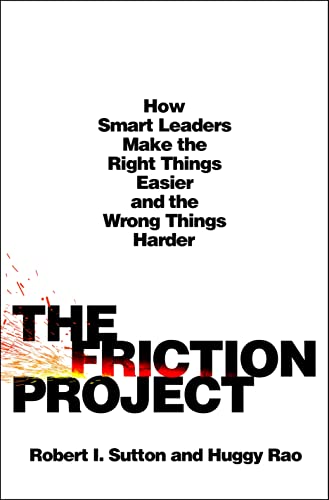
Working in companies shouldn't be so hard. Even when we all want the same things, we trip over bad process and unnecessary coordination. At the same time, other things can be too easy and we do things we later regret. Learn how to smartly work with friction.
The Friction Project: How Smart Leaders Make the Right Things Easier and the Wrong Things Harder. By @work_matters and Huggy Rao
https://t.co/Vp0yV4bP0G
Must be fun to be a PhD student right now. So many adjacent possibilities surface now that foundational models are available.
Cool paper on the relationships between objects in an image.
https://t.co/z26KalBnxE
#AI#computervision
@work_matters To the conscientious host, the cost of moving a meeting increases exponentially with the number of times its already been moved. Therefore a meeting that gets rescheduled more than 3 times provides evidence that the host is not very conscientious.
Good framing on the tradeoff between moving fast and shipping high quality code. In a data science context, I believe one needs to lean towards 'fast' in the short-term in order to learn more quickly and allay uncertainty. But, once value is found, we need refactor to achieve a robust system in the long-term to enable future learnings. Good infrastructure can shift the efficient frontier to outward.
Nice job @elijahbenizzy
https://t.co/xljYxLOwev
#datascience
Great article featuring @work_matters and @huggyrao on "addition sickness": the unnecessary rules, procedures, communications, tools, and roles that seem to inexorably grow, stifling productivity and
creativity.
Our friends Bob Sutton and Huggy Rao—two professors who have been working with the https://t.co/kTSgUDPFaR from the start—share their work with @HarvardBiz.
https://t.co/nGvWCcpJw9
@work_matters@huggyrao@StanfordGSB
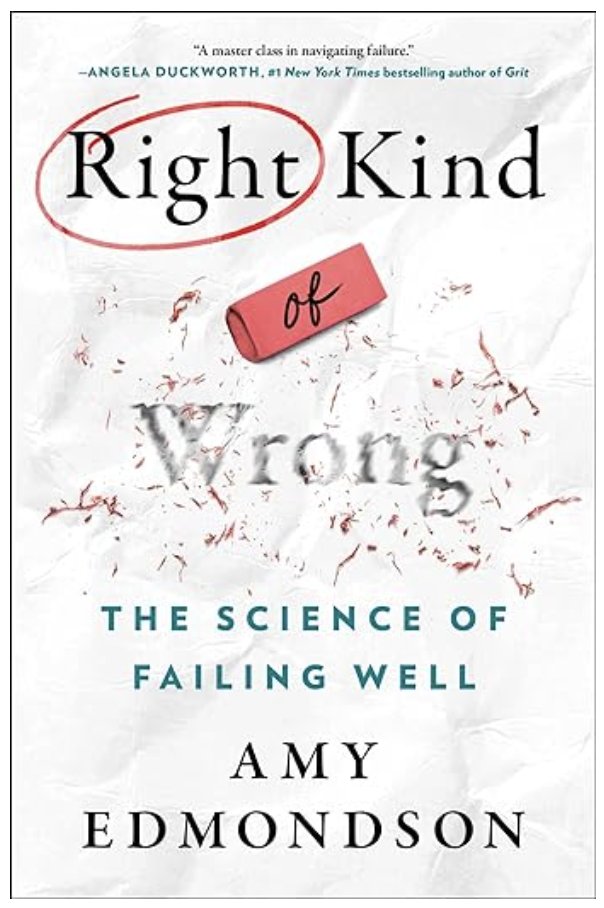
So many companies say they are okay with failure but they still behave in ways which discourages risk-taking and innovation. In @AmyCEdmondson new book she articulates the different types of failures which gives us with the vocabulary to adjust and embrace the right kind of wrong.
Very general statement: I am not a fan of using aggregated data for decision making. Most business decisions require good statistics to control for confounders and slow our ability to confirm our biases (and an RCT is best when possible). Self service analytics is best for monitoring.
Very appreciative to @wesmckinn and so many others that help evolve this space. So many of us stand on your shoulders while focusing on the mere application of these technologies and receiving the kudos for the value they generate. Thank you!
https://t.co/Bds9BLvTP6
#datascience #machinelearning #Ai
@work_matters Ugh, I bet they call themselves “data driven”. A shame. Those surveys are notoriously fickle, capturing only a narrow point in time. They also lack robustness; ask the same questions 1 week later and you will get different answers!