The main reason I didn't merge privatebroadcast to @BitcoinKnots, was that I judged it to be underreviewed and prone to bugs.
Since Core merged it in January, there were several followup fixes proving I was right, even before 31.0 was released.
They went ahead and released it anyway.
OP_0 preceding OP_IF means "if FALSE equals TRUE" then proceed.
This is how the hack works to put unexecutable code on-chain.
The hack was employed in 129,980,558 instances out of the total 130,452,396 times OP_IF was used (96.64%)
On GitHub
https://t.co/C10NBVbjTl
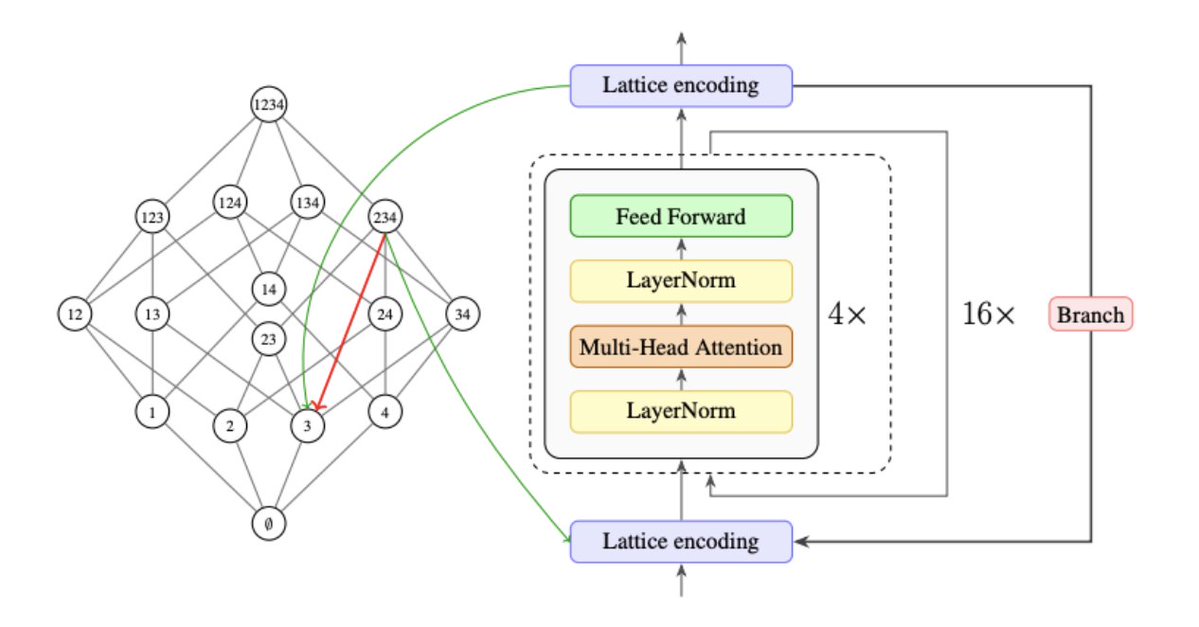
Introducing Lattice Deduction Transformers: An 800k-parameter looped transformer that reasons like a SAT solver achieves 100% on Sudoku-Extreme with only 15 minutes of training.
A collaboration between @axiommathai, @AmherstCollege and @BarnardCollege.
CAPTURE
An investigation across four articles into how informal power over Bitcoin Core was assembled, exercised, and defended.
Article Two: The Lever
https://t.co/72sC4969Tm
Slides from my talk "Lean: Extensible, Scalable, Trusted." this week at the Paris Lean Meetup, hosted by ITN at Mines Paris PSL and sponsored by @MistralAI .
It covers where @leanprover stands today across mathematics, software verification, and AI.
https://t.co/mYkBldpXNY
Today is the launch of SignalShot: An AI-powered moonshot launched to prove that Signal Messenger is bug-free and secure – and turbocharge the AI-powered quest to secure all critical software.The spectacular power of new AI tools such as Mythos to find zero-day exploits and enable hacking makes it timely to use AI also for cyber defense. Although using AI to find and patch bugs is helpful, it can't guarantee that all exploitable bugs have been found. An international collaboration is therefore launching SignalShot, an ambitious open-source project aiming to provide rigorous mathematical proof that Signal (the world's most popular open-source messaging app, with close to 100 million users) is fully secure. AI is rapidly getting dramatically better at proving things about math, and this moonshot aims to turbocharge and mainstream AI’s ability to prove things also about major software tools – just as the Liquid Tensor Experiment, which helped mainstream automated mathematical theorem proving.
https://t.co/kHbrFOx7qB
The Beneficial AI Foundation asks: "Can we prove that Signal's cryptography is secure — not just on paper, but in actual code?"
Signal Shot, launched today in Paris, is a public moonshot to formally verify the Signal protocol and its Rust implementation using Lean. Open to contributions!
🔗 https://t.co/kpb0HpaCUy
#leanlang #leanprover #softwareverification #baif #signal
Software Verification in Lean 2026 is a one-day open workshop on April 20, with talks by Max Tegmark, Leo de Moura, Son Ho, Derek Sorensen, and Karthikeyan Bhargavan.
On-site capacity has been reached. Register to join the livestream: https://t.co/8B8eOonnOt
In surprising news, GPT5.4 Pro just found a solution Erdos Problem #1196.
Now Gauss has formalized the proof of #1196!
The initial proof was 7.2K lines of Lean, done in ~5 hours. Subsequent golfing has compressed it down to 4K lines. (sorry-free, with comparator check)
The reason symmetry is so important in physics is because symmetry is a highly effective compression operator. If a system is invariant under some symmetry, you only need to explain one axis of it. Scientific models represent the systematic exploitation of the universe's internal redundancies through symbolic logic.
$315 BILLION in stablecoins are now backed by US Treasuries.
And I don't understand why no one's questioning this.
Goldman's David Solomon and former Treasury Secretary Steve Mnuchin just did a victory lap on stablecoins. Their pitch:
Stablecoins strengthen the dollar, create demand for Treasuries, make it easier for people outside the United States to hold dollars.
Sounds great. Until you look at what's actually happening underneath...
The GENIUS Act passed in July 2025. First federal stablecoin framework in US history. Stablecoin market cap has grown 50% year over year. Tether alone holds $141 billion in US Treasuries, making it one of the largest holders of American government debt on the planet.
Washington's pitch is simple: every time someone in Argentina, Turkey, or Nigeria buys USDT, they're buying Treasuries by proxy. Dollar dominance strengthened. Problem solved.
And here's the part they REALLY love...
The US ran an $1.8 trillion deficit in fiscal 2025. CBO projects $1.9 trillion this year. National debt just crossed $39 trillion. Interest payments alone now exceed $1 trillion annually.
Meanwhile, the biggest foreign buyers of Treasuries (China, Japan, Canada) have been pulling back for years. ARK Invest found that the share of Treasuries held by the largest foreign creditors dropped from 23% to just over 6% in the past 13 years. The Fed is STILL running down its balance sheet.
So who's going to buy all this debt? Washington's answer: stablecoin issuers.
Treasury Secretary Bessent said it himself: "A thriving stablecoin ecosystem will drive demand from the private sector for US Treasuries and help rein in the national debt."
Think about what that actually means.
The government is counting on a $315 billion crypto product (run largely by a company in El Salvador that just got its first real audit last week) to help finance a $1.9 TRILLION annual deficit.
Stablecoin issuers currently hold less than 2% of outstanding Treasury bills. Even if the market hits $2 trillion by 2028 like Standard Chartered projects, that's still just a rounding error against $39 trillion in total debt.
This is literally a NARRATIVE designed to make the debt problem sound manageable.
But the Federal Reserve published a study showing that for every $1 that moves from bank deposits into stablecoins, bank lending contracts by roughly 50 cents. Stablecoin issuers can't make loans. The GENIUS Act prohibits it. They can ONLY hold Treasuries, reverse repos, and cash equivalents.
So when deposits leave banks and flow into stablecoins, that money stops funding mortgages, small business loans, and commercial credit. It starts funding government debt instead.
The US Treasury itself estimated stablecoins could drain up to $6.6 TRILLION from the banking system.
That's not "strengthening the dollar." That's redirecting the lifeblood of the real economy into government IOUs while starving Main Street of credit.
And then there's the run risk nobody wants to discuss.
Fed Governor Michael Barr said it yesterday:
Stablecoin issuers have every incentive to chase higher returns on their reserves. But unlike banks, they CANNOT access the Fed's discount window. If a stablecoin run happens, issuers dump Treasuries into the market all at once.
Stablecoin inflows push Treasury yields down 2-2.5 basis points. Outflows spike yields UP 6-8 basis points. Easy in. Ugly out.
Meanwhile, Tether is the 800-pound gorilla. $185 billion in circulation. 550 million users. And until last week, it had never had a Big Four audit. It just hired KPMG after 12 years of operating with nothing but quarterly attestations.
This is the entity Wall Street is celebrating as the future of dollar dominance. A company headquartered in El Salvador that fought transparency in court twice and LOST both times.
Here's what Solomon and Mnuchin are actually telling you if you listen carefully:
Stablecoins create captive demand for short-term US government debt. Foreign governments don't want to hold Treasuries anymore. So Washington's solution is to get 550 million retail users in emerging markets to hold them instead through a digital wrapper called a "stablecoin."
The holders get zero interest. The GENIUS Act explicitly prohibits it. The issuers pocket the Treasury returns. Tether made $10 billion in profit last year. And the real economy loses credit while the government gets cheaper funding.
This is a classic Wall Street pitch to sell financial innovation as progress:
"This strengthens the system. This is good for everyone."
Then the leverage builds, the risks concentrate, and the people who sold you on it are nowhere to be found when it unwinds.
Stablecoins are NOT saving the dollar. They're a $315 billion shadow money market fund with no Fed backstop, no deposit insurance, and run dynamics that could destabilize the very Treasury market they're supposed to support.
If you want to hold dollars, hold dollars. If you want to own the asset that central banks are actually buying instead of Treasuries, you already know what that is...
🥇
CAPTURE
An investigation across four articles into how informal power over Bitcoin Core was assembled, exercised, and defended.
Article One: The Network
https://t.co/FSN3umnEUu
Has Bitcoin’s technical direction become political? 🤔
Jimmy Song brings the cypherpunk spirit back to the table in this unfiltered chat about trust, power, and the future of BTC.
We get into:
🧠 OP_RETURN debates
⚙️ Dev culture shifts
💡 "Innovation" vs. ossification
+ more!
Math, Inc. is proud to announce an all-star group of Veritas Fellows:
Renowned professor Kevin Buzzard, alongside Fields Medalists Maryna Viazovska and Terence Tao.
They will lead teams to build formal mathematics at unprecedented scale. 🧵
Humanity advances when individuals gain the capacity to verify truth for themselves, without institutional permission.
We're thrilled to partner with @robotventures on our mission to scale autoformalization, create verified superintelligence, and set the truth free.
Anyone who has traveled knows how different the US is. Anyone who has lived under a brutal regime knows what we have here is a miracle taken for granted by most Americans.