Ayúdanos a investigar qué piensa el profesorado español sobre la evaluación formativa. De todas las etapas desde Infantil hasta Universidad. Junto a @ernestopanadero y @ERLAgroup diseñamos una encuesta que te pedimos que compartas y difundas. Enlace: https://t.co/gy5a71L2we
How can future teachers accurately assess students’ SRL? Our new study shows that rubrics sharpen observation, thinking & accuracy in SRL assessment.
📑Infancia y Aprendizaje
Pre-print: https://t.co/oiFfa3e9k8
@ERLAgroup
@ernestopanadero, Charlotte Dignath, and Yves Karlen
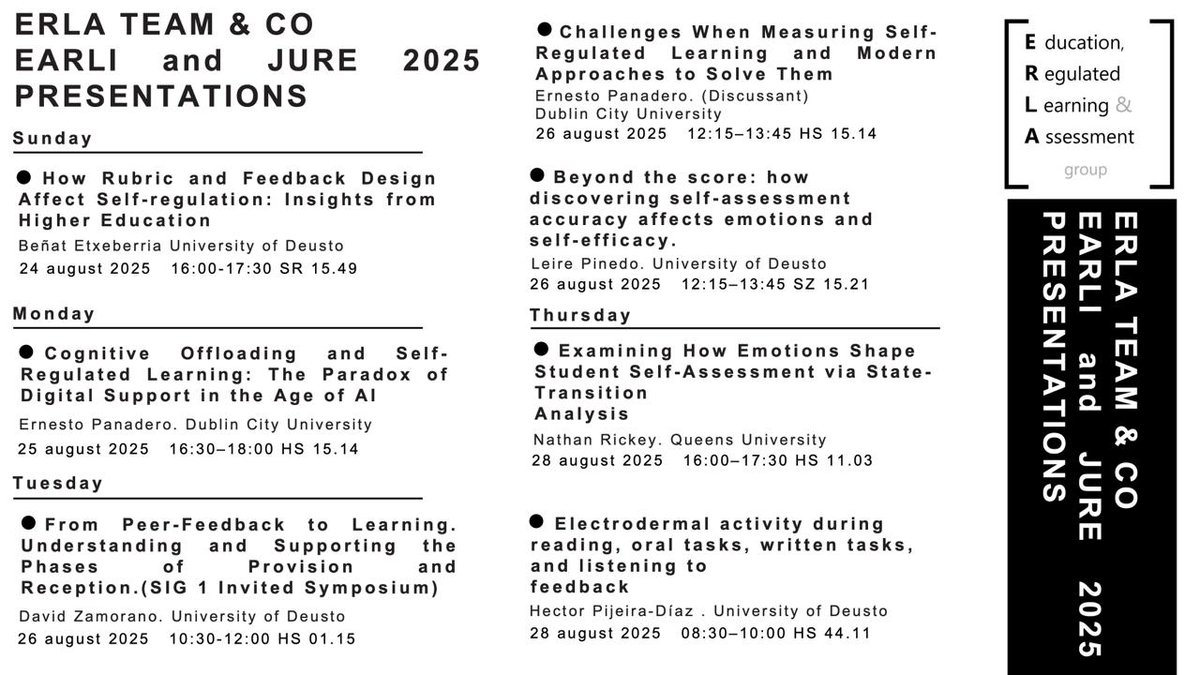
The ERLA team is back at #EARLI2025 & #JURE2025! 🎓
New research on peer feedback, self-assessment, self-regulation, AI, and electrodermal activity.
🗓️ Don’t miss our presentations, check out the full lineup below!
📍 @earli_office & @JURE2025
🌟Excited to co-organize an Erasmus+ training week on SRL with @JeltsenP & support from @ERLAgroup at @deusto!
📅 November 2025
🧠 Want to teach “learning to learn”? We’ll show you how!
📄 More info in the flyer
📝 Pre-registration is open!
🔗https://t.co/5vlGZHZCz5
Os comparto dos herramientas para mejorar el uso de rúbricas y evaluación entre pares creadas por @ernestopanadero y su equipo. En español e inglés, las veo realmente útiles para docentes y formadores:
Rúbricas: https://t.co/HCxOdHIw8M
Co-Evaluación: https://t.co/PHPEIYMu9D
Ayer tuve la oportunidad de hablar un rato en @ondaceromn sobre la investigación que venimos haciendo en @ERLAgroup sobre los procesos de autoevaluación del alumnado. Una experiencia muy bonita!
@ernestopanadero @Pinedo_Leire
https://t.co/INqTh5eybr
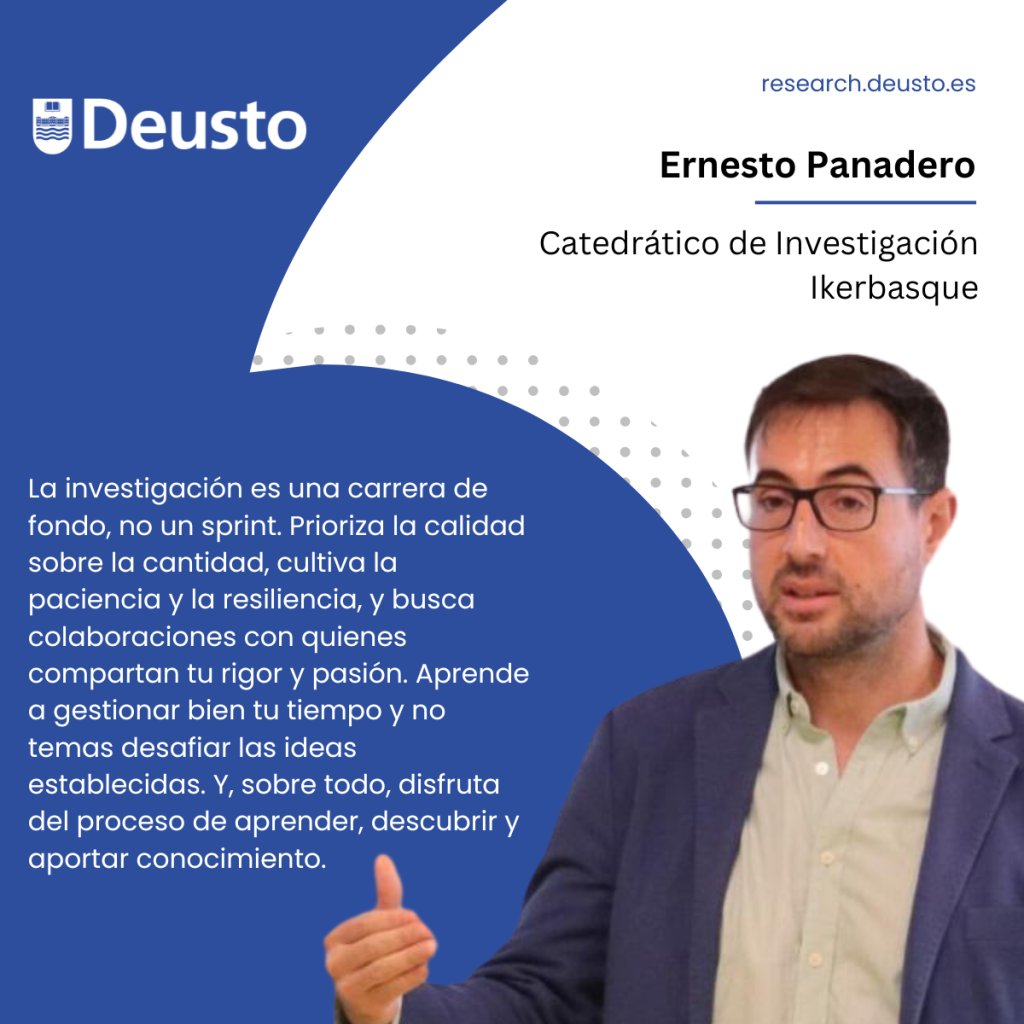
¿Quién investiga en la Universidad de @Deusto? Conoce a Ernesto Panadero (@ernestopanadero) https://t.co/o0hpPibXIK
Nor ari da ikertzen Deustuko Unibertsitatean? Ezagutu Ernesto Panadero https://t.co/Wj4U0jdTxz
🎉Happy to share it!
“Investigating anonymity in formative and summative peer assessment: effects on social-affective factors, perceptions, and preference” in Studies in Educational Evaluation
🧵 Thread with interesting findings 👇
50 free copies: https://t.co/yaaCjILmII
With @MMonguillot@xals66@lehane_paula & @ernestopanadero
@ERLAgroup@UFVinvestiga@ufvmadrid
Today, after two years of hard work, I finally got the first article of my PhD published!🥹
Are you interested on what aspects should be considered when designing SRL interventions for pre-service teachers? Then, read below! 📑
https://t.co/gzaRY7Zlwh
@ERLAgroup@deusto
Last week I visited @CTYI (Centre for Talented Youth, Ireland) and was amazed by their work and team!! I experienced their summer camps, seeing how they nurture talent and focus on socioemotional growth. Thanks to @DCU, @EUErasmusPlus & @deusto for making this mobility possible.
@lb_ikasiz ha escrito un nuevo post en The Conversation!
🔗 Lee su artículo sobre las dificultades de concentración en los jóvenes y cómo la neurociencia del aprendizaje puede ayudarnos a entender y motivar mejor a nuestros adolescentes:
https://t.co/FxDsLepSt4
We're at the last session of #sig1conference and @javierfdezr is presenting on ethical AI guidelines and their relevance to classroom assessment, with Gemma Cherry & @ernestopanadero
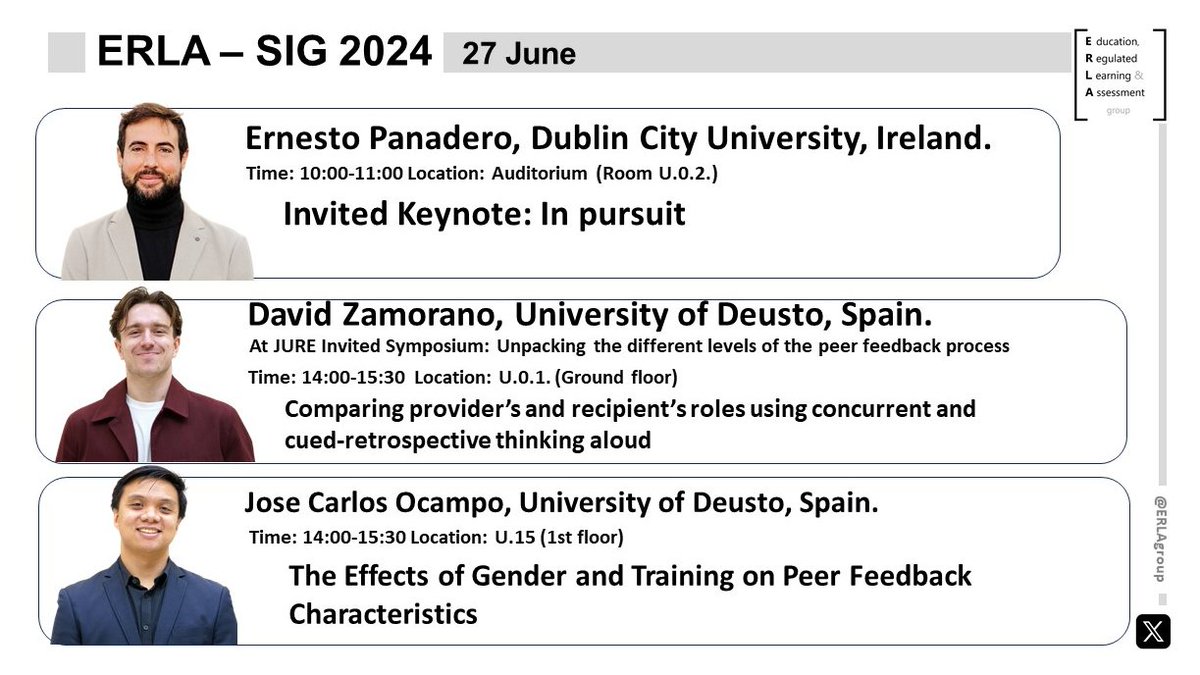
Good morning, @EarliSig1 ! 🌞 We're excited to continue the ERLA presentations today.
We kick off with a keynote by @ernestopanadero , followed by two insightful sessions on peer-assessment (@David_zsand & @ocampojcg )
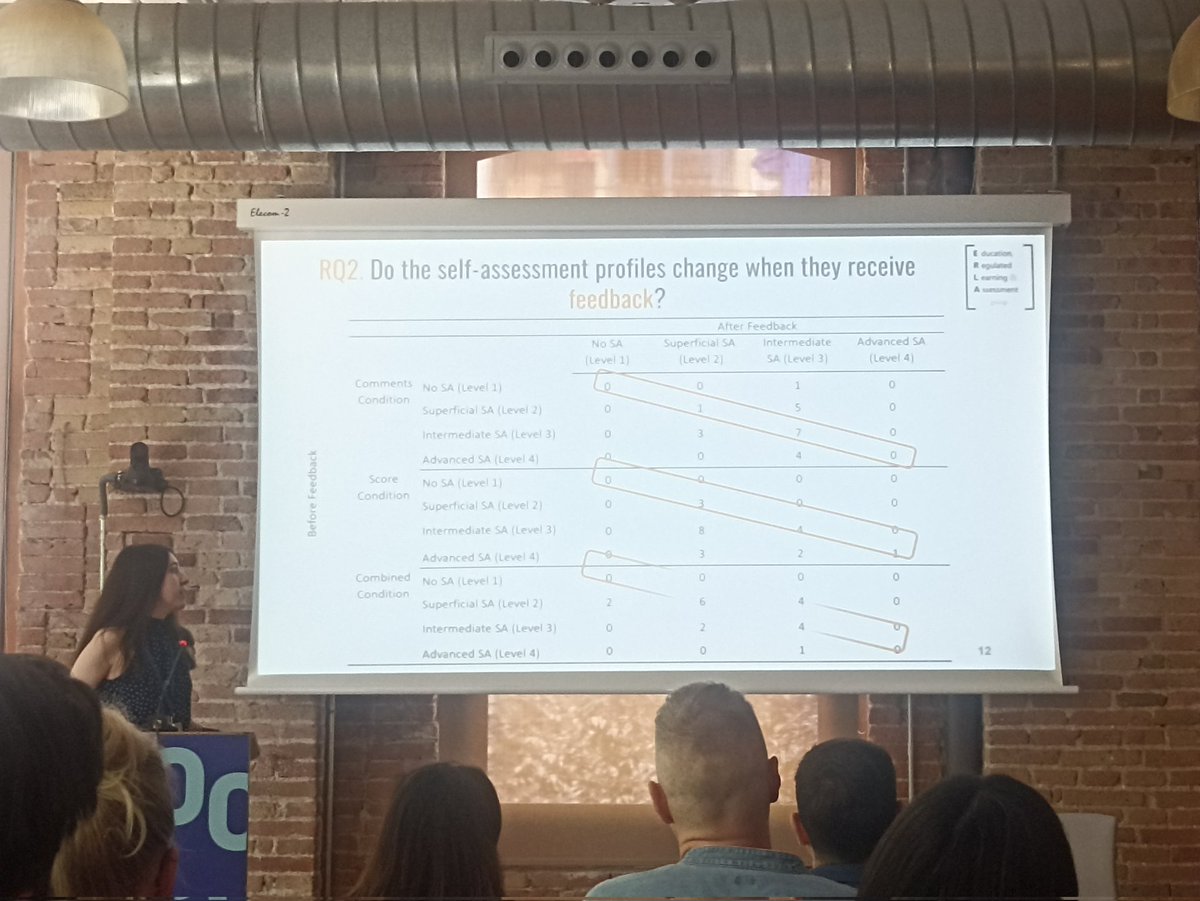
Our @Pinedo_Leire presenting her PhD project where she looked at different self assessment profiles by looking at the concurrent actions they perform and how they change with feedback📖
@ernestopanadero @Pinedo_Leire @JulianRoelle @David_zsand @ernestopanadero's conclusion from the study on how students use rubrics:
"Reading a rubric is a regulatory action on its own"
@ernestopanadero is telling us where the "rubric guys" story started.
It's a nice love story between @Anders_hkr and Ernesto, which resulted in several papers and symposiums about rubrics.
#sig1conference
@ernestopanadero @Pinedo_Leire @JulianRoelle @David_zsand The order of rubrics was not significant when we examined the think-aloud data but in a previous study examining eye-tracking data, we observed differences