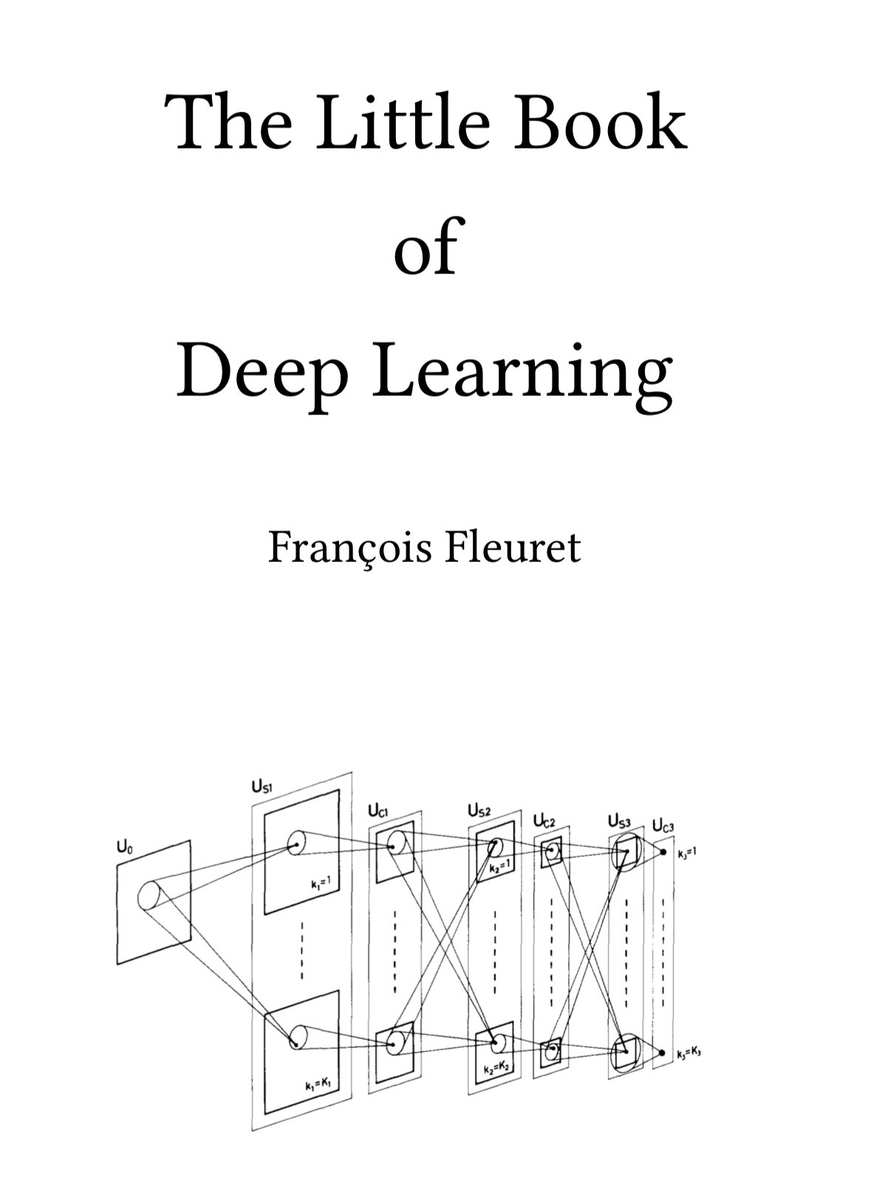
This is the best book I’ve read this year. It is also an important book. In a world obsessed with AI, Max Bennett (@maxsbennett ) approaches intelligence from a key point of view: biology.
A Brief History of Intelligence assembles the many mechanisms that contribute to intelligence in chronological order. This is not just clever structure. By explaining the problem each mechanism solves you get a deep understanding of why intelligence emerged and how it differs among species.
In this theory, intelligence emerges in animals because, unlike plants who can produce their own food, or fungi who eat what is already dead, animals roam the environment in search for something to kill and eat. In some ways, animals developed intelligence because we started in the worse ecological niche and were forced to innovate to survive.
These innovations start with the problem of deciding a common direction of motion in a multicellular organism. One of the things I found extremely refreshing, is that Bennet explains these mechanisms by summarizing experiments on c. elegans, a microscopic worm with about 300 or so neurons, that can be used to understand a primitive dopamine system and even emotions.
Do you ever feel like running away when you are in an uncomfortable situation? Do you like dancing when things go your way? Well, so does this little worm.
The book is filled with clever experiments that help separate the intelligence of worms, fish, and us, while showing that we still have much in common. When do we start recognizing patterns, and why? Why do the mechanisms that allow us to learn can lead to addiction? Why is imagination a key to intelligence?
From the basics of sensory input, valence, and motility Bennet takes us into neurochemistry, reinforcement learning, and credit assignment problems, showing that what we consider cutting edge research in machine learning is often something that evolution solved over one hundred million years ago. A truly refreshing read that humbles the field of AI while putting it into a broader perspective.
I would recommend this book to everyone interested in AI. After all, it is about something more general. About the I, no matter if it comes with an A or not. It is about the common problems that lead to the development of that I, and how these are shared by biological and artificial systems.
5 stars!!
We’re happy to present @zspald11 's work on shared neural representations of speech production across individuals! We find that patient-specific data can be aligned to a shared space that preserves speech information, enabling cross-patient speech BCIs. https://t.co/Oe1Q5KPsj3
Este mes cumplo 21 años fuera de Chile. 🇨🇱
Para quienes comienzan o piensan hacer una carrera fuera de Chile, acá van cuatro lecciones útiles.
1. Aprender a escuchar sin interrumpir.
La cultura chilena está caracterizada por diálogos donde es muy común interrumpirse. En Chile esto se ve incluso como una expresi��n de entusiasmo. Pero en muchas otras culturas interrumpir, sobre todo cuando hay una relación jerárquica, es una ofensa o falta de respeto grave. Conozco muchos compatriotas que nunca dejan terminar una oración. 😅
Sin ajustar este comportamiento, uno puede ganarse una reputación de irrespetuoso sin darse cuenta.
2. No “subirse por el chorro.”
Después de ganar un partido importante, los entrenadores de equipos chicos celebran, los de equipos grandes piensan en el siguiente desafío.
En mi trabajo como académico, me han tocado estudiantes que trabajan muy bien en equipo hasta que terminan un primer paper (en general, escrito por el advisor mientras ellos hacen el trabajo técnico a pedido). En ese momento se transforman, y creen que llegaron al mismo nivel de alguien con trayectoria. En algunos casos, esto los lleva a actuar de manera desafiante e irrespetuosa (se “suben por el chorro”) quemando los puentes que han formado sin repetir el éxito que creyeron haber logrado solos (eg una publicación de calidad similar).
La humildad después del triunfo es fundamental.
3. Priorizar calidad sobre costos o velocidad
En Chile podemos tener una cultura que prioriza soluciones rápidas y baratas. Esta actitud puede ser útil en algunas situaciones, pero contraproducente en otras. En ambientes de alta productividad se busca la mejor solución, no la más rápida o barata. Eso requiere mucha repetición, lo que es frustrante para alguien acostumbrado a hacer las cosas rápido y “good enough.”
En algunos casos, la persona que desconoce esta cultura interpreta el ser enviado a rehacer algo muchas veces como un ataque personal (eg “me tiene mala el jefe”), cuando esa no es la interpretación correcta.
4. No “sacarse el pillo”
Un comportamiento necesario para trabajar en equipo es admitir las equivocaciones inmediatamente y comunicarles de manera proactiva. Este permite el aprendizaje de los equipos y ayuda al crecimiento de la confianza.
La cultura de “sacarse el pillo” es lo opuesto y pasa menos “piola” de lo que muchos creen. Puede ser algo tan simple como preguntarle a alguien si hizo algo, y en vez de comenzar la respuesta con “No”, van directo a una excusa (🚩). O rompen algo por casualidad y en vez de reportarlo, lo esconden. La lista de ejemplos acá puede ser eterna.
Asumir errores rápidamente y comunicarlos proactivamente (no esperar a que otros se den cuenta) evita muchas discusiones innecesarias. Los errores son un menor problema que la incapacidad de admitirlos. No llores o escondas la leche derramada, avísale al equipo y corre a buscar la toalla nova.
En Chile hay mucho talento. En general, los estudiantes o profesionales jóvenes que veo no están atrasados en conocimientos técnicos. Pero si hay una brecha importante con otros países en algunas habilidades blandas. Mejorar estas habilidades es la responsabilidad de cada uno, y parte por reconocer errores.
El error no reconocido se repite.
Estos son todos errores que he cometido y que llevo décadas trabajando para cometer con menor frecuencia. Al final, vivir fuera me ha enseñado que no se trata de evitar los errores, sino de detectarlos rápido, corregirlos y seguir avanzando
Preprint time:
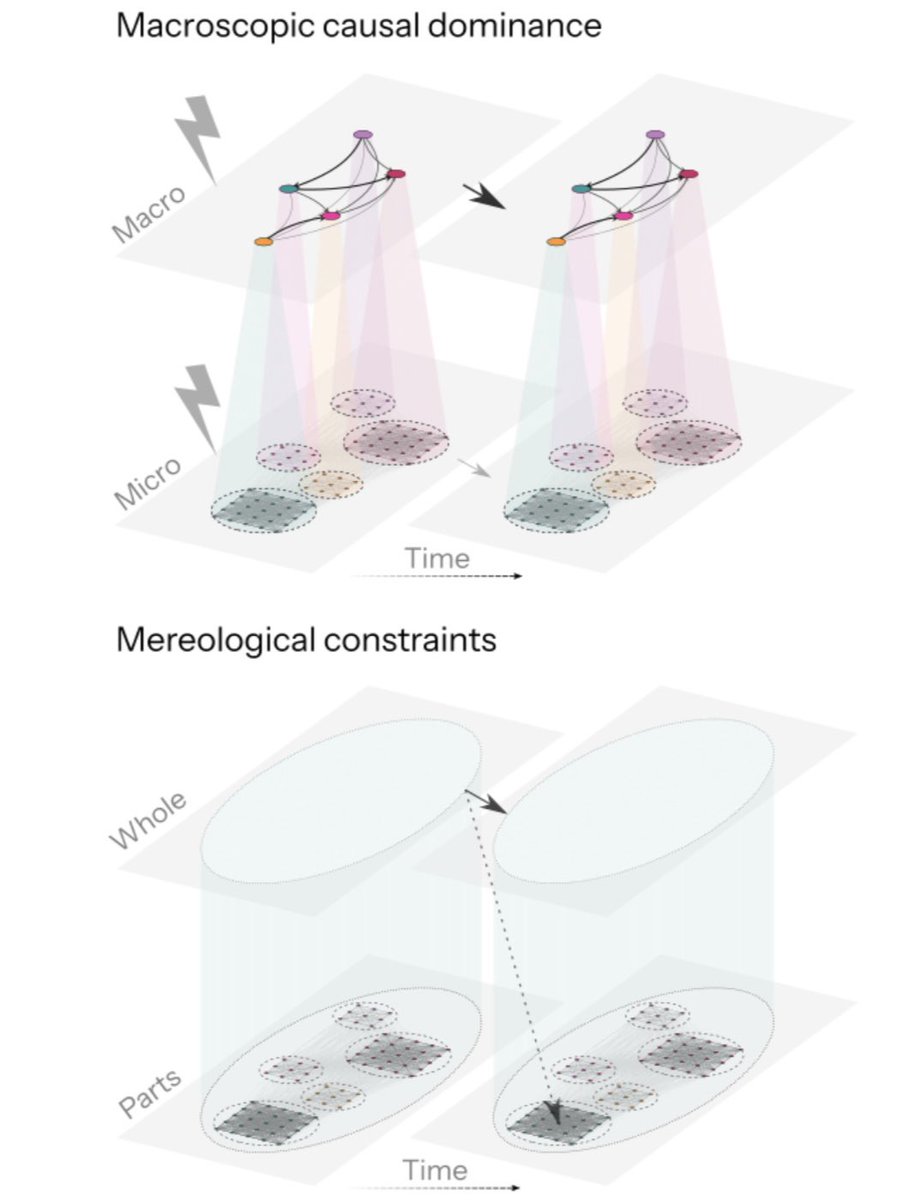
“Compatibilist emergence for the science of consciousness”
https://t.co/I7Zhno9UVW
How a multifaceted understanding of emergence can illuminate the link between consciousness and life!
Soc. Networks: Networked inequality: The role of changes in network heterogeneity and network size in attitudes towards inequality
https://t.co/rVySsqXK1u
☀️ As summer winds down, we’re getting closer to the Winter Workshop on Complex Systems! ❄️
Get ready cause the 2026 workshop will be held in Serra de Tramuntana in Mallorca, Spain. Prepare for an immersive edition in a stunning location!
Stay tuned for more info coming soon.
Are you interested in our work on complex physical systems and applications (to neural systems)?
Wanna join us in Sydney? 🐨 🦘
We have two open positions:
1. Postdoc position: https://t.co/0b4JOEKcSZ
2. Fully-funded PhD position: https://t.co/g6RbvNlaUt
More on collective behavior: Our new Annual Review of Biophysics piece - with the stellar Danielle Chase - explores how animals sense, share information, and make group decisions. In honeybees and beyond 🐝
https://t.co/UcuG35gUu5
Our article “Evidence of equilibrium dynamics in human social networks evolving in time”, published in Communications Physics, is now featured on their homepage as part of their monthly selection of highlights! If you didn't read it yet, take a look!
https://t.co/gLNIxXn7eQ
"Applied Antifragility in Natural Systems" is finally published!
Edited by Cristian Axenie, Roman Bauer, Oliver López Corona, Jeffrey West
Foreword by Nassim Taleb
E-book available immediately & print version on pre-order (link in reply)
It’s happening.
BRAN Lab is here, my first research group.
We explore how and why we connect (and disconnect), using network science, signed networks, ML, and cognitive modeling: from minds to systems, humans to AI, mental health to epidemic prevention.
https://t.co/niUXIxKoLq
NEW PAPER: The Theory of Economic Complexity
The Economic Complexity Index or ECI is a widely used empirical tool with an unclear theoretical basis. In this paper, we change that by formally deriving ECI for several production functions and showing what it really does.
In a single-factor model, ECI separates economies that are better or worse endowed with the factor. In a model with many factors, ECI tells us which economies have a higher probability of being endowed with many of them--regardless of what these factors are.
The idea that you can measure the combined presence of economic factors—no matter how they are defined--is an interesting departure in thinking. It provides a theoretical basis for the use of complexity measures in economic development. In the paper, we show this property is robust to substantial levels of noise and applies to other production functions, as long as they are not multiplicatively separable.
We also show that our model explains differences in network structure, like those observed between the product space (a network with a core and a periphery) and the research space (which is shaped as a ring). In the product space, the core-periphery structure tells us that capabilities are correlated across countries (e.g. Singapore scores high across all capabilities and Mali scores low across all of them). In the case of the research space, the ring structure is given by the fact that the capabilities of each field are only similar to those of a few neighboring fields.
Our main model is a generalization of Kremer’s O-Ring model with factors that can be made specific to each economy and activity. In this model, the output of an economy in an activity is proportional to the probability that it is not missing the factors that the activity requires. This allows us to easily generate output matrices as large as those observed in the empirical literature and calculate their ECI. We also used this opportunity to embed this model into a short-run equilibrium framework showing that prices increase concavely with the complexity of a product and that economies should converge to the wages of others with similar levels of complexity.
This is one of the most fun papers that I have worked in a long time. If you want to geek out with the mathematical foundations of economic complexity theory, please give it a read.
https://t.co/cmo5fkmSNY
Highly recommended!
"How do central banks control inflation? A guide for the perplexed" by Laura Castillo-Martinez and Ricardo Reis.
"The goal of this article is to provide a unified treatment of the theory of how central banks control inflation. The hope is that researchers will have an accessible entry point to this literature, so they can make sense of monetary policies and inflation outcomes."
Journal of Economic Literature:
https://t.co/y49ZWxXeY2
Ungated version:
https://t.co/s6qm6xOo3v