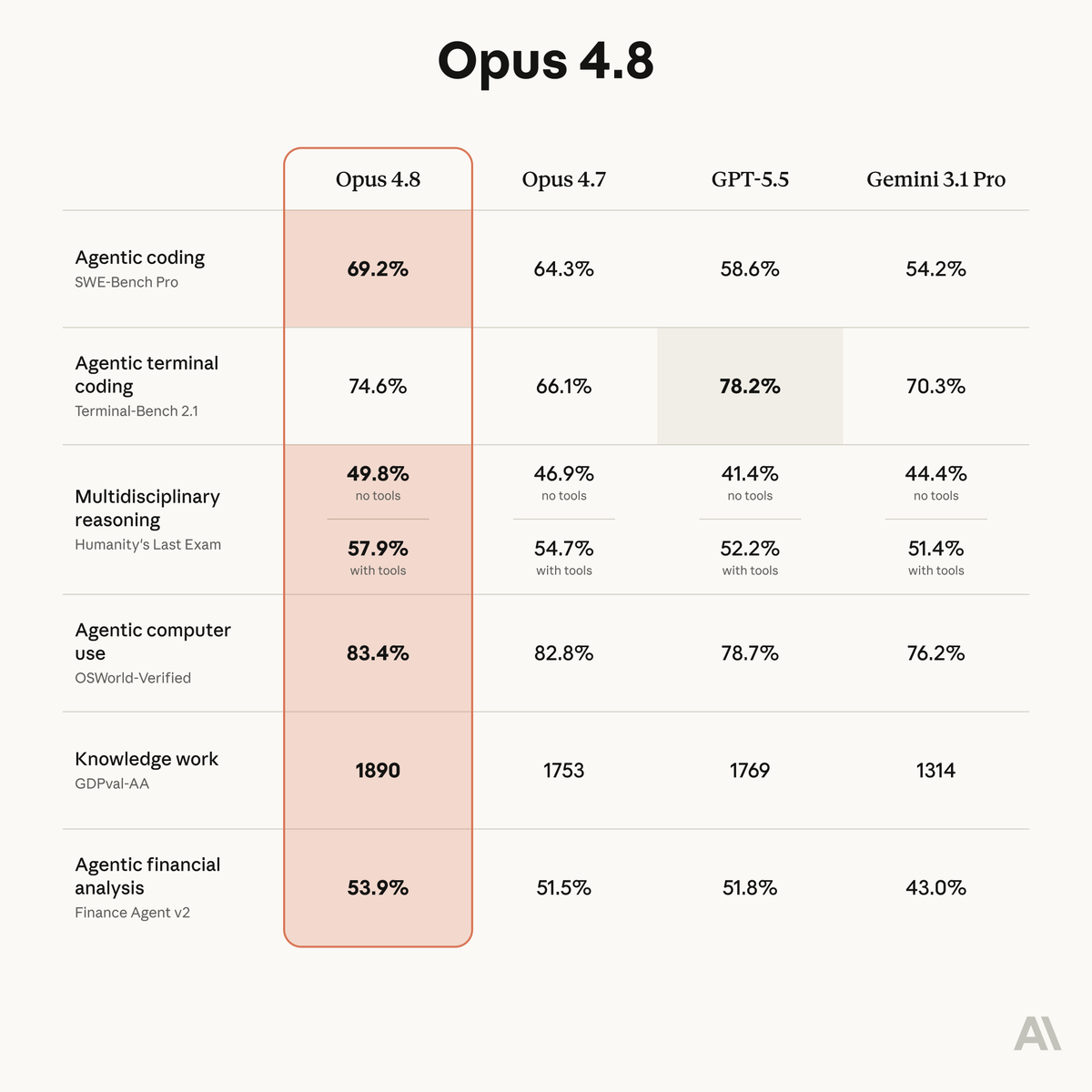
Introducing Claude Opus 4.8: it builds on Opus 4.7 with sharper judgment, more honesty about its own progress, and the ability to work independently for longer than its predecessors.
Available today at the same price.
So I built a small Opencode plugin that automatically sanitizes long tokens before they’re sent to the AI. It helps save a ton of tokens and removes the need to clean logs manually.
Feel free to check it out 👇
📦 npm i opencode-log-sanitizer
💻 https://t.co/gT13dE6suR
A big part of my workflow involves debugging AWS CloudWatch logs, and I often paste logs directly into Opencode. But the problem is those logs sometimes include massive base64 blobs, and manually cleaning them up is annoying (and honestly, I’m too lazy for that).
If you, like me, just woke up, let me catch you up on the Claude Code Leak (I know nothing, all conjecture):
> Someone inside Anthropic, got switched to Adaptive reasoning mode
> Their Claude Code switched to Sonnet
> Committed the .map file of Claude Code
> Effectively leaking the ENTIRE CC Source Code
> @realsigridjin was tired after running 2 south korean hackathons in SF, saw the leak
> Rules in Korea are different, he cloned the repo, went to sleep
> Wakes up to 25K stars, and his GF begging him to take it down (she's a copyright lawyer)
> Their team decided - how about we have agents rewrite this in Python!? Surely... this is more legal
> Rewrite in Py
> Board a plane to SK🇰🇷
> One of the guys decides python is slow, is now rewriting ALL OF CLAUDE CODE into Rust.
> Anthropic cannot take down, cannot sue
> Is this "fair use?"
> TL;DR - we're about to have open source Claude Code in Rust
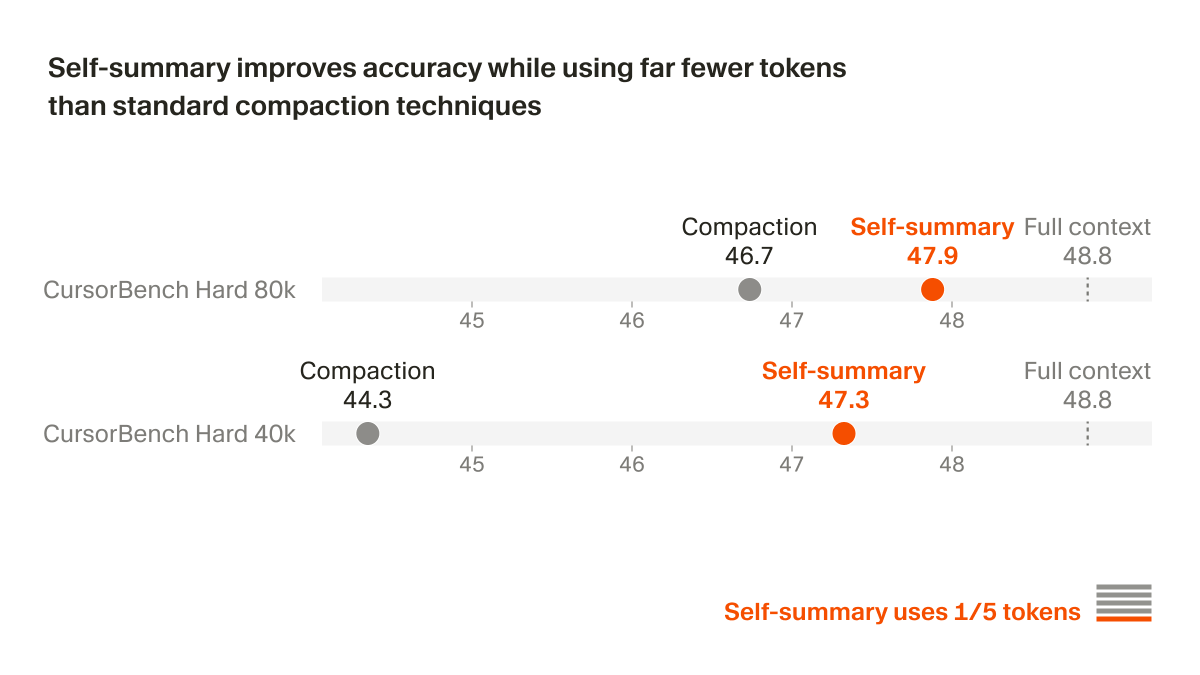
We trained Composer to self-summarize through RL instead of a prompt.
This reduces the error from compaction by 50% and allows Composer to succeed on challenging coding tasks requiring hundreds of actions.