Watch Friday's episode now:
https://t.co/PQMrEkiLU1
New evidence at the Noah Donohoe Inquest focused on the storm culvert where Noah’s body was found, including testimony about unexplained finger tracking marks inside the tunnel that were reportedly never photographed. #JusticeForNoahDonohoe
Patrick O’Donovan’s departmental records of his meeting with Coimisiún na Meán don’t disclose the secret phone call he’d made to a commissioner where the media minister sought to initiate a state examination of RTÉ’s fuel protest coverage.
https://t.co/1qCHjy6dUr
🇮🇪 @CoeGreco 5th Evaluation Report on 🇮🇪 raised concerns about integrity oversight for ministers and SPECIAL ADVISERS, recommending formal integrity checks, stronger conflict-of-interest controls and clearer codes of conduct. @thejournal_ie@ontheditchIE https://t.co/CqM5OF9Qja
A High Court judge has asked for people to come forward with information about an allegation that a senior garda shared a photograph taken inside a courtroom of a whistleblower and three people who were accompanying him.
https://t.co/p5WlSSQGTO
The same DPP who vigorously pursued a Garda for loaning a bicycle..
The same DPP who confirmed by FOI that they have no guidance or training on new protected disclosure laws...
DPP says no charges to be brought over whistleblower’s prison service claims
https://t.co/Ho9VQOkT8K
They deliberately set out to break #whistlblowers in #ireland.
From consultants to prison officers to honest bankers, all different sectors using protected disclosures none of which are ever resolved.
In EU terms, that’s ’No effective remedy’.
I exposed the CIA’s torture program because torture is illegal, immoral, and un-American. For telling the truth, I was prosecuted, imprisoned, and blacklisted while the people who authorized torture walked free.
This week, I was honored as “Whistleblower of the Week” by WhistleblowersBlog.
The fight for accountability, transparency, and constitutional rights isn’t over. It never is.
Read more here:
Alongside revelations nationally & internationally of banking & judicial collusion since 2008, has it all been game play to keep the chosen circle still at the top while ruining any who could challenge? #BankingScandal
In Ireland, penalisation of whistleblowers is so subtle even WRC Adjudicators often miss it. Employers are masters of quiet retaliation—restructuring roles, excluding staff, weaponising procedures. It’s systemic, sophisticated, and hidden in plain sight. #WhistleblowersIreland #Accountability
@BlowersIreland 👇
@WRC_ie
https://t.co/h7uOrINAGm
Out next week.
Shining a Light: Information Access in Ireland is a practical guide to getting records from public bodies.
If you’ve ever tried to wrangle information from the system, then this is for you.
Available from Wednesday, May 6.
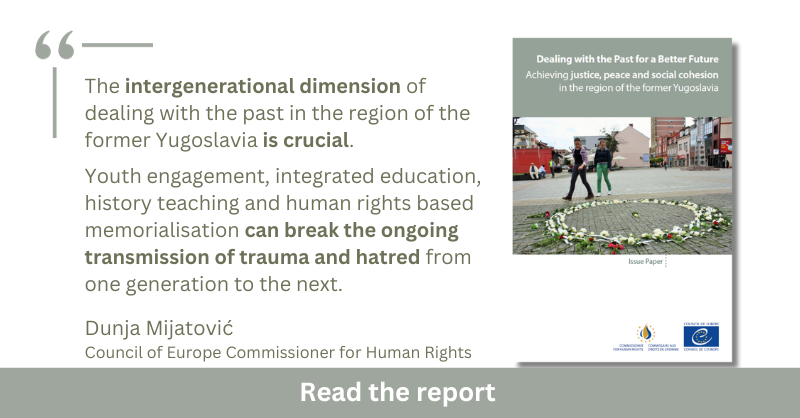
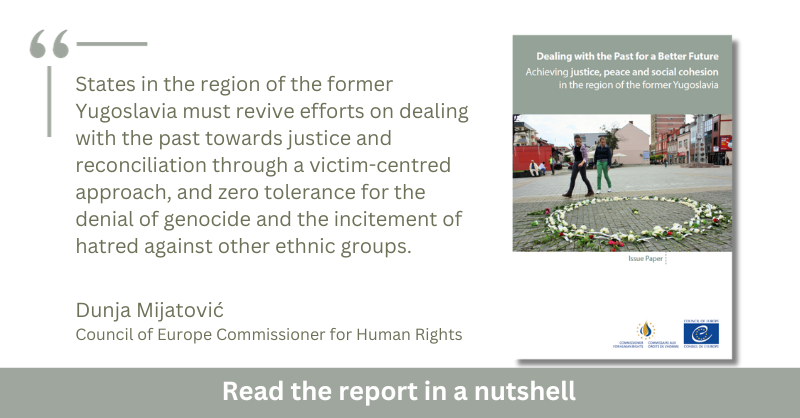
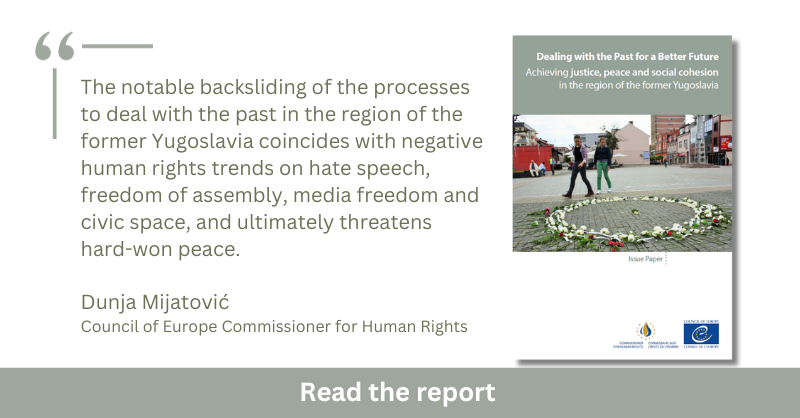
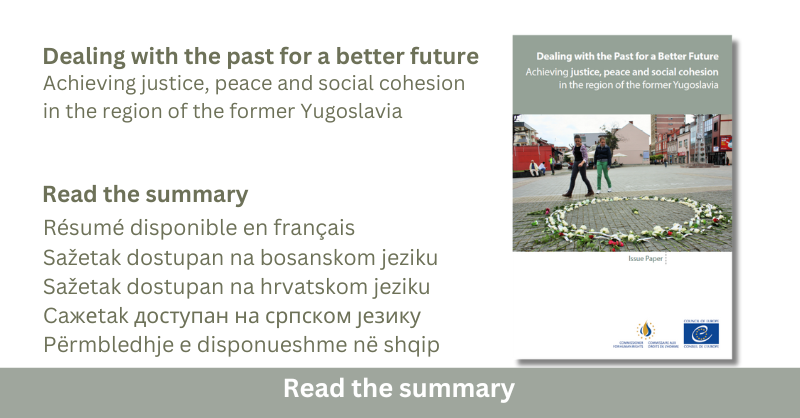
The failure to fully deal with the violent past is having devastating consequences on respect for #HumanRights, the #RuleOfLaw and social cohesion in the region of the former Yugoslavia.
Time is pressing to achieve effective justice, reparations and truth for the victims. �The failure to fully deal with the violent past is having devastating consequences on respect for #HumanRights, the #RuleOfLaw and social cohesion in the region of the former Yugoslavia.
Time is pressing to achieve effective justice, reparations and truth for the victims. �The failure to fully deal with the violent past is having devastating consequences on respect for #HumanRights, the #RuleOfLaw and social cohesion in the region of the former Yugoslavia.
Time is pressing to achieve effective justice, reparations and truth for the victims. �The failure to fully deal with the violent past is having devastating consequences on respect for #HumanRights, the #RuleOfLaw and social cohesion in the region of the former Yugoslavia.
Time is pressing to achieve effective justice, reparations and truth for the victims. 👇
Silence from Strasbourg!
The office of the Council of Europe @coe Commissioner for Human Rights was born, as many European institutions are, out of principle and promise.
Established by Resolution (99) 50 in the closing spring of the twentieth century, it was intended to stand—not as a court, nor as a tribunal—but as a vigilant observer. A voice, if you like, for the quiet insistence that human rights, once written into law, must also be lived in practice.
Its foundation rests upon the European Convention on Human Rights, and at the heart of that Convention lies the most elementary of all guarantees: the right to life, enshrined in Article 2 ECHR. It is a simple phrase, almost austere in its brevity, but its implications are profound. It does not merely prohibit the state from taking life unlawfully; it obliges the state to act—to protect, to prevent, and, when the worst occurs, to account.
There is, in the history of human rights, a phrase that has echoed across generations—“Never Again.” Born from the ashes of the #Holocaust, it was never intended as rhetoric alone, but as a promise. In legal terms, that promise finds its expression in Article 2: a binding obligation on the state not merely to refrain from unlawful killing, but to ensure that such failures are not repeated—through vigilance, accountability, and the rule of law.
Now, the @CommissionerHR is not a judge. He does not issue rulings, nor does he summon witnesses. His authority is no less significant: it lies in the power to notice, to question, and, when necessary, to challenge governments. It is, in essence, a moral office, and like all such offices, it depends upon the willingness to speak.
Which brings us, rather uneasily, to the present moment.
The current holder of that office, Dr. Michael O’Flaherty, has been confronted with allegations that reach into the darker corners of state responsibility.
Among them, the murder of Tom Oliver—within the jurisdiction of the #Irish State—and the shadowy presence of #British state agents. When asked to comment, the response, delivered on his behalf by Gaëlle Bausson @gbausson, Head of Communications at the Commissioner’s Office, was brief to the point of silence: “The Commissioner has no comments on this.”
Now, in fairness, silence is not always neglect. There are moments when discretion is warranted—when facts are disputed, or proceedings are ongoing, or when intervention might complicate rather than clarify. But there is also a point at which silence begins to echo.
The Oliver case does not stand alone. It is accompanied by other allegations—grave ones.
Claims of Irish State complicity in the attempted murder of prison officer Sean O'Brien; assertions of a cover-up in the murder of Irish soldier Gunner Dessie O'Donnell, 1983; threading through these accounts, reports of pressure brought to bear on those who have sought to speak out—#whistleblowers who, in another country, might be regarded as essential to the health of a democratic state.
Individually, such claims demand investigation. Taken together, they suggest something more troubling: the possibility—not the proof, but the possibility—of systemic failure. And it is precisely this kind of pattern, this accumulation of concern, that the #Commissioners office was designed to confront.
If, however, the institution tasked with promoting and protecting human rights can appear to overlook alleged violations in a member state such as Ireland, a more uncomfortable question begins to form. Who, then, holds the state to account for the loss of life within its jurisdiction?
What becomes of the promise embedded in Article 2 when allegations of unlawful killing, of collusion, of cover-up, and of reprisals against whistleblowers are met not with scrutiny, but intimidation, harassment, ridicule, and silence?
These are not easy questions, nor are they lightly put. Some may believe that such matters belong to another time, another place—that they could not take root in a modern #European #democracy. And yet, history counsels caution. The distance between principle and practice can, at times, be narrower than we would wish.
This is not an assertion of guilt, but a reflection on responsibility. For when the mechanisms of accountability weaken—or appear to falter—the consequences are not abstract. They are measured, ultimately, in human life, and in the confidence that such life will be protected by law.
And so a question, once more, returns to Dr. O’Flaherty in #Strasbourg—quietly, but persistently. Not as an accusation, but as an appeal to the very purpose of the office:
Cén luach atá ag an saol duit?
“What value does life have to you?”
#Article2 is not merely a provision of law. It is a test—of institutions, of states, and of those entrusted to speak when silence would be easier.
And so the question lingers, not loudly, but persistently: when confronted with allegations of this gravity, is silence an exercise of judgment—or an abdication of responsibility?
It was lovely catching up with Dr Dympna Waldron, the Galway Hospice Foundation whistleblower.
As two hospice whistleblowers, we both know how difficult it can be to speak up in our Health Service @HSELive
The story she shared with me was truly shocking.
Whistleblowers deserve to be listened to, protected and treated with respect here is her story 👇
https://t.co/svziXnwcNH
@HMcEntee It's strange that no public comment of condemnation ever comes from you re Prison Officer Noel McGree & his family whose home was targeted for doing his job serving the state - refusing to steal for superiors' private enterprises. Why @HMcEntee@SimonHarrisTD@MaryLouMcDonald?