🌟A modular and decentralized storage Layer 2 that offers programmable key-value storage
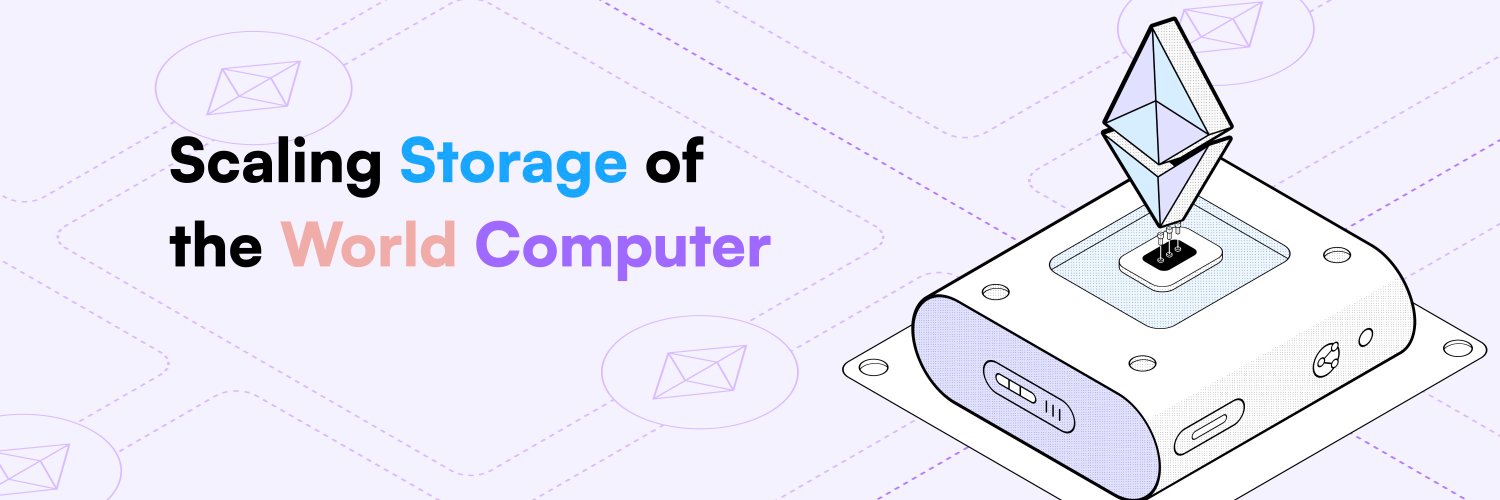
🌟Scaling Storage of the World Computer
🌟Received grants from ESP
🚀 EthStorage Mainnet Alpha is live on Ethereum!
After nearly 3 years of R&D, EthStorage brings petabyte-scale, verifiable storage to Ethereum — making long-term, on-chain data practical and affordable.
With this launch, Ethereum’s modular vision takes a major step forward: alongside computation (L2 rollups) and consensus (Ethereum L1), it now has a decentralized storage layer-2 — enabling Web2-like scale with Web3 security.
#Ethereum #EthStorage
More details 👇
Last week, Ethereum core contributors gathered in Svalbard for the Soldøgn interop: a week long event focused on hardening Glamsterdam implementations to scale Ethereum securely ☀️
Read the full recap, including their candidate post-fork gas limit, below:
Frontend attacks are becoming one of the most critical risks in crypto today — from DNS hijacks to compromised UIs.
This is exactly why we proposed ERC-4804 (web3://):
to enable direct access to apps from onchain data, without intermediaries.
This article does a great job outlining that vision and why it matters now.
Full article 👇
https://t.co/rIFSVw9FET
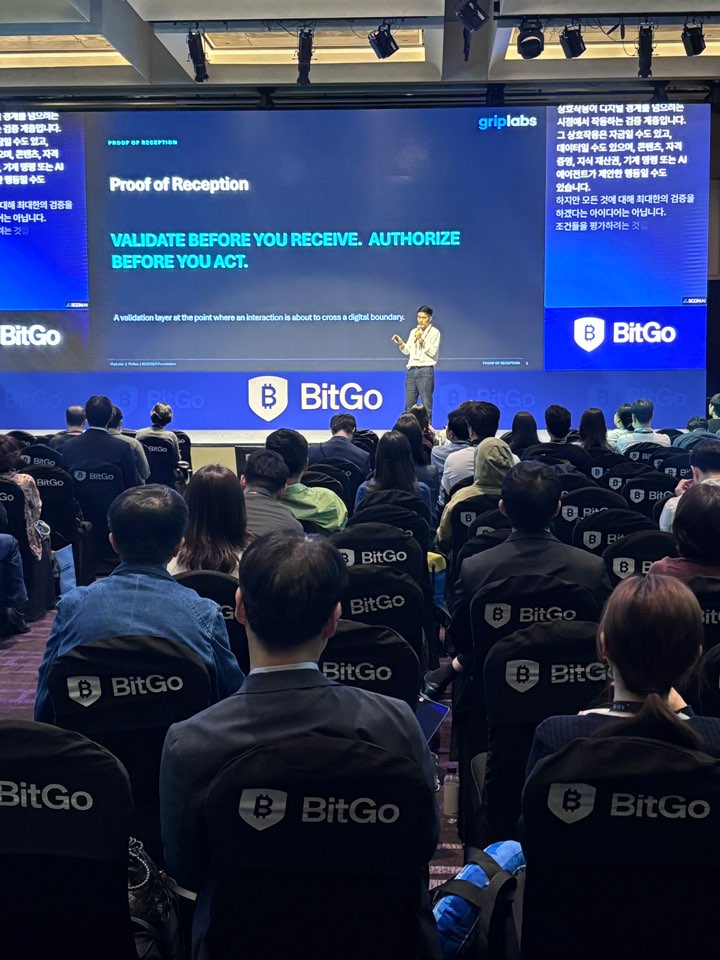
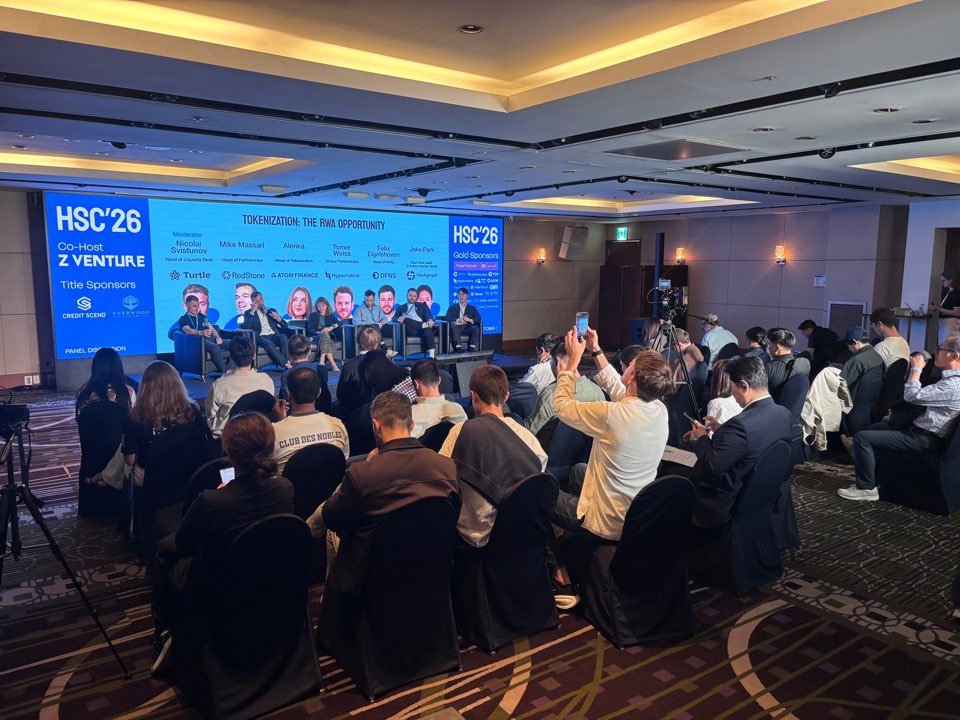
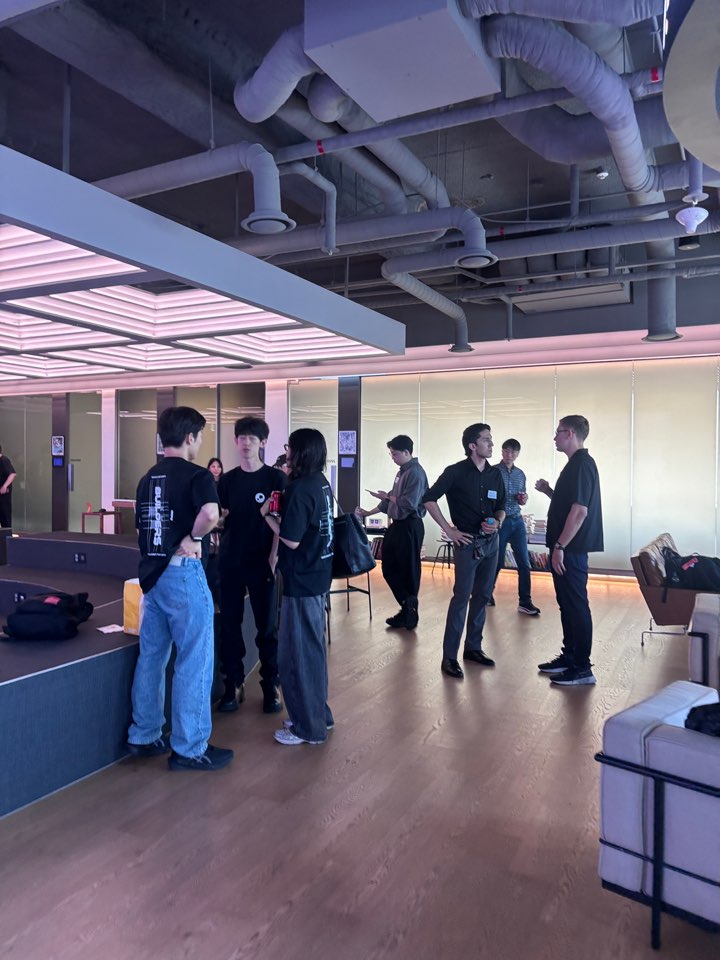
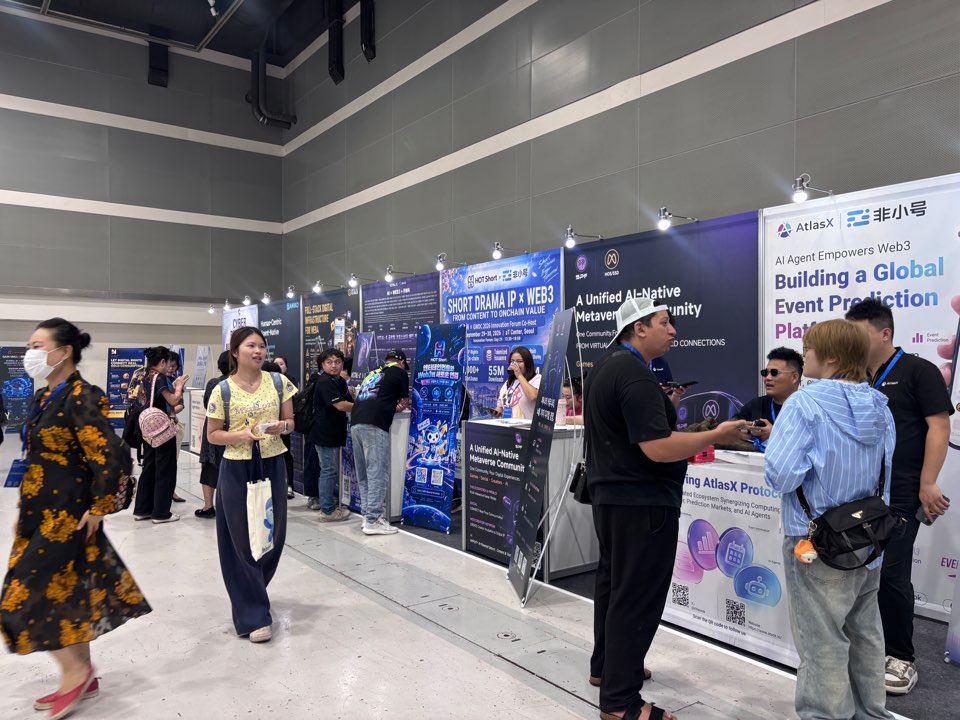
Great week at Buidl Asia in Seoul, Korea 🇰🇷
We joined a range of events across the week and had the chance to dive into discussions across infrastructure, applications, and emerging use cases in the ecosystem.
On the storage side, it was especially valuable —
we explored new ideas, met promising builders, and had meaningful conversations around how programmable onchain storage can support next-generation applications.
Excited about what’s ahead! #BuidlAsia
A missing piece of Ethereum:
No simple way to locate or browse on-chain content — even though the data is already there.
web3:// (ERC-4804) changes this.
Browse on-chain images and content directly — no DNS, no HTTP servers, no trusted intermediaries.
Simple as http://
At @EthCC, EthStorage founder @qc_qizhou walked through how it works — from fundamentals to real applications👇
EthStorage will be at @EthCC 🇫🇷, introducing web3:// — turning the EVM into an unstoppable web server.
If the full stack isn’t decentralized, it breaks.
web3:// (ERC-4804) decentralizes the access layer — enabling true end-to-end decentralization with no single point of failure.
See you in Cannes — come meet the team.
Learn how to turn the EVM into your own unstoppable web server with Anthurine (@anthurine) presenting web3:// at the Cypherpunk & Privacy track.
This could be the missing piece that finally makes decentralized hosting practical for everyone.
Excited to share that @anthurine from EthStorage will be speaking at @EthCC in Cannes 🇫🇷
📢Introducing web3:// — a decentralized access protocol that turns the EVM into an unstoppable web server.
🗓 Mar 31, Cypherpunk & Privacy Track
web3://(ERC-4804) enables fully decentralized on-chain apps without relying on DNS or centralized hosting.
As Ethereum continues scaling computation and storage, decentralizing the frontend access layer becomes equally critical.
Adoption is already emerging — including support from @opensea.
The decentralized web stack is gradually coming together.
Since we are building on top of the Ethereum ecosystem, the security of the base layer is fundamental for all infrastructure and applications built above it.
Expanding the EF bug bounty to $1M is a meaningful and positive signal for the broader ecosystem, reinforcing the importance of continuously strengthening the protocol’s security.
If Ethereum is for agents, data matters too.
Agents need persistent, verifiable storage for memory, content, and coordination.
EthStorage enables permanent, petabyte-scale storage at ~1/1000 the cost.
The need for this infrastructure is only becoming clearer.
Learn how to turn the EVM into your own unstoppable web server with Anthurine (@anthurine) presenting web3:// at the Cypherpunk & Privacy track.
This could be the missing piece that finally makes decentralized hosting practical for everyone.
As AI increasingly consolidates around closed platforms,
questions around who owns intelligence and who controls data are becoming impossible to ignore.
That’s why DeAI matters.
EthStorage is proud to join DeAI Builders Assembly as a partner,
where builders and researchers explore decentralized AI as an open, composable, and resilient alternative.
Our founder @qc_qizhou will also be joining the conversation to discuss why decentralized storage and verifiable data access are foundational primitives for open intelligence systems.
📍 Hong Kong | Feb 11
🧠 DeAI Builders Assembly
🔗 Register: https://t.co/xQFgxzJMX9
#EthStorage #DeAI #DecentralizedAI #ConsensusHongKong
Institutions need more than execution — they need reliable, accessible data onchain.
Looking forward to Institutional Onchain: Stablecoins, RWAs & AI during Consensus Hong Kong.
As RWAs and AI systems move onchain, decentralized storage and native data access become increasingly important.
Looking forward to an insightful discussion.
📍 Hong Kong | Feb 11
🔗 Register here: https://t.co/KAjFiG1h18
#EthStorage #RWAs #OnchainData #InstitutionalOnchain
We agree with @VitalikButeri: an L2 can’t survive by being “faster” alone.
EthStorage is an L2 — but not a TPS-focused one.
It’s a modular storage L2 designed to support Ethereum’s evolution toward a true World Computer.
As execution scales, on-chain storage becomes just as critical — especially in the AI era.
Data availability, verifiable storage, and on-chain access are foundational primitives for AI-native applications.
Scaling Ethereum isn’t only about faster execution.
It’s about enabling both computation and data to live natively on-chain — and that’s the role EthStorage is focused on.
There have recently been some discussions on the ongoing role of L2s in the Ethereum ecosystem, especially in the face of two facts:
* L2s' progress to stage 2 (and, secondarily, on interop) has been far slower and more difficult than originally expected
* L1 itself is scaling, fees are very low, and gaslimits are projected to increase greatly in 2026
Both of these facts, for their own separate reasons, mean that the original vision of L2s and their role in Ethereum no longer makes sense, and we need a new path.
First, let us recap the original vision. Ethereum needs to scale. The definition of "Ethereum scaling" is the existence of large quantities of block space that is backed by the full faith and credit of Ethereum - that is, block space where, if you do things (including with ETH) inside that block space, your activities are guaranteed to be valid, uncensored, unreverted, untouched, as long as Ethereum itself functions. If you create a 10000 TPS EVM where its connection to L1 is mediated by a multisig bridge, then you are not scaling Ethereum.
This vision no longer makes sense. L1 does not need L2s to be "branded shards", because L1 is itself scaling. And L2s are not able or willing to satisfy the properties that a true "branded shard" would require. I've even seen at least one explicitly saying that they may never want to go beyond stage 1, not just for technical reasons around ZK-EVM safety, but also because their customers' regulatory needs require them to have ultimate control. This may be doing the right thing for your customers. But it should be obvious that if you are doing this, then you are not "scaling Ethereum" in the sense meant by the rollup-centric roadmap. But that's fine! it's fine because Ethereum itself is now scaling directly on L1, with large planned increases to its gas limit this year and the years ahead.
We should stop thinking about L2s as literally being "branded shards" of Ethereum, with the social status and responsibilities that this entails. Instead, we can think of L2s as being a full spectrum, which includes both chains backed by the full faith and credit of Ethereum with various unique properties (eg. not just EVM), as well as a whole array of options at different levels of connection to Ethereum, that each person (or bot) is free to care about or not care about depending on their needs.
What would I do today if I were an L2?
* Identify a value add other than "scaling". Examples: (i) non-EVM specialized features/VMs around privacy, (ii) efficiency specialized around a particular application, (iii) truly extreme levels of scaling that even a greatly expanded L1 will not do, (iv) a totally different design for non-financial applications, eg. social, identity, AI, (v) ultra-low-latency and other sequencing properties, (vi) maybe built-in oracles or decentralized dispute resolution or other "non-computationally-verifiable" features
* Be stage 1 at the minimum (otherwise you really are just a separate L1 with a bridge, and you should just call yourself that) if you're doing things with ETH or other ethereum-issued assets
* Support maximum interoperability with Ethereum, though this will differ for each one (eg. what if you're not EVM, or even not financial?)
From Ethereum's side, over the past few months I've become more convinced of the value of the native rollup precompile, particuarly once we have enshrined ZK-EVM proofs that we need anyway to scale L1. This is a precompile that verifies a ZK-EVM proof, and it's "part of Ethereum", so (i) it auto-upgrades along with Ethereum, and (ii) if the precompile has a bug, Ethereum will hard-fork to fix the bug.
The native rollup precompile would make full, security-council-free, EVM verification accessible. We should spend much more time working out how to design it in such a way that if your L2 is "EVM plus other stuff", then the native rollup precompile would verify the EVM, and you only have to bring your own prover for the "other stuff" (eg. Stylus). This might involve a canonical way of exposing a lookup table between contract call inputs and outputs, and letting you provide your own values to the lookup table (that you would prove separately).
This would make it easy to have safe, strong, trustless interoperability with Ethereum. It also enables synchronous composability (see: https://t.co/9jy6v1X6Fw and https://t.co/gZmu3YjebM ). And from there, it's each L2's choice exactly what they want to build. Don't just "extend L1", figure out something new to add.
This of course means that some will add things that are trust-dependent, or backdoored, or otherwise insecure; this is unavoidable in a permissionless ecosystem where developers have freedom. Our job should make to make it clear to users what guarantees they have, and to build up the strongest Ethereum that we can.
🇹🇭 EthChiangmai 2026
EthStorage co-founder @qc_qizhou participated in @ETHChiangmai 2026 as a Hackathon Judge and Summit Panelist.
He joined the panel “Cypherpunk as a Survival Skill: What It Takes to Live Permissionlessly”, contributing to discussions with builders and the broader Ethereum community.
Thanks to the EthChiangmai team and everyone who made the event possible 🙏
Big thanks to @OpenSea for adopting web3:// (ERC-4804) and helping move Web3 toward more native data access.
Also appreciate @Bankless for the thoughtful coverage on why this matters.
Great to see web3:// (ERC-4804) being more widely adopted, now supported on OpenSea.
Glad that EthStorage, together with QuarkChain, could contribute to advancing decentralized data access on Ethereum.
OpenSea has added support for web3:// (ERC-4804)
Most NFTs today still rely on off-chain infrastructure to be accessed and understood.
When those access layers disappear, the asset itself becomes unreachable.
ERC-4804 introduces a native way to resolve NFT metadata directly from Ethereum — removing reliance on gateways, DNS, or centralized access points.
This standard was originally proposed and advanced by the QuarkChain team to address this long-standing gap in Web3.
For QuarkChain, this aligns directly with the Super World Computer vision:
a system where decentralization extends beyond execution to include how applications and data are accessed — forming a truly end-to-end decentralized stack.
🔗 OpenSea Metadata Standards
https://t.co/Iw7mqVkd8s
🔗 Bankless on ERC-4804
https://t.co/XQ7Dz2DFcL
🔗 web3://
https://t.co/QpmegoNSd3
EthStorage 2025 Annual Review
2025 was the year EthStorage moved from long-term research to real-world infrastructure.
From Mainnet Alpha on Ethereum, petabyte-scale verifiable storage, and Git-on-Ethereum (GoE), to deep contributions across Ethereum clients, EIPs, and storage architecture — this report captures how decentralized storage became viable at scale.
📘 Read the full EthStorage 2025 Annual Report:
🔗 https://t.co/vbcqClfTcQ
As Vitalik pointed out, if users can’t reach an application, decentralization doesn’t matter.
By combining decentralized storage — @EthStorage, ~1/1000× cheaper at petabyte scale — with web3:// (ERC-4804), full decentralization becomes practical, not just theoretical.
Access and storage are both on-chain, persistent, and trustless.
Welcome to 2026! Milady is back.
Ethereum did a lot in 2025: gas limits increased, blob count increased, node software quality improved, zkEVMs blasted through their performance milestones, and with zkEVMs and PeerDAS ethereum made its largest step toward being a fundamentally new and more powerful kind of blockchain (more on this later)
But we have a challenge: Ethereum needs to do more to meet its own stated goals. Not the quest of "winning the next meta" regardless of whether it's tokenized dollars or political memecoins, not arbitrarily convincing people to help us fill up blockspace to make ETH ultrasound again, but the mission:
To build the world computer that serves as a central infrastructure piece of a more free and open internet.
We're building decentralized applications. Applications that run without fraud, censorship or third-party interference. Applications that pass the walkaway test: they keep running even if the original developers disappear. Applications where if you're a user, you don't even notice if Cloudflare goes down - or even if all of Cloudflare gets hacked by North Korea. Applications whose stability transcends the rise and fall of companies, ideologies and political parties. And applications that protect your privacy. All this - for finance, and also for identity, governance and whatever other civilizational infrastructure people want to build.
These properties sound radical, but we must remember that a generation ago any wallet, kitchen appliance, book or car would fulfill every single one of them. Today, all of the above are by default becoming subscription services, consigning you to permanent dependence on some centralized overlord.
Ethereum is the rebellion against this.
To achieve this, it needs to be (i) usable, and usable at scale, and (ii) actually decentralized. This needs to happen at both (a) the blockchain layer, including the software we use to run and talk to the blockchain, and (b) the application layer. All of these pieces must be improved - they are already being improved, but they must be improved more.
Fortunately, we have powerful tools on our side - but we need to apply them, and we will.
Wishing everyone an exciting 2026.
Milady.
Merry Christmas!!🎄
Thank you to all the builders, researchers, and partners who were part of the EthStorage journey in 2025.
More building, research, and progress ahead in 2026.✨
A very interesting proposal from @VitalikButerin to use BLOBs as the unified storage layer for all blockchain history and state data (https://t.co/OqLD1BcT06).
In fact, several years ago we anticipated that Ethereum would naturally evolve into three interconnected networks:
- A voting network, composed of validators and zk-verifiers, incentivized primarily through block rewards;
- A builder network, consisting of block builders and zk-provers, capturing MEV and potentially other in-protocol rewards shared with validators;
- A storage network for history and state, built around a unified storage primitive (BLOBs), with the incentive model still to be fully defined.
One of the original motivations behind starting EthStorage was to become the first BLOB-native storage network, backed by a purpose-built proof-of-storage incentive mechanism.
It is exciting to see Ethereum steadily converging toward this architecture.
@VitalikButerin 提出了一个非常有意思的设想:使用 BLOB 作为统一的存储层,来承载区块链的全部历史数据和状态数据。
事实上,早在几年前,我们就预判以太坊会自然演进为 三类相互协作的网络:
- 投票网络(Voting Network):由验证者和 zk 验证者组成,主要通过区块奖励获得激励;
- 构建者网络(Builder Network):由区块构建者和 zk 证明者组成,通过 MEV 或其他潜在的协议内激励与验证者共享收益;
- 存储网络(Storage Network):负责历史数据和状态数据的长期存储,基于统一的存储原语(BLOB),其激励机制仍有待进一步完善。
EthStorage 项目的初衷之一,正是成为第一个 原生支持 BLOB 的存储网络,并通过我们设计的 Proof-of-Storage 激励机制,为这一层提供可持续的经济安全性。
很高兴看到,以太坊正在一步步朝着这一长期愿景稳步演进。