No me gusta hacer este tipo de predicciones. Aun así, viendo la reacción en mi timeline con la colaboración Swatch x Audemars Piguet, me apetecía escribir sobre lo que realmente está pasando aquí, más allá del meme y la espuma.
Café para cafeteros:
El Gobierno promete a la UE elevar la presión fiscal en €8.500M este año, para alcanzar una presión fiscal del 42,2% (en un país de pobres).
Mientras te hablan de especuladores, el Gobierno ya se lleva el 42,2% de la riqueza que se genera en España sin arriesgar capital.
Últimamente no he colgado nada en español porque la situación en España me deprime bastante.
Un ejemplo es este anuncio del PP sobre ocho medidas si llega al gobierno, que aquí incluyo.
Fijémonos en estas ocho medidas. Una, la ley sobre ELA, afecta a una minoría muy pequeña del país. Sí, tener esta enfermedad es una desgracia, pero estamos hablando de 900 casos al año en un país que se acerca ya a los 50 millones de habitantes. Es “buenismo” en su manifestación más mediocre. Otra, bajar el IVA de los productos básicos, es demagógica y en contra de la teoría económica básica. Modificar la Ley Presupuestaria para que haya un mayor control sobre el gasto en defensa y seguridad resulta irrelevante. Y las otras varían entre lo necesario pero no muy importante (la independencia del CIS) y lo esperpéntico (modificar la Ley de Costas).
España tiene cuatro problemas existenciales:
1) Fecundidad.
2) Inmigración.
3) Falta de crecimiento de los salarios reales.
4) Vivienda.
Ni una de estas medidas tiene nada que ver con 1)-4) (excepto, de pasada, la ley antiocupación). ¿Por qué? Porque cualquier cosa que de verdad contribuya a la solución de 1)-4) implicaría sacrificios para los votantes del PP: personas de más de 55 años que quieren dejar todo como está. De hecho, la ley antiocupación se menciona porque protege los derechos de propiedad de los mayores.
Feijóo y el PP, más en general, tienen la idea del futuro de España de una ameba porque a sus votantes el futuro de España les trae el fresco mientras su pensión se pague y el precio de su piso no caiga.
Y nada de lo que yo (o cualquier otro) pueda decir será capaz de mover ese macizo carpetovetónico.
A powerful scene in the Odyssey happens when Odysseus finally returns to Ithaca after twenty years of war and wandering.
You would expect the story to end with celebration, with the hero coming home, the family reunited, and order restored.
Homer does something far stranger.
Odysseus arrives disguised as a beggar, because Athena warns him that the palace has been taken over by more than a hundred suitors who have been living there for years, eating his food, drinking his wine, and pressuring his wife Penelope to marry one of them.
They believe Odysseus is dead and in their minds the kingdom is already theirs.
So the king of Ithaca walks through his own halls dressed in rags while the men stealing his house sit comfortably at his tables. They mock him, throw scraps at him, and one of them even strikes him, and Odysseus takes it. That is the remarkable part, because the same man who blinded the Cyclops and survived twenty years of disasters now stands quietly while strangers insult him in his own home. Homer tells us his heart burns inside his chest and that he wants to attack them immediately, yet he restrains himself and waits.
Instead of striking, Odysseus studies the room carefully. He counts the men, watches their habits, and quietly observes which servants remain loyal and which have betrayed him. The hero of the Odyssey does something most people cannot do, which is delay revenge until the moment is right.
Eventually Penelope announces a contest and brings out Odysseus’ great bow, declaring that she will marry the man who can string it and shoot an arrow through twelve axe heads lined up in a row. One by one the suitors try and fail, because none of them can even bend the bow. Then the beggar asks for a turn. The suitors laugh at first, but the bow is eventually handed to him.
Odysseus takes it in his hands and strings it effortlessly. Homer says the sound of the bowstring tightening rings through the hall like the note of a swallow. Then he places an arrow on the string and sends it cleanly through all twelve axe heads.
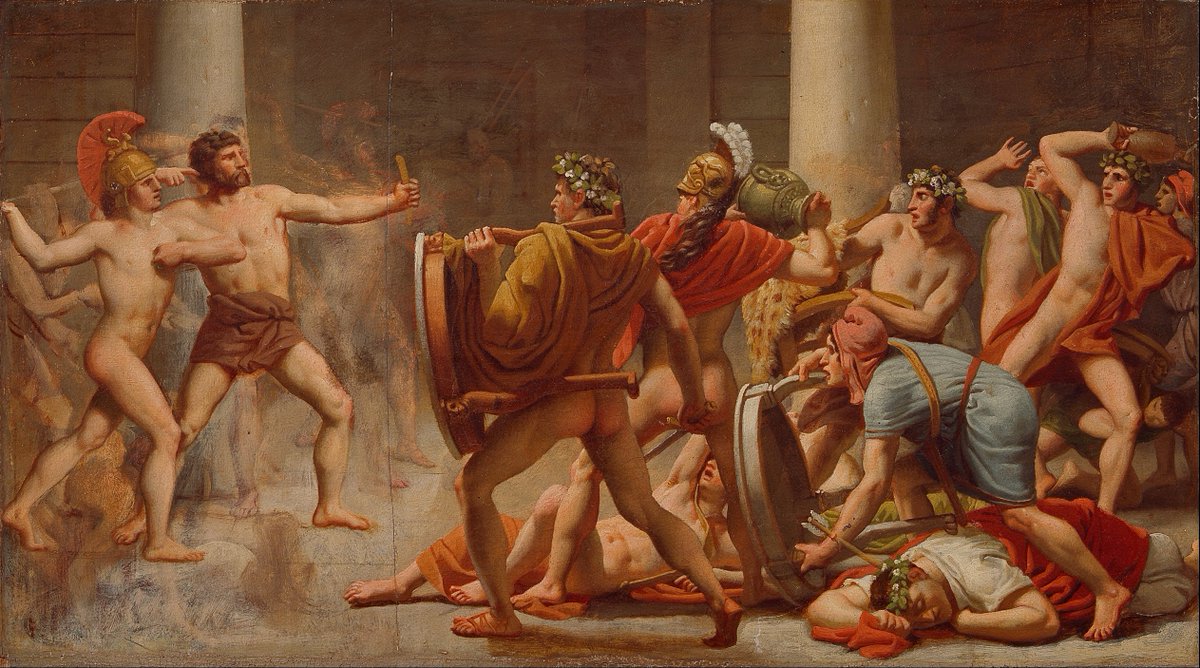
In that moment the beggar disappears. Odysseus turns the bow toward the suitors and reveals who he is.
What follows is one of the most brutal scenes in Greek literature. The doors are sealed and the suitors realize too late that they are trapped inside the hall. Odysseus, his son Telemachus, and two loyal servants begin killing them one by one. There is no escape, no mercy, and no negotiation. The men who spent years consuming another man’s house die inside it.
It is a violent ending, but Homer wants you to understand something important. The real danger to Odysseus was never just the monsters and storms on the long journey home. It was the possibility that someone else might take his place while he was gone. When Odysseus finally returns, he reminds everyone in Ithaca of a simple truth: a man’s home is not truly his unless he is willing to fight for it.
Más de 100.000 niños han sido abortados en 2024.
3/10 embarazos han terminado en aborto.
10.000 menores de edad no han necesitado del consentimiento de sus padres para abortar.
El aborto seguirá siendo financiado con tu dinero en 2026.