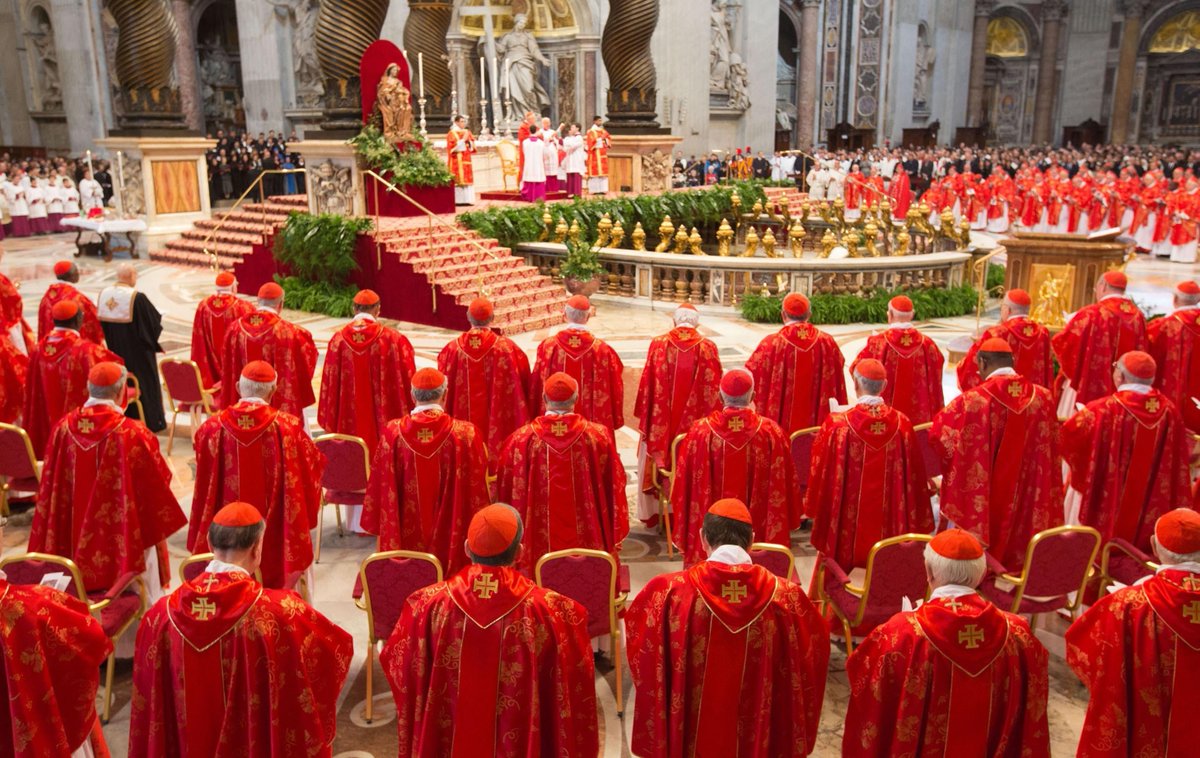
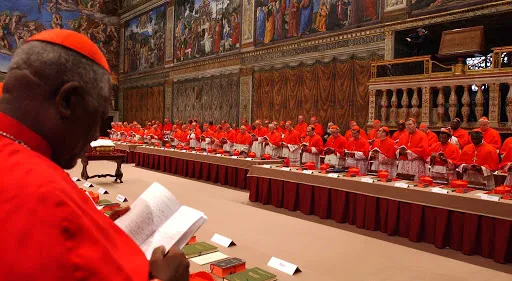
Ladies and Gentlemen, is this the organisation that Bola wants to wrestle with?
Not even The United States, United Kingdom, France and Germany all combined can wrestle with the Catholic Church.
Archbishop Onaiyekan is bigger than Tinubu in pedigree, education, exposure, character, leadership and integrity.
It is only in Nigeria that a character like Tinubu will have the audacity to talk back at such a globally revered man.
Good advice, with serious financial implications.
These days, taking care of even one child anywhere in the world requires you to be financially prepared or else you will cry more than the baby. 😂😂😂😂
Your phone is spying on you.
Your laptops are spying on you.
Your onion websites, freesites, tor technology powered platforms & the darkweb were all originally US military intelligence projects.
Again, the person looking for you doesn't have your time yet. Nothing is private.
Protect Rufai by all means necessary. He is the only fearless and uncompromised journalist this country has.
He never fails to call out APC hypocrisy…
Thank you @ruffydfire
“He Bought Food From This Woman Every Day Using Fake Transfer Alerts Since April Till Today. She Didn’t Realize It At First Until She Printed Her Bank Statement And Discovered That The Payments Had Never Reflected. She Said The Fake Transfers Accumulated To Over ₦400,000.” ~ Woman Reports👀.
Cardinal Onaiyekan's Abuse of Clerical Privilege
By Temitope Ajayi
There is something fundamentally inappropriate about Cardinal John Onaiyekan granting a television interview to offer his own account and interpretation of what transpired during the private meeting between the Catholic Bishops' Conference of Nigeria and President Bola Tinubu. It is, in my view, an abuse of clerical privilege.
The bishops requested an audience with the president. He granted the audience graciously. They presented, as was their right, a catalogue of the country's economic, social, and security challenges as they saw them. Except for their grudging acknowledgement of the benefits of NELFUND, they were dismissive of the other great things done by the administration. The bishops were notably acerbic in their submission, but the president listened to them patiently and responded.
That should ordinarily have been where the matter rested. None of the issues raised by the bishops is beyond scrutiny or rebuttal. Their assessment is neither scripture nor an article of faith. It is a perspective, and perspectives can be challenged with facts and evidence.
President Tinubu did exactly that, responding point by point to the issues they raised. On the bishops' demand for the return of schools to their owners, the President was surprised that such an issue could be tabled before him, as it is a matter for the states to resolve, in line with our constitution. So, he asked the bishops to take the matter to the governors and reminded them he returned mission schools in Lagos State when he was governor.
The President argued that the bishops’ characterisation of the country's current condition was incomplete and, in several respects, inaccurate. He pointed to measurable progress on the economic, social, and security fronts. He did not pretend that Nigeria's problems had disappeared. He acknowledged that significant economic and security challenges remain. His point was that the country has emerged from "a dark tunnel", that his administration has laid the foundations for recovery and that the next phase is to ensure the greatest number of Nigerians feels the gains.
What the clerics often overlook in these interventions is that governing a country is fundamentally different from shepherding a church. In a democracy, every interest group, including the Catholic Church, has every right to demand more from government. That is part of democratic engagement.
But the president of a nation of more than 200 million people is required to make difficult choices every single day. Those choices involve competing interests, limited resources, and imperfect options. They will inevitably disappoint some constituencies. There is no president, whether Tinubu or whoever succeeds him, who can wave a magic wand and make Nigeria's accumulated problems disappear overnight.
It is easy to compile a list of national problems. It is far more difficult to acknowledge the disasters that have been averted. Whatever anyone thinks of President Tinubu's policies, it is impossible to ignore the fiscal crisis he inherited and the measures taken to pull the country away from the edge of a financial cliff. Even the bishops themselves should recognise that one tangible consequence has been the restoration of greater fiscal stability across many states.
Countless civil servants and pensioners who, for years, endured unpaid salaries and pensions are now receiving them more regularly. That was certainly not the reality in many states from around 2014. Even about four years ago, 27 state governments struggled to meet even their most basic obligations. Many of those civil servants and pensioners are themselves parishioners in Catholic churches.
They know, from lived experience rather than official pronouncements, that there has been real relief in the regular payment of salaries and pensions. While this does not erase the discomfort many Nigerians still face, it is wrong to dismiss or ignore those improvements casually.
So when President Tinubu reminded the bishops of these facts during the meeting, he was not, as Cardinal Onaiyekan later suggested, being aloof or dismissive. He was presenting evidence to support his argument that the country is not standing still. A disagreement over facts should not be interpreted as arrogance.
The same applies to security. The bishops declared that Nigeria is bleeding. The President thinks otherwise. President Tinubu did not deny the seriousness of the security situation. Rather, he acknowledged the challenge while outlining the gains recorded by the Armed Forces and intelligence agencies across different theatres of operation.
As Commander-in-Chief, he receives operational briefings, intelligence assessments, and battlefield reports unavailable to the general public. The bishops, like other Nigerians, rely largely on media reports and public information. That does not make the President infallible, but it does mean he possesses information unavailable to the generality of the people. It is, therefore, legitimate for him to argue that the overall picture is more nuanced than newspaper headlines sometimes suggest.
Cardinal Onaiyekan's Arise News interview also reflected a familiar error that many ideological and professional critics make. They often assume that only critics speak truth to power, while everyone around a leader is either unwilling or incapable of doing so. It is an attractive narrative, but it is rarely true.
What truth does anyone really need to tell President Tinubu that he does not already know? As president, he has multiple channels for feeling the pulse of the country. He reads an average of 10 newspapers every day. He watches television, including discussion programmes, to gauge public opinion. He receives daily security, social, and economic intelligence reports from various arms of government, reports that are prepared for decision-making and are not sugar-coated. In a meeting earlier in the week, he still referenced a very harsh and largely uninformed opinion piece written by Dr. Chidi Amuta in his last Sunday Thisday Newspaper column.
Beyond that, he has friends and associates embedded in the social fabric of the country, drawn from different regions, professions, and political persuasions, who serve as informal sounding boards. Against that background, the suggestion that President Tinubu somehow needs only the Catholic Bishops to acquaint him with the truth is an overreach. They are an important constituency, but they are by no means the exclusive custodians of the national mood or the nation's conscience.
To assume that criticism delivered publicly is the only form of truth-telling is to misunderstand how government works. Presidents are exposed daily to competing advice, conflicting intelligence, uncomfortable assessments, and hard realities. Presidents are constantly confronted with information, much of it unpleasant. The real question is not whether they know the truth but what choices they make in response to it.
The Catholic Bishops discharged what they considered their moral obligation by presenting their concerns to the president. President Tinubu, for his part, accorded them respect by granting them an audience and responding to every issue they raised. That exchange reflected the civility expected in a constitutional democracy.
Reciprocity should have dictated that the confidentiality and dignity of that engagement be preserved. As such, it was inappropriate for one of the participants to emerge almost immediately on national television to provide his own version of what was essentially a private conversation with the president. Clerical office carries privileges, but it also imposes obligations. Among the qualities the Scriptures require of bishops are temperance, maturity, self-restraint, and the wisdom to remain above needless public controversy. Those virtues become even more important when dealing with matters of state. Public influence should be exercised with discretion, not by converting privileged access into a platform for post-meeting commentary.
-Ajayi is Senior Special Assistant to President Tinubu on Media and Publicity
Presidency says Cardinal Onaiyekan breached confidentiality by discussing bishops’ private meeting with President Tinubu during an ARISE News interview. https://t.co/SmMslEnEgt
It is the day you commit a crime, you'll know that nothing is ever deleted. Nothing is private. Nothing is incognito.
If you like delete your history, use brave browser, go private.
Every single thing you've ever done on the internet sits on a database in Oregon.
Hello there @PoliceNG, have you seen this?
Let’s assume some of your officers don’t give a hoot about Presidential directives, don’t they have any sort of personal dignity left?
Why is a policeman opening door for gehgeh after the background voice ordered him to?
“Your son is in the hospital and you’re here” — Moment a husband tried to send his wife out of an August meeting after discovering she wasn't at the hospital with their sick child
If you want to know why they don’t allow this empty skull speak to the media is because when he opens his mouth, kasala burst.
Just listen to your president.
“For 50 days the President did not call the Oyo Governor. Me? I will be there in 2 days. Is the bush not in Nigeria? Everybody in that bush will come out. Every-body! And it’s time to start parading the people they arrest, why are they always hiding them?”
— Peter Obi
“I have never seen any divorced woman that has come out to tell us their mistakes that led to their failed marriage, every time, na the man no good. Come out and say the truth”
- Lady says