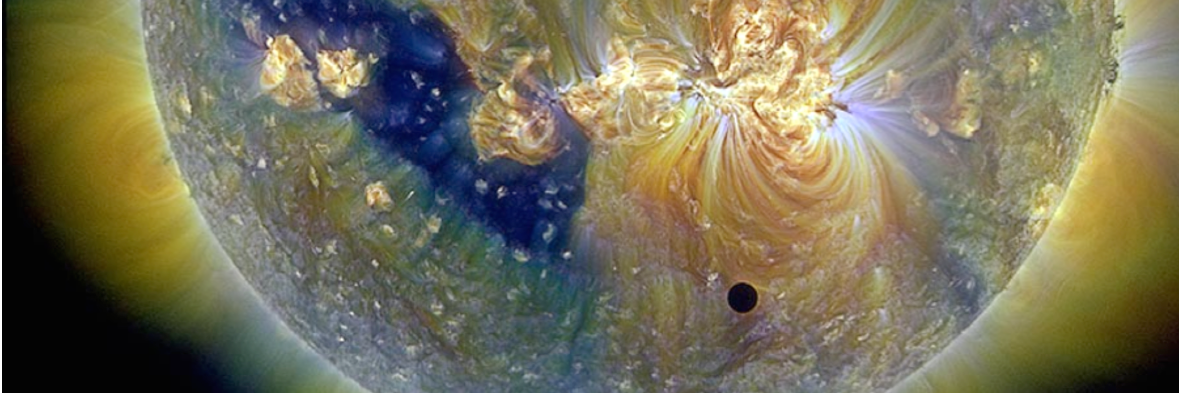
This result from @CenterForAstro and others is fabulous and highly relevant to our search for CMEs on other stars. It also demonstrates the power of multi-messenger and multi-wavelength observations. https://t.co/RE3BmLSde9
@KISS_Caltech is leading a panel on interdisciplinary collaboration for advancing space science, exploration, and technology at ASCEND 2026 (@aiaa).
Join us from 1:30 -2:15pm on Wed May 20 at the International Ballroom to hear from our invited panelists and Executive Director!
Launch Day for my new book on teams! It's my heartfelt, lived experience of incredible teams (👀, @NASAJPL, @ASU, @UCBerkeley, @beaglelearning) and the science of what makes each of us and our teams more resilient, successful, and joyful. Please, let me know what you think!
Hiya Friends! My book *Mission Ready: How to Build Teams that Perform Under Pressure* will be out in one week! Like all authors I'm looking for pre-sales and talk opportunities....if any of you have interest or ideas, I'd so appreciate the support! https://t.co/84h8jcLll7
@ASU@NASAJPL@NASA SPARCS industry partners included @BlueCanyonTech for the bus, Hexagon for the telescope, and Arizona Space Technologies for some engineering support. A great partnership between academia, industry, and government.
SPARCS' First Light images demonstrate that it is working on orbit. Exciting science times ahead! Congratulations to the whole team including those at @ASU, @NASAJPL, and @NASA. https://t.co/Fuf893EnQd
SPARCS' First Light images demonstrate that it is working on orbit. Exciting science times ahead! Congratulations to the whole team including those at @ASU, @NASAJPL, and @NASA. https://t.co/Fuf893EnQd
Dear #AAS247 Attendees and Exoplanet/Star/SpaceWeather Fans, there will be a fabulous Exospace Weather Splinter Session on Wednesday afternoon. Check it out! https://t.co/rVQFWp74k1
Dear #AAS247 Attendees and Exoplanet/Star/SpaceWeather Fans, there will be a fabulous Exospace Weather Splinter Session on Wednesday afternoon. Check it out! https://t.co/rVQFWp74k1
Indeed! Space Weather had and continues to have serious impacts on our planets. Here is our recently published @KISS_Caltech report on the state of the field of Exospace Weather and how to detect it in other planetary systems: https://t.co/LJ3tyI7uV6.
When the Sun burps, the ejected blob typically weighs 2 trillion tons, going a million mph, sometimes directly at us.
Likely a big factor in Earth's early development of life: https://t.co/mUzaZisRA9 @KyotoU_News
(2012 video from @NASA: https://t.co/plpZoMOdpr)
Hey, my latest book, Mission Ready: How to Build Teams that Perform Under Pressure, is publishing with @BasicVenture on April 21! Stay tuned, and here's the cover!
Interested in temperate terrestrial planet/exoplanet atmospheres? Come work with us at UA LPL! 3 year fully-funded position at UA LPL in the Ranjan group: https://t.co/4aaRWq3FQc. Questions? Please email me!
The final report for the 2023 KISS study program "Blazing Paths Observing Stellar and Exoplanet Particle Environments" was recently published.
To read the report and for more information, visit:
Final Report: https://t.co/3r5XBqZNbc
Study Program: https://t.co/TuGv8B4zbr
NASA’s Habitable Worlds Observatory will do more than hunt for life.
This summer scientists put forward 100 ideas for the ‘scope including planetary defense, studying Venus, and even observing individual stars in distant galaxies.
Me in Nature Astronomy
https://t.co/LecznADzdp
Our report on the The Exospace Weather Frontier unites diverse expertise, tackles key theoretical challenges, spotlights innovations, and recommends ways to accelerate progress across the field. Supported by @KISS_Caltech. https://t.co/WUQzjUIF4u