The Iberá Seedeater, a recently described species from Argentina, has a unique plumage that is a product of mixing coloration genes from closely related species.
These differences are enough to prevent it from interbreeding with its close relatives.
https://t.co/yyVQZ3pDvP
The reason biologists in your timeline are furious by this PR: the idea that species that diverged millions of years ago have only 20 genetic differences defies the fundamental principles of evolution. Like saying you turned a Honda Civic into a Formula 1 car by changing the oil
How do different types of genetic variants contribute to Capuchino Seedeater evolution?
@MariaRecuerda built a pangenome from 32 HiFi genomes, recovering 28% more sequence and 8% more genes than with a single reference.
More here: https://t.co/YgTTkvIsNC
The first Avian Hybrids story of 2025!
Convergent evolution of island melanism in the Chestnut-bellied Monarch
https://t.co/3xvXJ07j9G
Based on the PLoS Genetics paper by Leonardo Campagna and his colleagues | #ornithology
My study on territorial behavior and breeding philopatry has just been published (open access, @FieldOrnith). It is the result of my doctoral thesis.
https://t.co/yHqBbDJJqL
How do structural variants shape avian phenotypes?
This is what @MariaRecue13274 learned mainly from chickens.
https://t.co/2iMGkuw6Oy
(pic by Dennis G. Jarvis - CC BY-SA 2.0)
In 2013 Márcio Repenning and Carla Fontana described Sporophila beltoni. In our new paper, @Tram_N_Nguyen and I teamed up with them to show how S. beltoni diverged from S. plumbea with a few genomic regions resisting introgression, despite high gene flow.
https://t.co/DyV0dMrOLK
“Variant scores calculated by GATK did not clearly distinguish true positives from false positives in the vast majority of cases, implying that hard-filtering with GATK could be challenging… results suggest that Bcftools mpileup may be the first choice for non-human studies”
Hi Everyone! join us on 5th DEC 5pm CET for the next IOS seminar. Catherine Wagner and Carlos Daniel Cadena Ordoñez will give us a macroevolutionary perspective of speciation. Link on website https://t.co/Aa5kgQjDkd
We are excited to announce Christina P. Riehl as the next editor-in-chief of the AOS journal, Ornithology. Dr. Riehl is an assoc. professor in the dept. of ecology and evolutionary biology at @Princeton. Read our full announcement.
https://t.co/KCwJSiKSCj
#ornithology#research
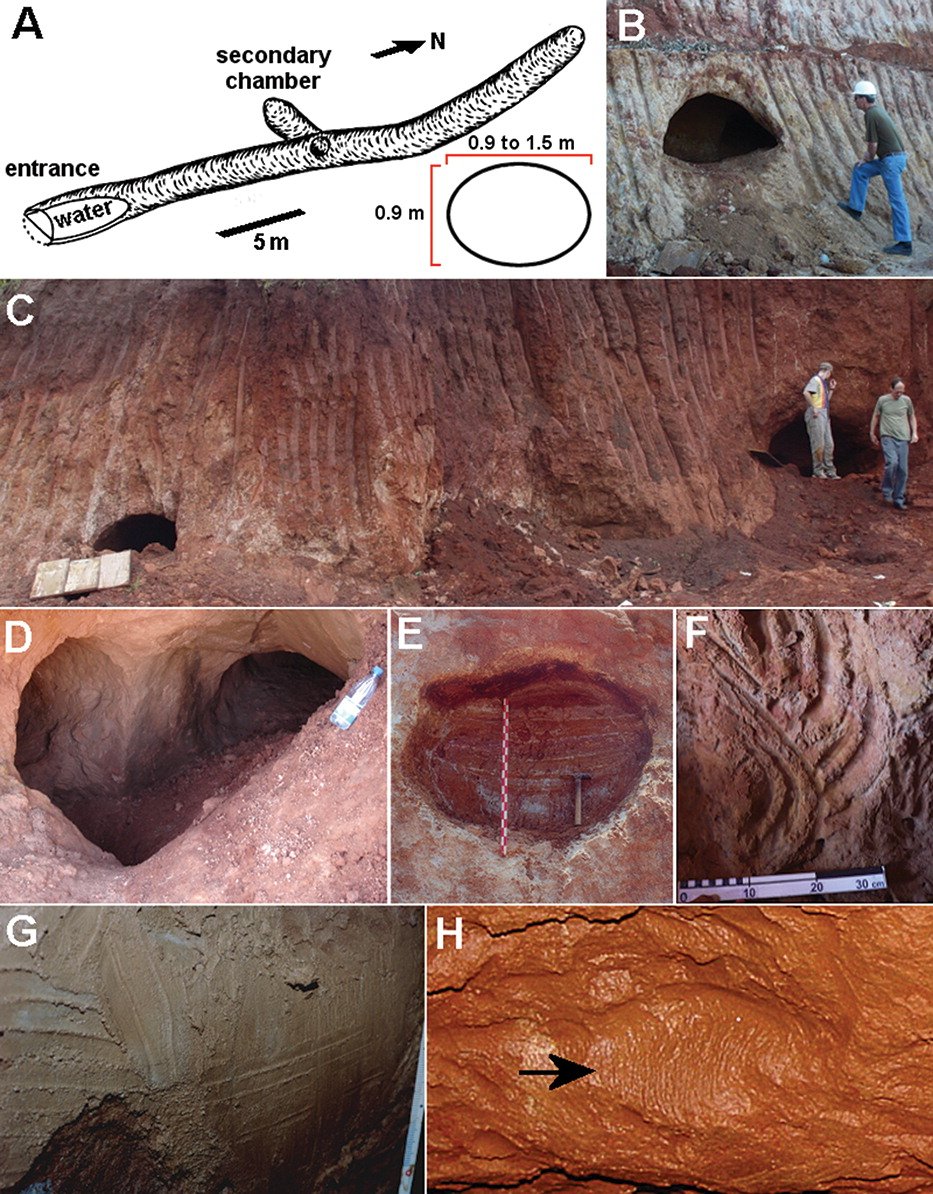
Your periodic reminder that paleoburrows - the subterranean lairs of extinct megafauna like ground-sloths and Glyptodonts - still exist https://t.co/X2TY0xwEj3