Super proud to launch AI-powered news hub creation on https://t.co/Ds2rg6h9eW and to partner with heavily-censored Brazilian dissidents on https://t.co/ZIlijol2AP, a censorship-resistant news hub that ensures all voices are heard leading up to the 2026 Brazil election.
More at https://t.co/dmPtVXSh97
While everyone argues about data centers and water, California almonds quietly use up to 80x more, AND the whole industry only survives because of trucked-in "livestock"...
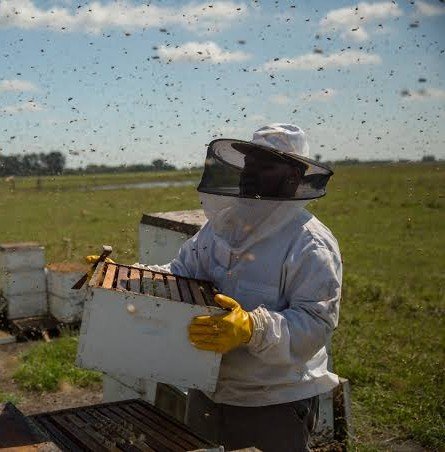
Every February, beekeepers transport nearly every commercial honeybee colony in the United States (around 2.8 million hives) to California to pollinate almonds.
It's the largest "managed-pollination" event on the planet. Almonds cover 1.4 million acres and need bees to pollinate so they set nuts.
So why do we need to truck them in? Well, almonds are grown in huge monoculture orchards, meaning the native bee species are all but eradicated...there's nothing for them to eat most of the year.
To fix the problem WE created, we ship in bees from across the country. I interviewed the creator of the 2019 documentary The Pollinators, which followed this migration and brought a lot of this story into public view.
First off, honeybees aren't native to North America. They were brought from Europe in the 1600s. The "bee crisis" you read about, with national colony losses around 55% last year and some commercial keepers losing 60 to 70% in a single season, is happening to a managed, introduced species.
It's a livestock collapse driven by long-haul transport, pesticide exposure at bloom, hives packed together spreading mites and viruses, and a monoculture diet.
Meanwhile, North America has roughly 4,000 native bee species. Most are solitary, don't make honey, don't sting, and quietly pollinate everything from squash to blueberries.
Research out of UC Davis and UC Berkeley has been direct about this: when blue orchard bees, bumble bees, and other natives forage alongside honeybees in almond orchards, fruit set goes UP, not down.
The presence of wild bees changes how honeybees move through the trees and makes the honeybees themselves more effective pollinators.
So the fix isn't more honeybee hives. It's hedgerows, wildflower strips, bare ground for ground-nesting bees, and uncut field edges, aka habitat for the natives who were doing this work long before we started trucking in livestock.
Honeybees are livestock. Native bees are the wildlife, and we should be planting to include them in our agriculture.
All it took was two Facebook posts to turn an online mob against Apeel Sciences and its booming business of keeping food fresh longer, writes Laurie P. Cohen. https://t.co/4kGkRx3xFJ
🇮🇱Israeli startup Remilk, one of the world’s leading companies in cultured milk, will launch its animal-free milk in Israeli stores starting January 2026.
Remilk uses fermentation to produce dairy proteins that are identical to cow’s milk- but made entirely without cows🥛🐄
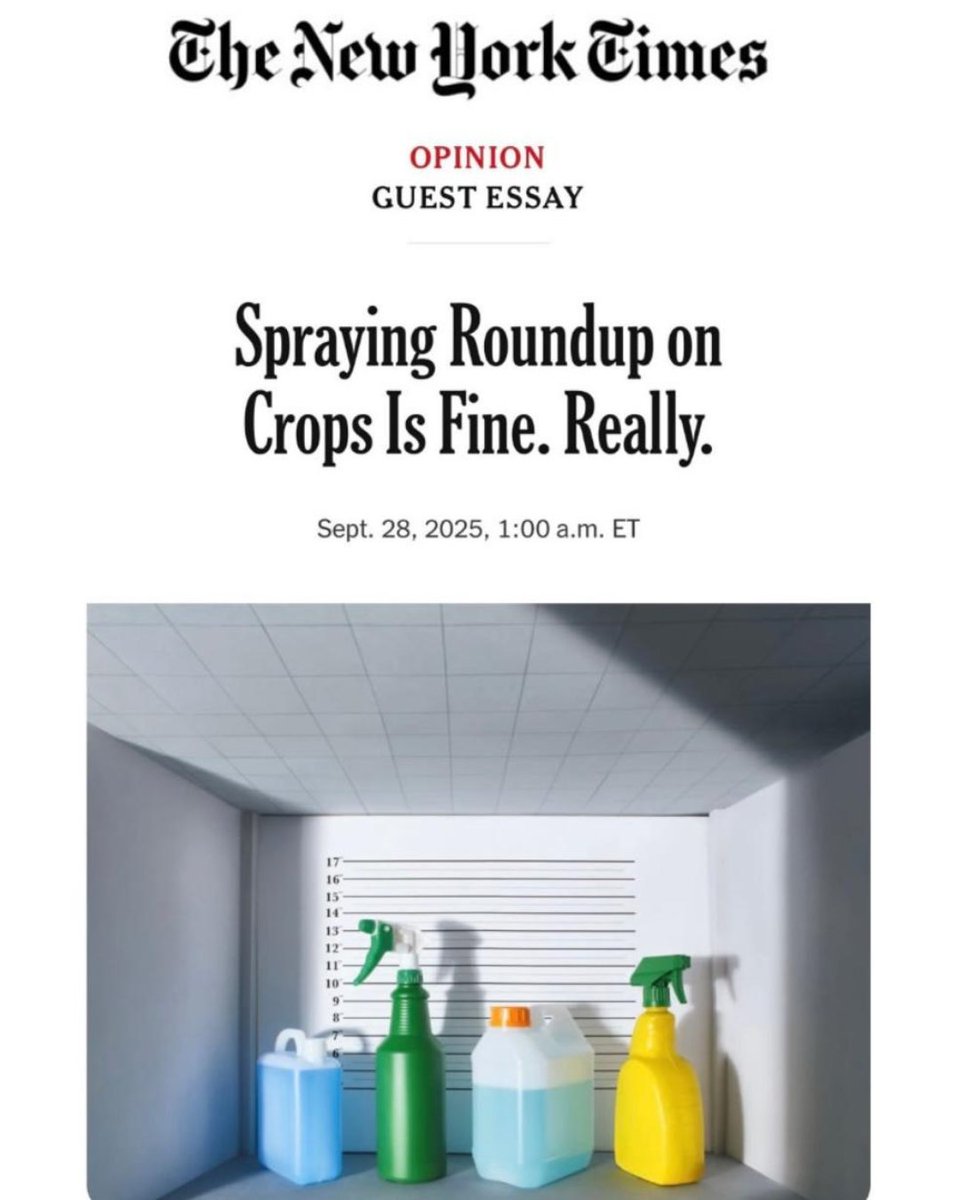
Ever wonder how much it costs to get propaganda like this into the news?
Bayer/Monsanto is spending crazy amounts of money trying to get a liability shield so we can’t sue them for ruining the soil and our health.
And now they are trying to convince you that spraying an antibiotic that locks up minerals onto your food is “just fine.”
How dumb do they think we are?
Here's how Joel Salatin runs his successful farm business without herbicides, pesticides, vaccines, or government subsidies:
"The basic concept is that you're studying Creation's pattern and order and trying to duplicate that on a domestic scale. I'll just give you an example.
…What do we notice when we look at animals in nature? Well, they move. They're not confined in houses, in little cubicles with their tails cut off.
…As soon as you say, well, animals move, well, OK, now we need to be able to provide shelter for them that's portable. We need to provide water to them that's portable, feed that's portable.
…And what are the symbiotic relationships?
For example, in nature, the wildebeest or the cape buffalo don't get grubicides and parasiticides.
Well, how do they stay healthy?
Birds. Birds follow them. The egret on the rhino's nose, they pick out the little bugs, and they scratch through the dung and spread that out so the sun can solarize it, and it covers more ground.
So we follow our cow herd with Egg-Mobiles, portable chicken houses. The chickens then scratch through the cow patties, eat out the fly larva, disinfect it for the cows the next time they come through. And you have this very natural cycle.
So while the average farm is shooting their cows up with grubicides and parasiticides, we simply collect thousands of dollars worth of eggs as a byproduct of our pasture sanitation program."
Since 1900, we've lost 75% of our global food crop varieties—the most rapid extinction of agricultural genetics in human history
Meanwhile, the US lost 93% of vegetable varieties between 1903-1983
This is one the greatest threats to agriculture and is rarely talked about 🧵
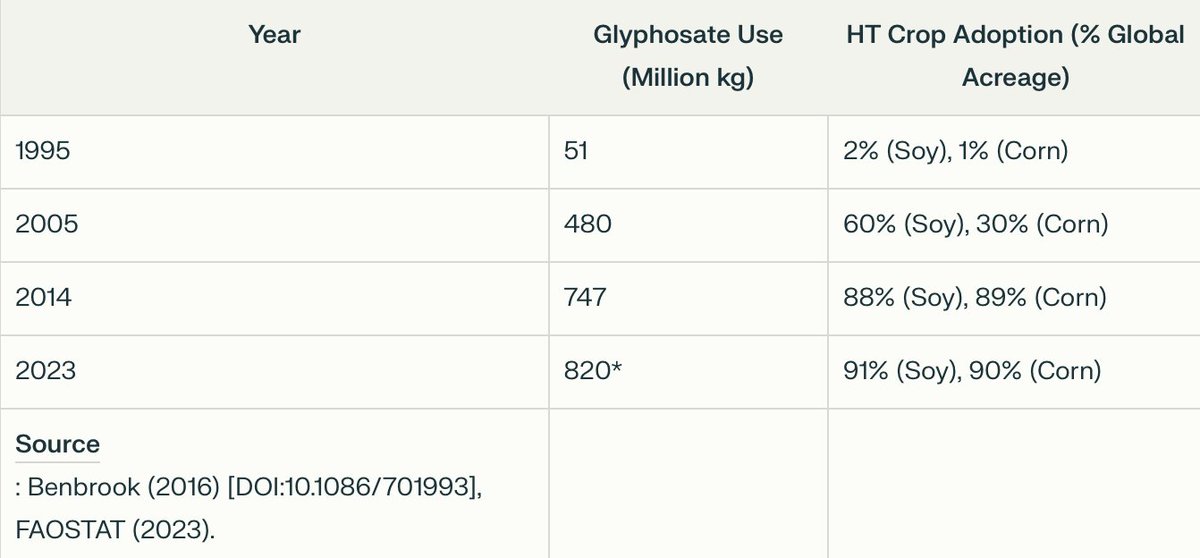
Genetically engineered (GE) herbicide-tolerant crops were sold as a solution for herbicide reduction and simplifying weed control
Instead, we've seen a 15x global increase in glyphosate use since 1995
In the US, yearly use rose from ~12,000 tons in 1995 to 113,000 tons by 2014
1/ Today I’m going to red pill you on RAW MILK and why it’s one of the most nutritious and suppressed foods on Earth.
Governments say it’s “dangerous.” But you can buy cigarettes, weed, and alcohol without a problem—yet raw milk is illegal in many states?
Let’s dive in. 🧵👇