Pour la première fois en 70 ans, le prix effectif des transistors augmente : il a doublé entre 2023 et 2026. Trois raisons : la demande créée par le boom de l'IA, la mémoire coûte plus chère, tout comme les nouvelles techniques de gravure. Par @ExponentialView
Monthly token volume for inference reached 39 quadrillion in September, 7.9x the volume from September 2025 and +16% MoM.
Via @ExponentialView
$NVDA $AMD $GOOGL $AMZN $META $MSFT
The GenAI economy has generated $110 billion in sales over the past 12 months. It is growing fast. On an annualized basis, the revenue run rate exceeds $175 billion.
These numbers took us several months to construct, and as far as we know, it’s the first bottom-up, deduplicated measure of consumer and enterprise AI spending across the full stack.
We are releasing this research today in our first The State of the AI Economy report.
https://t.co/cJwZb0T99C
Once you truly understand what part of the process is increasing token consumption, you will be forced to use AI in a completely different fashion.
According to the analysis presented by @ExponentialView "A coding agent that operates over 10 turns might need to re-read its full context every turn. That repetitive reading of context could use as many as 55x more tokens than a single-turn query for the same task.
Actual active inference is probably only 15-20% of the total token consumption. The rest is invisible work that you, as a user, and possibly the company paying for it all, haven’t modelled."
Proper documentation standard and knowing how to provide context effectively helps you reduce your token consumption. Think of token usage like fuel for your car. Don't waster it regardless of what model you are using.
We’re excited to share that AI in the Real World with Foundation Capital is now live on all major podcast platforms! Tune into our latest episode with @azeem of @exponentialview, where he and @joannezchen discuss the ways in which the great reorg is only just getting started, now on Spotify, Apple Podcasts, YouTube, and more.
https://t.co/qY4IIZc1P8
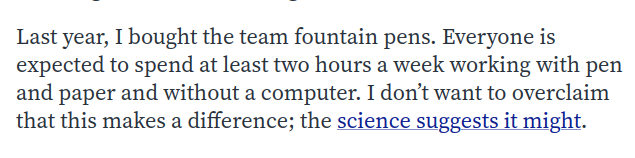
@aparanjape Want to maximize your use of AI but still give your brain enough exercise? Maybe buy a good quality notebook and fountain pen, as @ExponentialView suggests, and spend a few hours every week thinking with paper and pen.
cc: @docbhooshan
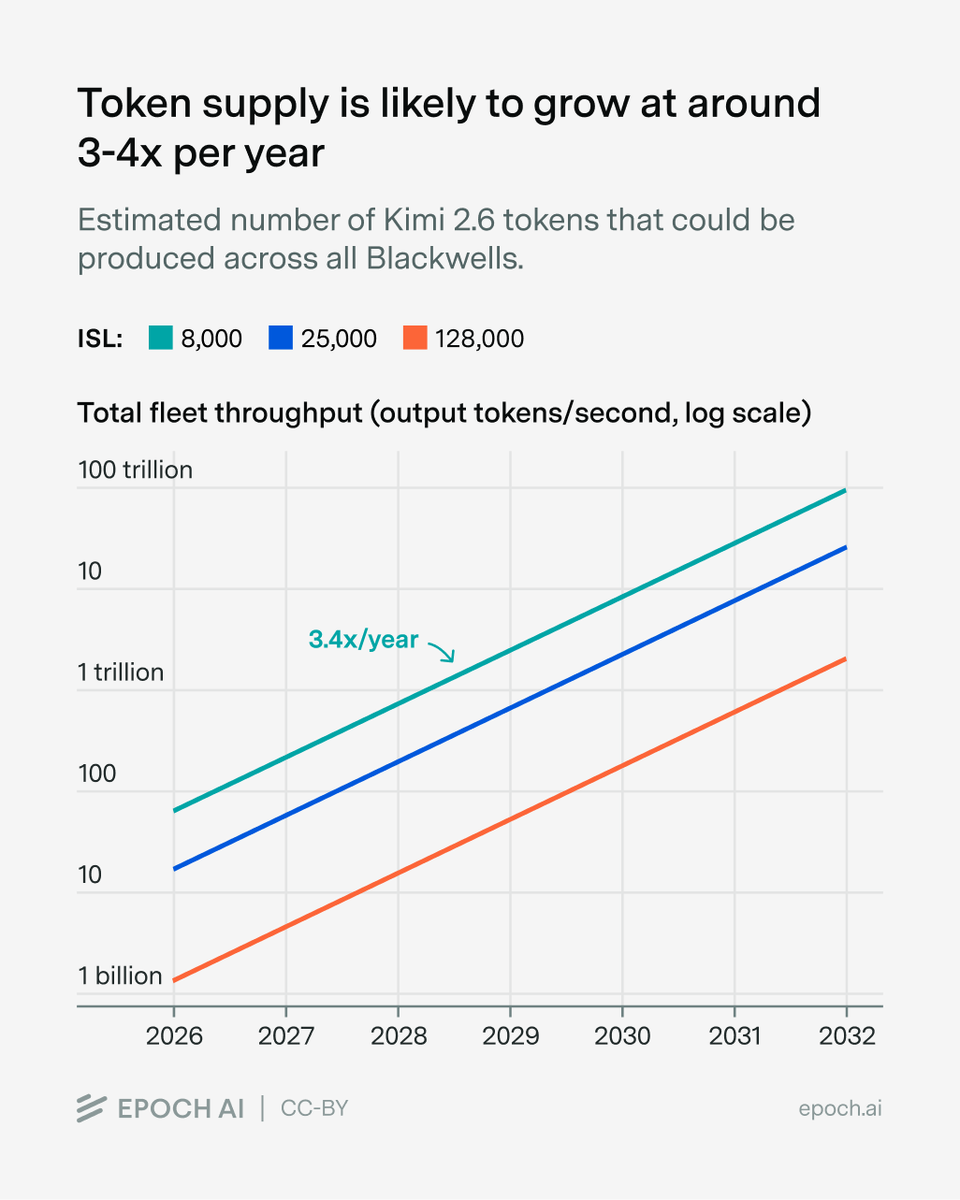
Are we nearing a compute crunch?
In our latest Gradient Update, @luke__emberson and @Jsevillamol estimate how many tokens all the Blackwell chips on Earth could serve, and compare this to total token demand. Direct comparisons are difficult, but it appears demand is growing much faster than supply.