So, GoLemon shut down last week. FoodCourt went dark a few months before it. EdenLife quietly buried its consumer business and ran to corporate clients.
Everybody online, even the ones who shouldn't, explained it almost the same way:
👉🏾 Funding winter, but it's sunny all year around here
👉🏾 Brutal macro, yes tough break boyz
👉🏾 Naira, it's already somehow at fault
All true. All incomplete.
Here is the part nobody wants to say: most of these were not killed by the market being cruel to them. They were killed by US NOT PAYING for the things we swore we LOOOOVVVEEEEEDDDD!
GoLemon said its orders were actually profitable, around ₦43K a basket. It still died, because it never hit the volume to carry the warehouses, the engineers, the fleet, the whole stack it owned
FoodCourt hit $4.3M in ARR and called itself profitable in 2024, then couldn't make payroll a year later
EdenLife was the poster child of the entire Africa-rising middle-class dream, premium concierge for the upwardly mobile Lagos professional. It took an honest look at its own unit economics and surrendered the consumer business.
Now look at who is winning in the exact same sectors. Chowdeck, asset-light, moving over ₦1.5B of groceries in a single month. Moniepoint. Twiga. Eden itself, now chasing corporate contracts. The pattern is not subtle.
In a market like ours, necessity scales and nice-to-have doesn't.
The businesses that reach real size sit on top of things people cannot say no to
Moving money(Paystack, Flutterwave, MoniePoint)
Financing an asset that earns(Carbon, MKopa, Sycamore, etc...)
Feeding a company(Mono, Lendsqr, etc...)
Credit
The middle-class convenience app dies because our middle class is thin, stretched, and one bad week away from cooking at home to save money. There is a cheaper informal version of almost everything you sell. So people don't pay. Then we blame VCs for not funding the very thing we ourselves won't buy. That math has never worked.
But here is where I have to be careful, because this is where people get loud and wrong. An earlier version of me did too
The problem is NOT that companies serve poor or desperate people. Serving the underserved is the most important work on this continent. The problem is that necessity demand is dangerously easy to abuse. When your customer cannot walk away, bad terms stop being a mistake and become the model. Opaque pricing. Punitive collections. Locking an asset after it has been fully paid for.
That is the real line. Not who you serve but the terms
Same customer. Same poverty. Clean terms, you built financial inclusion. Dirty terms, you built a debt trap with a pitch deck. One market already proved it is the terms and not the poverty: force real price disclosure on lenders and the rates fall overnight, same borrowers.
So, the culture is not "exploitation" not really. That is lazy and I no longer believe it. The honest version is harder:
Our market rewards necessity over nice-to-have. Necessity is easy to exploit if you choose to. And the whole game, the only game, is refusing to blur inclusion and extraction at exactly the moment blurring them pays better.
That is the conversation. I am ready to have it in the open
Are we?
Pourquoi apprendre la stack #mern ?
Si vous êtes développeur et que cet acronyme ne vous dit rien, vous devriez déjà avoir effectué votre inscription à la nouvelle formation de Codesk Academy !
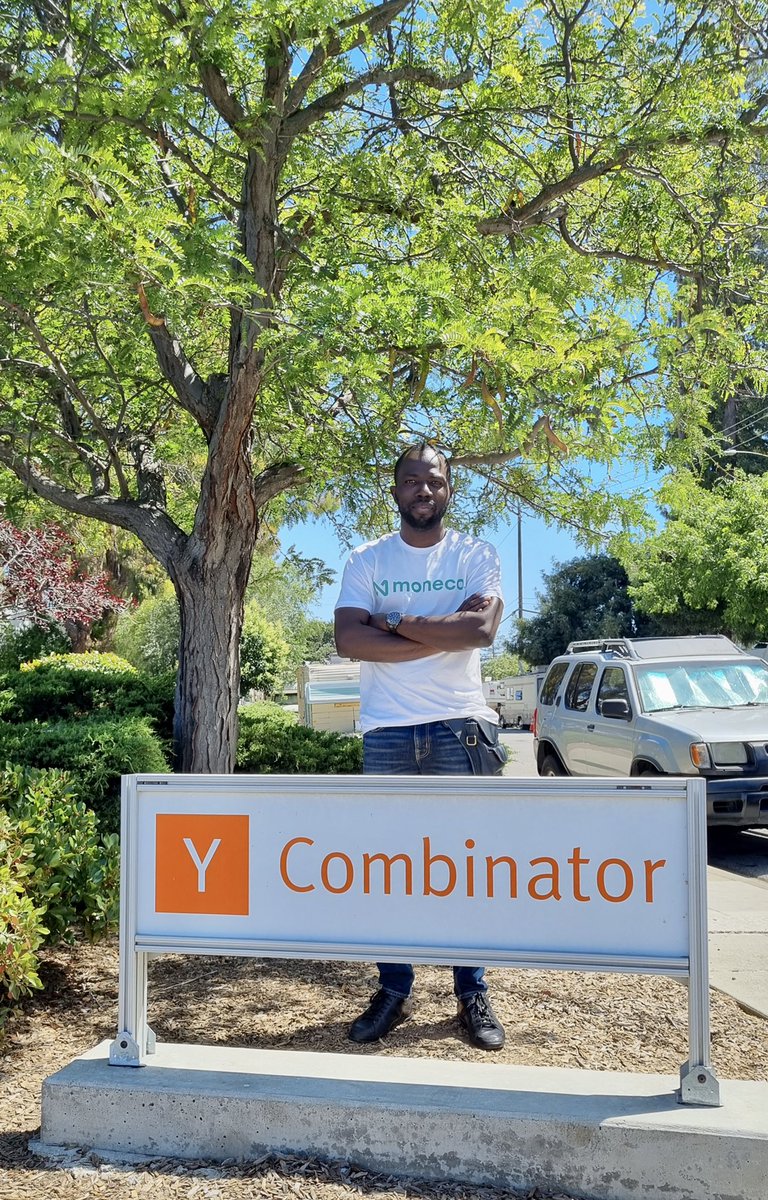
I am thrilled to announce that @MonecoHQ has been selected for Y-Combinator Summer Batch 2022.
With YC, Moneco will be able to launch, grow and scale, advised by some of the best , such as Dalton Caldwell and Michael Seibel.
Now let’s get back to work 💪🏿
3/
Alex Hormozi (@AlexHormozi)
If you want to learn sales (probably the most important skill in business), study Alex–he's a master at it. His channel is worth binge-watching.
Favorite video:
https://t.co/WGGItePPeG
YouTube is the greatest free university ever created.
But with 38,000,000+ channels it's hard to filter signal from the noise.
Here are 20 channels that will make you smarter:
Tous les matins sur mon trajet vers le boulot, je ne manque jamais de demander à mon chauffeur de taxi de ralentir à la traversée du grand marché Assigame du Togo.
La raison? Observer la dynamique - les boutiques, activités commerciales, transports.
1/n
Cotonou ! Il paraît que son marché gigantesque (juste au-dessus d’un des ponts) voit passer toute l’Afrique de l’Ouest !
🇧🇯
Cotonou, #Benin, with some cute ☁ cover. The city looks like two halves growing towards each other, maybe even giving each other a fist bump 🤜🤛