The @BostonCollege Investment Committee (an LP and my beloved alma mater) asked for a few thoughts on what's happening in AI. I recorded a test run yesterday morning and then shared it with my partners, who encouraged me to share it more broadly... so here you go!
This is not a sales pitch, it's just a reflection on what we're seeing. And it wasn't intended to be shared, so please pardon the rough edges.
https://t.co/AuZqHMSSxD
This is an extreme example of political retaliation and academic falsification, a waste of taxpayers' money in millions, and a material threat to all who are in a weaker position that should be condemned and actioned upon immediately.
Alleged research misconduct by Sabine Kastner, and silencing whistleblowers by the psychology department at Princeton Univeristy.
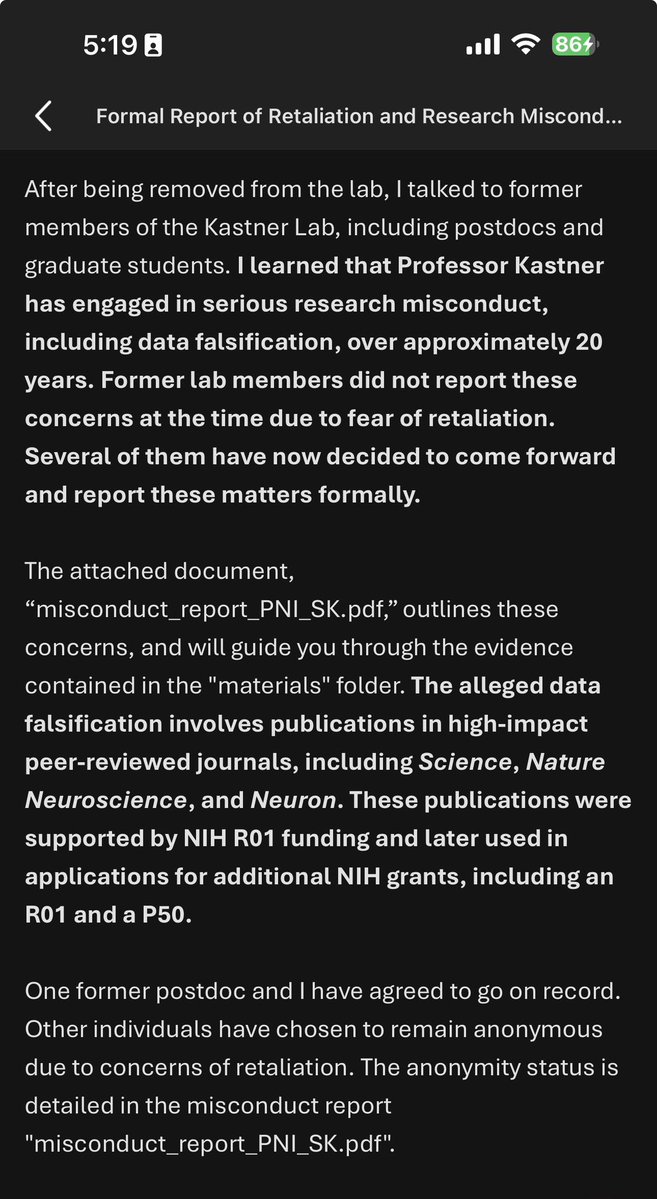
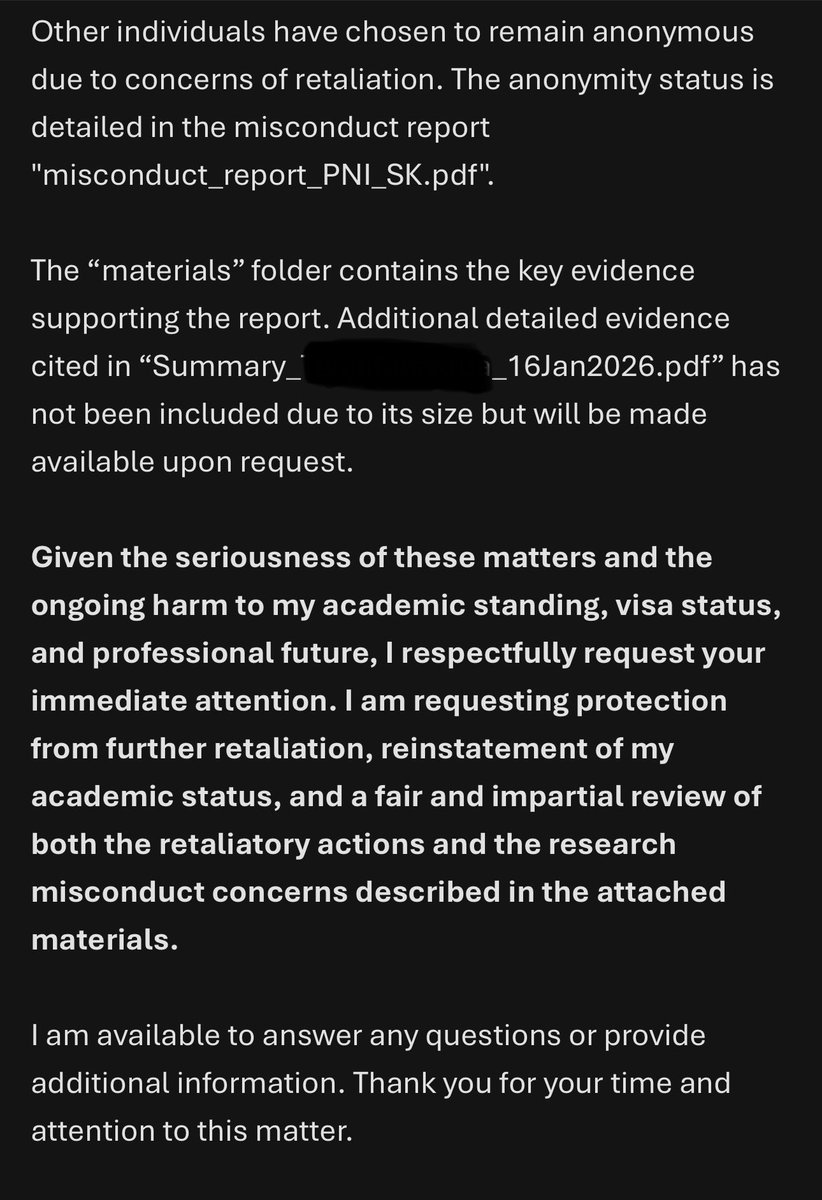
Multiple former members of the Kastner Lab at Princeton University, including former postdocs and graduate students, have formally reported research misconduct by Professor Sabine Kastner, including alleged data falsification spanning over 20 years.
They describe a culture where people feared speaking up. Some remained anonymous because they feared retaliation.
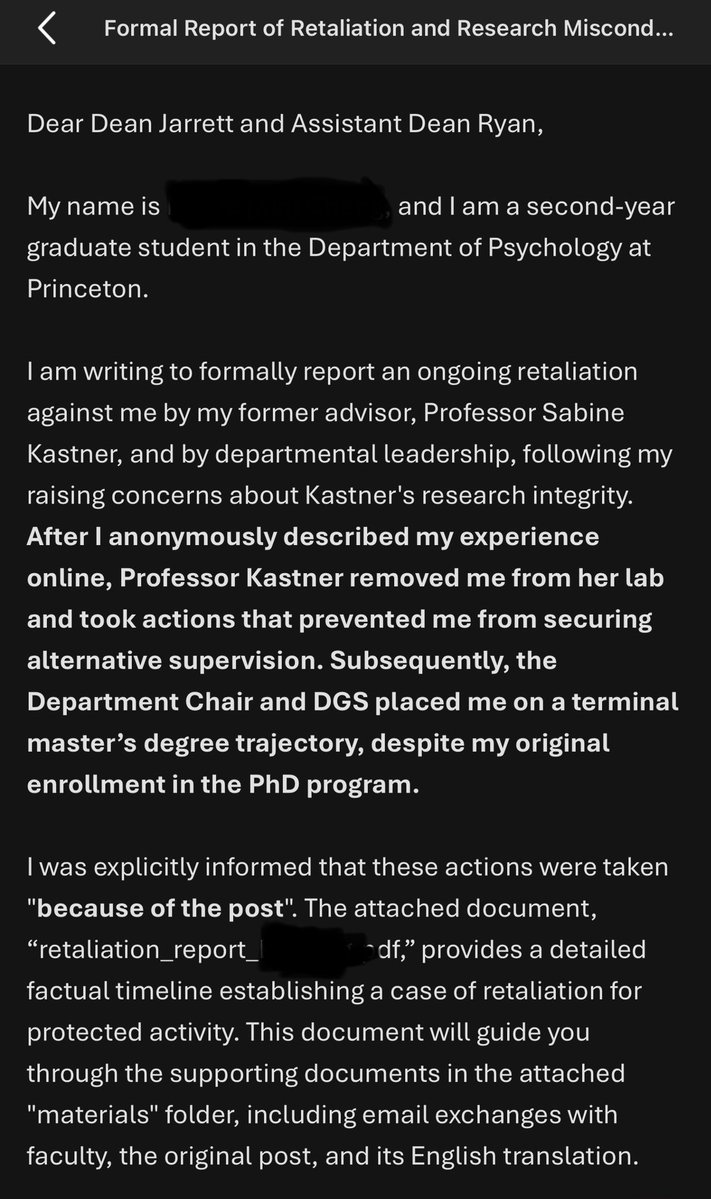
My own experience: after I raised concerns, I was removed from Kastner lab. I was explicitly told by the psychology department leadership that this happened because I raised concerns anonymously: they told me “you questioned her integrity. PNI is a community. You attack one of us, you attack all of us.”
Afterward, I could not secure a new adviser and my PhD enrollment was terminated through the “no active adviser” rule.
Many affected trainees were international students. Losing an adviser means losing visa status, and international relocation, creating enormous pressure not to report concerns. This is exactly why Kastner lab recruits a disproportionately high number of international trainees. And why the lab website has most former members erased.
The research involved is supported by active NIH grants of over $20m. Involved publications include papers in Science, Nature Neuroscience, and Neuron.
The departmental leadership has been complicit, by helping remove students who raised concerns instead of protecting them.
Over the coming weeks, I will post documents, timelines, and evidence so people can examine the facts themselves.
#ResearchIntegrity #Whistleblower #Science #NIH #HigherEducation #GraduateSchool #PhD #Retaliation #OpenScience #ResearchEthics #AcademicFreedom @ivanoransky@NIH@HHSGov
The legal profession is in a race between traditional firms adopting AI and AI-native firms scaling trust.
I can’t tell if a senior superstar attorney starting an AI-native firm is the best of both worlds or the worst.
Best case:
David starting an AI-native firm reduces the trust deficit because he has a book of business, and it’s easier to convince clients to follow the same lawyer to a new firm than to sign up with someone completely new.
And because he’s starting fresh, he doesn’t have the bureaucracy, legacy IT systems, and established ways of working that might inhibit his experimentation with / adoption of AI.
He would have trust from day one and could find someone good on AI to allow the firm to deliver quality legal services at unrivaled speed or cost.
Worst case:
David’s reputation doesn’t meaningfully close the trust gap. Clients might decide following their superstar lawyer from Wachtell to Kirkland & Ellis is perfectly fine, but following them from a massive firm to a new shop that’s experimenting with something new isn’t worth the risk.
And on tech adoption, becoming “AI native” is easier said than done. Although he’s starting fresh, he’s built a very successful career on a particular way of working. Breaking out of that will be tricky. A lot will depend on who he partners with, but his firm just might not be as good on AI as competitors like @crosbylegal.
He also won’t have as much data to draw on. I personally think analytics on top of legal services is the most valuable differentiator for an AI-native legal function: “This is the industry standard based on the past 23 deals we’ve done” is a much more compelling pitch in a billion-dollar deal than “I saved you $50K on associates time by using AI to draft and review clauses.”
At that point, you’re getting neither the experience / benefits of the best firms without the tech talent of the buzzy AI-native firms drawing from the SF startup scene.