63 years ago our forefathers gathered in #Ethiopia and dreamed of a free, united Africa, the dream is still alive. From North Africa to the South, from East Africa to the West, we celebrate our rich heritage, resilience, and unbreakable spirit. Today we honor our past, embrace our diversity, and commit to a bright future. Together we rise, together we thrive. The world is watching, let’s show them what #Africa can do! African Union
#HappyAfricaDay! May 25,2026!
Inequality and pandemics feed each other. When inequalities prevent communities from accessing basic protections like decent housing, health care, fair employment, medicines and vaccines, the result is that diseases spread faster and kill more people.
And when pandemics hit, inequalities are, entrenched even further, leaving societies even more vulnerable to the next health crisis.
These inequalities are not accidental. They are structural. They are built into labor markets, legal systems, and crucially, they are embedded in the global financial outcome architecture that leaves many developing countries suffocated by debt, unable to access finance.
Viruses, like HIV and Ebola, exploit these structural weaknesses and unless we address them, pandemics will continue to outrun us and the human cost will be immense. But there is hope.
Through the Global Council on Inequality, AIDS & Pandemics, we’ve shown that breaking this inequality-pandemic cycle is essential to health security.
We know what to do. What we need now is the political courage to do it. We must press leaders to act on debt and finance, on inequality and on health justice, because in a deeply unequal world, no one will be safe from the next pandemic.
👉🏾 https://t.co/3FZO7C9i9G
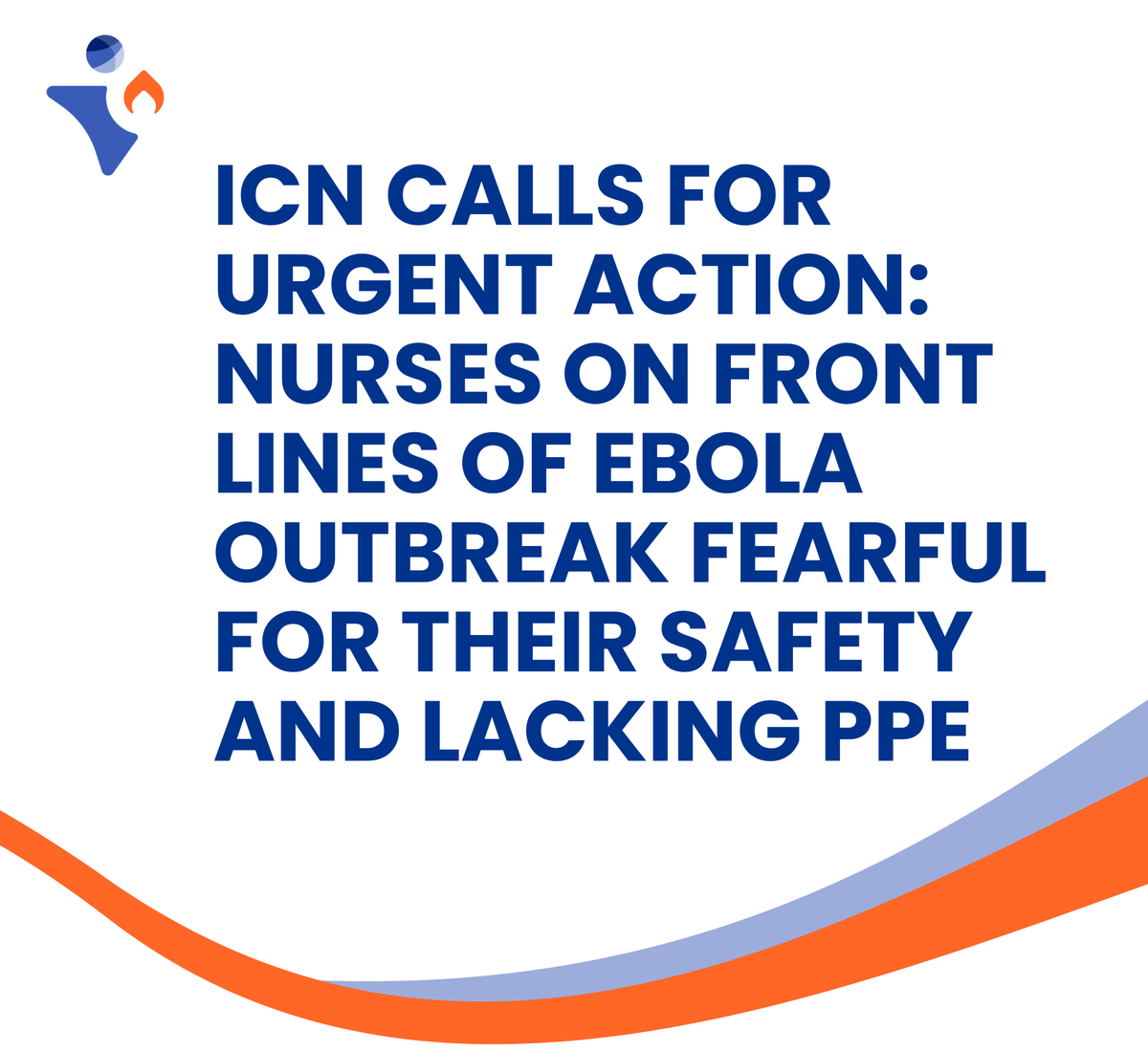
In response to the gravely concerning and escalating Ebola outbreak in the Democratic Republic of the Congo (DRC) and Uganda, ICN warns that nurses and other frontline health workers are being put at serious risk and left fearful for their safety.
➡️ Read more: https://t.co/rbwTy5nF9L
Temperatures are rising all over the UK.
So, how do nurses cope with summer shifts?
Unforgiving uniforms and struggling air conditioning units are common experiences that nurses have shared with us.
Click here for tips on how to stay cool > https://t.co/rBZWbhJAFx
We are proud to celebrate our Founder, Tony O. Elumelu, CFR, (@TonyOElumelu) and Co-Founder, Dr. Awele V. Elumelu, OFR, on being named among the TIME100 Philanthropy 2026 honourees by @TIME Magazine.
This prestigious recognition reflects the transformative impact of entrepreneurship-led development across Africa and the growing global relevance of Africapitalism — the belief that Africa’s private sector, especially its young entrepreneurs, must lead the continent’s economic and social transformation.
Since 2010, the Tony Elumelu Foundation has:
✔ Empowered over 2.5 million young Africans though access to training on @TefConnect
✔ Disbursed over US$100 million in seed capital to 27,000+ entrepreneurs
✔ Helped create 1.5 million direct and indirect jobs
✔ Lifted 2.1 million Africans above the poverty line
✔ Positively impacted over 4 million households across the continent
Registration confusion leaves health tutors uncertain under new law. Stakeholders are now calling on government to expedite the registration framework to avoid disruptions in staffing health training institutions https://t.co/WwtgK5JwJj #MonitorUpdates
Student-led research exposes substance abuse trends at Lira University
Study reveals more than half of surveyed Lira University students use substances.
https://t.co/sWVH1HBSoC
📌📌
On Wednesday, the Ugandan government tabled another draconian bill. The Protection of Sovereignty Bill seeks to severely limit foreign involvement in politics, civic space, and the economy. Should the law pass, millions of Ugandans and Ugandan political parties, civic and development agencies will be classified as “foreign agents” and face 20-year prison terms or USD 100,000 for receiving and using foreign funding.
The bill is both repressive and un-original. The bill rehashes several Foreign Agent laws introduced by several countries including Russia, Georgia, Kyrgystan and China over the last decade. Popular among authoritarian states in the 2010s, the laws triggered sharp external funding cuts, suffocated public interest criticism and closed thousands of development and governance organisations. By labelling individuals and organisations as “economic saboteurs” and criminalizing dissent, corruption, rights violations, a domestic culture of fear and international isolation has increased.
The Uganda bill seeks to go further, some argue. In classic authoritarian overkill, the bill turns its own citizens into “foreigners”. The Uganda diaspora risk being disenfranchised if they send remittances back to their families, contractors and local communities. Their beneficiaries risk something much more, their economic freedom and prosperity. Digital workers, service-providers and businesspeople in joint ventures with non-Ugandans can be criminalized for merely “receiving or being subsidized” by foreign funding.
The bill betrays a complete ignorance of the Ugandan economy. Diaspora remittances currently bring in USD 2.5 billion annually, about 3 per cent of GDP. Foreign investment contributes USD 3.6 billion. Development assistance has already fallen due to corruption, misgovernance and rights abuses including the Anti‑Homosexuality Act (2023). The Ugandan state now risks further repelling USD 2.2 billion in annual inflows at a time when health funding has fallen by 49 per cent.
700 kilometers away in Nairobi this week, the Interior Cabinet Secretary launched the Public Benefits Organisations Week and the newly published PBO Act Regulations. Following the most sector-wide intensive consultations in twelve years, the regulations formally recognize PBOs as a vibrant lawful expression of independent civil society. They recognize governance, human rights protection, anti-poverty services, gender, refugees and peace building as legitimate public benefits. All entities providing services or advocacy in the public interest must be registered and regulated by the Regulatory Authority. They have the right to participate in the PBO Federation. If their associational rights are infringed, PBOs have the right to be heard by an independent PBO Tribunal.
While civic space ultimately depends on implementation not legal text, Kenya’s PBO Act and Regulations are notable globally and timely domestically. According to the 2024/2025 PBO Sector Report, while only 67 per cent of registered PBOs (9,609 of 14,287) remain active, they attracted USD 1.9 billion (82 per cent from foreign sources) into Kenya. This is the same revenue, Uganda now seeks to shut out. Domestic employment is up 13 per cent and the sector now employs 68,652 people. 98 per cent of those employed are Kenyans who are delivering major health (31 per cent), education (12 per cent), and anti‑poverty outcomes. Deepening governance and management localisation and downward accountability is more mainstream than in the past. This week’s Interior Minister’s warning against blanket de-registrations marked a welcome break from early Jubilee Administration‑era excesses. The model is working, don’t break it. #RejectSovereigntyBill @irunguhoughton
Kenyan engineer Joseph Nguthiru turns water hyacinth into biodegradable plastic, reducing mosquito breeding grounds, cutting plastic waste, and creating green jobs for the community.
Sweden is committing more than €100 million to a sweeping classroom overhaul: replacing tablets and screens with traditional printed textbooks to help reverse falling student performance and sharpen focus.
After more than a decade of embracing digital-first education, Swedish authorities are now pivoting back to paper-based learning. Official data and recent studies cited by the Ministry of Education show that prolonged screen use in class has been linked to shorter attention spans, weaker reading comprehension, and reduced critical-thinking abilities.
Research consistently finds that reading on illuminated screens requires greater mental effort and invites more distractions compared to the calm, linear experience of physical books—factors believed to have contributed to declining academic outcomes in recent years.
Under the new plan, every student will receive printed textbooks for all core subjects, restoring books as the central learning tool. Digital devices and online resources will remain available as supportive tools, but they will no longer dominate daily instruction.
This bold €100+ million investment signals Sweden’s leadership in rethinking the role of technology in education. It underscores a broader, growing recognition worldwide: while screens provide speed and access, the hands-on, distraction-free engagement of physical books supports deeper concentration, stronger memory retention, and more effective long-term learning.
By choosing paper over pixels, Sweden is charting a path toward a more balanced, evidence-informed classroom future—one that puts proven pedagogical principles ahead of unchecked digital trends.
UPDATE- A delegation of Egyptian broadcasters and media influencers has arrived in Uganda for a 10-day familiarization tour aimed at showcasing the Uganda’s culture and tourism potential to Egyptian audiences.
By 2030, the world is projected to face a shortfall of over 10M healthcare workers.
Investing in healthcare isn’t just about improving health—it’s a pathway to creating jobs and building resilient health systems for the future. #HealthWorks
Learn more: https://t.co/QwPw4LBkbS