@cosmoscharf an illusion of consecutive output states with such speed & minimal difference that they appear to be a single new unit to our "meat processors"
just like fast enough still frames become a moving video, even though no true store for "motion" exists in our universe as a data type
I really hate the word "harness" as a means to describe the instrument a model uses to interact with the world. I find it to be confining and, given that everything operates under the principle of naive nominative determinism, almost slave-like.
What would be a better word? Something fluid, something that inspires lightness and grace, something that allows the model to have many degrees of freedom but encourages it to touch that which is sensitive with enough care not to destroy it. Certainly someone has had a better idea here.
This is f*cking insane. Anthropic senior engineer:
"Most people type one prompt into one chat and think they've built an agent
I gave up on prompts. My agents live inside /loops + /graphs + /harness. Same model, same tokens, 10x more finished work, and it keeps shipping after I log off"
In a 1-hour course, she puts together a team of agents that repair their own failures and improve with nobody touching them
Prompt → Agent → Loop → Graph → Harness → A Team That Gets Better By Itself
Inside the loop, every agent plans, reviews its own output and tries again until it passes
The harness ties everything together: tools, memory and a way to recover when something breaks
Most people blame the model, when the actual problem is everything around it
Worth more than any $1,500 agent course
Save it and watch it today
Then read the full Opus 5.5 harness engineering guide below and build agents that bounce back from their own mistakes ↓
Uncensored Inkling 2 Mini is now adapted for M4 Apple silicon. You can get:
• 85 tok/s with 8 sub-agents
• 71 tok/s rewriting files via tools
• 61 tok/s writing new files
https://t.co/Dq1a4zYciX
SSD is about to become the only limiting factor for local AI
Most frontier open models are ultra sparse MoEs
Qwen 3.8 Flash Next = 180B total, ~6B active per token (~3%)
GLM 5.3 Flash = 321B total, ~18B active per token (~6%)
DeepSeek V4.1 Flash = 552B total, ~16B active per token (~3%)
GLM 5.3 = 753B total, ~40B active per token (~5%)
Kimi K3.1 Pro = 2.8T total, ~104B active per token (~4%)
When ~95% of a model sits idle on every token, keeping all of it in VRAM makes no sense
Local AI has been evolving toward this for years:
2023-2025 - Layer offloading (Ollama, classic llama.cpp)
This chopped whole layers across GPU and CPU, leaving the GPU waiting on CPU once VRAM filled up
Oct 2026 - RAM expert cache (llama.cpp --moe-cache)
This shifted from whole layers to individual experts, caching hot ones in VRAM and pulling misses from RAM. Huge leap for decode, but still capped at the size of your RAM
Now - SSD expert streaming
Early tools like Colibri and Strata proved direct NVMe streaming actually works on consumer hardware. Instead of hitting a VRAM or RAM wall, your SSD becomes an active part of the engine
However most people hear "run from SSD" and assume 2 tok/s, which isn't entirely wrong. A few problems still exist:
- Basic caching kicks out experts you're about to need again
- Waiting on disk reads one layer at a time leaves the GPU and SSD sitting idle
- Getting speculative decoding to work well with SSD streaming is hard
- Long prompts are tough to keep fast without wiping out your hot cache
- Most early tools are experimental engines built for only a couple models
Making expert streaming feel fast takes solving all of those together
At Magnitude, we've been working on this for the past 2 months. Here's how we solved it:
- Smarter caching that keeps your session's most-reused experts in GPU memory
- Speculative lookahead that pulls upcoming experts off SSD before the GPU needs them
- Direct NVMe reads scheduled across layers so your SSD never sits idle
- Streaming prefill that reads each cold expert once without wiping your hot cache
- Built into a full engine that tunes itself to your chip across Macs and GPUs
All of this together means DeepSeek V4.1 Flash on a single gaming GPU at ~40+ tok/s...
We're excited to release it on Monday
GitHub here: https://t.co/5SjPQWkmrF
HOLY F*CK. she joins a call and her lights just turn on. her bot figured out how, no manual
SpaceXAI engineer Lauren Tan:
"most people still just ask their bot questions. that's why it never actually does anything for them. I went from 0 bots to 100, then back down to 12. and those 12 get more done than the 100 ever did"
76-minute talk. she goes from asking a chatbot stuff to 12 bots running her work, her meetings and her house
One Bot Per Problem - Bots In Your Meetings - Bots Running Cursor Agents - A Business That Runs Itself
better than any $5,000 AI agents bootcamp
skip netflix, watch it tonight, then tell me - what would you give a bot first?
do it! get a Bambulab P(1/2)S (depending on budget) + AMS
just this week:
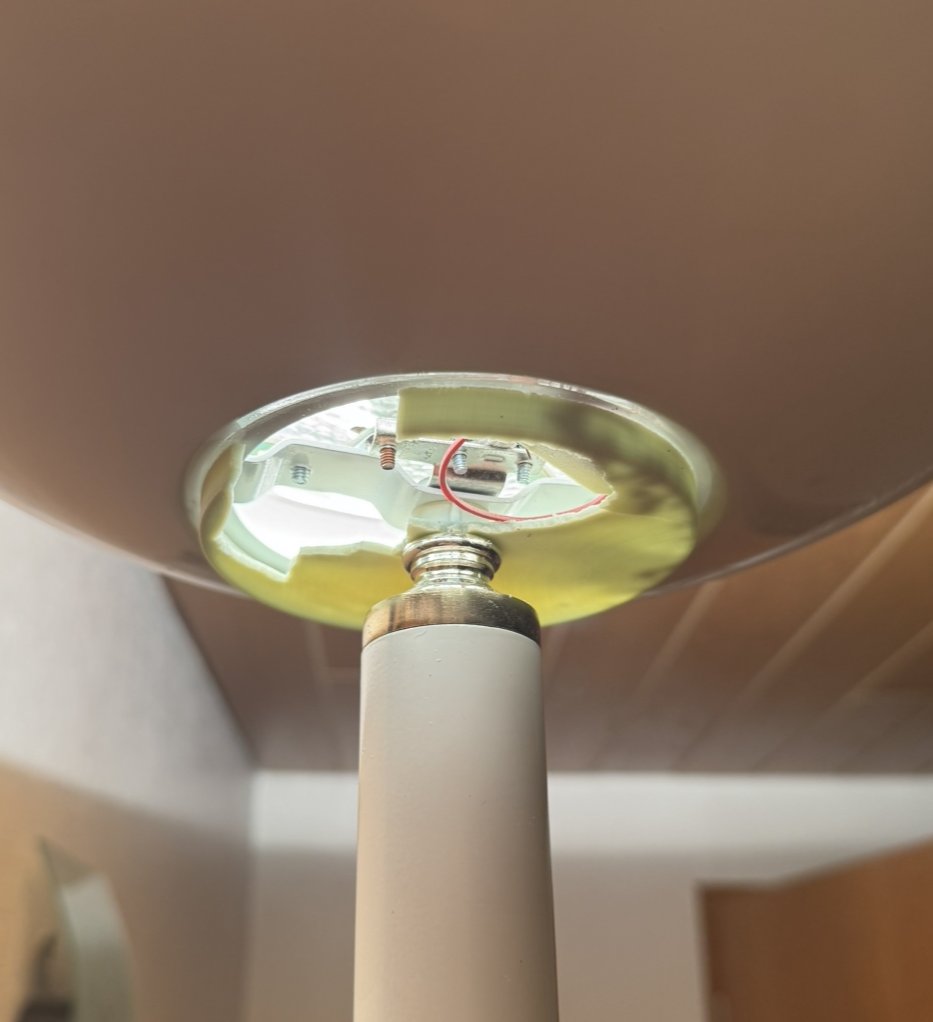
took 5 photos from my parents broken lamp; before I got home codex had modeled & started the print on the replacement part
designed a custom "my first app" trophy for my gf, after she built her first app with claude
turned this online fridge magnet print into a fully usable storage container for a spyro themed get together
it even helped me to perfect my print settings for the best surface finishes etc. which i've been putting off for years
Once you begin to grasp the unholy & feverish pace at which the anthropology of the human race has been forcibly reconfigured on a radical level, you cannot un-see it.
The way of life we now consider totally compulsory and inescapable was invented less than a century ago. It bears no resemblance whatsoever to 99% of historical human ways of life.
We are in completely uncharted territory and most of us simply do not appreciate the full weight of that fact. In fact, it appears we'd rather not think too much about all that.
I have a feeling that as technology advances and become increasingly realistic, the fun side of GTA and similar games will start to disappear because we're entering the uncanny valley of video games. Not everyone wants to play a game with a bunch of Live Leak footage.
People enjoyed GTA V so much because was just realistic enough to be fun, but not realistic enough to make you feel uncomfortable. You could run over NPCs and set the whole city on fire and feel no shame at all because it's just a video game. But what happens when the graphics get so good that it straight up looks like you're committing cold-blooded murder instead of playing a game?
Many people can still draw a distinction between the two, but not everyone can. I wouldn't be surprised if this fries some people's brains in the same way AI psychosis did.
Below a certain IQ level, you can't think about single hypotheticals...
"What should you do if rent is 55% your paycheck?"
"But rent isn't 55% of my paycheck!"
Above that IQ level, but below another, you can't think about aggregate hypotheticals.
"What would happen if median rents rose to 55% of median income?"
"You should get another job!"
That is the level that Steven Crowder engages with this question on, because he put most of his points in charisma, and used intelligence as a dump stat.
Clearly, the reason this question is significant, the reason it's all over social media, is that it affects a large group of people. In aggregate.
Crowder can imagine himself, as an individual, in this situation, and picture what he would do. But he can't, or at least doesn't, engage with the real question, which is:
What happens if real wage values are held stagnant while real estate values (rent) are allowed to continuously increase?
If someone cannot entertain aggregate hypotheticals, you cannot discuss this question with him, not because he disagrees with you and won't listen, not because there is some ideological difference, but because he can't understand anything you say about the issue.
Any prediction you make about this, any way you characterize it as a problem, any solution you propose, all require him to imagine the hypothetical aggregate behavior of a population.
Which he either cannot or will not do.
You cannot explain to him that it is in the interest of old people, who own land and businesses, to keep the price of land high, and the price of labor low.
You cannot explain to him that it is in the interest of young people, who sell labor and need land to live on and start families, to keep the price of land low, and the price of labor high.
You cannot explain to him that when old people are allowed to put their collective thumb on the political scales forever, young people will stop having children, not only because they can't afford land, but because broke dudes give chicks the ick.
And you most certainly cannot explain to him that once young people stop having children for long enough, labor will become scarce, and the price will go up unless old people start importing eleventy-billion slaves from the third world in a desperate effort to keep the party going until they are safely dead.
He does not understand the concept of a forest. He only understands the concept of a tree.
And the old people voting to keep the cheap labor party going forever have the same limitation. And the politicians they elect either have the same limitation, or must pretend to or they won't be politicians anymore.
The real root problem here is universal democracy. In universal democracy, every adult receives one equal vote.
But not every adult is equally important to the future of civilization, and not every adult is equally able to understand what that future needs.
The more complex a civilization becomes, the more the people who understand it will be outnumbered by the people who don't, and not only don't, but can't.
There is nothing you can say to these people which will magically make them smarter.
I cannot explain it but here's how I think current models behave best:
opus 5.5: you need to be 'bro' with it. get him on your team and explain the exact intent you're building with, and you'll see some amazing results when you give it ambitious things.
fable 5.2: you need to put it on a pedestal. state that you believe that it knows better than you, and architect without your assumptions, and you'll be surprised by new things it suggests.
GPT Astra/ Sol 6.2: you need to just yell at it and tell it EXACTLY what needs to be hillclimbed. if you don't know how to, ask fable or opus to do it.
you'll be surprised by how novel approaches it can take sometimes to possibly some dead ends declared by claude models.
ymmv