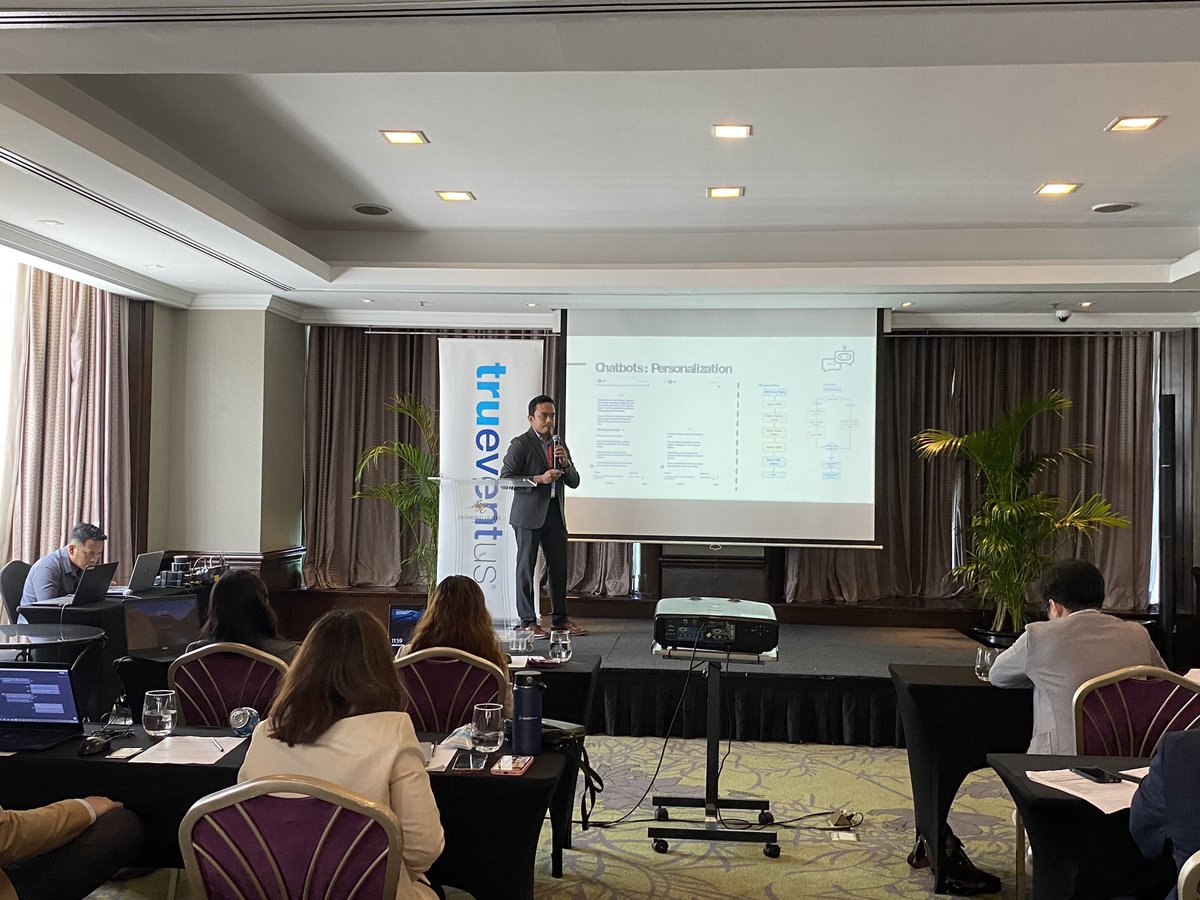
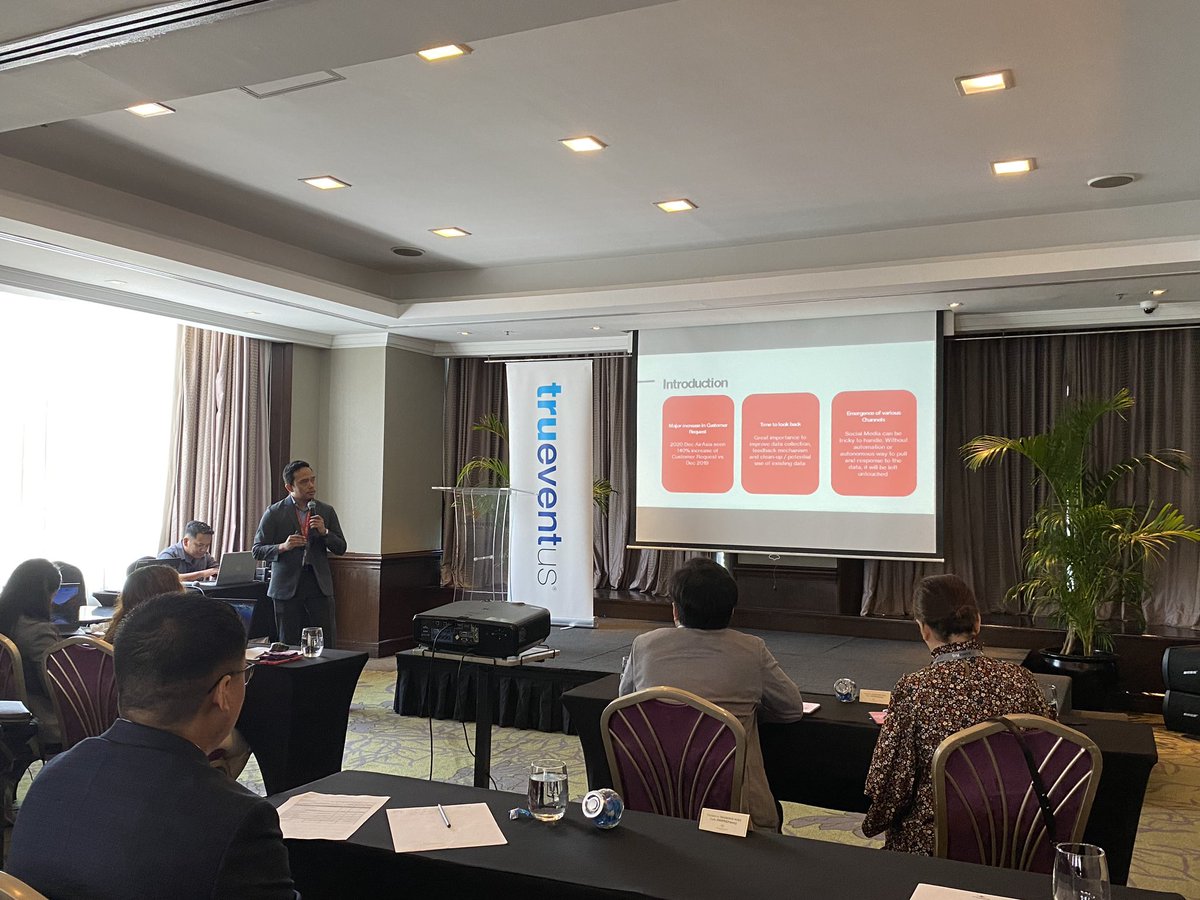
Sharing experience and best practices building Chatbot, AI and Data pipeline for @airasia at 3rd Annual Chatbot & AI Summit, Manila. Presentation: https://t.co/DVJQyQk3N2
Cc: @TrueventusMy
This is f*cking insane. Satya Nadella was asked if Microsoft is still hiring new grads. His answer is the clearest picture yet of what a company looks like after AI:
"What is an AI native company? They start with a token budget and a human."
"That person maxes their token budget and then says, let's add the next human."
"And every company is going to start looking like that."
In 3 minutes he goes from "we're a company of 200,000 people" to why hiring slowed down.
Token Budget → One Human → Max It Out → Add The Next Human → Every Company
you won't get hired because there's work. You'll get hired when the person before you runs out of AI budget to burn.
Would you get hired in this model?
Hey @grok, if AI replaces 40% of software engineering jobs by 2030, what happens to a 40 y/o software engineer with 18 years of experience, a mortgage, and children?
Give me a realistic survival and career transition plan, year by year, from 2026 to 2030.
This is very good. We need more individuals like her. And yes thank you my friend @HarithIskander for highlighting what is good for Malaysia ! Let us meet some time soon …
If HR lays you off and tells you to sign a severance agreement before 5 PM today, never say:
I'll sign it now.
This isn't fair.
I'm calling my lawyer.
Instead say:
WTF 🤯 so Uber basically built an entire software engineering lifecycle around agent skills.
the coolest part is that agents report their own failures, turn them into eval cases, and help draft fixes for human review
they're also doing versioning, trajectory evals, skill ablation, context efficiency, and token cost optimization
such an insane feedback loop for directly improving agents in production
if you're building agent harnesses, this is must read 🔥
A quick summary for better understanding 👇
Atlassian tried teams with no PM and no designer. Everyone was an "AI builder."
A few weeks in: "We’re moving faster than ever."
A month in: "Everyone’s gone back to doing their old jobs."
Researchers published the most uncomfortable paper on vibe coding.
ETH Zurich tested 100 developers in a controlled, commercial-grade vibe coding environment to see who actually succeeds.
And the results are a brutal reality check.
For the last two years, the hype has been nonstop: English is the new programming language. Just describe what you want, iterate on the output, and let the LLM handle the rest.
So researchers put that claim to the test.
They took 100 university students and placed them in a purpose-built vibe coding environment designed to mirror commercial AI tools.
Eight experts curated the exact tasks.
Then they measured three things:
- Written communication skills
- Domain-general cognitive ability (raw reasoning)
- Actual computer science achievement
Writing skill mattered. If you can’t structure your thoughts and specify intent clearly in plain English, the AI builds garbage.
But here is the part the hype cycle completely missed.
Computer science fundamentals were a massive predictor of vibe-coding performance.
Even after controlling for general cognitive skills and raw intelligence, CS knowledge still heavily dictated who succeeded and who failed.
Why? Because vibe coding removes syntax. It does not remove engineering.
Anyone can prompt an AI to generate a clean UI.
But the second the app breaks under the hood, you have to iterate from observed behavior. If you don’t understand how software actually works, you don't even know what to ask the AI to fix.
Natural language lowers the floor.
Computer science still decides the ceiling.
$MSFT Microsoft cut a top performer after over 12 years. That person told me they spent 4 months being off the payroll, applied to 50+ jobs at Microsoft alone.
They were RIF’d on July 6. Technical sales. The explanation was restructuring. AI never came up.
They tried to get back in because jobs were available and posted. They got recruiter rejections for jobs they’d already done versions of. Two full interview loops. Then silence. They suspect the headcount got frozen.
Four months later, a Microsoft partner hired them at lower total comp.
Their theory is that AI spending is squeezing the budget and that stock compensation and buybacks are part of the story. That’s their read from the inside.
At Amazon, my closest peer was promoted to Director before me. Then, when I was trying to become a VP, four of my peers got promoted ahead of me. All at once. Years later, I think I finally understand what happened.
I think I'm starting to degrade as an engineer
1. I stopped keeping up with programming languages, libraries, new patterns, systems, and all of that a long time ago. I couldn't care less about what's new in React, what got added to PyTorch, or what's in the latest ES spec. I can't even make myself spend 5 minutes skimming the docs
2. The amount of task context and information I hold in my head has shrunk to a minimum. When I used to research a topic through Google, I'd pick up a ton of interesting things along the way and broaden my horizons. Now an agent sends me something, and without even looking I say: ok, use it
3. My attention span has gotten worse. All I do is wait. On one hand, I think that's better than faking hyperproductivity, burning millions of tokens and degrading the work. I'm a firm believer in the linear approach. On the other hand, a 5-minute wait can stretch into 30. I switch to something else and find it hard to get back to the task
4. My anxiety has gone up. A lot of people call this cyberpsychosis. I wake up thinking about agents. I eat thinking about agents. I go for a walk thinking about agents. I talk to people thinking about agents. Even when I'm not working with agents, I'm thinking about what cool things I could do with them and planning my next session with them
5. I've become hyper-lazy. If something can't be solved with agents, I try not to do it at all
6. My creativity has faded. I may not be the strongest engineer, but I consider myself creative. That was always my strength. I could always come up with something interesting, an interesting solution. But that happened while I was working on something. Running into problems. Taking in new information. My brain was in a continuous flow. Now I've become dull and one-dimensional. I can no longer look at a problem from a different angle
I'm sure everyone who works with AI has these problems at least to some degree, even if few admit it. I worry that humanity will stop developing. AI is not the solution to every problem or a cure for every disease. It's a tool pretending to be an agent in its own right. In its current architectural forms, it will never be able to go beyond its own limits. A human can. But once people slip into the state I'm in, progress may slow down and get locked inside the bubble of what AI is capable of
DocuSign wants $8,100/yr from a 15-person team just to sign PDFs. So I built SignuDoc: open source, one-click deploy to your own @vercel account, $0 per seat.
White-label branding, full audit trails, tamper-evident seals and your documents never leave your cloud.
오사카 호텔에 나흘 묵으면서 매일 방을 치워주시는 아주머니께 작은 조미김 세 봉투와 약과 두 개를 쪽지와 함께 남겨뒀는데 그날 저녁 답장이 와 있었음
오사카 호텔에서 3박 4일 묵는 동안 매일 방을 반짝반짝하게 치워주시는 청소 담당 아주머니께 고마운 마음이 들었음
셋째 날 아침에 나가면서 내가 먹으려고 가져갔던 미개봉 '도시락용 한국 조미김 3봉지'와 '달콤한 약과 2개'를 테이블 위에 올려두고, 번역기를 보고 서툰 일본어로 "항상 깨끗하게 청소해 주셔서 감사합니다 작은 한국 간식입니다"라고 메모를 적어뒀음
그날 저녁 방에 돌아왔을 때 테이블 위에는 김과 약과가 사라진 자리에 예쁜 색종이로 접은 '종이학 두 마리'와 함께 삐뚤빼뚤한 손글씨 편지 한 장이 놓여 있었음
편지를 펼쳐 번역기로 읽어보던 나는 생각지도 못한 내용에 코끝이 찡해졌는데
Couldn't agree more ... Microsoft 365 outage is a good example why you need such engineer.. Despite selling Copilot to whole world, they couldn't fix the outage for more than 24 hours !! AI is a tool .. they cannot replace Software engineers. They can make things easy but cannot replace