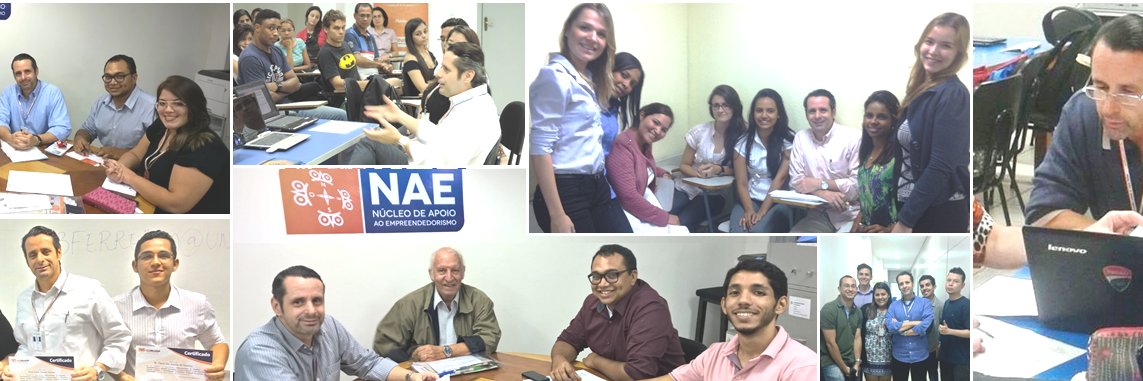
Professor universitário - Administração e Marketing - e Gestor da Presto Dati Tecnologia e Marketing. Pai de Caterina Barletta e Mestre em Administração-FGV.
10 years ago today, Solar Impulse 2 landed in Abu Dhabi after 14 months of travel and 550 hours of flight. Having traveled 25,000 miles around the world solely on solar energy, it became the first aircraft to accomplish the feat. Learn more: https://t.co/z83KgDr5Zw
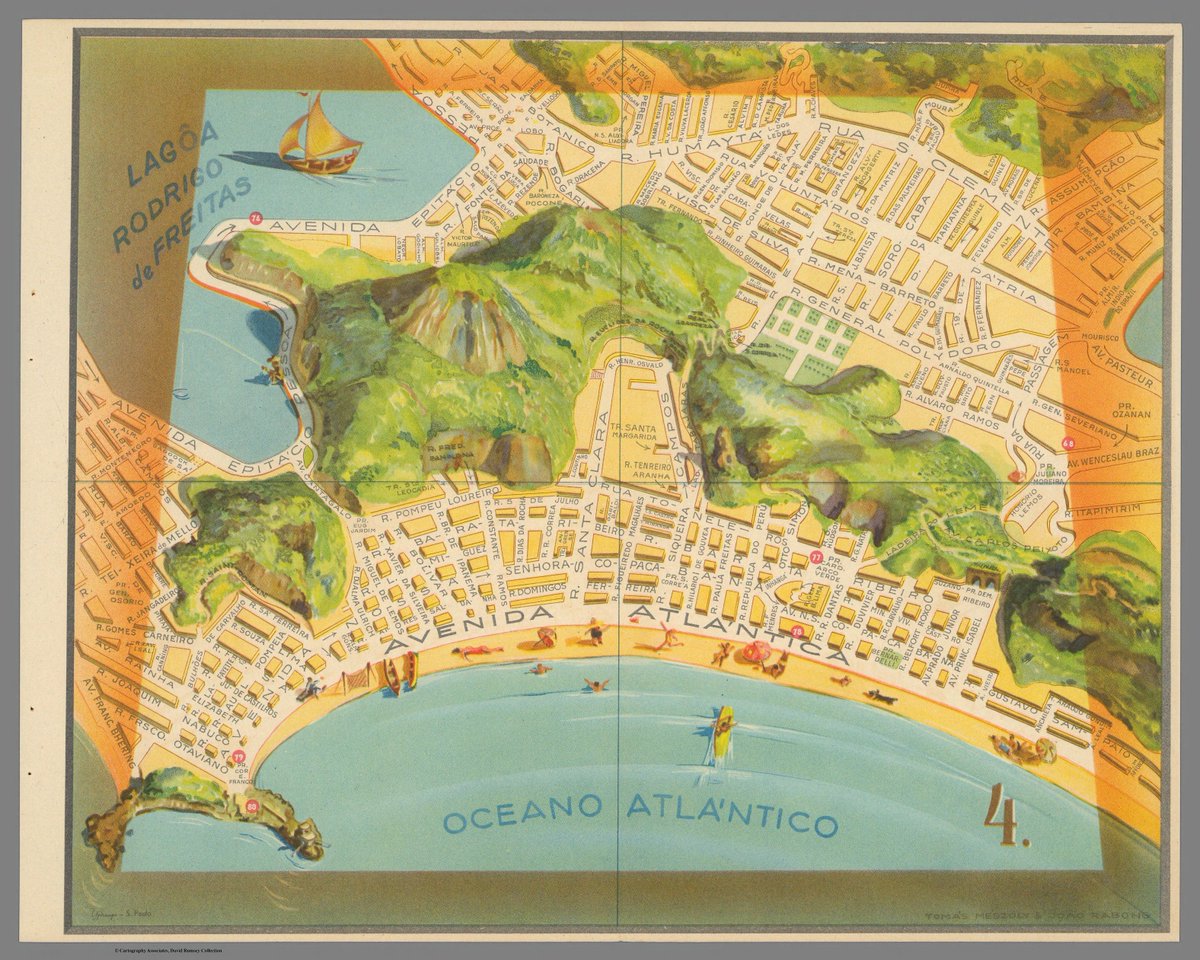
This beautiful 1934 map captures Copacabana just as it was emerging into one of the world's great beachfronts. Elegant typography, vibrant colours and a wonderfully optimistic vision of Rio. Vintage cartography at its finest. Source: https://t.co/WASxG46og4
This is so cool: IMAX built Christopher Nolan a new 70-mm film camera for The Odyssey. The camera runs about 30% quieter than the previous generation, carries a carbon fiber body, and adds an LCD readout for film remaining, internal temperature and shutter angle.
Still too loud for whispered dialogue. So the crew sealed it inside a soundproof housing called a blimp. It's roughly coffin sized and over 300 pounds, heavy enough that the dollies needed extra reinforcement.
That fixed the sound and broke the eyelines. A rig that size sits where the other actor's face should be, so the crew angled mirrors off the housing to bounce sightlines around it. First narrative feature shot entirely on IMAX film, and most of the engineering exists to defeat the noise of 70mm running.
Declassified 1991 Republic of Soviet Union Map Created By The CIA
This 1991 CIA map of the Soviet Union shows the internal republics of the USSR during its final year before dissolution. Each Soviet republic is color-coded and labeled, including the Russian SFSR, Ukrainian SSR, Byelorussian SSR, the Baltic republics, the Caucasus republics, and the Central Asian republics.
The map emphasizes the enormous size of the Russian Soviet Federative Socialist Republic (RSFSR), which dominates most of northern Eurasia, while also showing the distinct national republics that made up the Soviet federation. Capitals such as Moscow, Kiev, Minsk, Tbilisi, Baku, Alma-Ata, and Tashkent are identified, highlighting the political centers of the union.
A notable feature is the disclaimer stating that the United States did not recognize the incorporation of Estonia, Latvia, and Lithuania into the Soviet Union. This reflects longstanding U.S. Cold War policy regarding the Baltic states, which had been annexed by the USSR during World War II.
Produced in 1991, the map captures the Soviet Union at a historic turning point. Nationalist movements, political unrest, and economic crisis were rapidly weakening central Soviet authority under Mikhail Gorbachev.
Within months of this map’s publication, the USSR would formally dissolve, and the republics shown here would become independent states.
Unlike military-focused Cold War maps, this map centers on political geography and federal structure. It illustrates how the Soviet Union was organized administratively into republics with their own capitals, identities, and nominal autonomy, even though power was heavily centralized in Moscow.
In retrospect, the map serves as a snapshot of the final territorial arrangement of one of the twentieth century’s superpowers just before its collapse reshaped global politics and ended the Cold War.
More Declassified 1990s CIA Maps: https://t.co/XgUBDSeiS5
Em 2025 brasileiro bateu o recorde mundial ao completar 366 maratonas consecutivas, e um estudo revelou como seu coração reagiu a esse desafio extremo.
#ArquivoBBC
https://t.co/CrNVf3Wn5X
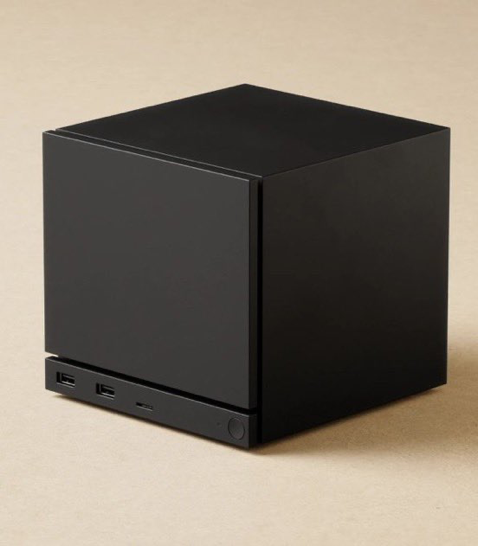
Linus Tech Tips says the Steam Machine has completely changed his view of Linux as a desktop operating system.
In his latest video, he says SteamOS is so good that the Steam Machine is “the best desktop PC I’ve ever used.”
He praised the OS for being fast, simple, and getting out of the way, making everyday use feel smoother than Windows.
He even said “The year of the Linux desktop is 2026, and the Steam Machine is leading the charge.”
George R.R. Martin: “I’ve always said there are two kinds of writers. There are architects and gardeners. Architects do blueprints before they drive the first nail. Gardeners just dig a hole, plant the seed, and see what comes up.” https://t.co/6fPDIr8qH9 #writing#screenwriting
Most apartment buildings use long shared corridors to reach as many homes as possible. At Sempacherhof in Basel, Miller & Maranta took a different approach.
The typical floor is organized around three stair-and-lift cores, with each core serving only two apartments. This removes the need for a long shared corridor and gives every home direct access from its own core.
The fragmented plan also allows the apartments to open toward multiple sides, bringing more daylight and natural ventilation into the homes.
Three cores. Six homes. No shared corridor.
Homer’s epic poems, including The Odyssey, are fundamentally works of fiction built upon centuries of fluid oral tradition rather than rigorous historical documentation. The stories were composed during the Greek Iron Age, roughly four hundred years after the Late Bronze Age setting of the Trojan War.
Because of this massive temporal gap, the foundational text itself is a patchwork of mythological elements, exaggerated heroics, and historical anachronisms. Any visual adaptation of these epics is inherently interpreting a heavily stylized myth rather than a grounded historical event, making the pursuit of strict chronological accuracy somewhat paradoxical from a narrative perspective.
If a production were to actually pursue pure archaeological accuracy for the Mycenaean era, the visual result would likely alienate modern audiences. Warriors from the 15th century BCE utilized heavy, cumbersome equipment like the Dendra panoply, a massive, cylindrical suit of articulated bronze plates that essentially encased a soldier from neck to knee.
Paired with a conical helmet painstakingly crafted from slivers of boar tusks, this authentic armor was designed for specific styles of chariot warfare or static infantry clashes. While structurally fascinating from an archaeological standpoint, these bulky defensive suits completely lack the sleek, romanticized aesthetic typically associated with ancient heroes.
In visual storytelling, creators consistently prioritize audience expectations, dynamic action, and visual appeal over rigid archaeological precision. Modern viewers have been conditioned to associate ancient Greek heroism with the aesthetics of the later Classical or Hellenistic periods, featuring muscular silhouettes, leather bracers, flowing capes, and plumed Corinthian helmets.
Equipping a leading actor in a historically accurate, restrictive bronze tube would not only make choreographed combat sequences nearly impossible to execute, but it would also shatter the established visual language that keeps an audience engaged. Consequently, productions intentionally lean into familiar, stylized designs to maximize emotional resonance and viewer retention.
While Christopher Nolan’s newly released 2026 cinematic adaptation of The Odyssey is a massive $250 million blockbuster, a lesser-known behind-the-scenes fact is that Nolan entirely avoided using green-screen visual effects for the production. Instead, he chose to shoot the epic exclusively on IMAX 70mm film—utilizing two million feet of film stock—and constructed fully authentic, physical props, including a massive Trojan horse and Odysseus's ship, to capture the ancient world practically in-camera. As for the original Homeric epic that inspired the film, a surprisingly obscure fact is that The Odyssey does not actually contain the definitive end of its protagonist's journey; Odysseus's ultimate fate was detailed in a lost ancient sequel poem called the Telegony, which dramatically concludes with the aging king being accidentally killed by Telegonus, his illegitimate son with the sorceress Circe, who unknowingly strikes him down using a bizarre spear tipped with the poisonous spine of a stingray.
#archaeohistories
The Iliad and Odyssey were two of eight ancient Greek epics. The other six are lost, with only fragments remaining.
The eight poems of the Epic Cycle told the complete story of the Trojan War in chronological order:
The Cypria covered the events leading up to the war and its first nine years. The Iliad focused on a few weeks during the final year, followed by The Aethiopis, which described Achilles’ final battles. The Little Iliad told of the planning and creation of the Trojan Horse, while The Sack of Troy covered Troy’s destruction. The Returns followed the Greek heroes’ journeys home, and The Odyssey chronicled Odysseus’ return to Ithaca. The Telegony continued his story after the events of The Odyssey.
Only The Iliad and The Odyssey survive in their entirety.
Chris Espinosa is currently the longest-serving employee at Apple. He joined in 1976 at the age of 14, writing BASIC code while the company was still based in Steve Jobs' garage.
Fluminense e Melhor e Mais Bonita Torcida do Mundo fazendo história!
𝟑𝟎.𝟎𝟔.𝟐𝟎𝟐𝟓. 𝐅𝐥𝐮𝐦𝐢𝐧𝐞𝐧𝐬𝐞 𝟐𝐱𝟎 𝐈𝐧𝐭𝐞𝐫𝐧𝐚𝐳𝐢𝐨𝐧𝐚𝐥𝐞-𝐈𝐓𝐀
𝐁𝐚𝐧𝐤 𝐎𝐟 𝐀𝐦𝐞𝐫𝐢𝐜𝐚 𝐒𝐭𝐚𝐝𝐢𝐮𝐦 - 𝐂𝐡𝐚𝐫𝐥𝐨𝐭𝐭𝐞 - 𝐄𝐔𝐀
📸: Marcelo Gonçalves e Lucas Merçon/FFC
Gilbert Strang, an MIT professor, taught the same linear algebra course for 62 years. When he delivered his final lecture in May 2023, students from around the world tuned in online to watch.
The course is MIT 18.06 Linear Algebra. Millions of machine learning engineers, data scientists, quants, and self-taught programmers learned the essential math behind AI from his clear, free video lectures, even though most never stepped foot on the MIT campus.
Strang joined the MIT faculty in 1962 and retired in 2023. When MIT launched OpenCourseWare in 2001–2002, he was one of the first to embrace it fully. While many professors hesitated, Strang saw it as an opportunity to share mathematics with everyone. He filmed his lectures and made them freely available.
He completely changed how linear algebra is taught. Instead of starting with abstract vector spaces and proofs, Strang began with something simple and visual: matrix multiplication. He built intuition first using concrete examples, then introduced more advanced ideas like eigenvectors and singular value decomposition. He insisted that students should be able to explain every concept with a small, tangible matrix before moving to theory.
Beyond the content, his teaching style stood out. He spoke to students with genuine respect, patience, and kindness, never using words like “obviously” or “trivially.” He regularly paused to check if anyone was lost and treated beginners as thoughtfully as he would his colleagues.
As a result, Strang became the default linear algebra teacher for much of the planet. Universities in many countries began recommending his lectures to their own students. Some even replaced their in-person courses with his videos because they could not match their clarity.
His final lecture ended with a long standing ovation. Strang seemed surprised by the applause, smiled humbly, and simply thanked everyone.
In his short comment under the YouTube video, he expressed gratitude for a wonderful life of teaching and hoped others would continue teaching the subject well. No self-promotion, no grand farewell—just quiet sincerity.
When you add up every version, every upload, help sessions, and all the different recordings MIT has shared over the years, the total has surpassed 20 million views.
Today, the full course, including all lectures, problem sets, and solutions, remains freely available on MIT OpenCourseWare. One of the most important mathematical foundations of modern AI is still just one click away.

















![Rainmaker1973's tweet photo. The map of optimum temperatures
[🗾 Alex Egoshin] https://t.co/FjYoqsL3DW](https://pbs.twimg.com/media/HNampVfWAAAqtQc.jpg)


