Hello,
Our Aquaguard has a problem, we purchased 3 months back, but past 3 weeks we have complaint but no response from company...
Our complaint number is CM-100926-78314840
WE ARE NOT GETTING PROPER RESPONSE, IF WE DON'T WE WILL COMPLAINT IN GOVT
@EurekaforbesIN
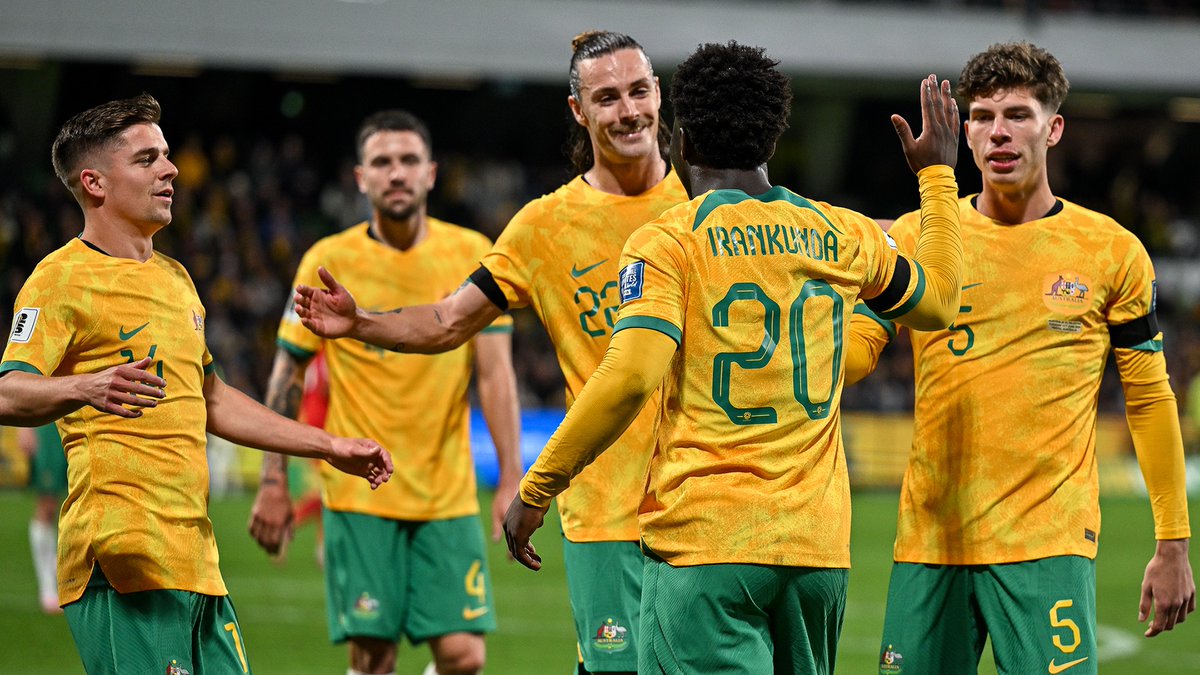
THREAD: Five Socceroos who earned a post-World Cup move
Australia fielded the most youthful World Cup team at the World Cup, and many of the Socceroos' young stars gained plenty of admirers in the process. These are the five Socceroos who warrant a post-World Cup transfer.
Let's talk about Australia and their World Cup.
After Japan, Australia are probably the second most organised and compact team defensively at this World Cup.
They defend in a 5-4-1 and have been using this system since 2024 when Tony Popovic took over. Two years of continuity have given them a clear playing identity and explain why they are well organised in their defensive block, much like Japan.
They haven't conceded many chances mainly through their compactness. They kept clean sheets against Turkey and Paraguay, while Egypt only scored from a set piece. Only the United States managed to score twice against them, and even then it came more from winning individual duels than from exploiting structural defensive weaknesses. Still, Australia looked vulnerable defending their own box at times, mainly because they spend too much time in a low block. Their 3-2-4-1 in possession also provides them with naturally strong rest defence, that's why we haven't seen Australia struggle in defensive transitions.
If there is one area they can improve, it is their high press and counter-press. This is the main reason they become passive and end up defending for long periods in their own half. When they lose the ball, they prioritise recovering their defensive shape instead of immediately pressing forward.
When it comes to the high press, it is difficult to press aggressively without adjusting the structure. If they keep the same 5-4-1 shape and do not release one of the wing-backs early, they give the opposition too much time on the ball. It also forces the striker to cover both centre-backs and the goalkeeper. Another option would be to release both wing-backs and have the two attacking midfielders press the centre-backs while the striker screens one of the opposition midfielders, similar to what Japan do. In that respect, Japan execute the high press better than Australia. Australia also struggle against teams that build with a single #6 positioned behind the striker, as nobody consistently takes responsibility for pressing that player.
Naturally, their ideal match-up is against teams that build with three centre-backs, allowing Australia to mirror the structure and press man-to-man much more easily.
With the ball, Australia have enough variety in their player profiles to be dangerous both in transition and in possession. Against Turkey, for example, they faced a team that dominated possession and committed many players forward. Australia looked extremely dangerous on the counter-attack thanks to the pace of players like Irankunda and Touré.
However, when they need longer spells of possession, they also have the technical quality to do so. O'Neill, Paul Okon, Metcalfe and Volpato provide composure, good ball distribution and enough quality to control the tempo. Jordan Bos also deserves a mention, as he is comfortable receiving under pressure and combining from wide areas.
Australia in possession can use inverted wing-backs or allow one of the attacking midfielders to drift wide during deep build-up to look for diagonal progression. Unlike Japan, their wing-backs are not primarily used as wide attackers on the last line. Instead, they have greater responsibilities in the deeper phases of possession. This helps Australia maintain their defensive structure and avoid being exposed in transition. Throughout this World Cup, they have progressed the ball well through the wide areas to find diagonal passes into central spaces with their wrong-footed players.
Finally, Australia's next generation looks promising. These are not just complementary players at this World Cup, they are already the core of the team. Some are already playing in Europe's top leagues, while others look ready to make that step soon.
Lucas Herrington (18), Irankunda (20), Paul Okon (21), Alessandro Circati (22), Beach (22), Christian Volpato (22), Mohamed Touré (22) and Jordan Bos (23) are not simply squad players. They are starters and the foundation of this team.
With a few tactical adjustments and the continued development of this talented generation, Australia's future looks very bright.
T20 Worldcup Finals (Since Last Decade)
2010 - ENG Won Toss & ENG Won the match
2012 - WI Won Toss & WI Won the match
2014 - SL Won Toss & SL Won the match
2016 - WI Won Toss & WI Won the match
2021 - AUS Won Toss & AUS Won the match
2022 - ENG Won Toss & ENG Won the match
2024 - IND Won Toss & IND Won the match
😮😮
#T20WorldCupFinal
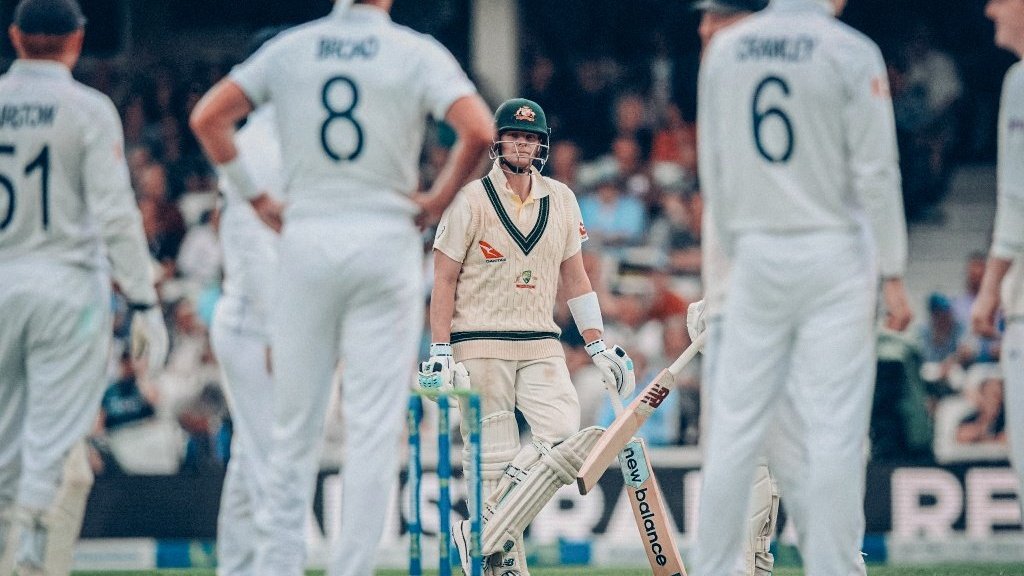
Steven Smith has 10,763 Test runs.
His top “bunnies” include:
Broad 577 (52.4 avg)
Anderson 479 (53.2)
Ashwin 434 (54.2)
Moeen 375 (93.7)
Stokes 366 (91.5)
Woakes 322 (53.6)
Jadeja 322 (40.2)
Umesh 292 (73.0)
Southee 188 (188.0)
Dominating some of the finest Test bowlers!!!🐐
Whenever the topic of a handshake comes up on the last day of the test match, it triggers my childhood trauma. When we needed 86 runs in 15 overs against the West Indies with 7 wickets in hand, and Dhoni went for a handshake.
Six Test wickets for less than 10 runs:
6-3 JLawson, WI v Ban, 2002
6-7 AGilligan, Eng v RSA, 1924
6-7 SBoland, Aus v Eng, 2021
6-8 DSteyn, RSA v Pak, 2013
6-9 MClarke, Aus v Ind, 2004
6-9 MStarc, Aus v WI, 2025
Most Test centuries by a non-Asian player in Asia (active players
7 - Steve Smith (43 Inns)
7 - Kane Williamson (47 Inns)
7 - Joe Root (60 Inns)
5 - Usman Khawaja (30 Inns)
5 - Darren Bravo (31 Inns)
4 - Harry Brook (10 Inns)
4 - Tom Latham (42 Inns)
#SLvSL#SteveSmith | @stevesmith49 | 📸- @FanCode