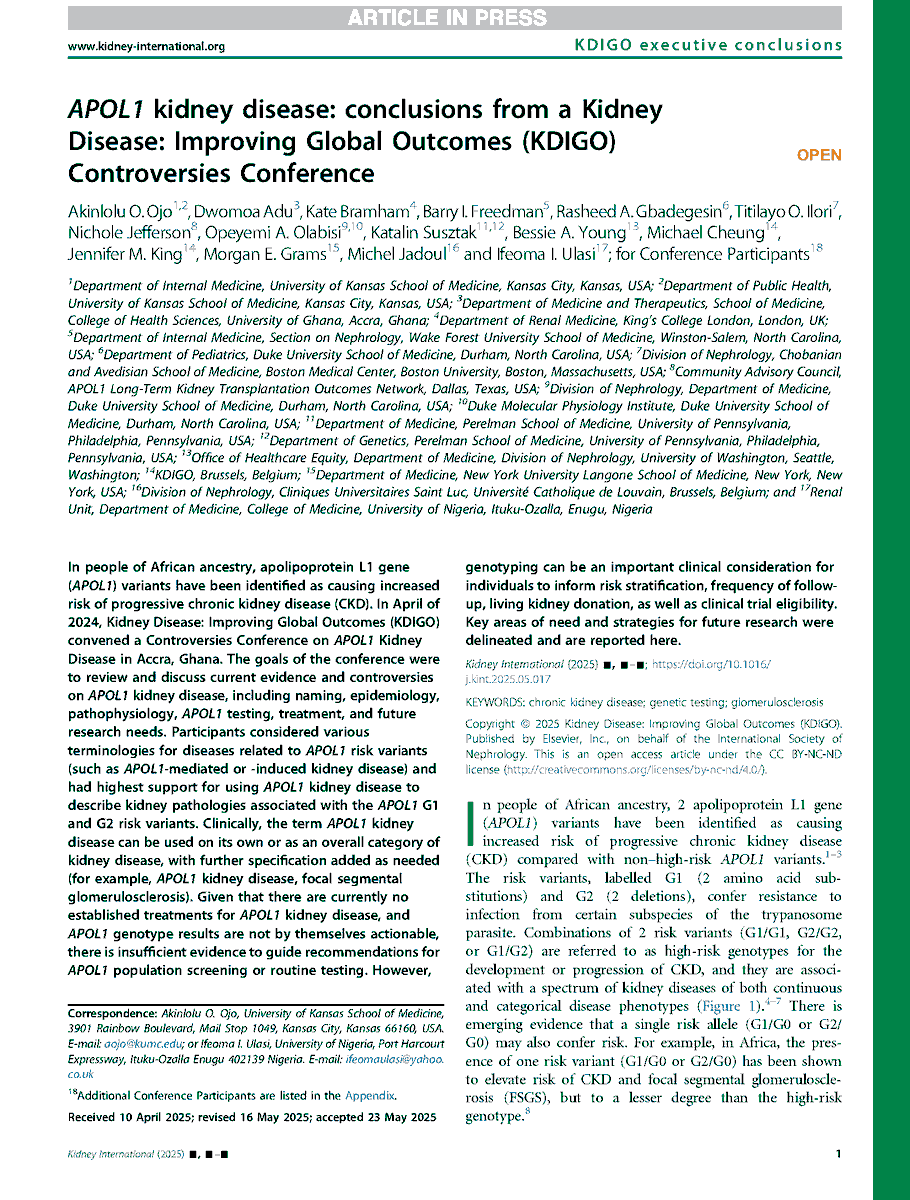
KDIGO is pleased to share the publication of the APOL1 Kidney Disease Controversies Conference Report in Kidney International.
Co-chaired by Akinlolu Ojo, MD (United States) and Ifeoma Ulasi, MD (Nigeria), the Accra, Ghana conference brought together scientists, clinicians, and patient representatives from around the world to address the urgent, inequitable burden of APOL1 kidney disease.
“This report is a milestone in global kidney health,” said Dr. Ojo. “The high prevalence of APOL1 high-risk genotypes in West Africa makes this disease’s impact potentially catastrophic. We highlight the urgency of understanding genetic and other factors, advancing biomarkers, and accelerating trials to improve outcomes—especially in Sub-Saharan Africa and the African diaspora.”
“To address this devastating disease, we must build research capacity, enhance genetic literacy, support ethical testing, and center patient experiences,” said Dr. Ulasi. “This is a call to action for equitable investment in research, prevention, and treatment—and for turning the promise of targeted therapies into accessible care.”
Read the open-access conference report in Kidney International: https://t.co/fXdcW7L5KX
Download the report: https://t.co/ISU9FlS98p
Learn more about the conference: https://t.co/uAXMWNEJxR
Night shifts are associated with a higher risk of death ☠️👇
Here are some evidence based approaches to maintaining healthy while working shifts. A 🧵
(1/x)
2.Preferred Anticoagulants:
•Apixaban and Low-Dose Rivaroxaban: These newer agents are preferred over warfarin due to their lower bleeding risks and more predictable pharmacokinetics in dialysis patients.
“Should Clinicians Write Directly to Patients? 📬💡” The practice of clinicians writing letters directly to patients is gaining traction, shifting away from traditional correspondence aimed at other healthcare professionals. Here’s a look at the pros, cons, and resources