https://t.co/y1oLVNGdRU
Our team is delighted to share our recently published article:
“Advances in Non-statin Lipid Therapies: A Narrative Review of Evolving Strategies for Cardiovascular Risk Reduction” in the American Journal of Cardiovascular Drugs.
Drawing from 138 references, we synthesized evidence, proposing frameworks and nuances to consider. Key highlights include:
✅ Practical considerations for ezetimibe, PCSK9 mabs/inclisiran, bempedoic acid, quoting pivotal trials, observational and pragmatic studies, and safety data to support these considerations
✅ Emerging therapies like CETP inhibitors, agents that target APO C-III, APO A-1, APO-B, and ANGPTL3, as well as CRISPR technology and inflammation-modulating agents. Coupled with a brief overview of lipid trafficking mechanisms to better understand these agents
✅ The concept of Residual Cardiovascular risk and how it plays into future research directions for ASCVD risk reduction, e.g Ziltivekimab etc
✅ Cost-effectiveness of these agents and integration of ICER in practical decision-making.
✅ Adherence, statin-intolerance/ drucebo effect, and patient preference challenges in real-world lipid management
This work reflects the contributions of a multi-institutional team spanning the U.S., U.K., and internationally, bringing together academic and clinical perspectives.
🔗 Access the article via Springer Nature’s SharedIt link: https://t.co/cgcmDa628D
We are grateful to our mentors and collaborators for making this ambitious project possible. We hope this serves as a useful resource for clinicians, researchers, and policymakers.
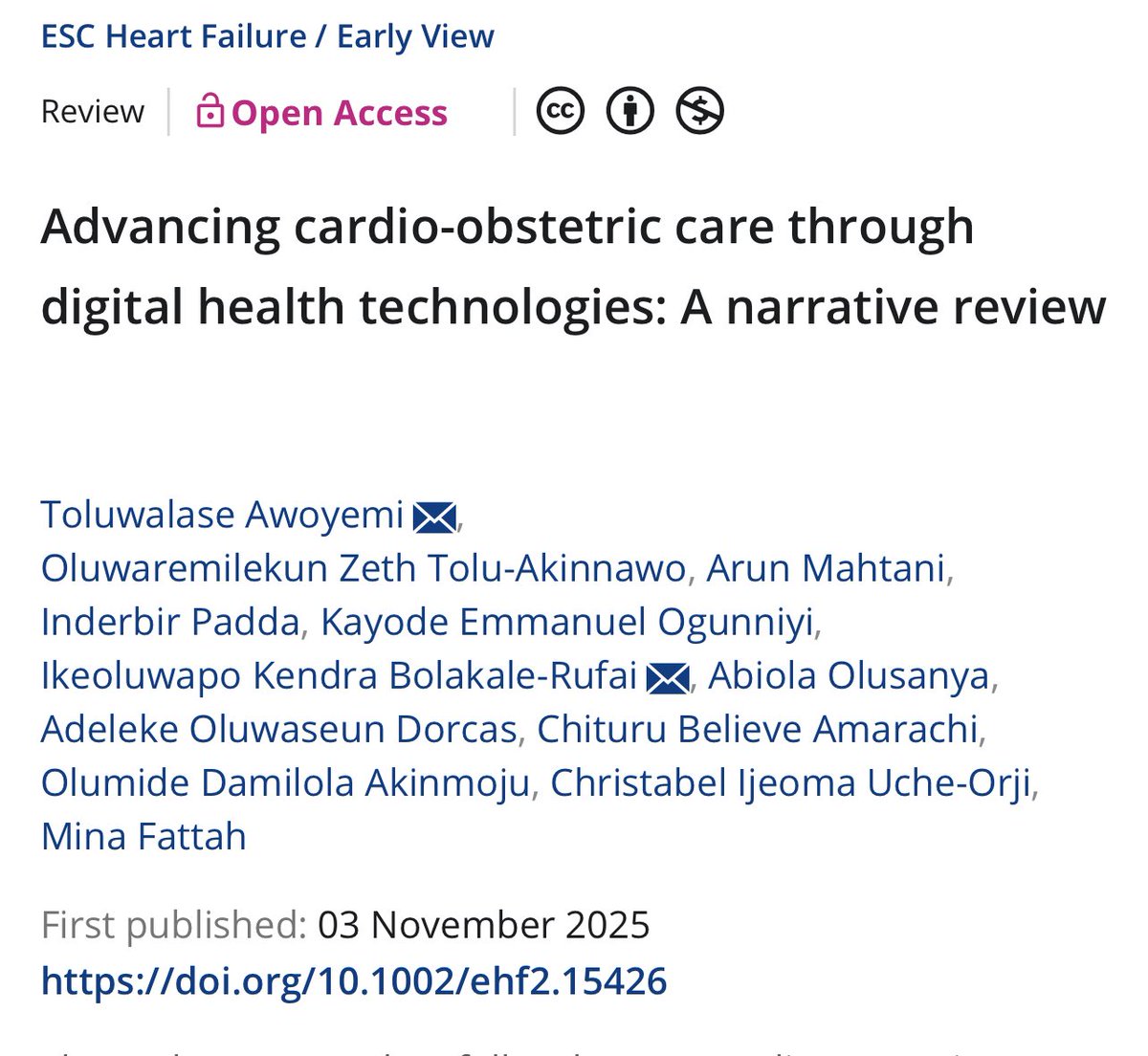
Cardiovascular disease is a leading cause of maternal complications. Telehealth, wearables & remote monitoring enable early detection and personalized care, improving outcomes and access. https://t.co/UrWH1u6J4U
#MaternalHealth#CardioObstetrics#DigitalHealth#HealthEquity
NEW on Heart Rhythm TV: How do GLP-1 receptor agonists impact outcomes in patients with AF? 🫀
In this episode of @CardioNerds Journal Club, Jeanne du Fay de Lavallaz, MD, and @RamyDossMD are joined by @VarunSundaram4 and @CardiacepPA to break down the landmark TRANSFORM-AF trial and what it means for AF care in obesity & diabetes. See the full interview here #EPeeps ➡️ https://t.co/BHGrlrQSlv
BREAKING: In the latest #HRStv Journal Club, @DanielAlyeshmer and @atulverma_md break down the OCEAN trial, a late-breaking clinical trial from #AHA2025 exploring anticoagulation vs. low-dose aspirin after successful atrial fibrillation ablation. See the full interview here #EPeeps ➡️ https://t.co/wZD9pXgOvG
LAAC vs best medical care
Thrombotic events - higher
Bleeding events -- higher (counting procedure; also see AVERROES)
CV death -- higher (please don't dare tell me that it was noise because if you do, let's relook at PROTECT and PREVAIL
LAAC done in experienced labs
#AHA25
In my view, people don’t give APOC3 nearly as much credit as they give PCSK9. Honestly, APOC3 inhibition might end up being far more life-transforming.
Before PCSK9 inhibitors, we already had statins that revolutionized LDL-C lowering. PCSK9 added value, but its market impact was modest.
For triglycerides (TGL), though, we’ve had nothing truly effective. APOC3 inhibition changes that — its impact on TGL reduction is absolutely transformative.
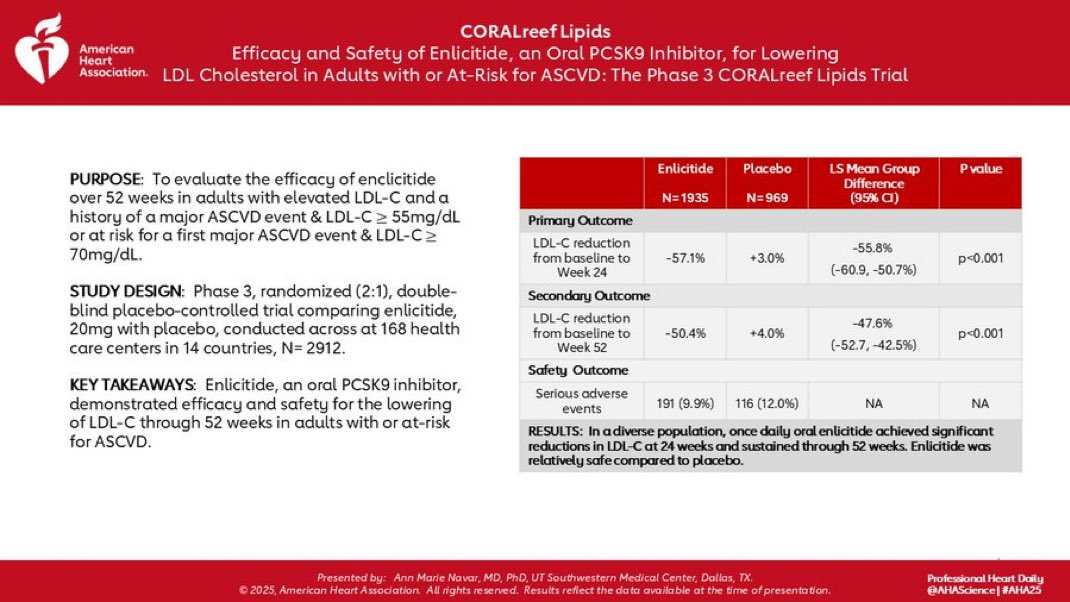
CORALreef Lipids Trial presented by Ann Marie Navar @UTSWMedCenter#AHA25
🫀 Pivotal phase 3 trial of enlicitide decanoate, a once-daily oral PCSK9 inhibitor (macrocyclic peptide), added to background lipid-lowering therapy
🫀 2:1 randomization: enlicitide 20 mg PO daily vs placebo x 52 wks
🫀 55.8% greater LDL-C reduction vs placebo at week 24
🫀 Majority of treated patients achieved both ≥50% LDL-C reduction and LDL-C <70 mg/dL; large proportion <55 mg/dL similar to injectable PCSK9i
🫀safe, effective
Now we await outcomes trials #CVPrev #LBCT #CORALreef
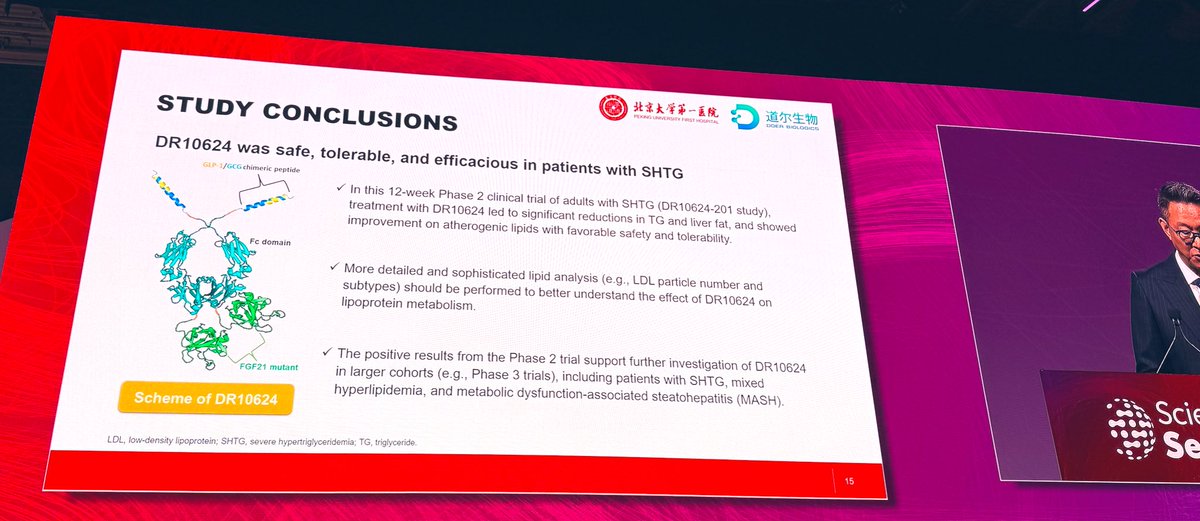
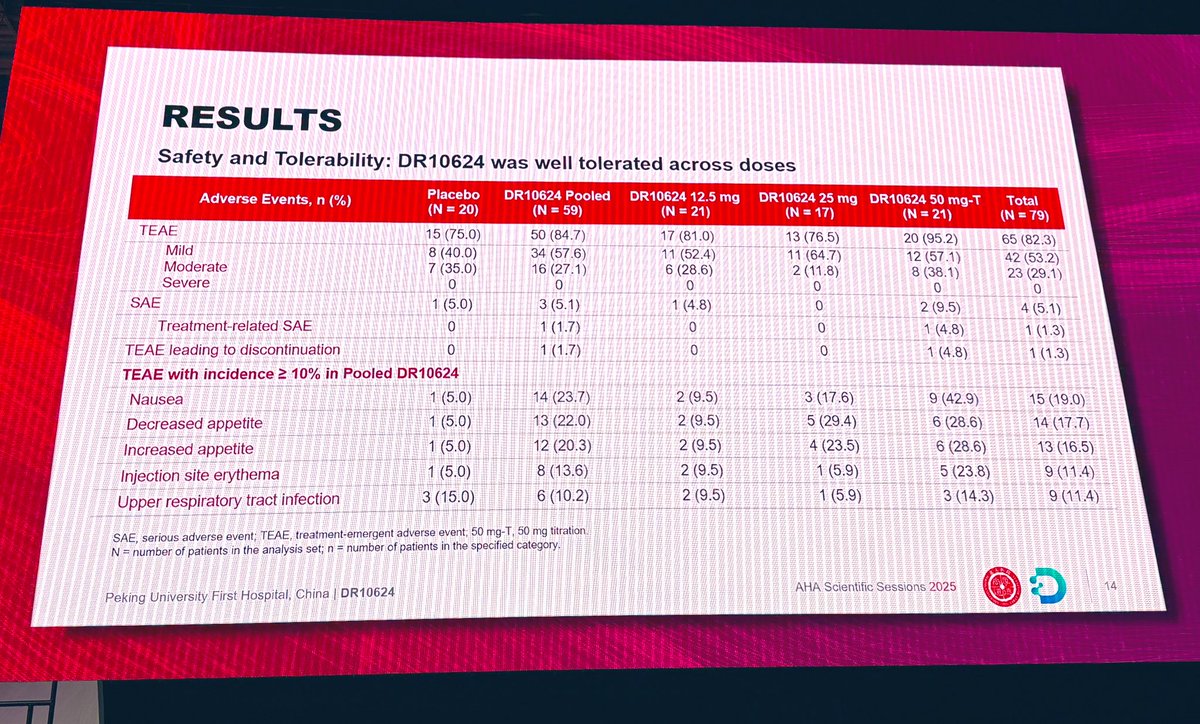
In patients w severe hypertriglyceridemia,
novel DR10624 -GLP-1/GCG chimeric peptide used in phase 2 study found to
⬇️ TG, liver fat & lipids w favorable safety profile #AHA2025
Phase 3 of DR10624 with lipid analysis (e.g., LDL particle number & subtypes) to be done in pts w mixed hyperlipidemia & MASH
#VESALIUS-CV is the first large-scale randomized trial of a PCSK9 inhibitor (evolocumab) in primary prevention, showing that aggressive LDL-C lowering reduces first major cardiovascular events in patients without prior MI or stroke.
This confirms that atherosclerotic risk begins well before the 1st event & can be safely modified.
Congratulations to these investigators for this important study #AHA25 #LBCT #CVPrev #CardioTwitter
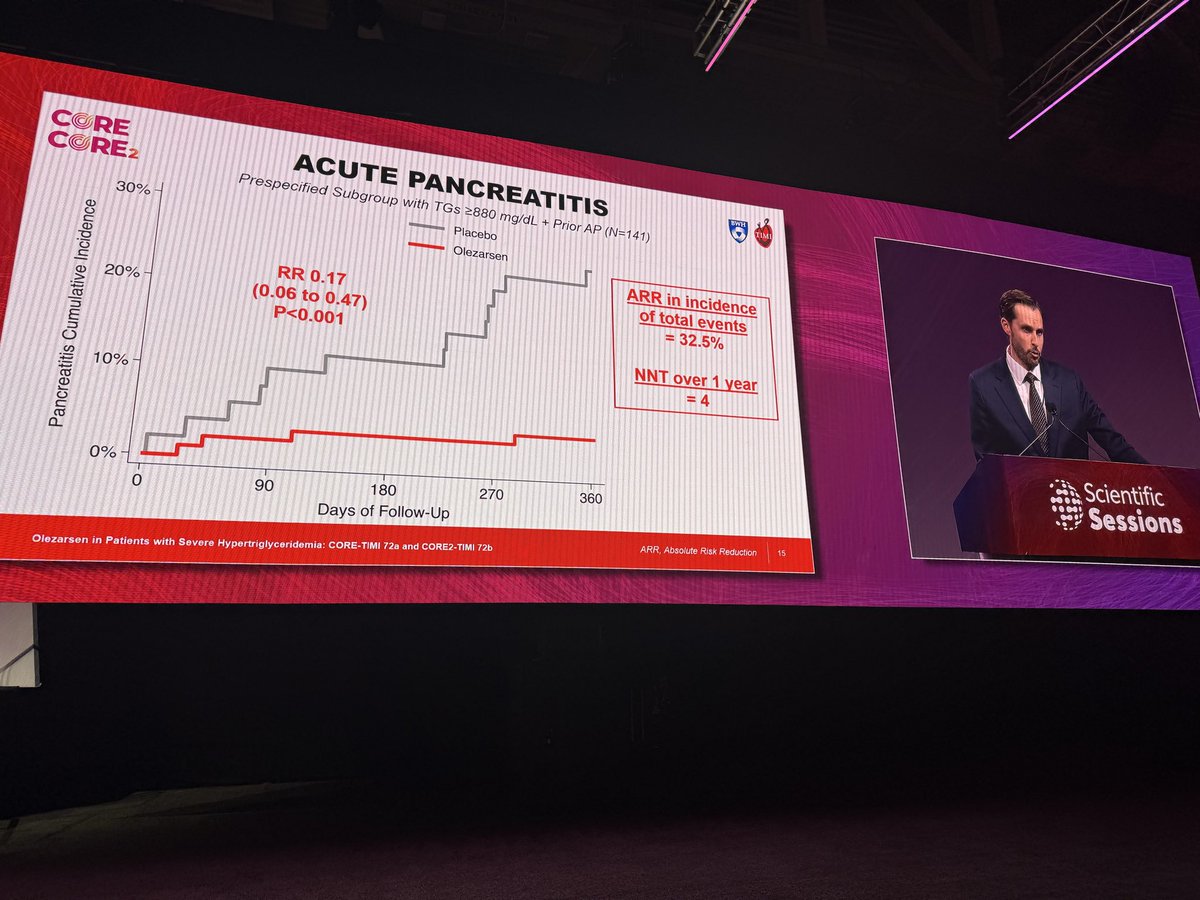
When I was a medical student, I vividly recall taking care of very very sick patients with acute pancreatitis in the ICU.
Remarkable to see how APOC3 inhibition (here, olezarsen) is now shown to be a highly effective therapy for severe hypertriglyceridemia, esp among those with prior pancreatitis to reduce risk for acute pancreatitis (NNT 20 for all and 4 for those with prior) & yield remission (up to ~50%) for hypertriglyceridemia. Congrats @marstonMD@TIMIStudyGroup! https://t.co/nWArbKj6Ps #AHA25 @NEJM
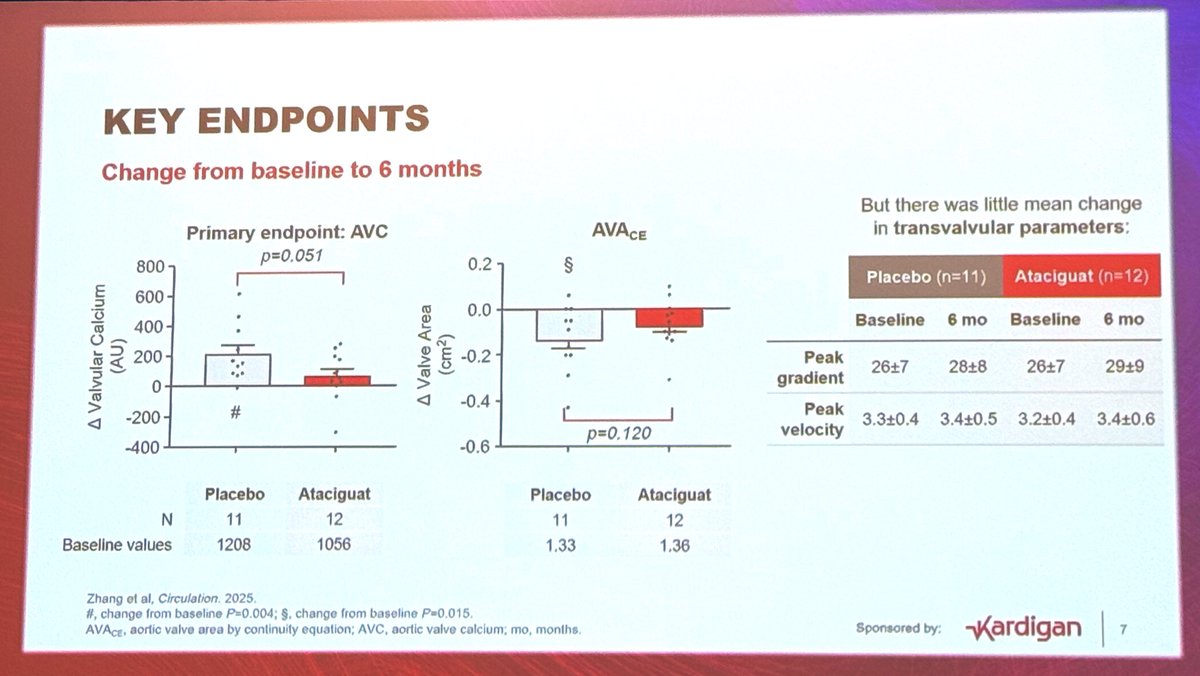
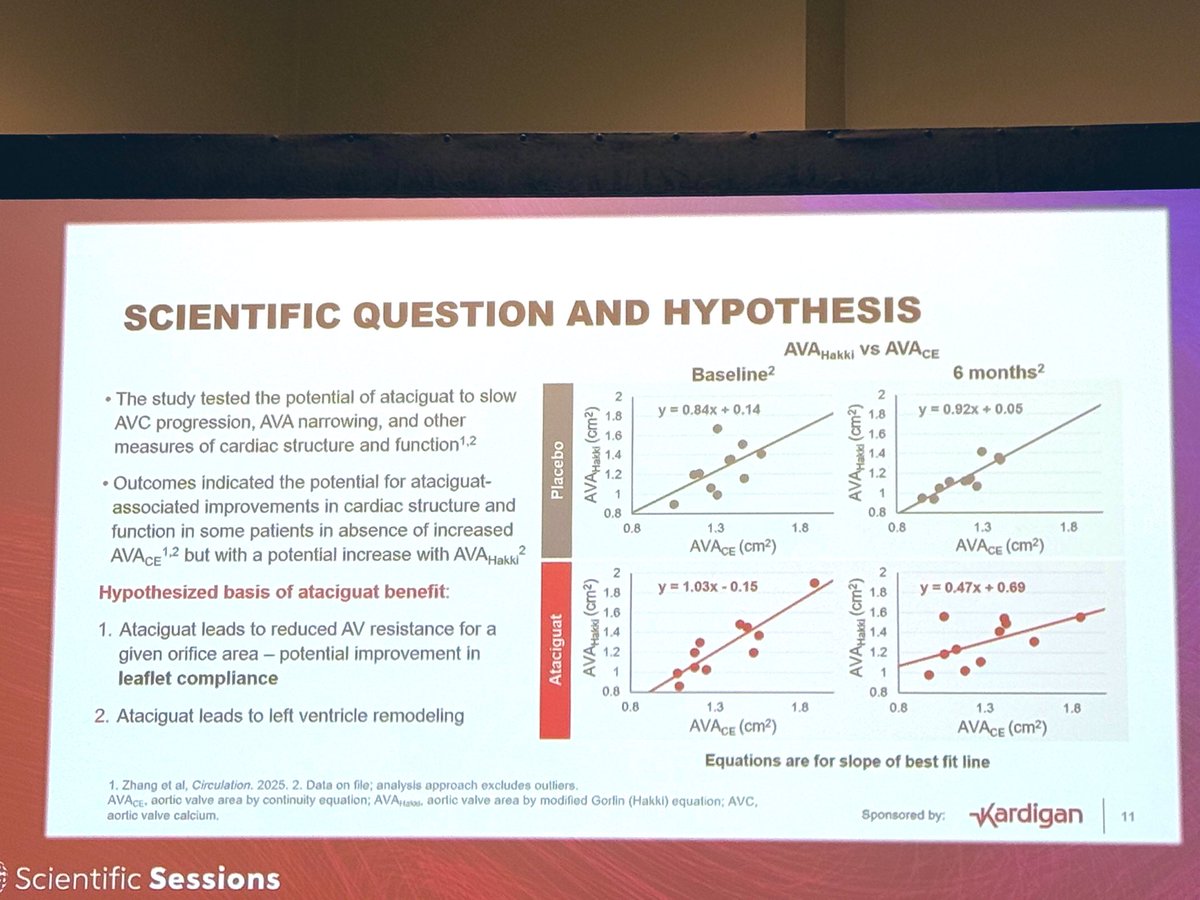
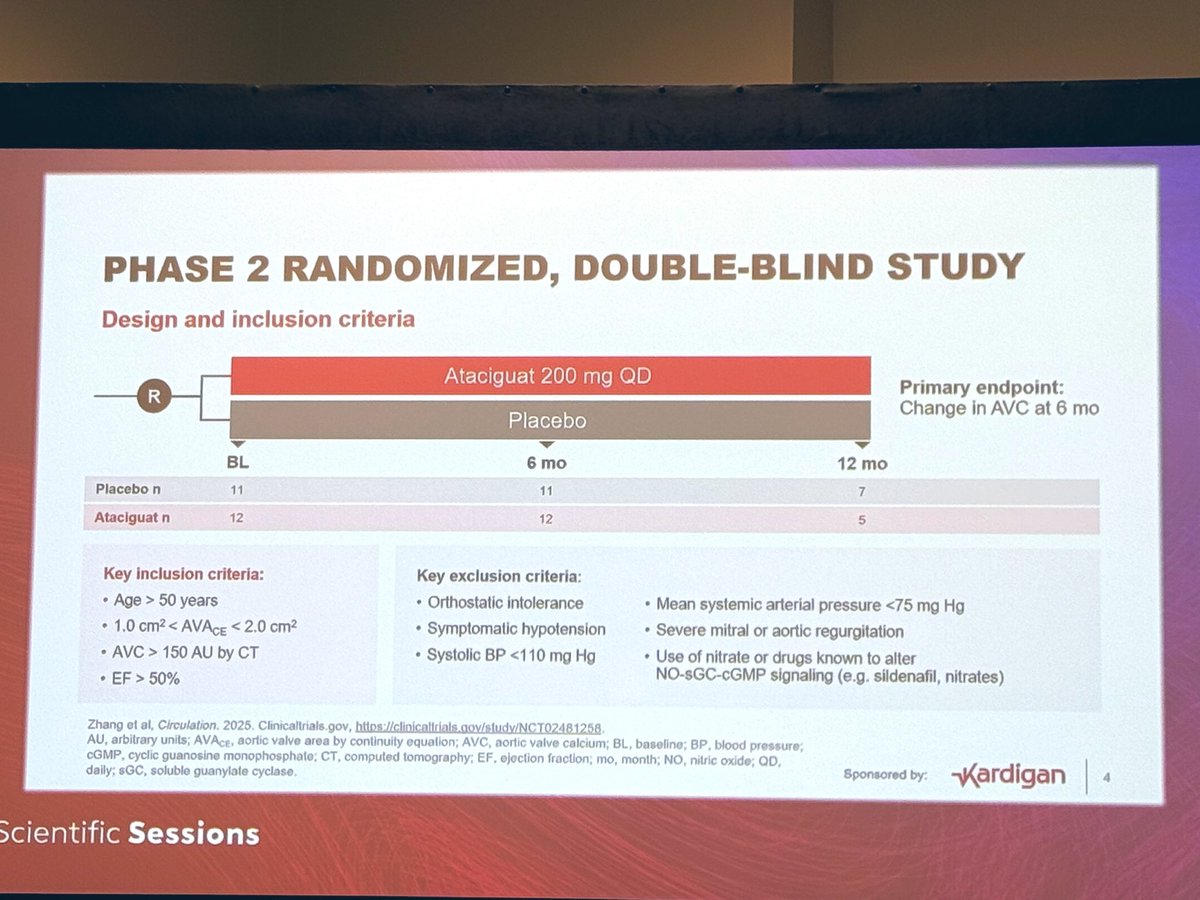
In moderate AS #AHA2025
Phase 2 study of 23 pts Ataciguat 200 mg QD tested if ataciguat slowed
AVC progression, AVA narrowing, & cardiac structure & function by #echofirst parameters
Finds ⬇️AV resistance for given orifice area, ⬆️leaflet compliance, LV remodeling
#AHA25
We have data on promising asymptomatic AS treatment in recent studies like EARLY TAVR, AVATAR, and RECOVERY but nothing to slow the progression. This is small phase II study but hope this benefit persists in the later phases.
PS Ataciguat has failed to show any benefit in angina or PAD population in the past.
M