punya terlalu banyak kelas karena sejatinya kampus indo masih teaching university bukan research university.
produk utama kampus itu masih lulusannya, bukan policy brief, paten, paper, apalagi prototype teknologi.
selain itu untuk BKD agar dapat insentif rata, paling enak memeras dari teaching. tak terhindarkan terima mahasiswa sebanyak-banyaknya, quantity over quality of service.
risiko lanjutannya, mahasiswa akan makin merasa dikorbankan dosen. padahal dosen cuma sekrup di sistem. sekrup biasa yang bisa jatuh sakit jantung, atau penyakit parah lainnya, lalu meninggal, dan digantikan dosen lainnya. begitu seterusnya.
sementara itu sistem pendidikan tinggi tetap abadi tanpa perubahan.
Karena perang dagang AS-Tiongkok, banyak perusahaan clean tech (panel surya, EV, baterai, dll) yang buka pabrik di Asia Tenggara. Ya plus plus industri lain sih, mereka mulai internasionalisasi.
Indonesia salah satu tujuannya, TAPI ‼️ faktor yg menentukan mereka pilih negara mana ya termasuk ini: biaya "tak terlihat".
Faktor yg mempengaruhi investasi masuk (mendorong industrialisasi, pertumbuhan ekonomi):
1️⃣ Energi bersih: jadi nggak hanya pasokan listrik atau sumber energi lain (yg andal, mana mau kalo sering blackout), sekarang energi terbarukan juga jadi faktor penentu.
Malaysia lebih dipilih buat lokasi data center salah satunya karena mereka punya pasokan energi bersih lebih banyak.
2️⃣ Infrastruktur dan rantai pasok: jalan, pelabuhan, kawasan industri, akses logistik lah pokoknya.
3️⃣ Tenaga kerja dan biaya produksi: SDM terampil, produktivitas, dan efisiensi operasional. Nggak semata angka UMK.
4️⃣ Insentif dan kepastian regulasi: fasilitas fiskal, kemudahan perizinan, akses pasar, dan konsistensi kebijakan.
Maleslah inves di negara yg kebijakannya tiap bulan ganti atau gak jelas.
5️⃣ Keamanan dan kepastian berusaha: nah pungutan informal masuk di sini. Kan ini susah dihitung yak, nggak kayak itung upah atau biaya operasional.
Padahal mereka buka pabrik tujuannya ya kalo bisa jangka panjang, bukan < 5 tahun. Belum balik modal shay
Palestinian Culture must and will survive. Its natural beauty is indestructible, as is the spirit.
Sliman Mansour was a leading Palestinian artist whose work captured the Palestinian people’s culture of steadfastness in the face of their ongoing struggles for recognition, rights, and freedom.
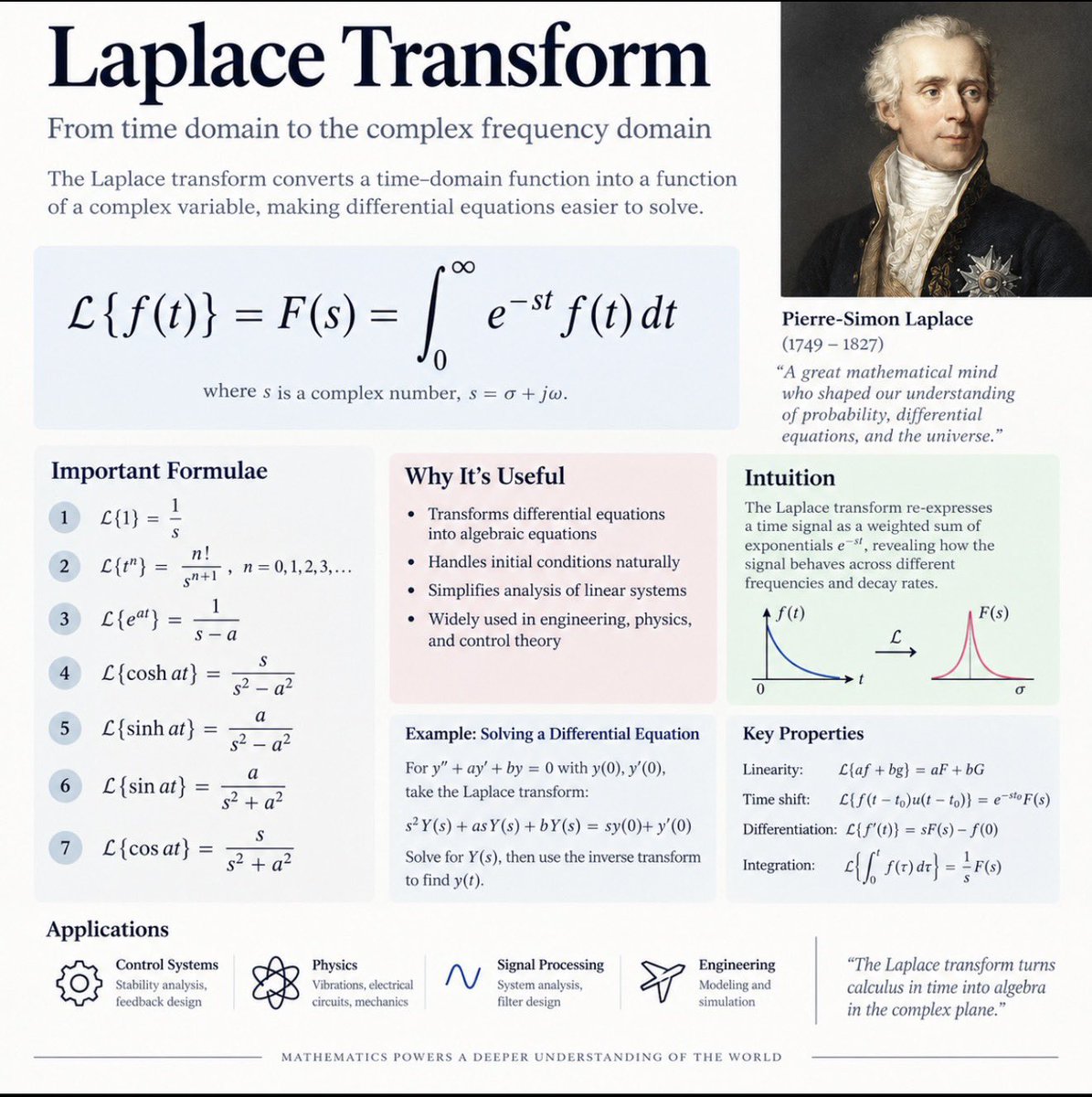
the laplace transform is one of those mathematical ideas that makes complicated engineering problems suddenly manageable. imagine trying to describe how a motor accelerates, how a circuit responds when you switch it on, or how a mechanical system vibrates after a disturbance. these systems evolve over time, and their behavior is governed by differential equations. solving those equations directly can get messy. the laplace transform changes the representation of the problem, turning differentiation into algebraic operations. instead of fighting the dynamics in the time domain, you move into a mathematical space where the relationships become easier to manipulate.
the interesting part is what this transformation reveals about a system. in the complex frequency domain, poles tell you about natural behavior, stability, oscillations and decay. zeros influence how the system responds to different inputs. a motor, an electrical circuit and a mass spring damper system may look completely different physically, but their transfer functions can share the same mathematical structure. that’s why control engineers use laplace transforms to analyze feedback loops, design controllers, understand transient responses and predict whether a system will settle down or become unstable.
what i find beautiful is that the laplace transform doesn’t change the underlying physics. it changes the language in which we describe it. a difficult problem in one representation becomes a simpler problem in another. this is a recurring pattern throughout mathematics, from fourier transforms and linear algebra to coordinate transformations and optimization. sometimes the breakthrough isn’t a better algorithm or more computation. it’s recognizing that the problem becomes much easier when viewed from the right mathematical perspective.
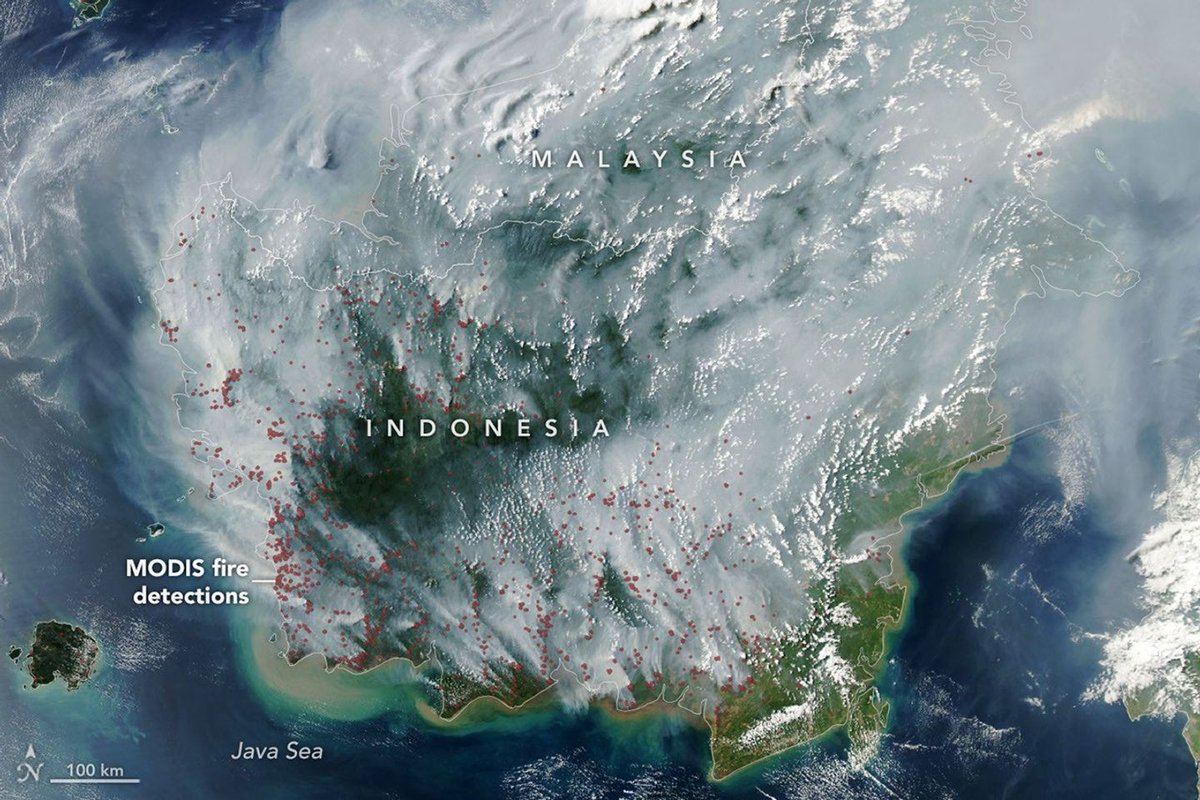
Fires are smoldering in Indonesia, which is in a severe and widespread drought. Some of these are tropical peatland fires, which burn slowly, release higher amounts of air pollution, and are notoriously difficult to extinguish.
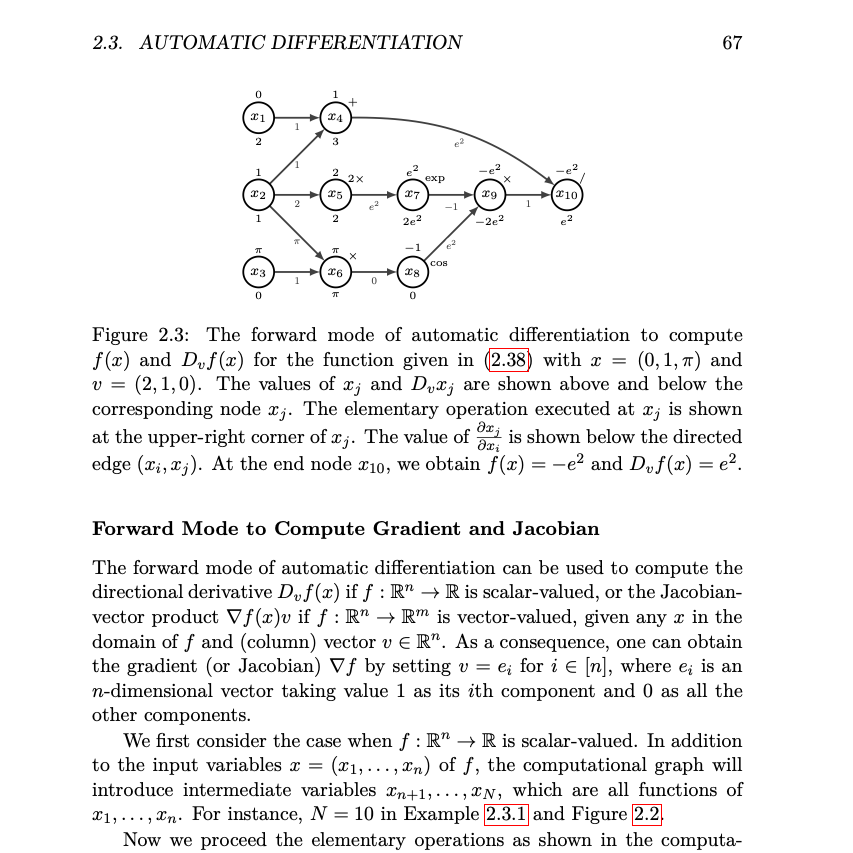
"Mathematical Foundations of Deep Learning" is an excellent free book of almost 300 pages on the mathematics behind modern deep learning. It is a good continuation of the previous resources I shared on the mathematics of modern AI and deep learning systems.
The book has chapters on deep neural networks and function approximation, the Universal Approximation Theorem, network architectures, activation functions, optimisation and optimality conditions, automatic differentiation, deterministic and stochastic optimisation, optimal control, Euler–Lagrange equations, Hamiltonian dynamics, Hamilton–Jacobi–Bellman equations, Neural ODEs, reinforcement learning, Markov decision processes, Bellman equations, model-based and model-free algorithms, generative models, and much more.
The focus throughout the book is mathematical. It is well organized and the exposition is accessible, although some basic mathematical background is naturally required. For me, it is another useful reference for anyone interested in the mathematics behind these systems. I recommend downloading it and keeping it in your personal reference library.
https://t.co/7A75Ii3jv6