How Japanese have produced wood for 700 years, without cutting down trees.
Daisugi is an ancient Japanese forestry technique developed in the 14th century originally used by people living in the Kitayama region, because the territory was extremely poor in saplings.
They planted cedars pruned in a special way to produce shoots that eventually would become perfect, straight, knot-free lumbers.
The shoots are gently pruned by hand every two years leaving only the top boughs, allowing them to grow straight. Harvesting takes 20 years and old 'tree stock' can grow up to a hundred shoots at a time.
There was actually another reason why the technique was developed: fashion. In the 14th century, a linear, stylized form of architecture known as sukiya-zukuri (数寄屋造り) became popular, and every prominent samurai or nobleman wanted a house built in this way.
There were simply not enough raw materials available to keep up with demand, so daisugi was developed to produce more wood in a shorter time.
The wood produced with this technique has also impressive qualities: it's 140% more flexible than standard cedar and 200% denser and stronger. And, it's extremely durable.
Bangladesh gesa sokongan global percepat penghantaran pulang Rohingya
NEW YORK – Bangladesh sekali lagi menggesa masyarakat antarabangsa memperkukuh usaha melindungi orang awam, menegakkan undang-undang kemanusiaan antarabangsa serta memastikan sokongan berterusan bagi membolehkan pelarian Rohingya dihantar pulang ke Myanmar secara selamat dan sukarela.
IMPRESIONANTE!!
Un hombre fotografió el Sol diariamente durante tres años desde el mismo lugar y a la misma hora.
Luego combinó todas las imágenes para revelar el movimiento del Sol en el cielo a lo largo del año.
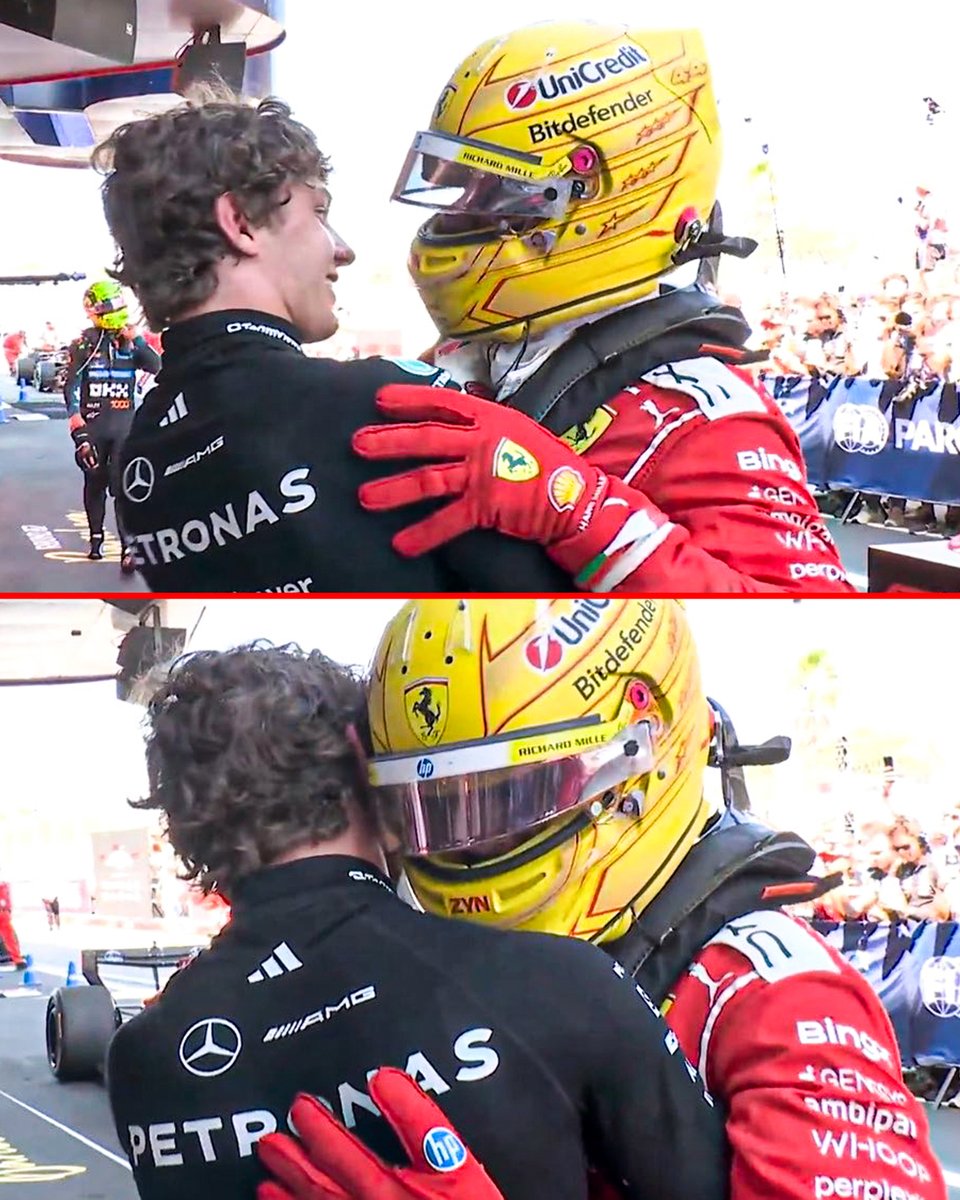
Walaupun dia warga Spain dan non Muslim, masih hormati pegangan agama pelumba motor team beliau ..
Tak spt Ahli Politik Malaysia tak tau adab
https://t.co/PlK9qF3M3R
Bapa merupakan tunjang kekuatan keluarga yang sentiasa berusaha memberikan yang terbaik demi kesejahteraan dan masa depan anak-anak.
Terima kasih atas segala pengorbanan, ketabahan dan kasih sayang yang tidak ternilai.
Selamat Hari Bapa kepada semua insan bergelar ayah.
‘𝐒𝐞𝐡𝐞𝐛𝐚𝐭 𝐊𝐀𝐒𝐈𝐇 𝐁𝐚𝐩𝐚’
Ikhlas daripada
Datuk Seri Hj. Hasnol Zam Zam bin Hj. Ahmad
Ketua Setiausaha Kementerian Kesihatan Malaysia
#KKMPrihatin #SihatBersama #MalaysiaSihat #MADANIBekerja
Graphene is just one atom thick but 200 times stronger than steel, lighter than paper, and conducts electricity better than copper. It can bend without breaking, carry huge electric currents, and even help detect cancer in real time. From quantum tech to flexible gadgets and super-fast charging, it’s the wonder material scientists are still unlocking.
Earth’s Sweet Spot Tilt: Why 23.26° Might Be One of Life’s Greatest Lucky Breaks
Planets don’t just spin — they lean. That lean, called axial tilt or obliquity, is one of the most powerful architects of a world’s climate, seasons, and potential to support https://t.co/lbfncnNHBR’s tilt of 23.26° is practically perfect — the ultimate Goldilocks angle. It delivers the four distinct seasons we know so well while preventing the kind of temperature extremes that would make large parts of the planet uninhabitable. This moderate tilt spreads sunlight in a way that keeps our climate relatively stable, drives gentle ocean currents and wind patterns, and allows liquid water to persist across vast regions https://t.co/t2FC0GLF7T that to our solar system neighbors:Uranus is tipped over at a wild 98°, essentially rolling on its side like a barrel. Its seasons last decades, with one pole plunged into decades-long darkness while the other bakes in continuous sunlight.
Venus is flipped almost completely upside down at 177.3° (spinning retrograde), resulting in a day longer than its year and a crushing, uniform greenhouse hell.
Mercury has almost zero tilt, so it experiences virtually no seasons — just blistering heat on one side and eternal cold on the other.
A planet’s axial tilt controls how sunlight falls across its latitudes over the course of its orbit. Too little, and climates become static and extreme. Too much, and seasons turn chaotic and brutal. The right tilt helps regulate temperature, drives weather systems, and creates the dynamic yet stable environment life seems to https://t.co/EQUZuoggFW astronomers hunt for habitable exoplanets, axial tilt has become a key factor in their assessments. The more we learn, the more we realize just how delicately balanced Earth’s cosmic posture really is — one of the many subtle reasons this blue marble became a thriving home for life.
Source: Laskar, J., & Robutel, P. (1993). The chaotic obliquity of the planets. Nature, 361(6413), 608–612.
NATO states treat us 'like a banana republic… either ignorance, but clearly arrogance' — Malaysia's PM Anwar Ibrahim exclusively to RT
While Russia 'honored ALL commitments', despite ‘difficult period' of restrictions
Watch in full tomorrow, June 18th
https://t.co/bPtSXU5rUe
The untold story of Malaysia's role in SpaceX's survival.
Malaysia was instrumental in keeping SpaceX alive in its early years. One could argue it helped save Elon during his lowest financial period.
Falcon 1's first three launches, 2006 to 2008, all failed. The company was nearly bankrupt — grown men were weeping after the third failure. The fourth flight in September 2008 finally reached orbit with a dummy payload, RatSat. But still, no paying customer.
SpaceX needed a real commercial customer to prove the business was viable.
That customer was Malaysia.
Malaysia was looking to launch its satellite, RazakSAT, and needed a reliable, cost-effective option. Dr Ahmad Sabirin first give Elon a call on Christmas 2003 to explore the possibilities of launching of satellite to the low equatorial orbit and met in El Segundo, And after many discussions, they agreed to launch from Omelek Island in the Kwajalein Atoll.
On July 14, 2009, RazakSAT flew — the fifth and final Falcon 1, and SpaceX's first-ever commercial launch. The Malaysian flag Jalur Gemilang was painted on the side of the rocket.
That payment helped SpaceX make payroll through its hardest stretch. And it put Malaysia in orbit. Win win.
For old times' sake, Elon should drop by Malaysia. Ask someone to hold his teh tarik for one more handshake.
Dr Ahmad Sabirin & Elon, 2004.
A lorry driver has drawn praise online after reportedly helping to slow a bus believed to have experienced brake failure along KM265 southbound, after the Menora Tunnel.
Many netizens have commended the driver's quick thinking, saying his actions may have helped prevent a more serious incident.
Ayrton Senna en el Gran Premio de Mónaco 1990…
A diferencia de las levas actuales detrás del volante, el McLaren MP4/5B de Senna tenía una caja manual de 6 velocidades en forma de H.
Para cambiar de marcha unas 3,600 veces por carrera, Senna debía soltar constantemente el volante con la mano derecha.
Controlaba un indomable motor V10 a más de 250 km/h por calles estrechas con una sola mano.
El auto no contaba con dirección asistida ni suspensión activa. Toda la tracción y corrección en los saltos de Montecarlo dependían puramente de su sensibilidad y fuerza muscular.
Toyota phát minh ra động cơ oto chạy bằng nước kìa 😁😁😁
Trong một bước di chuyển được thiết kế để phá vỡ ngành công nghiệp ô tô toàn cầu, Toyota vừa cho ra mắt một động cơ chạy nước dựa trên hydrogen được sản xuất bởi điện phân - và điều đó chỉ phát ra hơi nước! Không liti. Không có trạm sạc. Không có gì ngoài cuộc cách mạng thuần khiết. Với sự lựa chọn táo bạo này, Toyota không chỉ cạnh tranh với xe ô tô điện - nó đang tuyên bố kết thúc kỷ nguyên pin.
Massimiliano Grasso II
Syukur World Cup 2026 berjalan sebelum pilihan raya PRN dan PRU. Dapat rakyat Malaysia menonton perlawanan bola sepak tanpa perlu melanggan siaran berbayar 😚
Piala Dunia 2026: penonton hargai siaran percuma RTM
https://t.co/0r48VRxp5o
The International Space Station circles the planet so fast that the crew watch the sun rise and set sixteen times in a single day, a new dawn roughly every ninety minutes
#Space
https://t.co/WFC6g7EcJj
It's hard to believe, but the very first photograph of the Andromeda Galaxy was taken on December 29, 1888, by astronomer Isaac Roberts 🛰
Now compare: an image of the same galaxy from a similar angle, taken by the Hubble Space Telescope in 2013.