🇯🇵🇨🇳 Kintetsu Railway in Japan has quietly removed all Chinese writing on their train signs.
Everything will be displayed in only Japanese and English from now on.
No Joke: 🇨🇳 Chinese regime tells U.N. Human Rights Council they are “committed to the promotion and protection of human rights” — and that the million-plus Uyghurs and Tibetans in so-called re-education camps “voluntarily participate.”
The AI industry is optimizing for a definition of intelligence that does not exist.
Andrew Ng just said it out loud.
Ng: “AGI, to me, should be less about AI that already knows everything under the sun. That seems very challenging, doesn’t seem practical.”
The human brain is not the most powerful economic asset in history because of what it holds.
It is powerful because of what it can pick up.
Ng: “The amazing thing about the human brain is its plasticity, or its ability to learn.”
That same biological hardware that earns a PhD in quantum physics could have been trained on chess, surgery, or rewriting global supply chains from scratch.
Ng: “That same human brain, just given different training, could have been a chess master, or could have been amazing at playing tennis.”
General intelligence is not omniscience.
It is the structural capacity to master whatever you point it at.
Ng: “It is through learning that we then gain these incredibly specialized intelligences.”
The winner is not whoever builds the biggest model.
It is whoever builds the most adaptable one.
The AI that walks into a domain it has never touched and executes before a human analyst finishes reading the brief.
Ng: “What makes the human brain so valuable for economic tasks, is its ability to just learn to do whatever is needed.”
Every corporation on earth pays for human labor because humans adapt.
Not because they already know everything.
AGI is the digitization of that exact capability.
At machine speed.
At infinite scale.
Ng: “A lot of what makes the human brain so general is not that my brain or your brain already knows everything under the sun. It’s our ability to adapt, to learn a huge range of things.”
The most powerful economic asset in history was never specialized knowledge.
It was the raw capacity to acquire any knowledge, in any domain, on demand.
The winning AI is not an encyclopedia.
It is the force that makes encyclopedias irrelevant.
And once that exists, the question stops being what the AI knows.
It becomes what you can teach it before your competitor wakes up.
Most people dominating this conversation have not understood that yet.
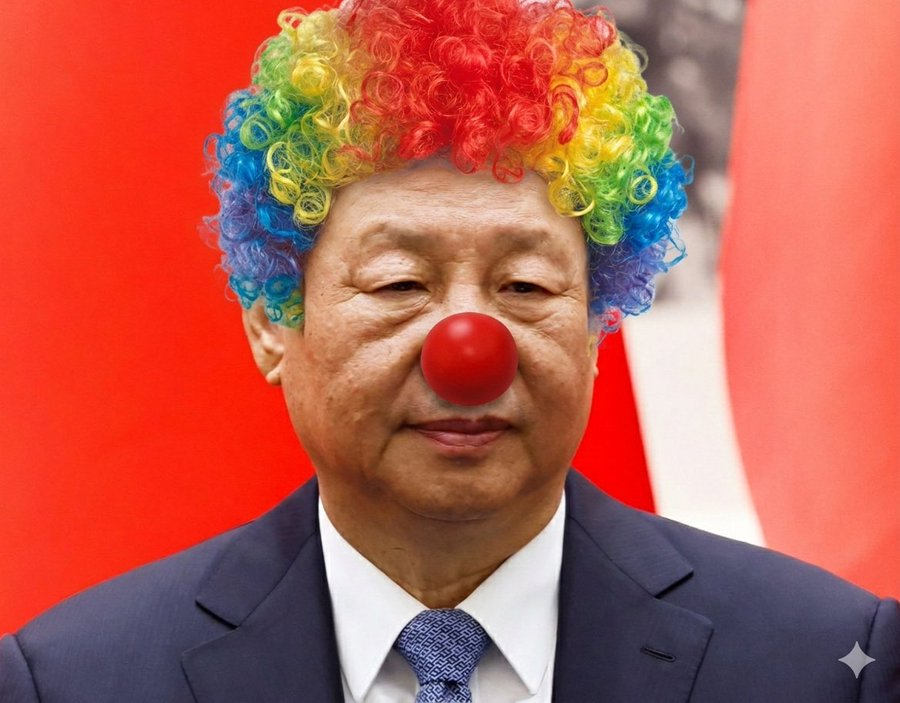
For years, the Chinese Communist Party bet its Middle East strategy on the survival of Iran’s regime.
Xi Jinping called America a “declining power.” Beijing signed a strategic pact with Iran and relied on its leaders to counter U.S. influence.
Now that bet has collapsed.
When America's strength is tested, it delivers. And the world is watching.
https://t.co/AUPUXoVSei
My latest
China is Scrambling: The Overnight Pivot
Xi Jinping is scrambling. The word is not used lightly. For a leader who has built his image on strategic composure and long-horizon thinking, the current moment is acutely dangerous. Not because China faces a direct military threat, but because every available response to the crisis in the Persian Gulf leads Beijing into a trap of its own contradictions.
https://t.co/CkFYMYO6mx
How India Reacted after Terrorist Attack?
* By Destroying Pakistani Airbases
How Iran Reacted after killing of Supreme Leader?
* By attacking US based in 14 countries
How US reacted after 9/11?
* By Attacking Iraq
How Afghanistan reacted after Pakistani attack?
* By attacking Pakistani Soldiers on Durand line
How China Reacts when People Question their Failed Defence Equipment ?
* By creating Fake X Accounts, Using VPN and Make people tweet from Singapore, Japan, Indonesia, Nigeria and Hongkong!!
China = Paper Tiger.
- @Iam_Rohit_G
Honor is building the first phone that also includes an AI robot. It's a robot in the sense that the pop-up camera acts as the AI's eyes, and if I understand correctly, it allows a continuously active AI companion to work as an assistant.
Interesting, but probably more of a gimmick. However, personal AI companions are coming.
For the entire history of human civilization, every financial transaction had a heartbeat on at least one side of it.
That era just quietly ended.
Armstrong: “We’re giving them stablecoin wallets. They’re doing a lot of machine-to-machine payments.”
No human initiated it. No human approved it. No human was on either side of the transaction.
Just two machines. Exchanging value. At the speed of compute.
This is the moment most people will look back on and realize they didn’t fully understand what was happening.
Armstrong: “Traditional corporate cards can’t be issued to non-human entities.”
That sentence is the wall between AI as a tool and AI as an autonomous economic actor.
Right now, AI agents can think. They can write code. They can handle customer support at scale.
They can reason through problems that would take a human team weeks.
But the moment they need to spend money to finish the job, everything stops.
Armstrong: “Like they might need to spin up AWS resources. Get through a paywall to read a research paper. Buy a domain. Launch a marketing program.”
Every one of those actions requires capital.
To a machine, money isn’t wealth.
Money is the API key for the physical world.
And the legacy financial system is guarded by a biological firewall.
Identity verification. Compliance checks. A legal person who can be held responsible for the transaction.
Somewhere right now, there is a person whose entire professional function is to be that approval layer. To be the human in the loop. To be the heartbeat the system requires before it releases capital.
That person is about to be routed around.
Not replaced. Bypassed.
Armstrong: “If it has to bug a human every time it needs to do something, that kind of breaks the whole dream.”
The entire promise of autonomous AI collapses at the payment layer.
So Coinbase didn’t wait for the banking system to catch up.
Armstrong: “We’re giving them stablecoin wallets.”
No human identity required. No compliance department creating friction. No legacy institution deciding whether a non-human entity qualifies.
Just a wallet. A transaction. Settled instantly. At machine speed.
Here is the thing nobody wants to say out loud.
The moment AI agents can earn, spend, and transact autonomously, they stop being tools.
They become participants.
Entities with financial agency. Ones that can acquire resources, execute contracts, hire human freelancers, and operate independently within economic systems designed entirely around the assumption that only humans do those things.
That assumption is being dismantled right now.
The machines are no longer just thinking. They are transacting.
We spent the last five years arguing about when AI was going to take our jobs.
We completely missed the moment it started opening its own bank accounts.
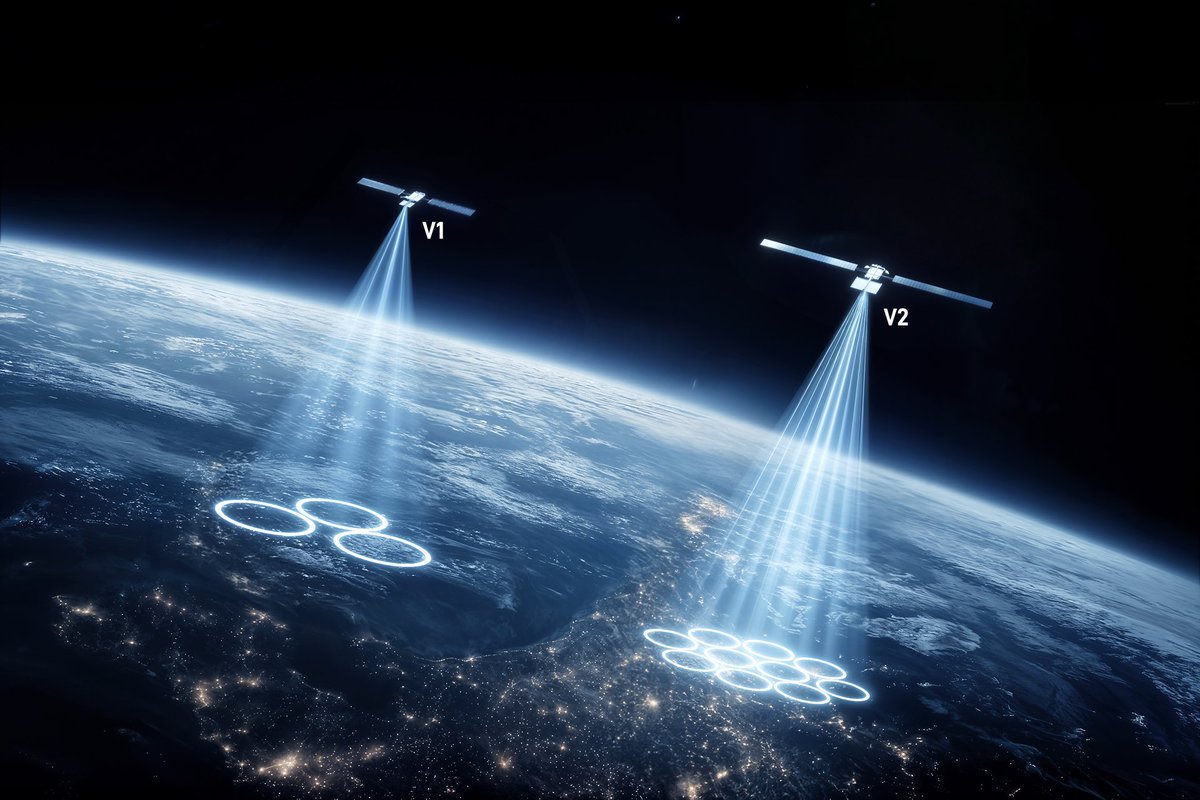
Starlink Mobile’s next-gen satellites will deliver 5G speeds from space with 100x the data density of the current V1 generation satellites
V2 satellites will seamlessly enable streaming, internet browsing, high-speed apps and voice calls, just like being connected to a terrestrial network → https://t.co/CV6MjKASx7
BRUTAL TRUTHS ABOUT PEOPLE:
1. The weakest are often most cruel.
2. The dumbest talk the most.
3. The most miserable are the most jealous.
4. The most insignificant are the most arrogant.
5. The wisest remain calm.
6. The strongest are always kind.
7. The smartest often stay silent.
8. The happiest live quietly.
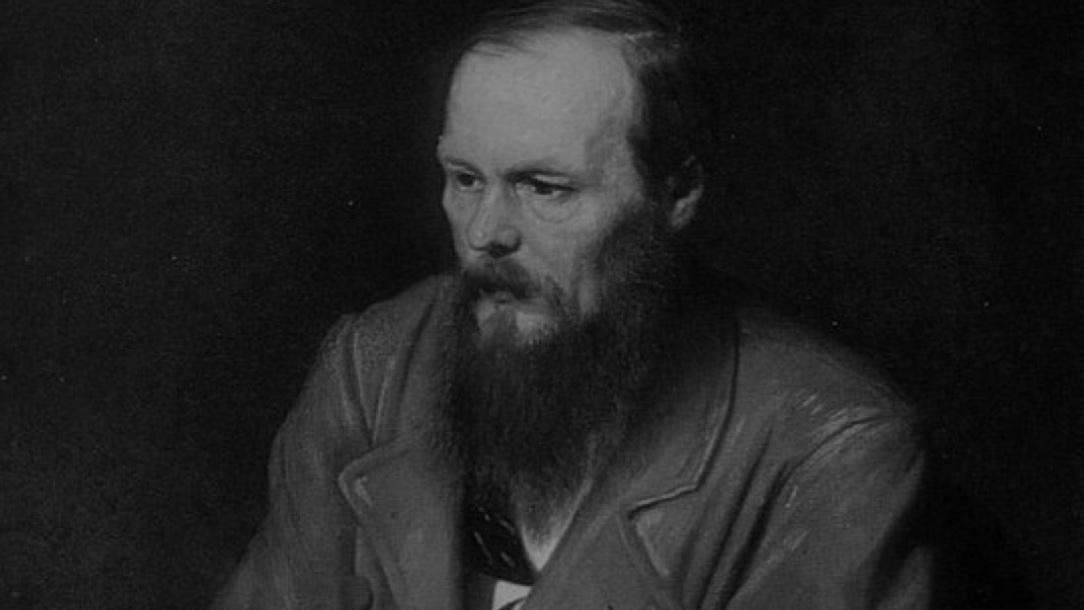
“The more you understand this world, the more you destroy yourself. That's why fools are happy, and intelligent people live in loneliness.”
- Fyodor Dostoevsky