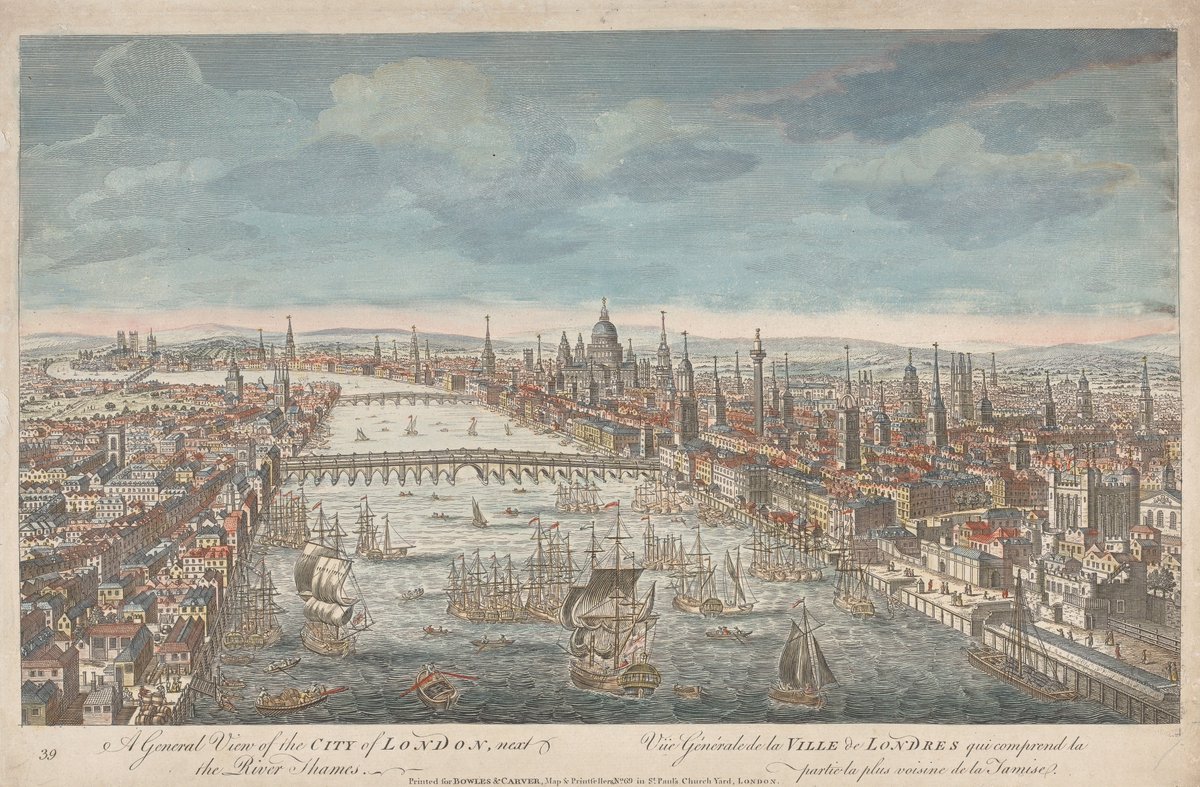
Why do London, Tokyo, New York & Cairo all sit beside water? It's no coincidence. Before railways, water was the only way to move goods at scale. A fascinating tour of the cities that rose to greatness on rivers, harbors & canals. 🌊
https://t.co/n6gERXpfkH
The result was an unprecedented deployment of capital. Although we no longer use flying shuttles, we still use these financial technologies today (https://t.co/ngYdIeI3yc).
The Industrial Revolution did not change contract architecture. It changed the runtime.
Contracts once operated at human scale.
Global supply chains pushed the system beyond personal trust. The response was protocol.
Double-entry accounting, bills of exchange, standardized insurance, sovereign bonds: portable promises that could travel without their originator.
Can not agree more. The joint-stock company, limited liability, and global operations were all started in the 17th century in the Netherlands, but they became one of the most important causes of the Industrial Revolution (https://t.co/FLdxDHljXU).
I think his "culture of growth" had less of an impact than the general public thinks. I agree with this 100%. It enabled the deployment of large capital with more efficient management.
“modern accounting was a key technology that enabled the Industrial Revolution ”
Ever feel like your work is just a back-office function? A Nobel Prize-winning economist disagrees.
Joel Mokyr, one of 2025's top economists, argues that modern accounting was a key technology that enabled the Industrial Revolution. https://t.co/CzSNPmaXd6
The Noyyal River in remote India was far more than a natural feature — providing transport and storage that made local commerce possible. Even in the most overlooked corners of the world, water determined where economic life took root.
What's it about the Noyyal river?
Economic & Environmental Significance
🌊The Noyyal is a tributary of the Cauvery and originates in the Velliangiri Hills. The river travels through the cities of Coimbatore and Tiruppur and meets the Cauvery at Noyyal in Karur district.
🌊At one time, the drinking water needs of the area from Coimbatore to Tiruppur were well served by the Noyyal and several canals, tanks and rivulets around the town. It was an efficient system that provided water transport and storage, and maintained stable groundwater levels. It is believed that there were around 32 tanks in this area.
🌊With the urbanization of this region, the system fell into neglect and the number of functional tanks has reduced drastically. Today, only eleven are left, in varying levels of disrepair.
🌊This ancient yet effective system of water supply no longer works and water is scarce in the region. Agriculture has suffered greatly. At one time, the river irrigated over 350,000 hectares, but today due to lack of irrigation water, lakhs of coconut trees in the area have gone dry and have been cut down
Spiritual & Cultural Significance
🌊The “Noyyal” is a sacred river in Tamil history. It was originally known as Kanchi Nadi, and only later came to be known as Noyyal, which means “one who is free of illness.”
🌊Many temples and centers for the arts were once found along the river at Perur, near Coimbatore. The ancient Pateeshwarar temple at Perur is still the venue of the Natyanjali, an annual dance festival.
🌊The source of the Noyyal – the Velliangiri Hills – are known as Dakshin Kailash or South Kailash, and in the yogic lore, Adiyogi – the first yogi – spent time here.
This group of 1000 women (the Mangai Valli Kummi group of Vellanatham Shri Shanmugasundaram) performed this dance at the launch of the Noyyal Ratha Yatra at Adiyogi. The Ratha Yatra will be about creating an awareness about the necessity of restoring the river as well as have the NGOs join hands to start working on the Project.
A concise, accurate diagnosis. This essay provides the crucial theoretical framework that elevates this from a mere investment pitch to an understanding of how cities actually generate collective intelligence. https://t.co/8PiqTwpjpv
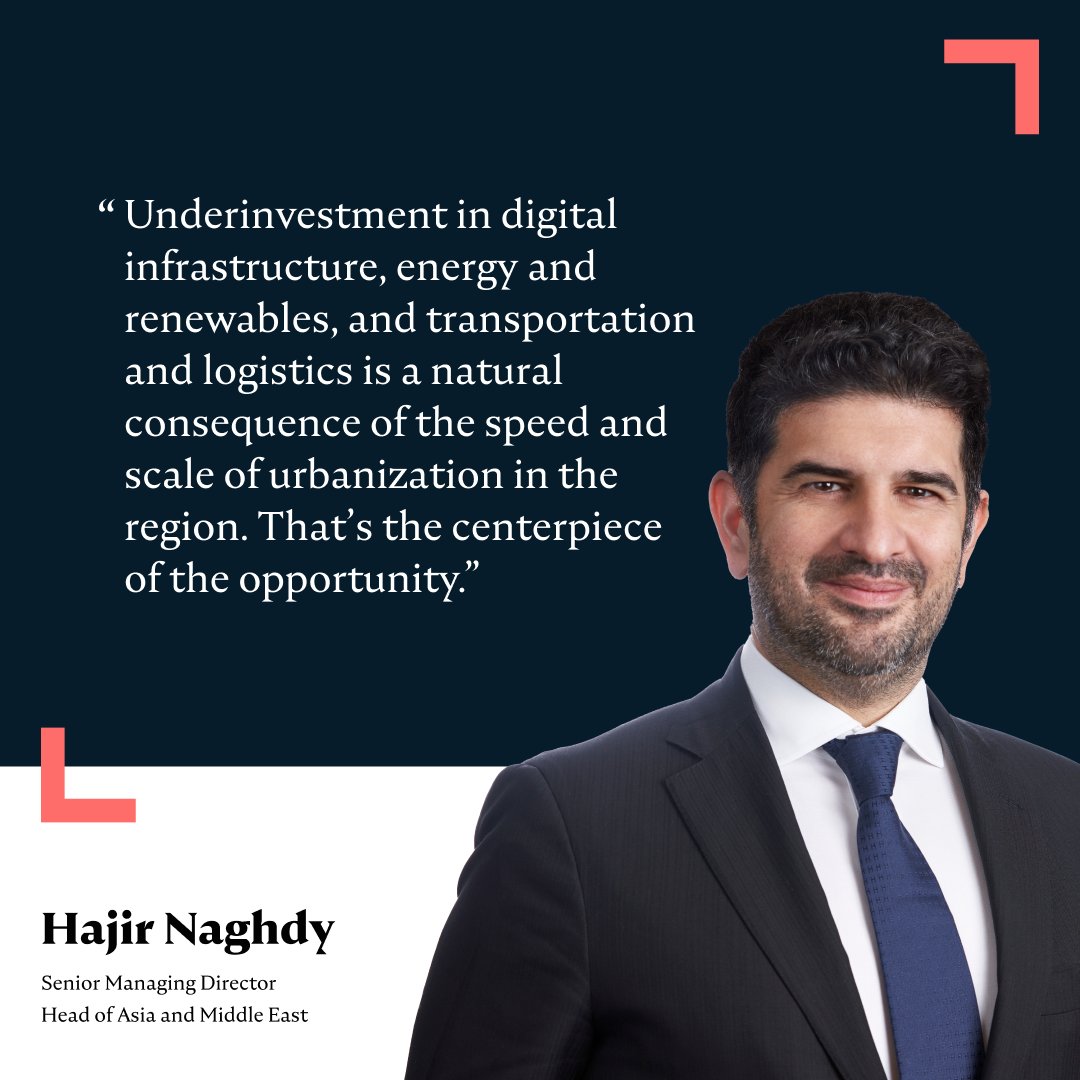
Urbanization, shifting regulation, and growing demand for power and connectivity are redefining the investment landscape in Asia. Learn more in @DealStreetAsia’s recent interview with Hajir Naghdy, Head of Asia and the Middle East at Stonepeak: https://t.co/h9Nd3ICvqM
"The development of interconnected water transport, linking river and maritime routes, aims to expand options and reduce overall transportation costs."
Samdech Thipadei (01 May 2026)
Unofficial Translation
An astute observation linking development to logistics. By framing inland water transport as a "climate frontline," it reinforces this essay’s point that water is not just cheap and reliable way to move the world’s goods. https://t.co/SRBDy9k2h1
India's maritime infrastructure is a massive catalyst for economic growth. Modernizing our ports helps lower logistics costs and boosts global trade efficiency. A great step toward a stronger economy. This structural shift is anchoring our future in the sea for a better tomorrow.
History repeat itself. Water transport has been the source of economic developHistory repeats itself. Water transport has been the driving force behind economic development. https://t.co/SRBDy9k2h1
As mentioned in the Economic Survey 2025–26, inland waterways are emerging as a key component of India’s sustainable transport and domestic logistics system. Policy support and infrastructure development have led to steady growth in Inland Water Transport, improving freight efficiency and promoting greener modes of movement.
The Survey also notes the expanding role of inland waterways in urban mobility and river-based tourism. Water metro services and river cruises are enhancing passenger connectivity while supporting tourism and local economies, reinforcing the contribution of inland waterways to inclusive and sustainable growth.
Tal como se menciona en la Encuesta Económica 2025–26, las vías navegables interiores están emergiendo como un componente clave del sistema de transporte sostenible y de la logística interna de la India. El apoyo en materia de políticas públicas y el desarrollo de infraestructura han impulsado un crecimiento sostenido del transporte fluvial interior, mejorando la eficiencia del transporte de cargas y promoviendo modos de desplazamiento más ecológicos.
La Encuesta también destaca el papel cada vez mayor de las vías navegables interiores en la movilidad urbana y el turismo fluvial. Los servicios de metro acuático y los cruceros por ríos están mejorando la conectividad de los pasajeros, al tiempo que impulsan el turismo y las economías locales, reforzando así la contribución de las vías navegables interiores a un crecimiento inclusivo y sostenible.
@MEAIndia@IndianDiplomacy@mygovindia
A crisp, timely reminder: infrastructure is more than concrete; it is the arteries of the economy. This essay elegantly articulates how water, as the original transport network, remains essential to unlocking modern productivity. https://t.co/us7emBG1Zl
Inland water transport is driving green mobility, multimodal logistics and river-led economic growth. From new terminals and jetties to cruise tourism and urban water transport, India’s rivers are fast becoming engines of sustainable growth, writes @businessline.
A succinct headline from an earlier era, now given fuller meaning by your essay’s argument that urban growth is less an accident of scale than a consequence of expanding exchange. https://t.co/n6gERXpfkH
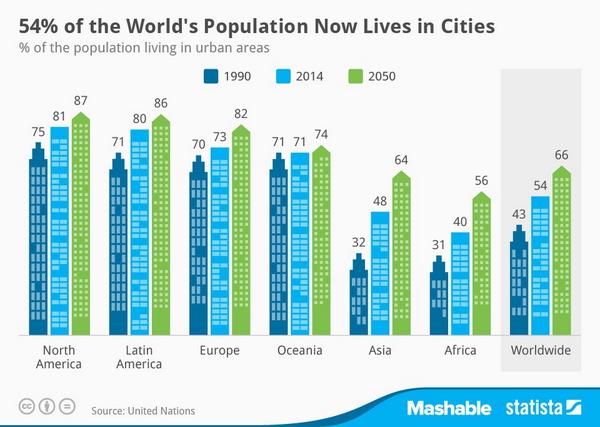
@UN_News_Centre A crisp reminder that urbanisation is no side issue: cities have become the world’s principal habitat, and the essay usefully shows how that fact follows from deeper forces of exchange rather than mere demography. https://t.co/n6gERXpfkH
Mokyr's micro-inventions were demand-driven responses to visible bottlenecks — flying shuttles beget spinning jennies, canals beget railways. This essay shows that cascade in full:
https://t.co/UoI34sQBFa
The Network is Intelligence: How Urbanization, Connectivity, and Clusters Shaped Human Advancement. Water transport created London, Tokyo, Amsterdam, Shanghai — every great pre-modern city. https://t.co/8PiqTwpRf3
I've been making the case for a while that Rome wasn't really a European civilization — it was a Mediterranean one. This article supports that idea.
“fewer than 30% of Rome’s inhabitants had genetic ties to early Italian ancestors."
https://t.co/Pa8YTt130i
I agree with Smith. But, the Chinese economy is roughly the size of America's. That enormous domestic market means strong returns on investment, including R&D. China will remain a serious tech powerhouse for decades.
https://t.co/VeppFAN6Ds
Rewritten and improved.
This essay explains how market size has shaped economic development throughout history.
Population density and transportation were major drivers of market size and, consequently, the economy.
https://t.co/SRBDy9k2h1