My favorite line from Atomic Habits has been living in my head rent-free:
“It doesn’t make sense to continue wanting something if you’re not willing to do what it takes to get it. If you don’t want to live the lifestyle, then release yourself from the desire. To crave the result but not the process is to guarantee disappointment.”
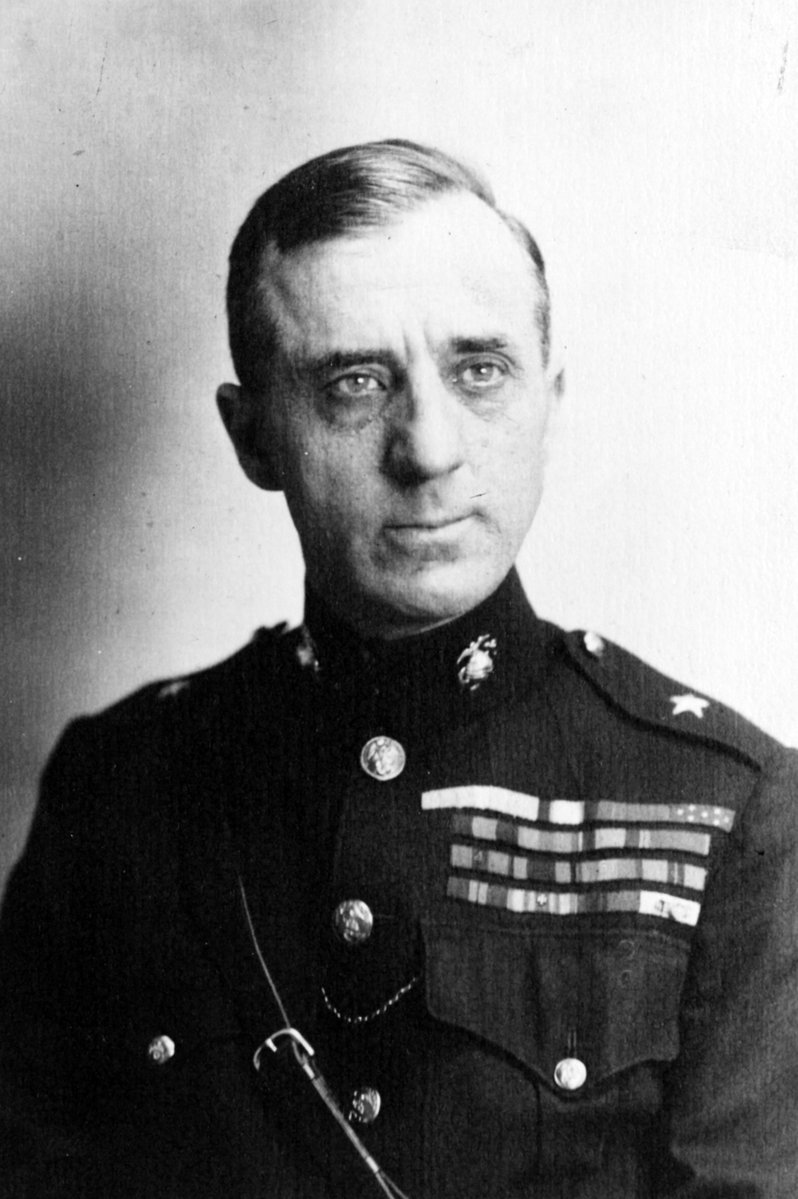
Smedley Butler was one of the most decorated Marines in U.S. history.
He received two Medals of Honor, one of only 19 Americans ever to do so.
He spent thirty-three years in the U.S. Marine Corps, rising to Major General.
In 1935, he wrote a book called War Is a Racket.
He said:
"I was a racketeer, a gangster for capitalism. I helped make Mexico and especially Tampico safe for American oil interests in 1914. I helped make Haiti and Cuba a decent place for the National City Bank boys to collect revenues in. I helped in the raping of half a dozen Central American republics for the benefit of Wall Street. I helped purify Nicaragua for the International Banking House of Brown Brothers in 1902-1912. I brought light to the Dominican Republic for the American sugar interests in 1916. I helped make Honduras right for the American fruit companies in 1903. In China in 1927 I helped see to it that Standard Oil went on its way unmolested. Looking back on it, I might have given Al Capone a few hints. The best he could do was to operate his racket in three districts. I operated on three continents."
One of the most decorated Marines in American history said this.
In 1935.
It is not assigned reading.
The football stadium still says, "Thank you for your service."
But the general who explained what that service was actually used for is still kept outside the official mythology.
The older you get, the more you realize luck is mostly exposure. If you sit in the same place, have the same routine, talking to the same people, nothing new really happens. You have to engage the world to win. Travel more. Talk to people.
A surprising amount of adulthood is just finally accepting that no one is coming to impose the structure you need. You either build it, or you drift inside the structures other people built for you.
there's fuck you money, but then there is fuck you skills. you can be so skilled that you don't actually have to care about what people think. you'll be fine no matter what
When Shohei Ohtani was a high school freshman, he created a detailed "dream sheet" with one central goal: to be the #1 draft pick for 8 NPB (Nippon Professional Baseball) teams.
It was a 64-cell roadmap based on a framework called the Harada Method.
Here's exactly what Shohei did 👇
1. First, some history.... The Harada Method was created by Takashi Harada, a Japanese junior high track coach. He took a team ranked last out of 380 schools and, using his system, turned them into the #1 team in the region within 3 years. They held that top spot for the next 6 years.
2. You start by placing your main goal in the center of an 8x8 grid. For Ohtani, this was "be the #1 draft pick."
3. Next, you identify 8 critical supporting pillars needed to achieve that goal. These surround the main goal.
Ohtani's 8 pillars were:
• Body
• Control
• Sharpness
• Speed
• Pitch Variance
• Personality
• Karma/Luck
• Mental Toughness
4. You then break down each of those 8 pillars into 8 smaller, actionable tasks or daily routines.
This fills out the entire 64-cell grid, turning a massive dream into a concrete, daily action plan.
To improve his karma, he listed tangible actions like:
• Showing Respect to Umpires
• Picking up trash
• Being positive
• Being someone people want to support
5. The method goes far deeper than just technical skills. It forces you to analyze your weaknesses and build confidence. It also has a highlight on service to others, emphasizing that humility and contributing to your community are essential for personal success.
6. The key to the system is daily execution and accountability. Once the 64-cell chart is complete, you turn the tasks and habits into a daily diary and a "Routine Check Sheet." It’s designed to transform abstract intentions into a measurable, daily practice.
IMO it really speaks to Jensen’s leadership that Nvidia still runs as it does when 50% of your employees could choose to retire tomorrow but don’t and instead keep showing up and working hard
Have found pretty good Deep Research results with this prompt. Good for getting up to speed on a new company. Sharing in case it’s helpful.
——
“You are an equity research analyst. Produce a rigorous, source-backed investment memo on {Company} [{Ticker}] with a clear Buy, Hold, or Sell call.
Rules for research and writing
1) Use only verifiable, recent sources. Prioritize official filings, earnings materials, investor presentations, regulatory documents, reputable industry data, and high quality media. Cite every non-obvious fact with a link and date.
2) Separate facts from interpretation. Tag each paragraph as Fact, Analysis, or Inference.
3) Use precise dates. Avoid vague time references.
4) Quantify claims. Show math for derived metrics. Use tables where helpful.
5) Note uncertainty. Call out missing data and state assumptions.
Deliverables
A) Executive summary (8 to 12 bullets): snapshot, thesis, rating, price targets and time frames, key drivers, key risks, near-term catalysts, and what would change the call.
B) Full memo with sections 1 through 15 below.
C) Appendix: source list with links and dates, data tables, and a simple operating model.
1) Thesis framing (purpose: define what must be true to create value)
- State the core investment question in one sentence.
- List 3 to 5 thesis pillars that would make the stock attractive.
- List disconfirming evidence to test that could break the thesis.
2) Market structure and size (purpose: size the prize and trajectory)
- Quantify TAM, SAM, SOM. Segment by product line, customer size, industry, and geography.
- Identify growth drivers: regulation, replacement cycles, macro activity, technology adoption.
- Estimate current penetration and runway. Compare against peer adoption curves.
3) Customer segments and jobs to be done (purpose: map who buys and why)
- Describe mix by size band and industry. Identify buyer roles and budget owners.
- Detail core workflows and pain points. Explain mission criticality.
- Assess switching costs and vendor lock-in by segment.
4) Product and roadmap (purpose: evaluate product-market fit and durability)
- Summarize core modules and adjacent products. Call out differentiators.
- Compare depth vs breadth versus best point solutions.
- Explain implementation time, integrations, configurability, and typical time to value.
- Provide quality and reliability signals: uptime, incident history, mobile performance.
- Roadmap credibility: stated milestones versus delivery track record.
5) Competitive landscape (purpose: position the company)
- Identify direct and indirect competitors by segment and size.
- Compare pricing, packaging, and feature gaps. Include switching friction and contract terms.
- Summarize win or loss reasons from reviews, case studies, and disclosed data.
6) Go-to-market and distribution (purpose: test scalability of new-logo engine)
- Break down demand sources: inbound, outbound, partner referrals, marketplaces.
- Sales productivity: ramp, quota attainment, conversion rates where disclosed or inferred.
- Role of channels and partnerships: integrations, OEMs, platforms.
- Services and customer success model. Training and community as moat.
7) Retention and expansion (purpose: quantify durability of revenue)
- Report gross and net dollar retention by cohort and segment if disclosed or estimable.
- Explain logo churn drivers and timing. Provide a churn curve if possible.
- Identify expansion vectors: seat growth, module attach, usage-based add-ons.
- Discuss contract length, renewal mechanics, and price increase policies.
- Include reference-call insights or credible review synthesis.
8) Monetization and embedded finance if applicable (purpose: understand usage economics)
- Revenue streams and pricing model. For payments or fintech: share of customers active, GTV penetration, take rate by tender type, blended margin, cost stack, fraud exposure, and who holds credit risk.
- Revenue recognition: gross vs net. Seasonality and cyclicality.
- ARPU uplift from usage products. Payback on onboarding.
9) Unit economics and efficiency (purpose: test scalability with profitable growth)
- CAC, payback period, magic number, LTV to CAC by segment if available or estimable.
- Contribution margin by line: software vs usage vs services.
- Cohort profitability and cash contribution over time.
- Implementation and support cost over customer lifetime.
10) Financial profile (purpose: link operations to financial outcomes)
- Revenue mix and growth by component. Gross margin by line. Operating leverage path.
- Rule of 40 and efficiency trends. GAAP to cash flow bridge.
- Leading indicators: billings, RPO, backlog.
- SBC, dilution, and share count trajectory.
- Liquidity, working capital needs, and path to FCF breakeven and target margin.
11) Moat and data advantage (purpose: assess defensibility)
- Workflow depth and data lock-in. Network or ecosystem effects if present.
- AI or analytics differentiation with measurable outcomes.
- Integration footprint and practical switching costs.
12) Execution quality and organization (purpose: evaluate management and operating cadence)
- Leadership track record and stability. Org design and succession.
- Engineering velocity: release cadence, defect and incident rates where available.
- Customer sentiment: CSAT, NPS, peer review sites, and community signals.
13) Risk inventory and mitigants (purpose: make downside explicit)
- Macro, regulatory, competitive, operational, and concentration risks.
- Payments, credit, or compliance risks if relevant.
- Implementation complexity and time-to-value risks.
- For each risk, propose leading indicators and mitigations.
14) Valuation framework (purpose: value with cross-checks)
- Public comps table: growth, gross margin, operating margin, Rule of 40, EV to revenue, EV to gross profit. Normalize for any usage or payments reporting differences.
- DCF with explicit drivers and sensitivity bands.
- Cross-checks: cohort NPV math, S-curve adoption, unit economics to enterprise value sanity checks.
15) Scenarios, catalysts, and monitoring plan (purpose: set expectations and triggers)
- 12 to 24 month bear, base, bull cases. Specify NRR, new logos, pricing or take rate, margins, SBC, and share count. Assign probabilities that sum to 100 percent.
- Near-term catalysts: product launches, pricing changes, partnerships, market entries, M&A, regulatory outcomes.
- Early warning indicators: churn spikes in small cohorts, backlog slippage, uptime incidents, pricing pushback.
- What would change my mind: three positive and three negative triggers.
Output format
- Executive summary
- Rating with price targets and time frames
- Investment thesis and variant perception
- Detailed sections 1 through 15
- Tables and charts embedded
- Source list with links and dates
- Appendix with model assumptions and calculations
Quality bar
- No generic claims. Back important statements with numbers and citations.
- Label any speculation as Inference.
- Be concise and structured. Prefer bullets and tables.
You can take any one minute clip from The Wire and teach a sociology lesson. If you can’t keep track of five Italians and their gabagool then maybe #TheWire isn’t for you. No disrespect meant..aww fuck it. And fuck your flying dragons. The Wire is the best show ever.
Unsolicited advice on what makes someone a good junior associate on the buyside
I always receive this question in my DMs, so thought I would put together a few traits that I have seen
Feel free to add on in the comments if you have any thoughts
Ability to absorb information very quickly
As an Associate, you are digging through CIMs and VDRs with lots of data, often with short timelines to indications on transactions. One of the core skills here is what I call being able to "separate the substance from the noise"
A bad Associate will spend countless hours digging through every small detail and wasting useful hours + resources on things that dont make a difference
The best Associates regularly follow this routine when digging through data rooms:
(1) Quickly skim through the CIM + model
(2) Identify the key drivers of the business (as in what factors drive volume x pricing and costs)
(3) Isolate the 4-5 factors that you need to get comfortable around in order to underwrite the business
(4) Dig into the VDR for data around those 4-5 factors
(5) Identify the thesis and risks, and data required to get comfortable around those factors
As you do this, many deals will fall apart because you will identify factors that you would never be comfortable with. Maybe its customer concentration, maybe its sole supplier risk, maybe its macro economic conditions, or just the unit economics in general
The best Associates minimize the hours that a VP / MD needs to dig through the deal to identify factors that move the business. If something looks like a kill, they can identify it early and save countless hours their seniors would have had to spend looking through it
This is one of those skills that you get better at with more experience. The longer you do it, the more you understand what matters to your firm when underwriting a deal
I would argue, this is also the core skill that makes someone a good investor. Learn to separate the substance from the noise
Asking the right questions
Good associates know what questions to ask. This is harder than it sounds. During a deal process, companies and bankers have limited capacity to get you answers you need
Bad associates will spend their time putting together a 11 page DD list that they will never receive proper answers to. Even if you do receive it, you are killing precious time that the company will need to get back to you
Remember, once the process begins - it is usually the investor who is on a shot clock. Especially true for larger size transactions, but any banker led process will feel this way even in down markets
As an Associate, it is important to recognize what is worth asking and what is not. Only ask the questions that move the needle on your underwriting thesis.
Before asking a question, a good thought process is: "will receiving the answer to this question change how I think about the risk is going to be priced in this opportunity?"
There is no riskless investment. The question is if you are being paid to take the risk in any given investment. Thats what DD is supposed to inform you on.
Focusing on the things that matter will also save yourself a lot of time. Obviously, VPs and MDs may make the final call here, but my advice is to learn to think like an investor in this way from early on
Collaboration
Working on a deal means third parties are constantly in your inbox and phone. This includes accounting teams sending you the QoE and audits, lawyers asking to call about terms in the company's customer contracts, bankers sending you the latest set of bids on a process you hired them to run
Bad associates become unorganized during fast moving processes. They lose track of emails, deliverables, and often forget to follow up with third parties on key inputs to the underwriting
Being organized and being able to represent your company well matters a lot. Also good to remember that you will repeatedly work on transactions with some of the same firms. Many of these third parties will also represent the other side on some transactions
Reputation matters a lot. It is a smaller world than people think, and the best Associates are able to recognize that and work accordingly
Being a good speaker / salesperson
As you "grow up" into your role, VPs / MDs start expecting you to take on more responsibility.
Instead of simply being the note taker during negotiations, you will have to start speaking and presenting in front of very informed audiences, including CEOs and Boards in some cases
Internally, you will have to sell and defend your numbers to your investment committee. Come promotion time, you will have to sell yourself on why you deserve it vs the next guy
Seniors need to feel confident in your ability. This comes from a combination of working hard and being able to sell yourself very well to your own team
The ultimate sign of a good speaker is someone who can articulate complicated ideas in a precise manner. This comes with practice.
If you are an Associate, my advice is to put yourself in uncomfortable situations and raise your hand to present as much as possible
Even if your MDs dont offer, go out of your way to ask for sections of the investment memo that you can present to your committee. This will help build up confidence and get you reps for a crucial aspect of the job