Phage therapy is promising to kill drug-resistant bacteria—but finding the right phage is slow. A new ramanome-based phage susceptibility test (RPST) identifies phages within ~1 h. Faster answers, better treatments!
Paper: https://t.co/IHP9Ve4Osy
Try RPST: https://t.co/uqjqBgdgVQ
Exciting news! mLife’s 2025 JCR Impact Factor has reached 6.7, with a 5-year IF of 6.8, ranking Q1 in Microbiology (23/167). We thank our authors, reviewers, editors, and readers for their trust and support. Submit your next discovery to #mLife!!!
👉🏻https://t.co/oNMnhasQE2
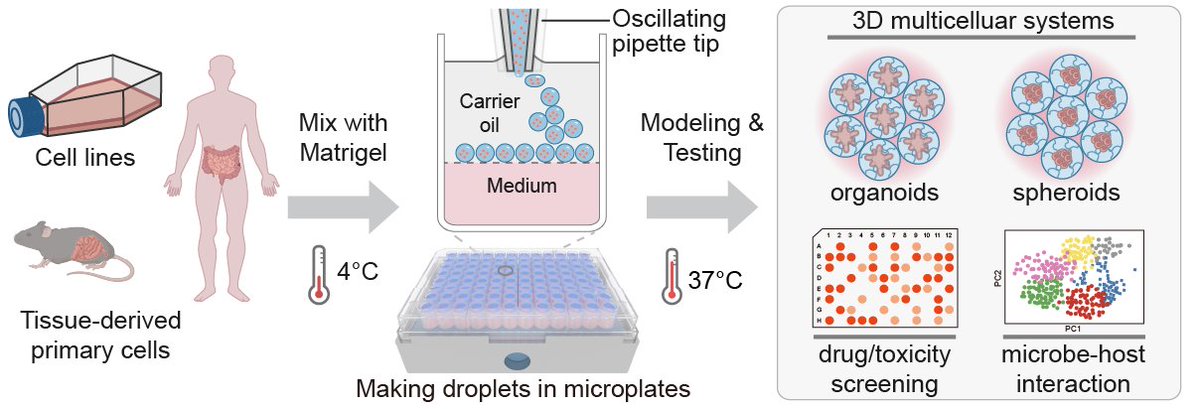
Excited to share our new paper in Microsystems & Nanoengineering:
We developed OsciSphere, a platform for high-fidelity bioassembly of organoids and spheroids, enabling scalable drug screening, tumor–immune modeling, and precision oncology
https://t.co/MidKEXt9St
New in Analytical Chemistry: microfluidic FACS via gradient dielectrophoresis.
A compact chip design for gentle, precise cell sorting with high viability.
https://t.co/l4A1PpB7gh
Prof. Jiang’s journey is remarkable: born in China, raised in Canada, educated at Yale, then returning to China—not for prestige, but to teach and push for a more creative generation. I learned a lot from his story and his vision. He now teaches in Beijing. @xueqinjiang
Jimmy Dore’s @jimmy_dore interview w/ Prof. Jiang @xueqinjiang is worth watching. A sharp and thought-provoking discussion on how extreme eschatological beliefs may be driving geopolitics and war.
https://t.co/d0hUhw9x42
We worked with @Ginkgo to connect GPT-5 to an autonomous lab, so it could propose experiments, run them at scale, learn from the results, and decide what to try next. That closed loop brought protein production cost down by 40%.
Our work is on the cover of Cell Host&Microbe! With human Gut Microbial Protein Structure database https://t.co/CcZb7zH0sz and AI, we demonstrate the power of structure-guided approach in discovering functional dark matter (e.g. phage protein, isozyme).
https://t.co/xDLFTzzoci
BREAKING NEWS
The 2025 #NobelPrize in Physiology or Medicine has been awarded to Mary E. Brunkow, Fred Ramsdell and Shimon Sakaguchi “for their discoveries concerning peripheral immune tolerance.”
WATCH LIVE: Join us for the 2025 Nobel Prize in Physiology or Medicine announcement.
Hear the breaking news first – see the live coverage from 11:30 CEST.
Where are you watching from?
#NobelPrize
https://t.co/M89Xm7LrHs
On July 11 - July 13, we held the GPB Omics & Bioinformatics Frontiers Symposium (GFS2025) in Haining, Zhejiang, China, especially focusing on novel technologies regarding pangenomics, large-cohort genomics, spatial omics, immunomics, and single-molecule imaging & sequencing.
Leonard Rome’s lab discovered an odd, abundant component of cells in the 1980s—and he’s still trying to figure out what it does.
Learn more in this @NewsfromScience feature: https://t.co/WxgEIwacBa #ScienceMagArchives
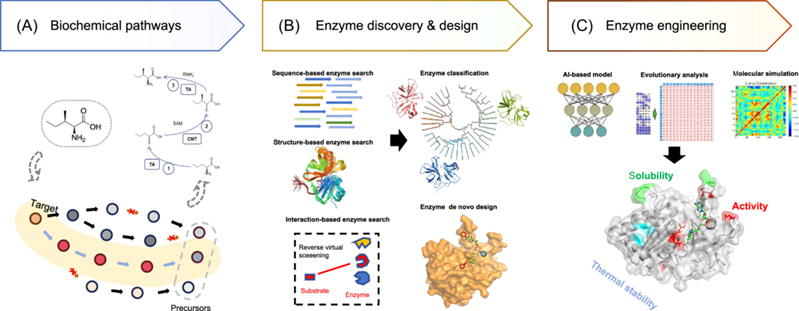
How can AI revolutionize enzyme engineering? A new #mLife review summarize molecular retrobiosynthesis as a framework for discovering and designing enzymes, integrating artificial intelligence to accelerate biocatalyst development. @wileymicrobio https://t.co/Ij7xXeHyp5
How did eukaryotes get their membranes? A new #mLife study engineered E. coli to produce archaeal lipids, providing clues to one big question in evolution: how bacterial-type membranes in archaeal–bacterial chimeras evolved? @wileymicrobio @WileyEcolEvol https://t.co/rBPYKo6nAN
We teamed up with Kubo Biotech to develop a portable qLAMP system for rapid, on-site detection of Mycobacterium in bovine feces.
A powerful tool for field diagnostics in resource-limited settings.
📄 Read here: https://t.co/t6gSaUgMNc
#POCT#LAMP#Mycobacterium