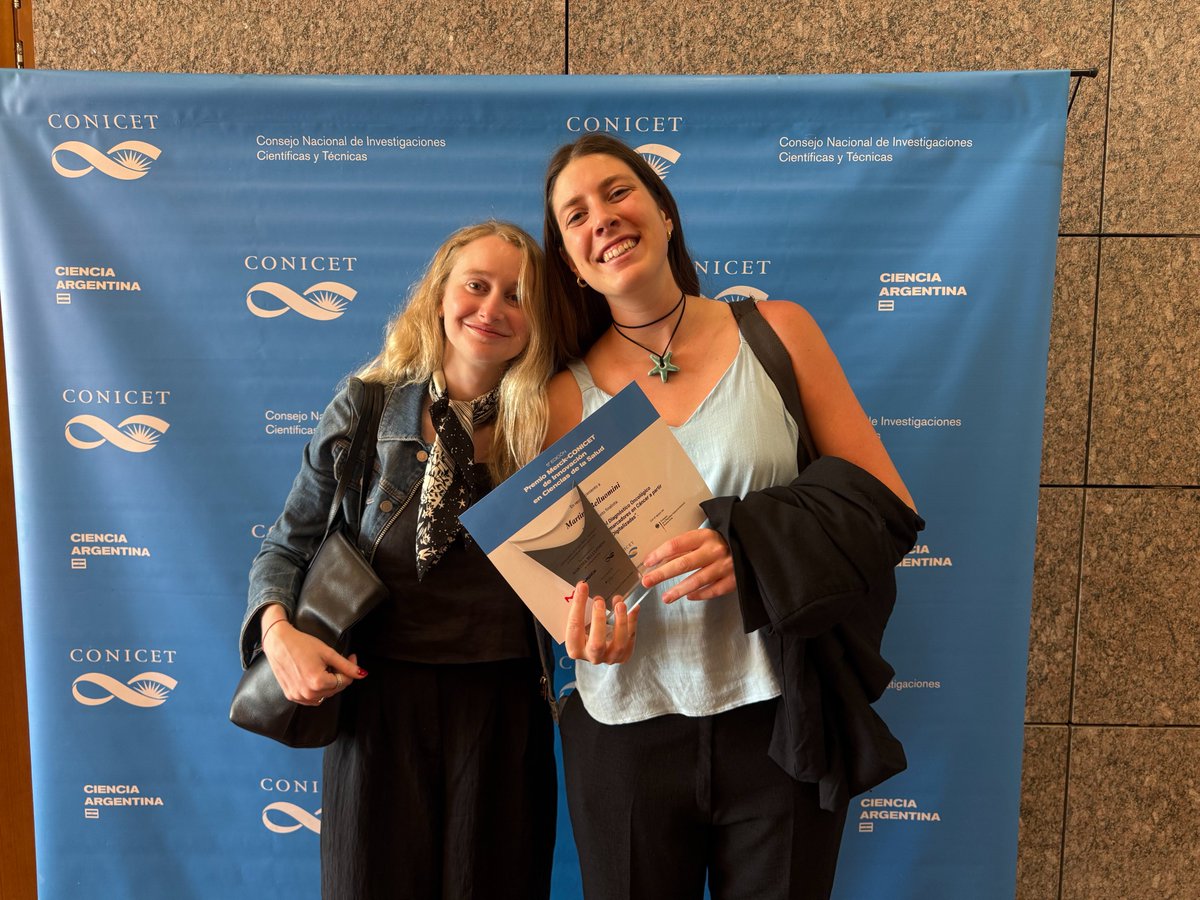
DOS BIOINGENIERAS CREARON UNA IA QUE PASA DE DETECTAR MUTACIONES DE CÁNCER EN UNA BIOPSIA EN UN MES A CINCO MINUTOS
Ana Gorodisch y Martina Belluomini son de Buenos Aires. Se recibieron de bioingenieras en el ITBA en 2023. Para su tesis de grado desarrollaron un algoritmo de inteligencia artificial que analiza imágenes de biopsias tumorales y detecta mutaciones genéticas invisibles a simple vista. En 2024, lo presentaron en el congreso de la American Society of Clinical Oncology. Ahí vieron que la necesidad era real y que nadie estaba desarrollando algo similar localmente.
En 2025 fundaron Kuvia. La tecnología toma la imagen de una biopsia tumoral, que ya se obtiene de rutina en cualquier paciente oncológico, y detecta en cinco minutos los biomarcadores que definen el mejor tratamiento, sin insumos adicionales. Hoy ese proceso puede tardar hasta un mes y no está disponible en todos los centros médicos.
Desarrollaron un producto para detectar un biomarcador clave en el cáncer de colon y endometrio, entrenado con los primeros datos de patología digital del país y en validación en más de cinco instituciones. Una de ellas es Biogenar, un laboratorio de anatomía patológica ubicado en Buenos Aires.
Fueron seleccionadas en Transformar Salud, la iniciativa de la Fundación Garrahan y Roche, para desarrollar una IA orientada a cáncer pediátrico. Y el Harvard Health Systems Innovation Lab destacó su solución entre los desarrollos globales de IA en salud.
Hoy son cuatro en el equipo: Ana como CEO, Martina como CTO y dos data scientists. Colaboran con un laboratorio de diagnósticos en Estados Unidos y están en conversaciones para llegar a Brasil.
"Queremos usar nuestra tecnología no solo para generar diagnósticos más rápidos y económicos, sino también para desarrollar nuevos diagnósticos que hoy no existen"
Unity AI is now in Open Beta 🎉💫
We believe AI has the most impact when it helps creators move faster while staying in control of the creative process.
Use our built-in agent tuned for Unity workflows or connect the AI tools you prefer via AI Gateway and MCP Server.
¡Estoy muy contento de compartir esto! Es genial cuando las alianzas traen beneficios reales para los que estamos en el día a día.
Si sos PAS y socio de AMPAS, VISION PAS te ofrece un descuento increíble:
🔥 25% OFF inicial + 15% OFF permanente.
#seguros#software#PAS#mdp
It is hard to communicate how much programming has changed due to AI in the last 2 months: not gradually and over time in the "progress as usual" way, but specifically this last December. There are a number of asterisks but imo coding agents basically didn’t work before December and basically work since - the models have significantly higher quality, long-term coherence and tenacity and they can power through large and long tasks, well past enough that it is extremely disruptive to the default programming workflow.
Just to give an example, over the weekend I was building a local video analysis dashboard for the cameras of my home so I wrote: “Here is the local IP and username/password of my DGX Spark. Log in, set up ssh keys, set up vLLM, download and bench Qwen3-VL, set up a server endpoint to inference videos, a basic web ui dashboard, test everything, set it up with systemd, record memory notes for yourself and write up a markdown report for me”. The agent went off for ~30 minutes, ran into multiple issues, researched solutions online, resolved them one by one, wrote the code, tested it, debugged it, set up the services, and came back with the report and it was just done. I didn’t touch anything. All of this could easily have been a weekend project just 3 months ago but today it’s something you kick off and forget about for 30 minutes.
As a result, programming is becoming unrecognizable. You’re not typing computer code into an editor like the way things were since computers were invented, that era is over. You're spinning up AI agents, giving them tasks *in English* and managing and reviewing their work in parallel. The biggest prize is in figuring out how you can keep ascending the layers of abstraction to set up long-running orchestrator Claws with all of the right tools, memory and instructions that productively manage multiple parallel Code instances for you. The leverage achievable via top tier "agentic engineering" feels very high right now.
It’s not perfect, it needs high-level direction, judgement, taste, oversight, iteration and hints and ideas. It works a lot better in some scenarios than others (e.g. especially for tasks that are well-specified and where you can verify/test functionality). The key is to build intuition to decompose the task just right to hand off the parts that work and help out around the edges. But imo, this is nowhere near "business as usual" time in software.
🔴 ¡YA ES OFICIAL!
Sir Ian McKellen y Elijah Wood volverán a reunirse en 2027 en la nueva película de ''EL SEÑOR DE LOS ANILLOS: LA CAZA DE GOLLUM''
La producción empezará en mayo de 2026.
La película se grabará en Nueva Zelanda y mantendrá la continuidad con la trilogía original.
El guión está actualmente en desarrollo y quieren mantenerse fieles a Tolkien.
Andy Serkis será el director y volverá como Gollum. Peter Jackson será el productor. 🔥
I'm not joking and this isn't funny. We have been trying to build distributed agent orchestrators at Google since last year. There are various options, not everyone is aligned... I gave Claude Code a description of the problem, it generated what we built last year in an hour.