Not getting interviews in 2026? 😔
95% of the time it’s your resume.
Here’s a 0-bullshit thread that actually fixes it and gets you calls.
Attaching my LinkedIn inbox screenshot for proof!
Save this thread 🧵👇
Let me trace the timeline here because nobody's connecting it.
Step 1: Scrape the entire internet. Every book, every article, every conversation, every piece of art, every forum post. Do it without asking. Do it without paying.
Step 2: Train a model on all of it. Call it "artificial intelligence."
Step 3: Go to BlackRock's Infrastructure Summit and announce: "We see a future where intelligence is a utility, like electricity or water, and people buy it from us on a meter."
Step 3 is where you sell people's own knowledge back to them. On a meter.
They took the collective output of human thought, compressed it into a model, and now they want to charge you by the token to access a version of what you and everyone you know already created.
One Reddit user put it perfectly: "They stole all this data from us, the people, our life's work, creativity, art, by devouring the internet and blowing through all copyright laws. Now they want to sell it back to us in the form of a utility."
Imagine if someone photocopied every book in the public library, burned the library down, and then opened a subscription service for the copies.
That's the metered intelligence business model.
And they're pitching it to infrastructure investors as though they invented water.
A financial reset is coming.
Countries will ditch the US$, US will ditch the world trade, China will dump its goods on others.
What's coming is dangerous.
And, here is what you do:-
1) Buy some gold (physical) at every support. This is your safety engine.
2) Do NOT trust the government 1 bit. They can put retrospective taxation on digital version of gold/silver.
3) All people that you see buying "digital" gold via Mutual Funds are big time fools. And, will get screwed at some point.
4) Put a decent chunk of your money on "growth" assets. Things that improve productivity. Eg. Tech. Within tech AI. This is your growth engine.
5) Do NOT make large commitments. Eg. if you can afford a house worth 10Cr. Buy worth 2Cr
6) Having investment options across multiple countries. Example: buy your US stocks directly; get access to South East Asia market etc. Yes, you need to be a HNI or whatever.
7) But, if you are working with small capital: pick gold, growth equities (primarily the US).
8) Do not trust derivative products like REITs. Another scam is brewing here (big time), especially in markets like India
9) Builders + Politician lobby is deeply corrupt= REITs will give them more leverage. Be safe!
10) Keep 60-70% of your capital in liquid assets. Opportunities = crashes= great wealth!
Build a portfolio that survives.
I'm doing exactly that. And, helping my community do the same.
1) You know what Meta, Msft, Google does. You use their products everyday.
2) These are some of the most followed firms in the world.
The transparency/availability of info on these firms is 100X more than any Indian firm.
3) The US Market structurally has outperformed the Indian market over any meaningful horizon (if we see in the same currency).
Yeah, these are some points you should know. Use a mix I'd say: invest in US, invest in India.
Then build your own blended strategy.
🚨 SHOCKING TRUTH: Anant Ambani's ₹750 Ice Cream is PROOF India is DOOMED to Stay Poor Forever? The Dark Secret No One Dares Say!
Hey friends, stop everything. While you're struggling with ₹50 ice cream cones in this crazy heat, Anant Ambani – son of Asia's richest man – just launched Vantara Creamery selling scoops for a jaw-dropping ₹750 each. Yes, you read that right. Seven hundred and fifty rupees for one scoop of fancy ice cream.
The internet is exploding with memes, anger, and questions. But here's the real bombshell: This isn't just about rich people flaunting luxury. It's the deadly symptom of why India keeps failing to build real tech giants like China. We're trapped in a dangerous illusion.
The Ice Cream Empire While the Nation Starves for Innovation
Think about it. The Ambani family has unlimited money, power, and brains. They could pour resources into AI that changes the world, semiconductors that make India independent, or batteries to crush Tesla. Instead? Premium ice cream targeted at the super-rich.
Why? Because in today's India, selling fancy scoops, protein powders, or hair oil makes way more money with zero risk than betting on hard tech. One viral Instagram post, beautiful packaging, and boom – cash flows in weeks. Deep tech? It takes 7-10 years, massive risk, and government red tape that kills dreams.
This is controversial, but someone has to say it: Our entire startup culture is a massive scam. We brag about having over 2 lakh startups. Sounds impressive, right? Wrong. Less than 1% work on real future tech like AI, chips, or biotech. The rest? Shampoos, popcorn brands, and food delivery apps. Shark Tank India is basically a D2C fashion and food show at this point.
The Heartbreaking Reality of India's "Tech" Unicorns
India has 117 unicorns worth billions. Their total patents? Just around 2,129. Shockingly, over 110 of them have ZERO patents. Zero! Compare that to real tech companies abroad that file hundreds every year.
Our biggest "tech" firms are actually delivery apps and e-commerce. Engineers from IITs – the best brains in the country – are delivering Swiggy and Zomato orders because the pay is better and faster than risky startups. This is heartbreaking. We're wasting our demographic dividend on gig work.
China? They're building BYD electric cars, TikTok-level apps, and dominating semiconductors. India? We're busy copying foreign tech and paying them $14.3 billion every year in royalties just to use their inventions. That's money leaving our country while we sell ice cream.
Zoho tried to build semiconductors – a massive ₹3,500 crore project. They had to shelve it because finding real tech partners in India is nearly impossible. Even big corporates run away from deep tech.
Why This System is Broken (And How It's Keeping India Down)
India's economy has three layers:
- Top 15 crore rich people who buy ₹750 ice cream
- Middle 30 crore aspirational folks loving convenience apps
- Bottom 100+ crore fighting daily survival
The system rewards quick consumer wins over long-term nation-building. Foreign companies laugh all the way to the bank as we import their tech and export our talent.
This isn't hating on Ambani – they are brilliant businessmen playing the game perfectly. The real villain is our broken incentive structure that makes ice cream the smartest bet.
We say we want an Indian Elon Musk. But our ecosystem rewards the guy selling overpriced dessert instead.
The Wake-Up Call We Desperately Need
India has the talent. We have the population. We have ambition. But we're stuck in "trader mode" instead of "builder mode."
Real change needs:
- Massive rewards and protection for deep tech risk-takers
- Education that teaches invention, not just dropshipping tricks
- Government buying Indian tech first
- Culture that celebrates patents more than valuations
Until then, expect more ₹750 ice creams while China builds the future.
What do you think? Is Anant Ambani's ice cream a smart business move or a national embarrassment? Drop your hot takes below – let's debate this like our future depends on it (because it does).
Like, share, and subscribe if you want more truth bombs on India's real challenges. Turn on notifications – the next one might hit even harder.
This is Peter Steinberger, and his story is just insane 😳
- Sells his first company for $100M+
- Spends 3 years in existential crisis
- Becomes jacked
- Comes back from retirement
- Vibe-codes 43 failed projects
- Project 44 is ClawdBot
- Goes viral
- Anthropic sends you trademark lawsuits
- Renames to MoltBot
- Crypto scammers hijack your accounts in seconds
- Secret rebrand to OpenClaw
- Hits 180K GitHub stars
- Gets acquired by OpenAI
No VC funding.
No 100+ person team.
Just a solo founder + shipping.
Probably one of the wildest tech and AI stories of all time.
Legend.
What part of this feels most unbelievable to you?
#ArtificialIntelligence #AI #Startups #SoloFounder #Technology #Innovation
Met a ~4 YoE SWE (E4) from Meta, Bangalore who had joined just a few months back at roughly ~₹90L annual TC (₹50L base + $140K RSUs/4 years + bonus)
He got impacted by Meta layoffs and is back in the market again. I shared our budget with him and technically it would be a pay cut from his last compensation. He still insisted to proceed and acknowledged the market pay trends & the difficulty to land interviews.
Honestly, this is one of the toughest parts of recruiting nobody really talks about. From my own experience, I’m usually uncomfortable proceeding with candidates knowingly taking significant pay cuts, even when they genuinely say they understand the market and are okay with it.
Because as a recruiter you’re constantly balancing two things: human empathy and hiring probability.
On one side, you genuinely want to help.
Losing a job unexpectedly while bills, EMIs, responsibilities and uncertainty keep running in the background is rough.
But on the other side, intuition often tells you: the moment the market improves or a better aligned opportunity appears, there’s a high chance the candidate moves again and honestly I don’t blame them for it.
I’ve seen this happen personally a few times too. At one of my previous companies, I ended up considering two very senior candidates (~20+ YoE) for Principal-level openings because they had been impacted and were in genuinely difficult situations. They were requesting to be considered despite budget constraints.
One candidate joined and left within a week after receiving a better offer elsewhere.
The other dropped post offer while negotiating an up-leveling. Ironically, he seems to be back in the market again and recently reached out to me once more.
Again, no hard feelings. People optimize for survival first. But this is the uncomfortable side of hiring: recruiters are constantly making judgment calls between empathy, business reality, team bandwidth, hiring timelines and probability of long-term alignment.
Helping someone feels human. But knowingly entering a likely mismatch can also mean:
• wasted interviews
• delayed hiring for teams
• restarting pipelines again
• candidates leaving quickly
• trust erosion internally
If you were the recruiter here, what would you do?
"बोया पेड़ बबूल का, तो आम कहाँ से होय?"
Translation: If you plant cactus, you won't get Mangoes.
We built no competency.
Therefore, we have no choice now.
My Uncle has EV Charging Station.
Total Investment = ₹10 - 15 Lakhs
Govt. Subsidy = ₹8 - 12 Lakhs (80%)
Effective Cost = ₹2 - 3 Lakhs
Per Unit Charge = ₹15 - 20
Average Unit Per Car = 30 - 45 Units
Monthly Earnings (20 Cars) = ₹4 - 5 Lakhs!!!
I watched a billionaire carry a food tray for his employees.
No assistant. No ego. Just Harsh Mariwala Thing🙏
I worked under him for 19 years.
12 of those reporting directly or one level below.What I learnt from him no MBA class can teach .
During market visits, he would walk to the counter, buy food for the team, pick up the tray himself, and serve us.
A man worth $6.9 billion carrying a tray for people 8 levels below him.
No fancy watch. No designer belt. No expensive pen.
The richest person in the room always looked like the simplest.
He gave me ₹1 crore and said go build a company in Bangladesh.
I built it from nothing. He never micromanaged. Just trusted.
That ₹1 crore business is worth ₹16000 crores today.
Three things I learned from him that no business school will teach you:
1. Have a Right to Win before you enter any market.
2. Innovation is not a department, it is survival.
3. Hire people better than you. Delegate fully. Review relentlessly.
He did not build a ₹1 lakh crore company by being the smartest.
He built it by being the most humble and “Let go approach “
Humility is not weakness. It is the highest form of confidence.
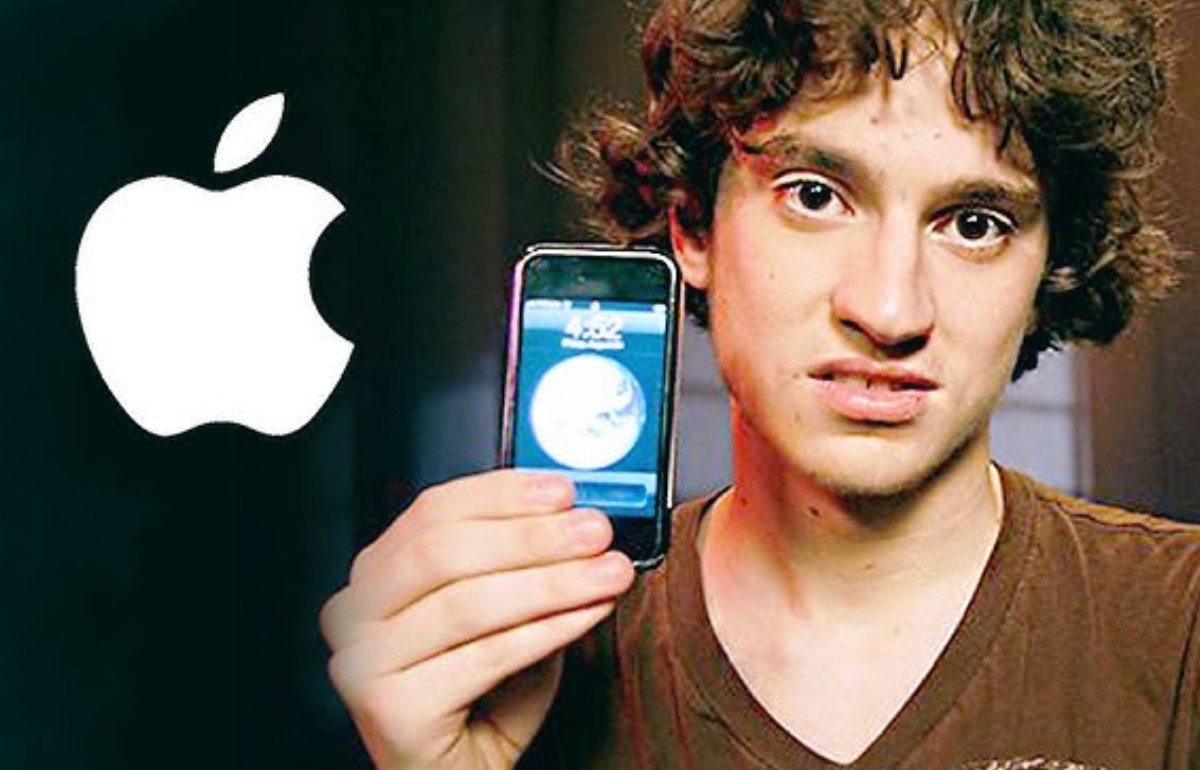
A 17 year old in his mother's kitchen in New Jersey unlocked the iPhone in 2007 so it could run on any carrier in the world, and 18 years later he is the only person on Earth trying to break NVIDIA's monopoly on AI compute from his apartment in San Diego with a 12,000 line piece of code.
His name is George Hotz. Most people call him geohot.
The framework he built is called tinygrad. It is open source. It is MIT licensed. And it is what he believes will end the trillion dollar moat around CUDA.
At just 17, George became the nightmare of tech giants. He did it in his mom's kitchen with a soldering iron and an eBay-bought original iPhone. Apple had locked the device to AT&T. He unlocked it in 500 hours of work over a summer. He uploaded a video to YouTube. The world lost its mind.
Three years later he reverse engineered the PlayStation 3 and put the keys on the internet. Sony sued him. The case settled. He kept hacking.
Elon Musk noticed. He tried to recruit George to fix Tesla's Autopilot. George's response became legend. "I don't want to work for you. I want to beat you."
In 2015 he started his own self-driving car company called comma AI out of a garage. He sold a $1,500 device that you plug into your Honda and it drives itself on highways. The thing actually worked.
Then in November 2022 he walked away from his own company to start something most engineers thought was impossible.
He decided to break NVIDIA.
NVIDIA is worth around 3 trillion dollars right now. Every serious AI lab on Earth runs on NVIDIA GPUs. The reason is not the silicon. AMD makes silicon that is comparable on paper. The reason is CUDA, the software layer NVIDIA spent 20 years building that nobody has been able to replicate.
CUDA is what people in the industry call a moat. A trillion dollar moat.
George looked at this and decided one person could rewrite it.
He started tinygrad in late 2022 as a neural network framework so small you could read the entire codebase in an afternoon. PyTorch has millions of lines of code. Tinygrad fits in roughly 12,000.
His bet was that if you could write a framework small enough for one human to understand, you could port it to any hardware on Earth in months instead of years.
He bought six AMD Radeon 7900 XTX cards, the consumer gaming GPUs you can buy at Best Buy, and tried to make them train AI models. AMD said it would not work. The drivers were too unstable. ROCm, AMD's official software stack, was famously broken.
For two years George fought AMD publicly on X. He posted bug reports daily. He called out AMD's CEO Lisa Su by name. He live streamed himself debugging firmware crashes at 3 in the morning. The AMD subreddit followed it like a soap opera.
Then in March 2025 something changed.
AMD shipped him two MI300X data center systems, the same chips that power Microsoft and Meta's AI infrastructure. AMD's lead GPU software engineer Anush Elangovan posted publicly that he was working closely with tinygrad to "commoditize the petaflop."
George wrote a blog post titled "AMD YOLO" the same day. Tinygrad now has a fully sovereign AMD stack. They rewrote the entire pipeline from the hardware up to PyTorch compatibility. Their own driver. Their own runtime. Their own libraries.
The line that broke the AI infrastructure world was this one. NVIDIA is either massively overvalued or AMD is massively undervalued. The hardware is similar. CUDA is not the moat people think it is.
The whole thing runs on roughly 12,000 lines of code.
You can buy a Tinybox from him today. Six AMD GPUs in a custom chassis. Around $15,000. It trains models. It works.
NVIDIA spent 20 years building the deepest moat in tech.
A solo hacker just walked across it.