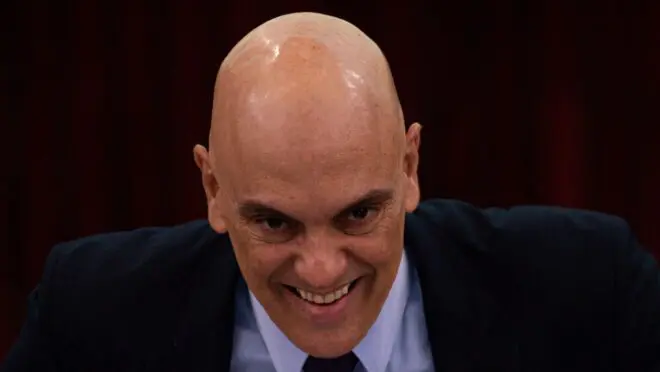
Here we go again. In 2022, Alexandre de Moraes used emergency anti-disinformation powers to police online political speech during the decisive final stretch of the election to ensure @LulaOficial could get elected. Even with that exponential advantage, Lula barely managed to come out ahead by 1% in official results making the 2022 margin the closest Brazilian presidential election result to date.
Lula then promptly tried to codify into law the Moraes censorship tools that helped secure his election in 2022, but the Brazilian Congress flatly refused to bless an even broader version of that censorship architecture.
Now, understanding the Brazilian Congress would never pass such a repugnant censorship package, Lula is moving to impose it by presidential decree four months before the 2026 election.
When speech rules cannot pass democratically and are desperately imposed by signature of the guy sinking in the polls, it raises a legitimate question about whether elections in such circumstances can credibly be called free and fair.
https://t.co/6rWnzn0ykn
457 days after @rumblevideo and Trump Media sued Brazilian Supreme Court Justice Alexandre de Moraes over extraterritorial censorship, a federal court in Florida has finally authorized service by email.
Today’s decision allows the case to move forward and takes us one step closer to protecting Americans’ First Amendment rights from foreign censorship.
Justice Moraes imposed secret censorship orders from Brazil on American platforms and speech protected by the Constitution while bypassing the U.S. government and courts.
Moraes must now respond in an American court or face a judgment by default.
Three places in Brazil that most fund managers cannot find on a map:
MATOPIBA. The size of France. Producing soybeans on land that costs $5,200/hectare while Iowa farmland costs $49,400. Cash rent: $45/acre vs $180 in Iowa. Two harvests per year instead of one.
The Industrial South. WEG, Tramontina, Randon, and hundreds of private manufacturers founded by German and Italian immigrants, running three shifts, exporting to 40+ countries, trading at 4-8x EBITDA.
The Mineral Belt. 94% of global niobium. Second-largest rare earth reserves. Graphite exported at $600/tonne, processed in China, sold back at $12,000.
Every frontier has world-class assets and zero international visibility.
That combination has a name: arbitrage.
Read more here:
https://t.co/7yEYpFYgtQ
@alannasdog@ComiranDiego@kannbwx Almost all deforestation today is caused by illegal mining, which Lula is allowing to run even more rampant than Bolsonaro, who western media wouldnt shut up about being terrible for enviro. IBAMA is catching and penalizing all but illegal mining ops in the deep amazon
@BitPaine The question is not “who is selling?”, it’s “where are folks buying?”
And the answer is demand is being funneled to paper bitcoin, while selling is channeled to the open market.
It’s completely manipulated and a massive buying opportunity!
@EvertonMatos@ggreenwald O lei é justamente pra punir aqueles que violam direitos humanos. De Moraes viola direitos humanos decretos na Constituição Brasileira quase todo dia, seja liberdade de expressão, seja o direito de ter punição apto para o crime, direito de devido processo legal etc. aplicou certo
One can make the argument that the US should have no role in Brazil. Other than censorship of Americans and US companies — which Moraes is doing — that’s my view.
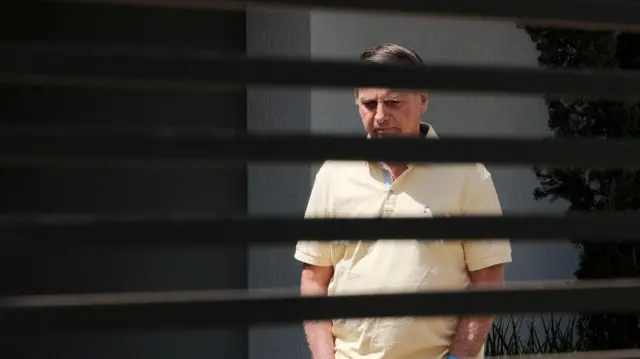
But once Trump beats his chest and imposes punishment on Brazil until it releases Bolsonaro and ends censorship, crawling away with nothing is weak and self-destructive.
Friends... history repeats itself.
They turned their backs on Brazilians because Americans pursue their own interests.
A little history shows that I'm right.
Happy reading 📚
THREAD | When the West Turned Its Back on Nanjing (1937)
1/
Between 1937 and 1938, the Imperial Japanese Army murdered approximately 200,000 to 300,000 Chinese in Nanjing.
The West knew.
And chose not to act.
2/ The denunciations didn't come from China, but from Protestant Americans and Europeans who were in the city: missionaries, teachers, and doctors.
3/ They created the International Security Zone, which saved approximately 250,000 civilians—concrete proof that the massacre was underway.
4/ John Rabe, a German Protestant, wrote in his diary:
“Every day I see executions, rapes, and bodies in the streets.”
5/ Minnie Vautrin, an American missionary, documented daily rapes, rescues of girls, and murders within hospitals and schools.
6/ These reports were sent to embassies, newspapers, and governments in the US and Europe.
Letters, photographs, and even films were produced.
7/ The response was silence.
No serious sanctions.
No formal condemnation.
No diplomatic rupture.
8/ Why?
Because Japan was seen as a “civilized” nation and useful against communism.
China was not.
9/ There was also convenient skepticism: after the First World War, denunciations of atrocities began to be treated as “propaganda exaggeration.”
10/ The truth is simple:
Believing the missionaries would require action.
And action went against political and economic interests.
11/
Only after 1945, with the defeat of Japan, did the West officially acknowledge the massacre—when there was no longer any political cost.
12/ Nanking was not ignored for lack of evidence.
It was ignored for lack of moral will.
13/
When American and European Christians told the truth, their own countries chose to look the other way.
@SecScottBessent@USTreasury why in the world would you lift the sanctions to Alexandre de Moraes when, per statute, sanctions should only be lifted when the cause for them has ceased?
Can you please confirm to the press whether or not the sanctions against De Moraes have been lifted and end or confirm the rumors?
He is still violating civil rights of American citizens, me included.
https://t.co/Z0q2F9hwHV
🇺🇸🇧🇷 OPINION: THE U.S. LIFTING SANCTIONS ON JUSTICE ALEXANDRE DE MORAES WAS THE FINAL BLOW TO BRAZIL'S DEMOCRACY
Just 5 months ago, the U.S. hit Brazil’s censor-in-chief, Justice Alexandre de Moraes, with sanctions for jailing dissidents, censoring social media, and acting like a one-man Supreme Court.
Sadly, it didn't last long. The sanctions were just lifted, and Brazil's tyranny shrugged off like it’s last season’s scandal.
To Brazilians watching their country slide into strongman rule, it feels like betrayal.
Justice Alexandre "Voldemort" de Moraes had become infamous for kicking in doors and freezing accounts just because someone tweeted the wrong thing.
Americans noticed. Sanctions came. For a second, it looked like someone finally cared.
That second’s over. The excuse? Trade talks and some vague political amnesty.
The result? Lula’s loyal court stays stacked, dissenters stay scared, and the U.S. has left Brazil’s pro-democracy movement twisting in the wind.
Let’s be clear. This wasn’t just a slap in the face to free speech. It was the final seal of approval on Brazil’s new reality: courts that answer to power, not law.
The people risking their lives to speak out? They just got the message loud and clear. They're on their own.
Brazil’s middle class is already vanishing. Inflation’s eating wages, investment is fleeing, and poverty is creeping back in like mold.
The government offers cash handouts like it’s a fix, but it’s just gasoline on the debt fire.
This is how Argentina collapsed under Peronism: bloated spending, no growth, and a generation stuck paying the bill.
But the real nightmare is what’s happening to Brazil’s institutions. Congress is just background noise now.
Lula’s Supreme Court does the heavy lifting, rubber-stamping decrees and crushing dissent.
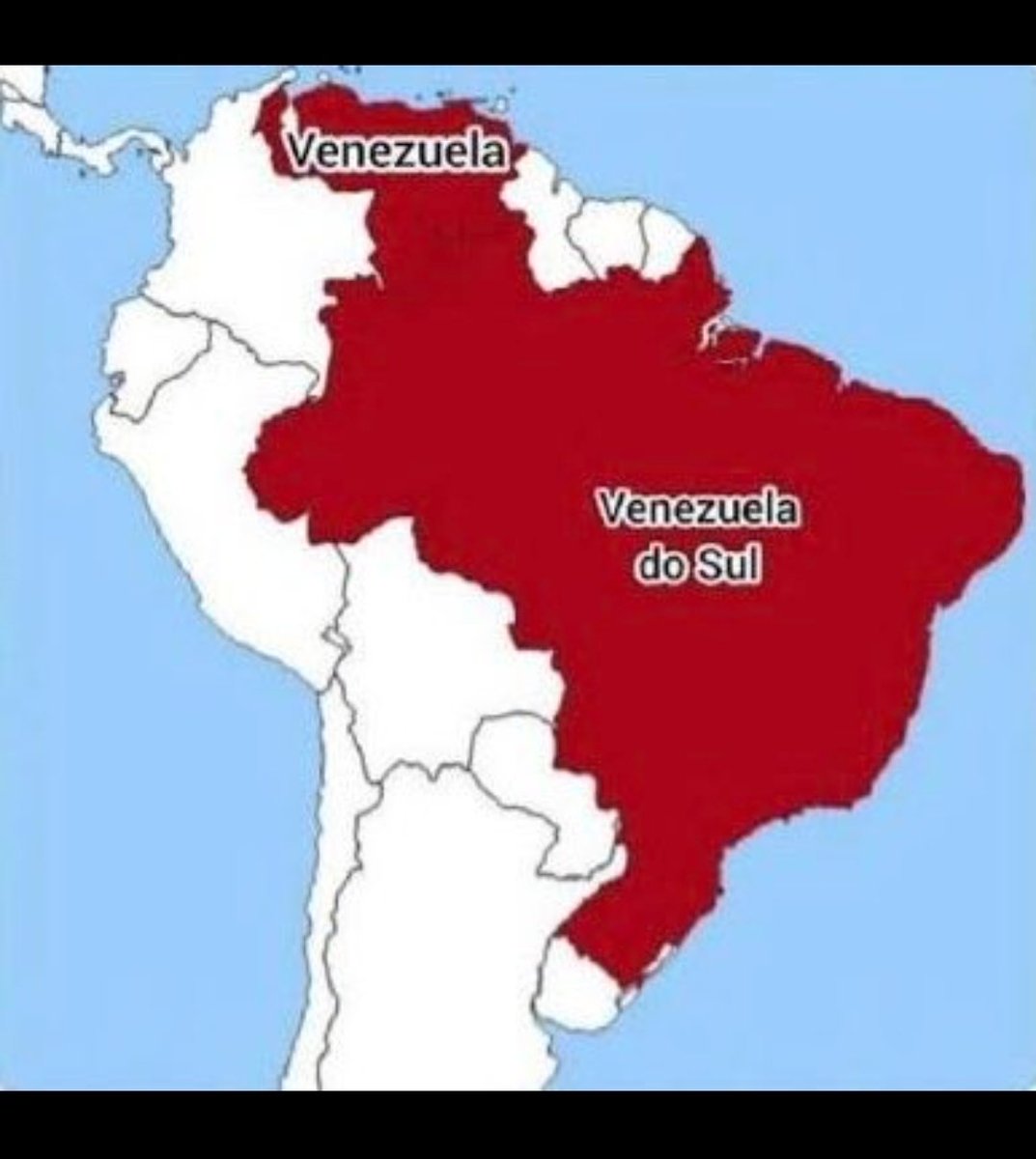
It’s starting to look less like pre-Milei Argentina and more like Venezuela with nicer branding.
Judges act like kings, critics are criminalized, and nobody knows who’s next.
And now that the U.S. has walked away, there's no pressure from outside.
No lifeline, no leverage.
Brazil needs a miracle, but so did Venezuela and it never came.