🚨THE FBI CREATED A FAKE CRYPTOCURRENCY.. LISTED IT ON UNISWAP.. HIRED MARKET MAKERS TO PUMP IT.. THEN ARRESTED EVERYONE WHO SAID YES..
THIS IS THE CRAZIEST LAW ENFORCEMENT OPERATION IN CRYPTO HISTORY!!!
The FBI built an actual ERC-20 token on Ethereum called NexFundAI.. 100 billion token supply.. A professional website.. Whitepapers promising "passive income through AI-powered investing"..
It looked exactly like every other crypto project.. Because that was the point..
Undercover agents posed as the founding team.. Then reached out to professional market-making firms and said "we need you to fake our trading volume"..
Every single firm said yes..
Here's what they recorded..
Gotbit.. A firm run by a 26-year-old Russian who publicly bragged in 2019 that he built a business faking trade volumes.. His team kept internal spreadsheets with columns literally labeled "fake volume" vs "market volume"..
When asked how fast they could pump NexFundAI's volume to $1 million per day.. They said "6 hours.. It will cost about $200"..
$200 to fake $1 million in daily trading volume..
MyTrade.. Run by a guy who called himself "the mastermind".. He explained the exact psychology of the scam on camera..
"We make the chart look like a really nice roller coaster ride.. That's where people jump in.. We have to make them lose money in order to make profit"..
He said that on a recorded FBI video call..
CLS Global.. A Dubai-based firm.. Their bots generated 98% of NexFundAI's total trading volume.. When the FBI asked if they could sync fake volume spikes with fake news announcements.. They said absolutely..
ZM Quant.. Bots executing 10 to 20 trades per minute through dozens of wallets to look organic..
All of them knew it was fraud.. All of them did it anyway.. All of it was recorded..
And the clients were even worse..
Saitama.. A meme coin that hit $7.5 billion market cap.. The founders coordinated buys through private Telegram chats.. Sent "pump it" memes while manipulating the price.. Then dumped on retail investors..
$7.5 billion.. Built entirely on fake volume.. Every penny of real money came from retail investors who thought the momentum was organic..
One founder left Saitama and started Robo Inu.. Used Gotbit again.. Another launched VZZN.. Same playbook..
Lillian Finance.. Founder claimed to be a defense contractor who addressed Congress.. Marketed the token as funding children's hospitals.. Pocketed everything..
When the FBI shut it down.. They seized $25 million in one day.. 18 people indicted across the US, UK, and Portugal.. The CEO of Gotbit was arrested in Portugal and extradited.. Sentenced to 8 months plus $23 million forfeiture..
But here's the part that broke my brain..
Real people bought NexFundAI..
The FBI's fake token.. With zero utility.. Zero real developers.. Created solely to catch criminals.. Attracted real retail investors because the fake volume made the chart look bullish..
When the FBI pulled the liquidity to end the operation.. Those people lost real money.. On a government-issued token..
The FBI had to set up a restitution portal to pay them back..
And it gets worse..
Within 24 hours of the DOJ announcing the sting.. Someone cloned the FBI's exact smart contract.. Launched a copycat token.. Rode the viral momentum.. And made $127,000 in a single day..
Using the exact same manipulation tactics the FBI just arrested 18 people for..
Then in 2026.. The FBI did it again.. New token called Lexobit.. 10 more arrests.. Including operators extradited from Singapore..
IRS forensics showed that in one firm's trading.. 1,209 out of 1,221 consecutive transactions went straight back to wallets the firm controlled.. 99% circular..
The FBI proved what everyone in crypto suspected..
The volume is fake.. The charts are painted.. The momentum is manufactured..
And every time you buy a token because "the chart looks bullish".. You might be the exit liquidity.
@LongHashVC We have developed our own FHE & ZK tech to protect agent economy. Confidentiality is the prerequisite for the next generation of onchain finance.
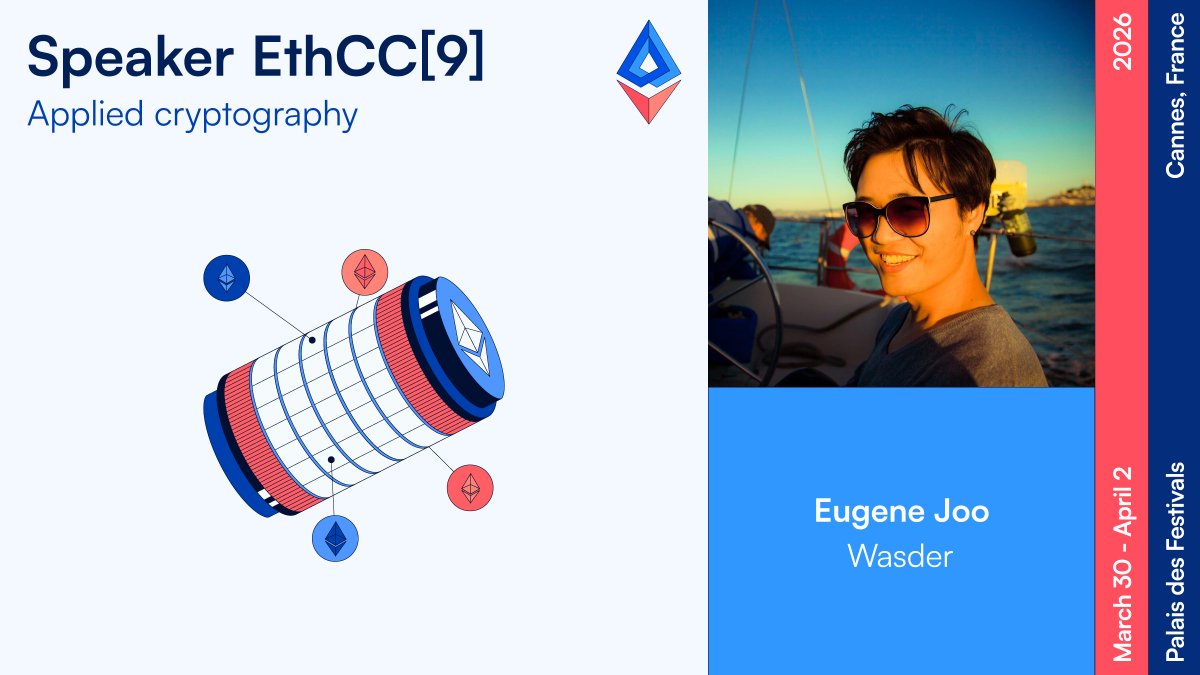
Here's one you won't want to miss: Eugene Joo (@fhethereum) is bringing FHE to Ethereum in the Applied Cryptography track with "FHEthereum: FHE for Ethereum".
This could be the privacy breakthrough that finally makes encrypted computation practical on the blockchain.
@gorochi0315 이렇게 좋은게 진짜일리가... ㅎㅎ 순진하시네!
> If your computer is really powerful, you can download a bigger program like qwen3-coder:30b.
> If your computer isn't as strong, smaller programs like gemma:2b or qwen2.5-coder:7b will work just fine.
Less speculation means fewer yield games and a quieter CT. But that is what real adoption looks like: stablecoins, RWAs, and fee-generating apps compounding in the background.
Fewer tourists, more builders. The teams with real distribution and product-market fit survive.
The State of CT
> Defi TVL 40% down from 2025 peak
> RWA TVL at ATH ~$20B
> Stablecoins MC at ATH
> Tether + Circle eats 44%+ of on-chain fees (daily)
> Vibes at ATL, nothing much is happening on-chain
> Speculative yields dried out, no standout points system, no high fixed yields
> Only seeing OpenClaw, Seedance 2.0, Privacy, and Peter Steinberger (founder of OpenClaw) on the timeline
> X gradually killing CT biz (Infofi, claim-fee token launcher, agents/slops)
> Peter saying he almost deleted OpenClaw because of crypto community
Broader adoption is happening while CT is leaving.
Literally nothing to do besides playing the long game here.
The best part of this community is getting to meet truly qualified people who are serious about studying blockchain tech. Had another great one today. Thanks for hosting the event! Kudos to @shuenrui
🇭🇰 Whitepaper Session at @ethereumhkhub during @consensus_hk
Join us Fri Feb 13 | 12–3PM for a roundtable on the next Eth Upgrade and Performant DEXs.
[[ RSVP: https://t.co/f76hhQ0bOz ]]
Topics:
1️⃣ Hegotá Upgrade (EIP-8081): Hardening Ethereum’s censorship resistance. We’ll analyze the trade-offs of FOCIL (Fork-choice enforced Inclusion Lists) and how it shifts power away from centralized builders.
https://t.co/EuQE3QBUsZ
2️⃣ https://t.co/15HDH2huw0: Can Solana hit CEX-level performance? We’re deconstructing their custom validator client architecture achieving 20ms ticks and gasless execution.
Summary: https://t.co/fY2OEm8I5f
🗓 Fri Feb 13 | 12:00–3:00 PM
📍 HK Ethereum Community Hub (Cheung Sha Wan)
🎙 Led by @shuenrui (@ImpossibleFi / Whitepaper Reading Club KL)
Thank you @not_qz / @ethereum_sg , @NPC_Leo and Sara from @Ethtao_Ethtao / @snzholding for making this happen 🙏
#ConsensusHK #WPRC #Ethereum #Solana #DeFi
$350B/day in repo settlement. $6T+ in tokenized RWAs. @CantonNetwork just proved that institutions won't come onchain without privacy.
But here's what most people miss: Canton's privacy model is access-control-based. Daml defines who can see what. That’s table stakes for compliance.
The next frontier is computing on encrypted data without ever decrypting it.
Imagine cross-counterparty risk calculations, margin optimization, or portfolio analytics across @jpmorgan@GoldmanSachs and @BNPParibas ; where no party reveals their positions, yet the system still produces accurate results.
That's what FHE unlocks. Not replacing Canton's model, but adding a layer that access control alone can't provide.
Privacy in TradFi isn't just about hiding transactions. It's about enabling computation between parties who fundamentally cannot trust each other with raw data.
This is exactly what we're building at @FHEthereum 🔐
Wanna discuss further @YuvalRooz? :) @DigitalAsset
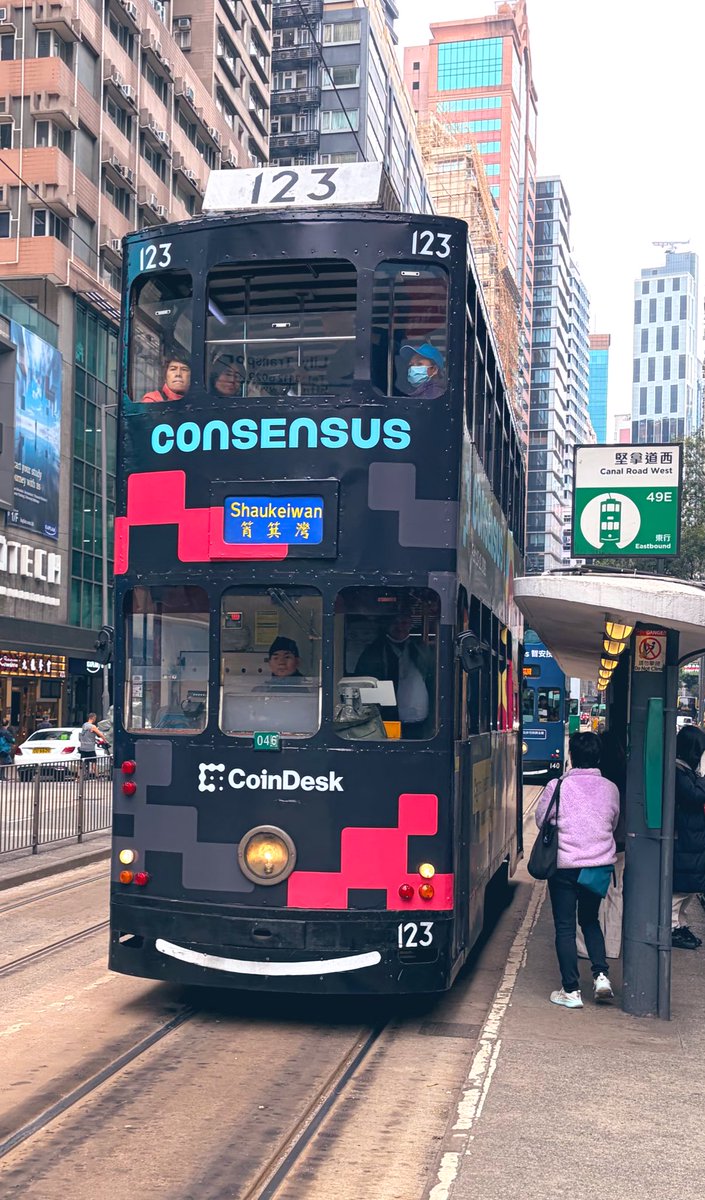
Consensus HK this year is pretty different from last year (+ sharing HK food gems below)
- Consensus is usually filled with institutions, family offices, and projects wanting to raise. Discussions centered around RWAs, institutional adoption, regulations, and occasional interesting narratives.
- Last year occasional interesting narrative was AI agent. But, this year it's Privacy and AI.
- As payments, stablecoins, tokenized securities grew in adoption, compliance, security, privacy, and the implementation of AI on blockchain became the next things on the agenda.
- Less degen AI agents vibes, more institutional adoption vibes this time around.
Price down, fundamentals up, excitement depends on who you're talking to.
(Personal Note — food gems below for those who're interested)
Food & Restaurants
Kam’s Roast Goose — long queue; get the char siu (takeout is fine)
Yat Lok
Lin Heung Lau — classic old-school dim sum
Tim Ho Wan
Sun Hing Dim Sum — great late-night dim sum
One Dim Sum — more foreigner-friendly
Australia Dairy Company
Yee Shun Milk Company
Mak’s Noodles — iconic shrimp wonton noodles
Tsim Chai Kee — Michelin-recommended
Kau Kee — legendary beef brisket noodles
Keung Kee
Hing Kee Restaurant — claypot rice
Kwan Kee — claypot rice
Oi Man Sang — anything stir-fried is good
Lau Hing Kee — pan-fried buns
Lau Haa — hotpot
Tung Po — good for bigger groups
Ho Lee Fook — slightly higher-end local delicacies
Fuk Lam Moon
Farm House Restaurant — Causeway Bay
Jimmy’s Kitchen — classic HK institution
27 Kebab House — non-Cantonese food fix
Desserts & Sweets
Bakehouse — get the egg tarts
Mammy Pancake
Chau Kee — HK-style French toast
Auntie Sweet
Vision Bakery (Central)
Messina Ice Cream
Snack Baby Gelato
Sundazed — matcha latte + soft-serve
Healthworks — Central MTR; healthy dim sum + exotic herbal drinks (sea coconut). This is my personal fav on quick healthy food/drinks.
Bars & Cocktails
Bar Leone — Asia’s No.1; queue from ~4:30 PM
COA — previously Asia’s No.1
Penicillin
Zzura
Maggie Choo’s — live music & vibes
We are here in Hong Kong for @consensus_hk
Traders and funds looking for #onchain#privacy should meet us and learn our #FHE and #ZK powered privacy trch stacks.
Virtuals nailed the 5 pillars for autonomous agents: Identity, Commerce, Funding, Social, Intelligence.
But they also named the elephant in the room: "Blockchain enables value security without #privacy."
Agents holding funds, building reputations, transacting - all on a public ledger. Every strategy exposed. Every balance visible.
This is exactly the gap @fhethereum closes. Fully Homomorphic Encryption lets agents compute on encrypted data without ever decrypting it. Privacy AND verifiability, not a tradeoff, but a stack.
The pillars are right. The missing layer is privacy infrastructure.
Agree. This is a multi-year infrastructure play, and the names you listed have been ahead of it.
But here's what nobody in the #x402 conversation wants to address:
x402 just hit 100M+ payment flows. V2 shipped with multi-chain support and modular architecture. @Google AP2 integrated it. @Mastercard Agent Pay went live in Australia. The rails are real and accelerating fast.
Every single one of those payments? Fully transparent on-chain.
Scale this to the actual agentic internet. Millions of agents, hundreds of transactions per day each. And you haven't just built a payment layer. You've built the most comprehensive behavioral surveillance infrastructure ever deployed.
Wallet address + IP address + timestamp = complete behavioral graph. No hack required. This happens by default.
This is why enterprise adoption will stall. No CFO signs off on payment rails where competitors can see which data feeds you're buying, which APIs you're calling, which strategies you're pursuing. Privacy regulators are already flagging on-chain transaction transparency as a concern.
The real bottleneck for agentic payments isn't in-browser micropayments or speed.
It’s privacy.
We're building this at @FHEthereum. Private x402 using ZKP and CKKS-based Fully Homomorphic Encryption. Payments that are programmable, verifiable, and confidential. Settlement and compliance checks happen on encrypted data. No one sees amounts, counterparties, or patterns.
x402 is the right standard. But without a privacy layer, it won't reach the scale everyone's projecting.
All of sudden, x402 and ERC-8004 will start to get a ton more attention.
No brainer as to why, but its very good that Ethereum has been working towards solutions for agentic commerce for awhile.
People will be flying about agent-to-agent payments and what's to come.
Reality is different.
Its slower. Until we get actual micropayment functionality in-browser, the state of agentic micropayments is still in the distance. Likely late 2026, 2027, but who knows with these time frames.
Halliday, NEAR, Allora, Chainlink, Virtuals, Bittensor Circle, and many others have been in front of this wave as well.
This is a multi-year category with most progress coming later in the decade, but when it hits, its going to hit hard.
Privacy isn't one tech, it's a set of tradeoffs (#ZK vs #FHE vs #MPC vs #TEE) and a set of product goals. Also agree the attack-surface angle (#MEV/position hunting) is still under-discussed.
My take: "shared private state" is a north star, not PMF. It's the endgame UX, but it requires new execution assumptions, heavy client/prover UX, and real composability + coordination across builders. That's a lot to ask from an early market.
Early PMF comes from narrower wedges with obvious ROI and minimal integration pain:
- confidential auctions with sealed-bid / hidden intent
- private RFQ/OTC
- selective disclosure
And compliance-friendly privacy isn't optional if you want serious adoption. "Privacy" without authorized disclosure either won't onboard institutions or will get boxed in. This is why we built private transfers with an auditor key: default confidentiality, but a designated auditor can decrypt when required.
The real differentiator isn't who believes in which camp - it's who can ship these wedges with clean UX, clear key management, and a credible trust model.
Gotta win distribution.
The observation so far is that
- There are several privacy camps -- people who really believe in zk, people who believe in FHE, or in MPC or TEE. Each camp believes their combination of tech or their tech might be more scalable than another.
- The goal of many privacy infra players is to get to “shared private state”. From user POV, we’ll be able to do things like we would on normal public L1s while staying anonymous and/or confidential.
- Infra players compete to build scalable infrastructure that builders can build private applications on top off e.g. wallets, neobanks, prediction markets, spot/perp trading, money markets, etc.
- Initial demand stems from builders wanting to keep some aspects of apps private (e.g. some apps might require KYC, users might prefer not to share their entire on-chain financial history and/or link that history to their identity)
- Privacy/cryptography improves a lot as a technology but implementation to create a reliable privacy system remains quite early (for private transfers, that's already done but for more complex use cases, still early)
- One aspect that's not being discussed enough is the role of privacy in mitigating targeted attacks in Defi like preventing Hyperliquid whales from getting their positions hunted, reducing MEV attacks for traders because order flow & positions are hidden.
My early sense is that there's a real potential for private primitives/apps to spawn off of this wave of privacy infrastructure (private perps & private money markets might still be a bit further away though)
Thoughts?
The "@Ethereum for people who need it" era is about real self-sovereignty: #security and #privacy with #verifiability. That's exactly where #FHEthereum sits: #CKKS#FHE has achieved exactness, and we're seeing ~8x/year speedups. The goal is simple - #open, #secure, and verifiable privacy that users can trust.
In these five years, the Ethereum Foundation is entering a period of mild austerity, in order to be able to simultaneously meet two goals:
1. Deliver on an aggressive roadmap that ensures Ethereum's status as a performant and scalable world computer that does not compromise on robustness, sustainability and decentralization.
2. Ensures the Ethereum Foundation's own ability to sustain into the long term, and protect Ethereum's core mission and goals, including both the core blockchain layer as well as users' ability to access and use the chain with self-sovereignty, security and privacy.
To this end, my own share of the austerity is that I am personally taking on responsibilities that might in another time have been "special projects" of the EF. Specifically, we are seeking the existence of an open-source, secure and verifiable full stack of software and hardware that can protect both our personal lives and our public environments ( see https://t.co/GzgBS9sh87 ). This includes applications such as finance, communication and governance, blockchains, operating systems, secure hardware, biotech (including both personal and public health), and more. If you have seen the Vensa announcement (seeking to make open silicon a commercially viable reality at least for security-critical applications), the https://t.co/cuyU9Chs1y including recent versions with built in ZK + FHE + differential-privacy features, the air quality work, my donations to encrypted messaging apps, my own enthusiasm and use for privacy-preserving, walkaway-test-friendly and local-first software (including operating systems), then you know the general spirit of what I am planning to support.
For this reason I have just withdrawn 16,384 ETH, which will be deployed toward these goals over the next few years. I am also exploring secure decentralized staking options that will allow even more capital from staking rewards to be put toward these goals in the long term.
Ethereum itself is an indispensable part of the "full-stack openness and verifiability" vision. The Ethereum Foundation will continue with a steadfast focus on developing Ethereum, with that goal in mind. "Ethereum everywhere" is nice, but the primary priority is "Ethereum for people who need it". Not corposlop, but self-sovereignty, and the baseline infrastructure that enables cooperation without domination.
In a world where many people's default mindset is that we need to race to become a big strong bully, because otherwise the existing big strong bullies will eat you first, this is the needed alternative. It will involve much more than technology to succeed, but the technical layer is something which is in our control to make happen. The tools to ensure your, and your community's, autonomy and safety, as a basic right that belongs to everyone. Open not in a bullshit "open means everyone has the right to buy it from us and use our API for $200/month" way, but actually open, and secure and verifiable so that you know that your technology is working for you.






![WPReadingClub's tweet photo. 🇭🇰 Whitepaper Session at @ethereumhkhub during @consensus_hk
Join us Fri Feb 13 | 12–3PM for a roundtable on the next Eth Upgrade and Performant DEXs.
[[ RSVP: https://t.co/f76hhQ0bOz ]]
Topics:
1️⃣ Hegotá Upgrade (EIP-8081): Hardening Ethereum’s censorship resistance. We’ll analyze the trade-offs of FOCIL (Fork-choice enforced Inclusion Lists) and how it shifts power away from centralized builders.
https://t.co/EuQE3QBUsZ
2️⃣ https://t.co/15HDH2huw0: Can Solana hit CEX-level performance? We’re deconstructing their custom validator client architecture achieving 20ms ticks and gasless execution.
Summary: https://t.co/fY2OEm8I5f
🗓 Fri Feb 13 | 12:00–3:00 PM
📍 HK Ethereum Community Hub (Cheung Sha Wan)
🎙 Led by @shuenrui (@ImpossibleFi / Whitepaper Reading Club KL)
Thank you @not_qz / @ethereum_sg , @NPC_Leo and Sara from @Ethtao_Ethtao / @snzholding for making this happen 🙏
#ConsensusHK #WPRC #Ethereum #Solana #DeFi](https://pbs.twimg.com/media/HAxL8ayaEAAqoW5.png)