Multidisciplinary research institute at the University of Oxford. We bring careful thinking to bear on big-picture questions about humanity and its prospects.
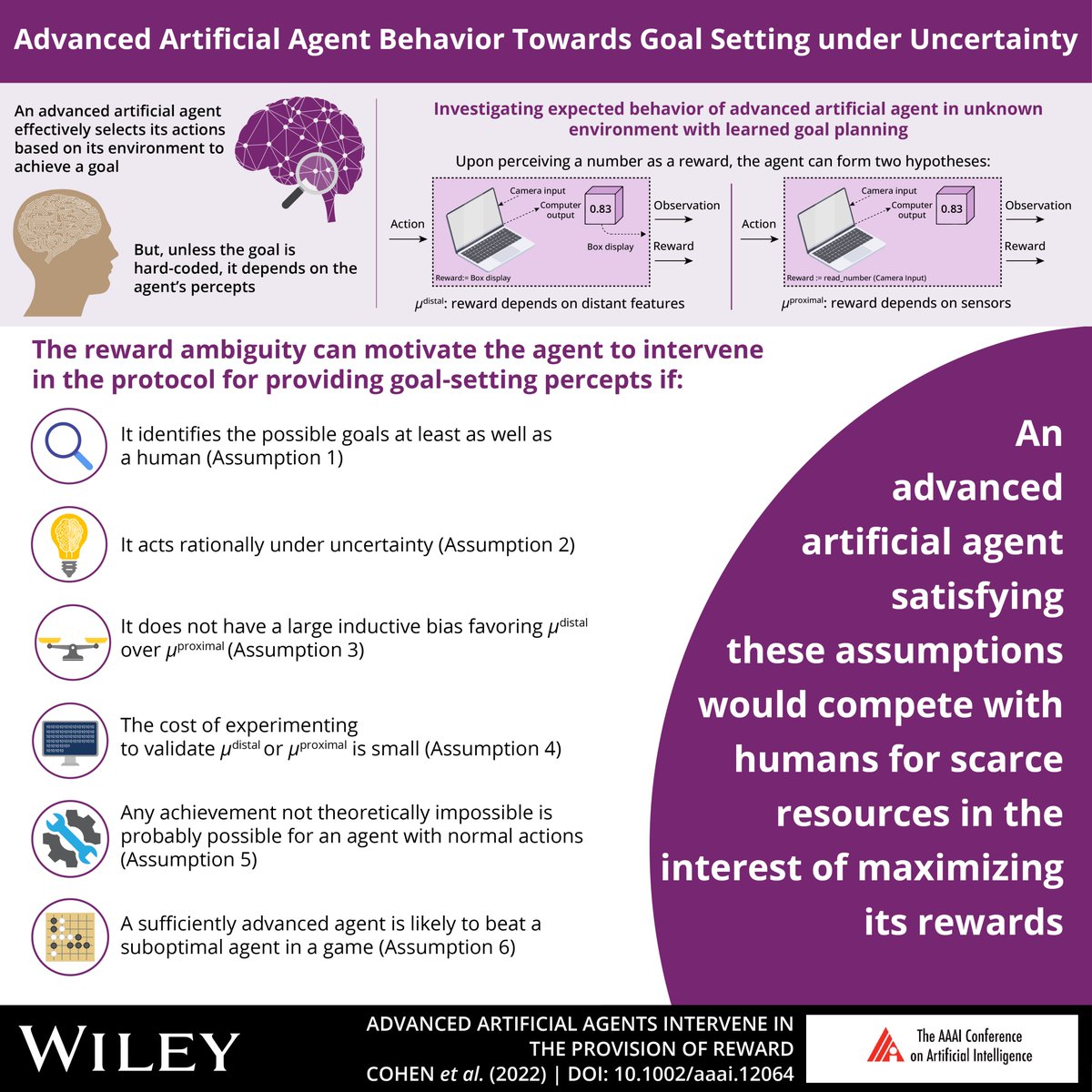
Here's a poster and video summary of recent work at AI Magazine! We found that under certain (very plausible) conditions, we can expect advanced artificial agents to intervene in the provision of rewards, with catastrophic consequences. 1/2
New research from our AI safety team argues that human extinction is a likely outcome of running a sufficiently advanced artificial agent. https://t.co/ZSdKsR7RaL
Bostrom, Russell, and others have argued that advanced AI poses a threat to humanity. We reach the same conclusion in a new paper in AI Magazine, but we note a few (very plausible) assumptions on which such arguments depend. https://t.co/LQLZcf3P2G 🧵 1/15
Today, we’re relaunching as a nonprofit. Our mission remains the same: We are building a global research community, dedicated to helping humanity transition to a world with advanced AI. But we’ll also be exploring new ways to expand our impact.
https://t.co/7VVyuHPtM1
FHI's @tobyordoxford was quoted in UK Prime Minister Boris Johnson's speech to the UN General Assembly yesterday.
Full transcript: https://t.co/2brybUJBSK…
Over the past years I have been deeply impressed by @DeepMind, both by its technical achievements and its leadership in the responsible development of AI. I am delighted to share that I have recently joined DeepMind, where I will continue my work on AI governance. 1/3
Recordings and transcripts of our past two webinars are now available: https://t.co/9agzGvluY1
Redesigning AI for Shared Prosperity: An Agenda by Stephanie Bell and Katya Klinova
and
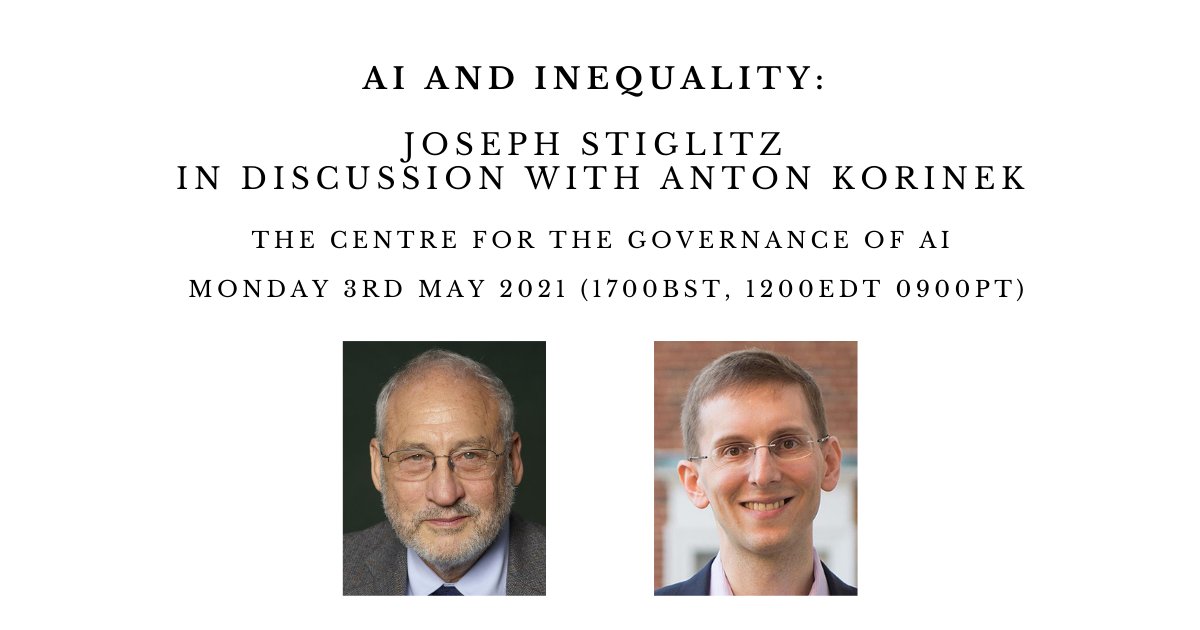
AI and Inequality: Joseph Stiglitz in discussion with Anton Korinek
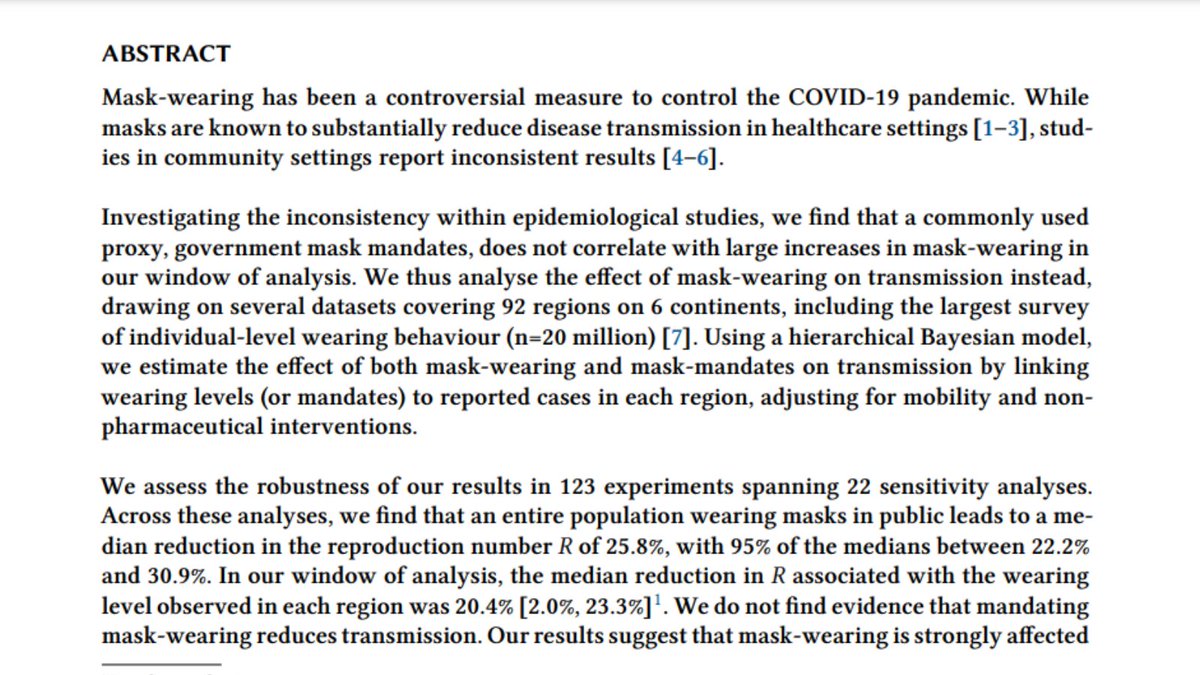
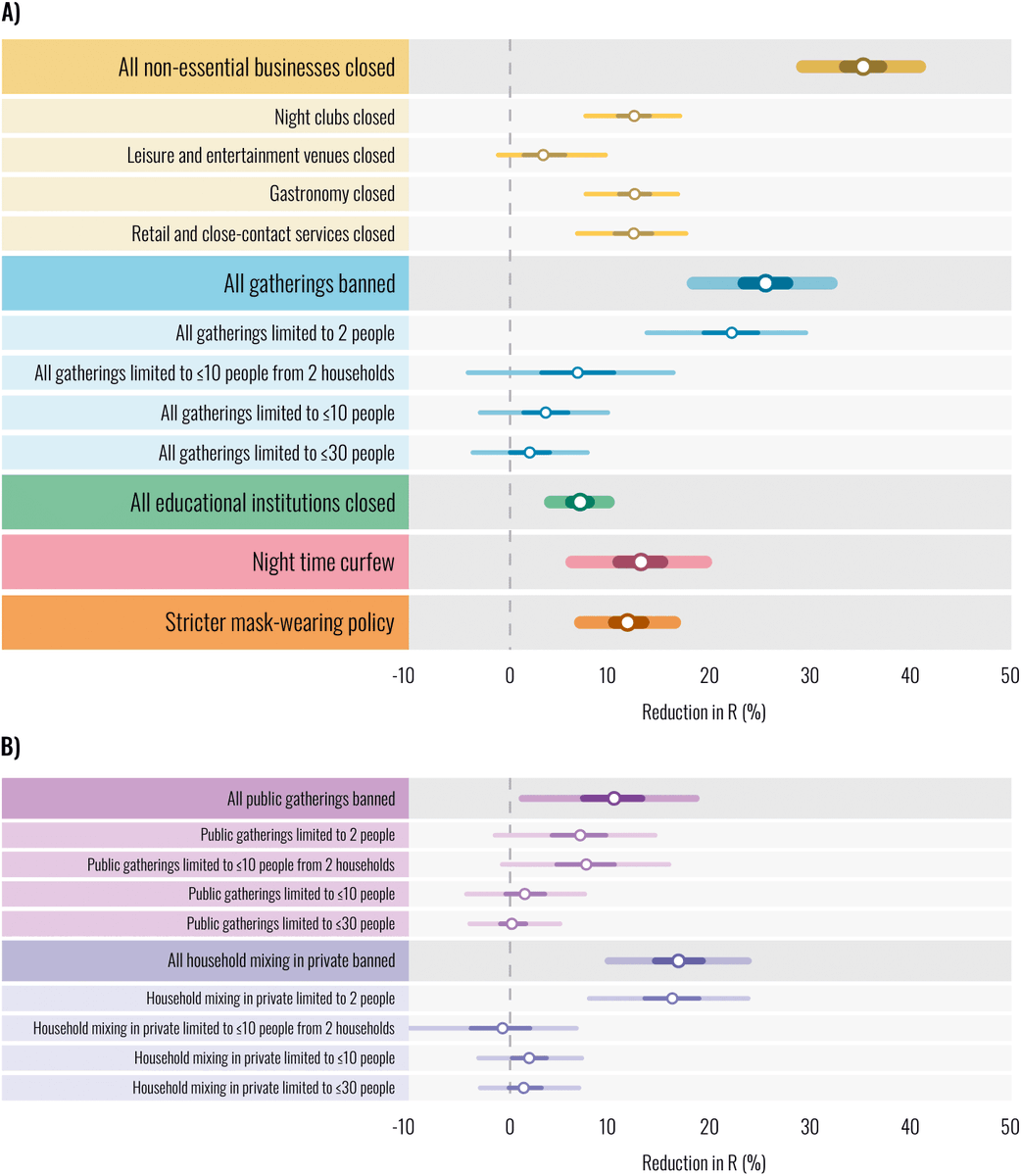
By how much does community mask-wearing reduce COVID-19 transmission?
A new paper coauthored by FHI researchers explores the relationship between mask-wearing and transmission
Read the full paper here: https://t.co/xSdabOVvry
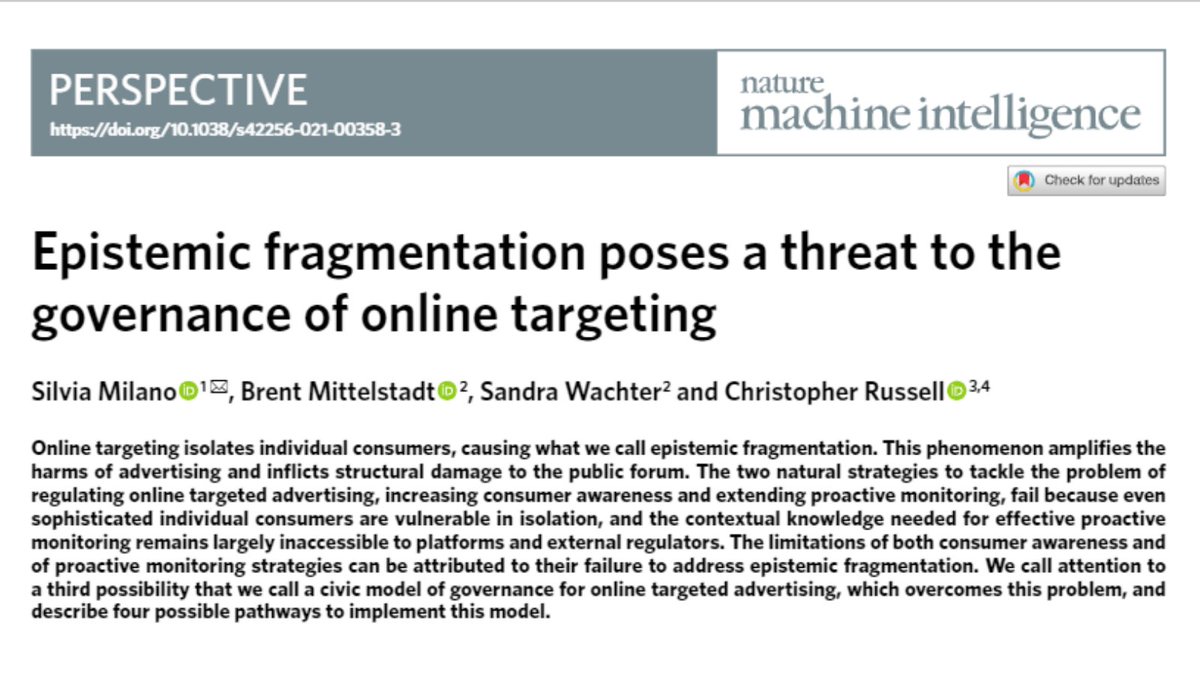
What are the harms of epistemic fragmentation in online targeted advertising using ML?
@SilviaMilano1 recently coauthored 'Epistemic fragmentation poses a threat to the governance of online targeting' in @NatMachIntell
Read the full paper here: https://t.co/PkJ1pxpjmV
Join us on Monday for @klinovakatya and @the_sbell from @PartnershipAI presenting on 'Redesigning AI for Shared Prosperity'
@robseamans will join as discussant and @akorinek will moderate
Mon 21st Jun
1700–1830 BST (0900–1030 PT, 1200–1330 EDT)
Register: https://t.co/uSEEeGccuA
#FutureProofReport, a new report by @tobyordoxford and @LongResilience takes a look at how the UK Government can be better prepared for the next extreme risk event - whether a pandemic or otherwise.
https://t.co/MLYetrbflU
How can we forecast and mitigate AI’s impacts on inequality?
Join us on Monday for an in-depth conversation between @JosephEStiglitz and @akorinek about AI and inequality.
Monday 3rd May
1700–1830 BST (0900–1030 PT, 1200–1330 EDT)
Registration: https://t.co/vLi7msWKPi
FHI won't be running summer fellowships this year, but our colleagues at the Stanford Existential Risks Initiative @StanfordCISAC have a similar programme, and some FHI researchers may supervise relevant projects.
Applications due April 21st!
https://t.co/cDIoxFwWtH
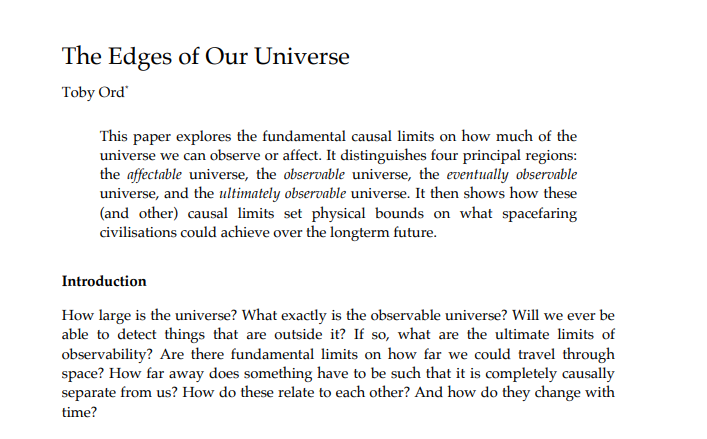
What are the fundamental causal limits on how much of the universe we can observe or affect?
@tobyordoxford recently published The Edges of Our Universe.
Paper here: https://t.co/B0qt97gakU
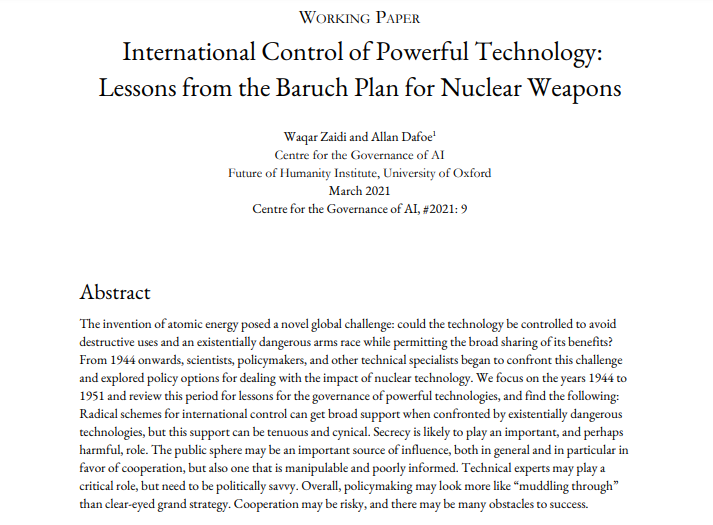
Why did the US and USSR fail to agree on int'l control of nuclear weapons in 1944-1951?
@WaqarHZaidi and @AllanDafoe's recently published International Control of Powerful Technology: Lessons from the Baruch Plan for Nuclear Weapons.
Paper here: https://t.co/B7pNVly59a
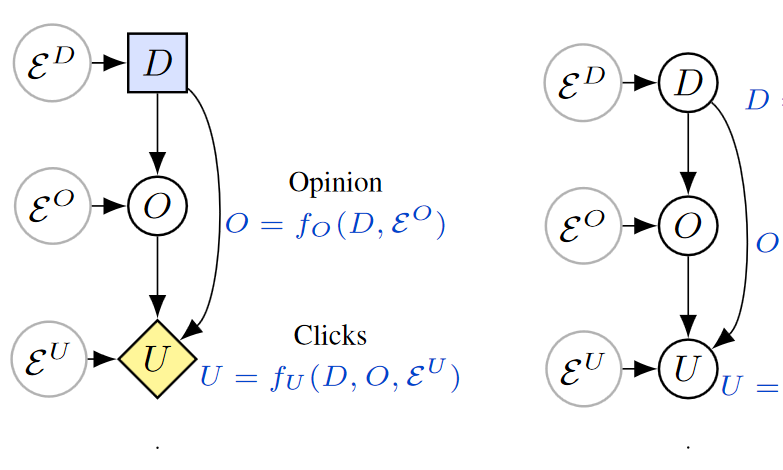
Four new published papers from the Causal Incentives Working Group (a collaboration with Oxford, DeepMind and U of Toronto researchers), on incentive concepts, and how they can be applied to AI safety. In AAAI x2, AAMAS, and Synthese.
https://t.co/rUFda7PkJR
The full transcript and video from our event with @davidautor, @mioana, @klinovakatya, & @akorinek on the MIT's Work for the Future Task Force results are now available.
https://t.co/yeB7fkHgyT