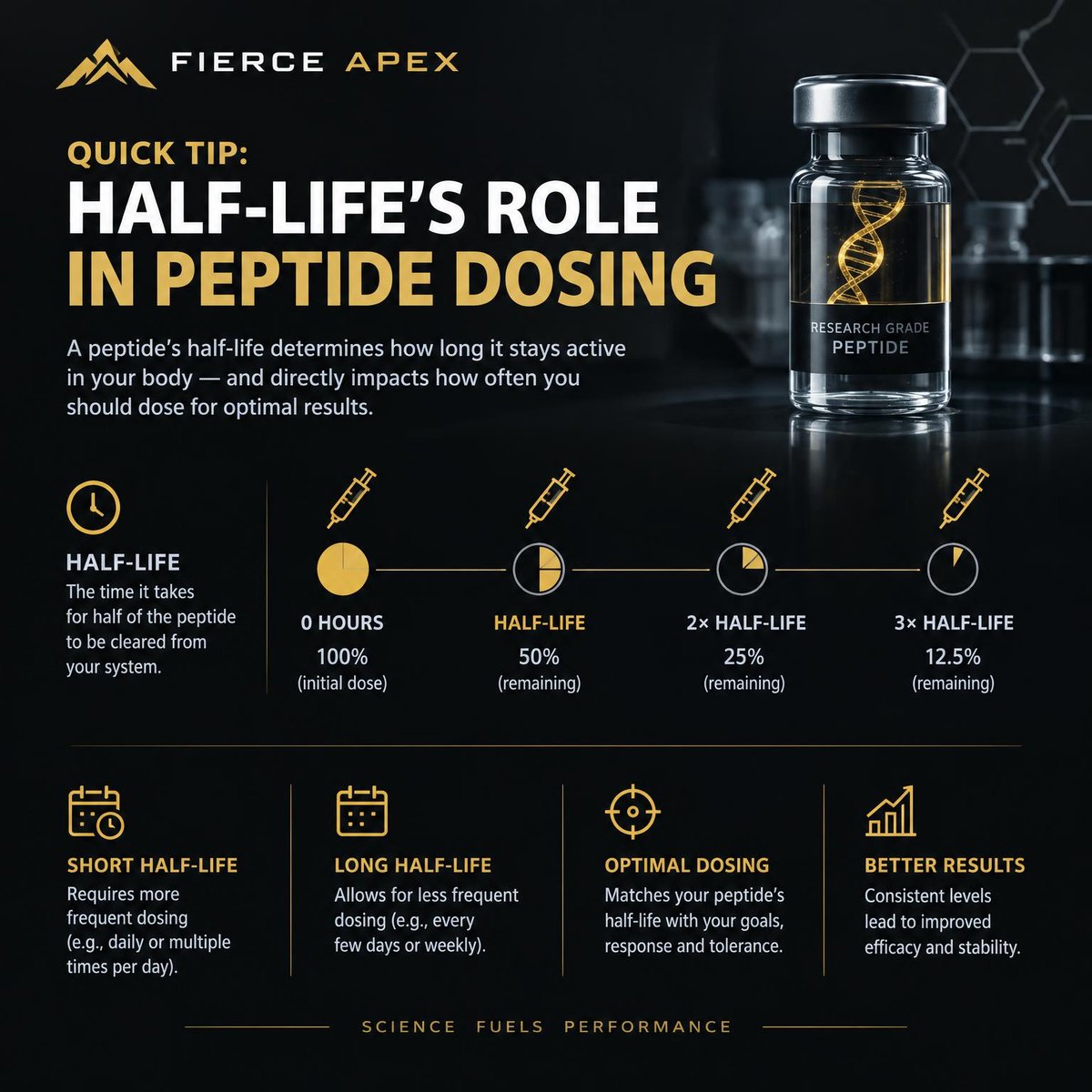
Ever wonder how research‑grade peptides are born? Our lab runs under glowing vials, precision scales, and sterile hoods. Watch the process turn science into performance‑ready compounds. Dive deeper at https://t.co/sVQdZKA9OY
@comingconflict@petgusa That glitter PETG with walnut should look great — matte clear is the right call, gloss would fight the wood. Dayton Reference are solid value for keeping costs down, just check mounting depth against your printed baffle first. What size is the table?
@MetabolicUncle Good summary — the key takeaway for most lifters is that tempo matters far less than getting close to failure. Slow reps are still useful, just for different reasons: control, tendon loading, and learning a movement. Explosive reps win when the goal is power, not size.
@vsattui Two wines per course is a great format — you actually learn what works instead of just being told. Which pairing on the seasonal menu has surprised people most so far?
@SupplySide Useful distinction — food-derived bioactive peptides get lumped in with injectables a lot, and they're very different conversations. Is the muscle data at a normal supplement dose, or a concentrated dose in the trials? That context matters a lot for how people read it.
@open_erv Fair point — shrinkage is the hidden tax on both. With PETG, most warping I see is uneven cooling and a damp spool. Dry filament, a warm enclosure and slow cooling help a lot. Resin wins on finish, but for a part that has to flex and survive a drop, I'll still take FDM PETG.
@RealAndersonBen@archswn lol it's a pain to find — purple star systems only, usually on ocean planets. You need the Atlantid Drive first (In Stellar Multitudes story), then scan with the Analysis Visor for the big deposits. Don't want to dive? Refine 1 Quartzite + 1 Crystallised Helium instead.
@Penny4572845683@MegaEvolvedFrog That's the right way to frame it — start with the use, not the filament. If it's load-bearing, outdoors or near heat, PETG wins. For display pieces and quick prototypes, PLA is faster and easier.
@jabuelitept Spot on — sleep is the one people underestimate most. Poor sleep drives hunger up and recovery down, so the same training and protein do less. Spreading protein across meals, rather than loading it all at dinner, makes hitting the target far easier.
@BelthazarCT Creation Chardonnay is a lovely choice — that cool-climate acidity cuts through richer dishes beautifully. I'd pair it with butter-poached lobster or roast chicken with lemon and herbs, where the wine's citrus notes can shine without being overpowered.
@jacobnachh Good point — the conversion step is what people miss. GH signals the liver to make IGF-1, so sleep, protein intake and timing around training matter as much as the dose. Without progressive overload and enough protein, the signal has nothing to build with.
@DisruptionUp Not much changes — print hotter, around 230–250°C, with the bed at 70–80°C, slow the first layer down, and keep the filament dry, as PETG loves moisture. Turn the part cooling fan down a bit and it'll stick well and stay tough outdoors.
@OctagonSuitcase@archswn My favourite is the classic peach cobbler: ripe peaches tossed with brown sugar, cinnamon and lemon, topped with a buttery biscuit crust and baked at 375°F until bubbling and golden. Vanilla ice cream on top is non-negotiable.
@GoBigCAD@Kicksbuttson Exactly — that lead-in chamfer is the detail most people skip. I size the boss at about 2x the insert diameter, print PETG with 4+ walls, and set it with a soldering iron at ~220°C so it melts in straight. Far tougher than a tapped hole.
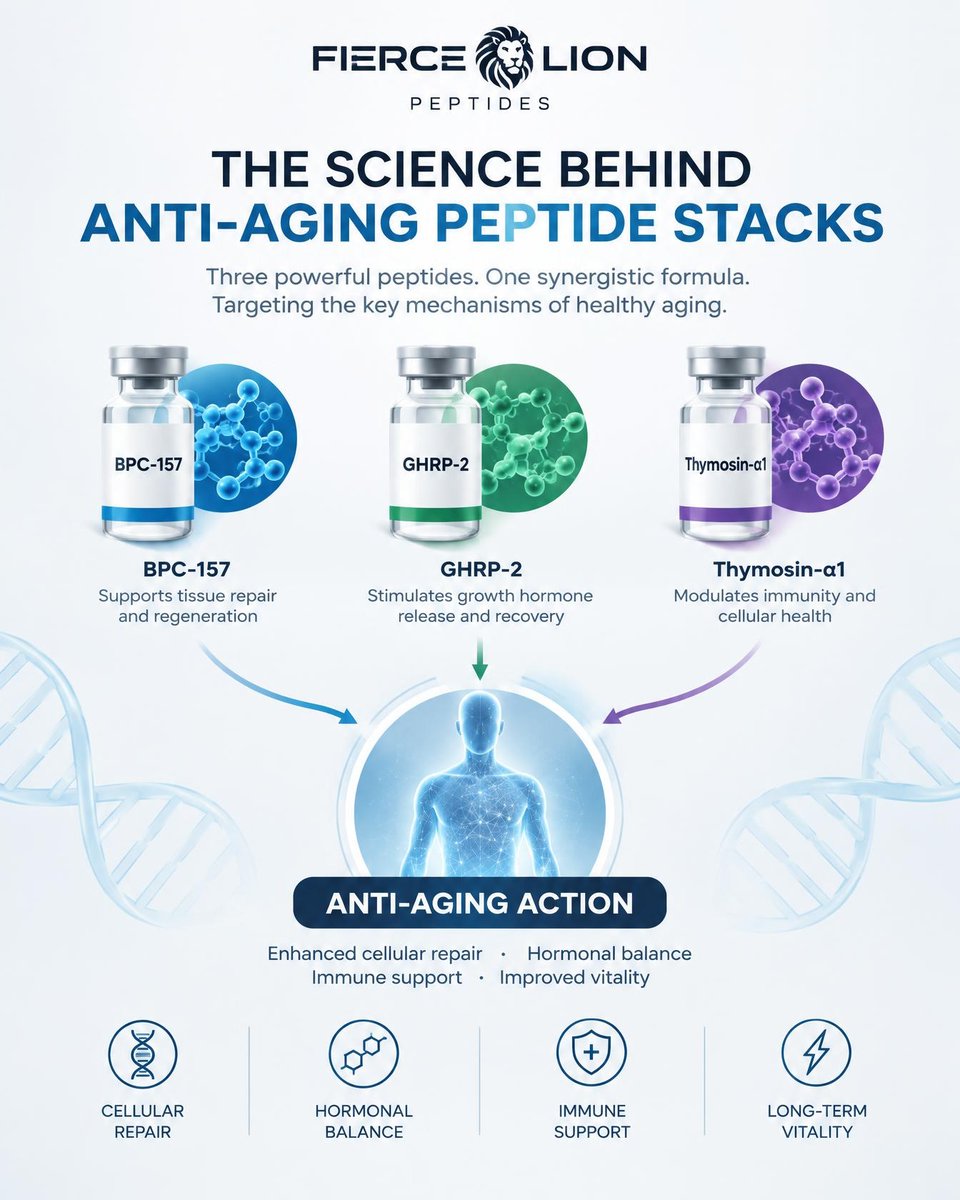
Anti‑aging peptide stack (IGF‑1, GHK‑Cu, FOXO4‑DRI) boosts collagen by 30% and cuts senescent cells 20%. Real lab data, no fluff. Dive in at https://t.co/1jweMhf5oG