GIS Analyst Toolkit: ArcGIS Pro Create File Geodatabase
Shapefiles are so 1920s😁 Today many professionals work with File Geodatabases (.gdb) or Server Geodatabases(MSSQL / PostgreSQL / etc...).
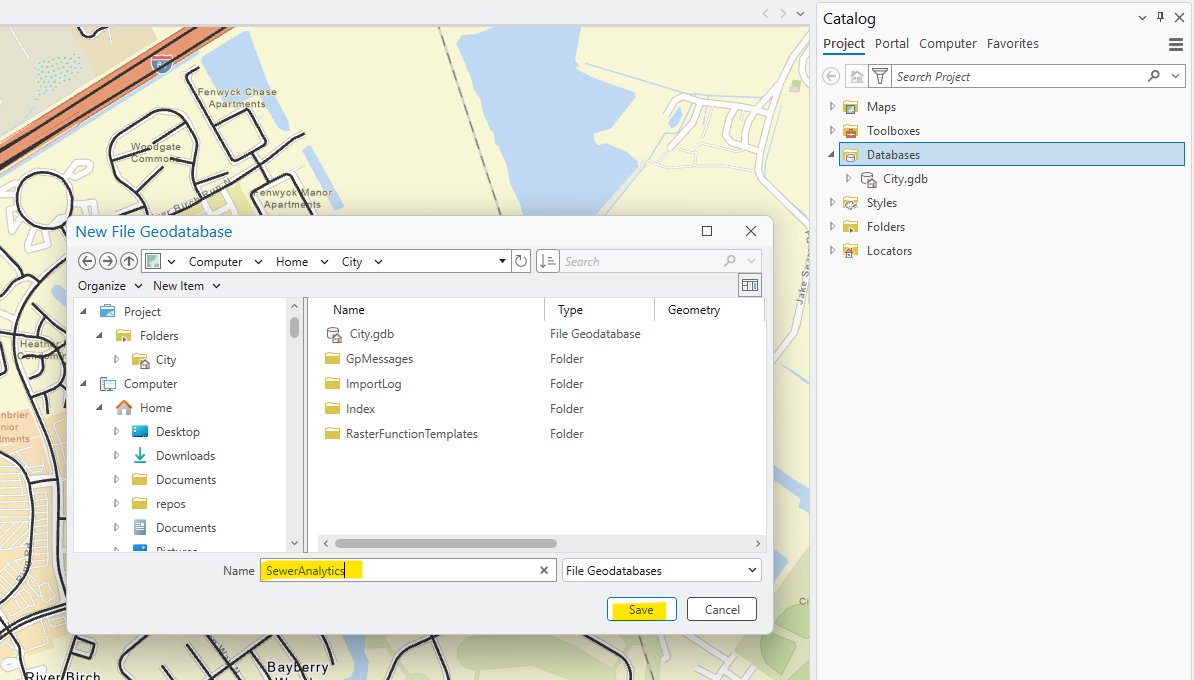
In ArcGIS Pro, we just simply right click Databases in the Catalog panel and then click New File Geodatabase and then name the database and pick a spot you want to save the new Geodatabase.
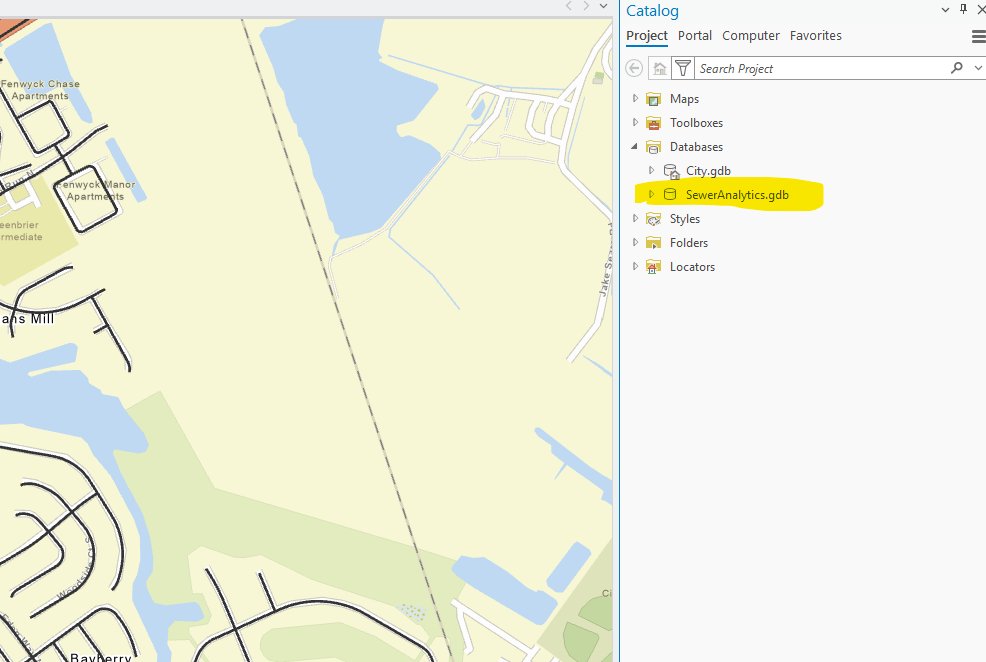
Afterwards, we have a File Geodatabase that helps organize our data and allows us to accomplish more than what those old shapefiles can .
Keep GISing!!!!
This is sick! I built the entire city of Gurgaon in 3D using GPT-6 Astra
I saw everyone building all sorts of cool demos with Astra, so I decided to give it a shot and needless to say,
I was not dissapointed
https://t.co/rH0Hh0fbxs
I got physical simulation working with motion-bricks.cpp and kimodo.cpp using GEAR-SONIC and Mujoco's C API. So motion-bricks.cpp can drive a physically simulated character.
Half way through you can see that the physically simulated skeleton falls while trying to follow an animation from Kimodo, but it's possible to get it back on its feet again.
I dunno if this is good for games, but it naturally deals with things like foot slippage. Also I would imagine that it's possible to have a physically simulated character that can't fall over and moves at a steady speed by clamping the movements.
Possibly I should release gear-sonic.cpp independently of motion-bricks, but they go together very well.
Excited to be at #ECCV2026 this week! Find me at
➡️ VidMap, a new system for 3D reconstruction from videos, poster #157 session #3 Thurs AM https://t.co/Uqf6Hvcqvf
➡️ ViLMa workshop Tuesday 8:45 for a talk covering VidMap and new works 🤫 https://t.co/9DaSQ0572X
See you there 🤩
Bonjour! Welcome to Paris, the capital of France known for its world-class art and architecture
Made with forge3d, engine for accurate and pretty 3D maps
Try it here: https://t.co/IvUfbpSVPo
You know I had to do it!!
gpt-6-astra (High), one prompt, Terreiro do Paço in Lisbon (Blender, not Three.js!)
This one hits home personally
5 years ago, in college, I had a whole course in Computer Graphics. For the final project, every group had to recreate Praça do Comércio / Terreiro do Paço in Blender (our project delivery is in the comments).
I wanted to see how Astra would perform. For one-shot, it's pretty damn good.
Astra is a beast in Spatial 3d, and Blender is not like Three.js! It's significantly more complex, with a broader range of modeling, materials, lighting, etc.
Generational leap (and I will run a few more prompts here)
the only reference input for this model was a 60-page pdf manual on how to construct a prefabricated timber house published by the forest research institute of malaysia in 1996
GOOGLE MAPS SHOWS YOU STREETS. THIS WEBSITE SHOWS YOU THE MOVIE SCENES FILMED ON THEM.
it's called Movie Scene Map → https://t.co/j5BjdTJcbX
15,716 real filming locations. 166 countries. one map.
click any pin. see what was filmed there.
search any movie. see every place it was shot.
Game of Thrones castles in Croatia.
Breaking Bad streets in Albuquerque.
Lord of the Rings hills in New Zealand.
the well from The Dark Knight Rises at Mehrangarh Fort in Jodhpur.
the Woman in Red fountain from The Matrix in Sydney.
the best part is how fast your brain starts using it wrong.
you open it to search one movie.
then you search your city.
then your hometown.
then the place you went on vacation.
built by one anonymous guy who goes by Flightmussy.
just a website that lets a normal person see where their favorite movies were actually made.
open tab.
search your city.
see what movies got filmed near you.
I managed to stitch together an animation from kimodo.cpp with motion-bricks.cpp dynamic animations. Of course with Astra, it's Astra weekend after all.
Doing this revealed a bug in how the encoder handled rotations of the toes and finger joints that wasn't reachable until we tried conditioning on an animation not produced by motion-bricks.cpp itself.
Workouts monitoring using @ultralytics YOLO26 pose 🏃♂️➡️
Imagine tracking your workouts using YOLO26, whether it's leg press, bench press, or leg extension, with just 2 lines of code!
I've shared the command for running it, making it easy to track your workouts even on a CPU-based system. You don’t always need a high-end GPU; exporting the model to TorchScript or ONNX can boost performance on CPU devices.
Code below 👇
#Workout #AI #MachineLearning
Inspired by @bilawalsidhu’s videos, built first prototype combining 3D reconstruction with live camera at Shibuya Crossing.
@mapillary geotagged images + COLMAP + MVSAnywhere → 3D points
YOLO26s-seg + ByteTrack → live tracking of people and vehicles
Visualization @rerundotio
Image Georeferencing Using GeoLibre in the Browser
Learn how to georeference images, scanned maps, and historical maps directly in your web browser using GeoLibre, with no desktop GIS software required.
Video tutorial: https://t.co/ERllSQkzwj
In this tutorial, I demonstrate how to georeference a campus map by selecting ground control points, choosing a transformation method, evaluating residual errors, and aligning the image with a basemap. You'll also learn how to export the georeferenced result as a GeoTIFF, reload it into GeoLibre, compare it with the basemap, and share the finished map online.
GeoLibre is a free and open-source, cloud-native GIS platform that runs in the browser, on desktop and mobile devices, and in Jupyter notebooks.
Try it out:
- Web App: https://t.co/hc6Das1MBj
- GitHub: https://t.co/VXq8c1o2Nd
#opensource #geospatial #GeoLibre
Just read a paper that genuinely made me go "ohhh, that's clever" 🤯—it tackles hyperspectral image denoising by fusing two heavy hitters: transformers and diffusion models.
Link[https://t.co/egexyl6GVb]
Until recently this was possible in ArcGIS (proprietary software) and QGIS (free software) and you had to first learn how to use those tools.
Now GIS professionals can ask agents to make similar publication-ready maps with forge3d
Scal3R from NVIDIA
Accurate online 3D reconstruction on kilometer-scale sequences with only ~1% extra parameters on a frozen backbone, trained in 8 hours on a single GPU.






![GsisOffice's tweet photo. Just read a paper that genuinely made me go "ohhh, that's clever" 🤯—it tackles hyperspectral image denoising by fusing two heavy hitters: transformers and diffusion models.
Link[https://t.co/egexyl6GVb] https://t.co/T2YdaIL1O8](https://pbs.twimg.com/media/HRPb1O1WoAEClo6.png)


