China-ROK Ties Improve — Expect the Empire’s Destabilization Playbook
Wang Yi in Seoul: China-ROK relations have entered a track of improvement and development that serves both countries’ interests.
This is exactly what Washington does not want to hear.
South Korea and China share deep economic interdependence, geographic reality, and a growing preference for pragmatic cooperation over confrontation. Lately the relationship has been improving precisely because Seoul understands that becoming a permanent forward base in an aggressive US-Japan-ROK trilateral containment architecture against China is not in its national interest.
The Empire’s response is predictable. Expect the United States, the CIA, and the usual network of NGOs and “civil society” operations to intensify efforts aimed at destabilizing South Korea — manufacturing domestic pressure, amplifying internal divisions, and trying to force a reversal of this positive trajectory with Beijing.
Seoul has already shown it prefers the US security umbrella without fully locking itself into a new Cold War front against its largest trading partner. Economic reality still outweighs ideological loyalty to a declining Empire.
Countries are calculating coldly. China understands this. Washington is still stuck in the old playbook of pressure and alliance discipline.
🚨 Pour la deuxième année consécutive, l’Espagne combat les incendies sans ses hélicoptères Kamov Ka-32 🇷🇺.
Ces appareils russes (capacité de plus de 5 000 litres, excellente maniabilité) figuraient parmi les plus efficaces du dispositif espagnol 🇪🇸.
Depuis 2024, ils restent au sol : les sanctions de l’UE empêchent d’obtenir les pièces de rechange et l’intervention des techniciens russes nécessaires au maintien en condition opérationnelle.
Le groupe parlementaire Sumar (gauche) a demandé une dérogation aux sanctions. Le gouvernement a répondu que cette décision ne lui appartenait pas mais revenait à l'UE.
Des sanctions décidées par le Conseil de l'UE sans clause de sauvegarde, sans tenir compte de la sécurité civile.
Quand la technocratie 🇪🇺 ne sait plus revenir sur ses propres erreurs, ce sont les citoyens et la nature qui en paient le prix fort : 13 morts et 130 000 hectares brûlés en Espagne cet été.
#Frexit #UPR #Asselineau2027 🇫🇷
https://t.co/dBV1uPB4Vw
Antony Blinken, former U.S. Secretary of State, recently acknowledged:
"China is bigger than us. Its market is much larger. Its manufacturing is three times ours. They have more ships. They publish more papers and file more patents.
No matter how strong we are, competing head-to-head can be tough."
This isn't Chinese propaganda. It's a direct admission from Washington about the real scale of China's manufacturing, industrial capacity, innovation, and naval power.
China has built this position through sustained investment, long-term planning, and development of productive forces, combining state guidance with market dynamism.
Do you think this admission marks a shift in how the West perceives China's rise?
Or is it still just rhetoric?
Share your analysis in the comments below.
I’m going to take my time with this one. If you’re busy, save this post and read it later. If you’re a night owl like me, this is a good late-night read.
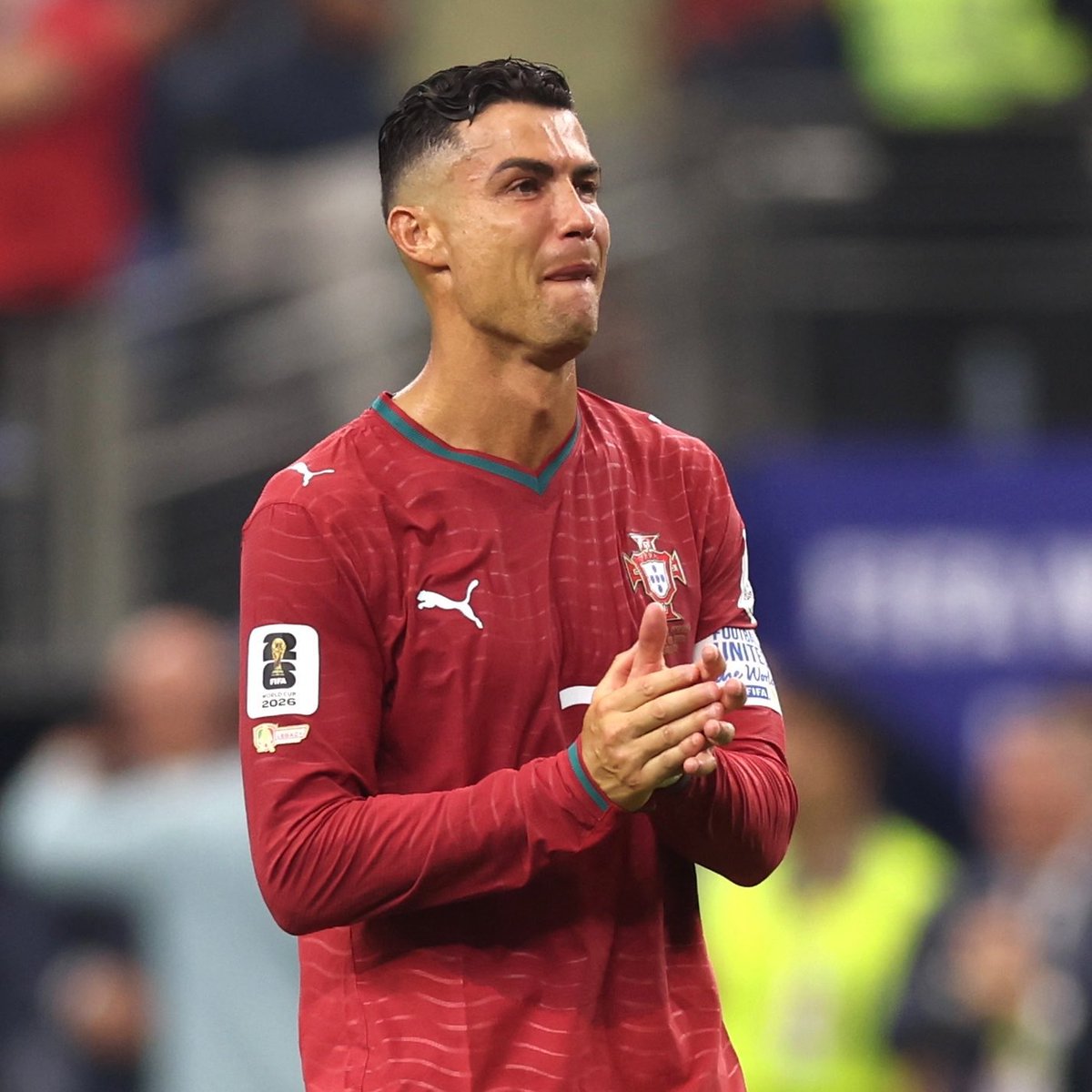
Do you know the worst thing about Cristiano Ronaldo?
It’s that he set the standards for what defines a legend… and in the end, he couldn’t even live up to the standards he created himself.
After winning Euro 2016, Ronaldo said:
“You can’t become a legend until you win a trophy with your national team.”
It was an obvious dig at Messi.
Argentina had just lost the 2014 World Cup final to Germany, and Messi was going through the toughest period of his international career. Those words only added fuel to the fire.
Where was the respect for a rival, Ronaldo?
The surprising part was that social media completely embraced that narrative. Messi was labeled a bottler, while Ronaldo was declared the winner of the rivalry—at least in the media, not on the pitch.
Then Messi retired from international football, came back, won the Copa América, and suddenly they were level in major international trophies.
What happened next?
Ronaldo fans started saying that one Euro is worth more than a hundred Copa Américas, claiming there was no competition in South America. Not true—but that became the excuse.
Then Messi went on to win the World Cup.
This time, the excuses changed again.
They claimed FIFA had fixed the tournament for Messi. That the World Cup was scripted in his favor. They simply didn’t know what else to say.
Then Ronaldo himself came out with one of the strangest quotes imaginable:
“A legend’s career can’t be defined by just seven games.”
At first glance, it sounds reasonable.
But beneath it was another attempt to diminish what Messi had achieved.
Before the World Cup, they insisted it would be Ronaldo’s tournament. On paper, Portugal had a fantastic squad. If the manager couldn’t get the best out of them, that’s Portugal’s problem—not Ronaldo’s.
Yet that same Portugal squad wasn’t any weaker than the Argentina team Messi led to the 2014 World Cup final—the same team people mocked Messi for not carrying to the title.
Just a couple of days ago, Ronaldo said:
“The World Cup doesn’t define my career, whether I win it or not.”
A statement that directly contradicts what he had said years earlier, when he admitted that winning the World Cup would make him feel completely fulfilled.
Now you’re 41 years old, Cristiano.
By your own standards:
* You have 5 Ballon d’Ors, not 8.
* You have one European Championship, not two Copa América titles.
* You never won the World Cup.
* You have four European Golden Shoes, while Messi has six—even though you’re an out-and-out striker.
So what now?
Will you keep playing until the next World Cup and become the first player to appear in one at 45, hoping to finally win it?
If we judged you by the standards you created, you wouldn’t qualify as a legend.
Of course, nobody actually judges you that way. Everyone still recognizes you as one of football’s greatest legends.
The real mistake was comparing Ronaldo to Messi in the first place.
That rivalry was exaggerated from the beginning by the media and figures like José Mourinho.
Messi conquered every major trophy available to him, shattered records that once seemed untouchable, and at 39 years old he’s still competing with Kylian Mbappé and Erling Haaland—the stars of the next generation—for the Golden Boot. And honestly, he could still win it.
What made Messi beloved by so many fans is that he never tried to diminish Ronaldo’s achievements.
Ronaldo, on the other hand, repeatedly made comments that many interpreted as attempts to downplay his greatest rival’s accomplishments—and that’s never an admirable trait.
Cristiano helped create a generation that thinks belittling other people’s achievements while constantly glorifying your own is a way to establish dominance.
Good bye. Ronaldo.