WATCH: @InTheAssembly landed an EXCLUSIVE interview with @enhanced_games Co-Founder and Executive Chairman, @C_Angermayer.
Listen to his thoughts on the recent inaugural Enhanced Games and where the telehealth business $ENHA is headed from here.
Skip to 2:00 for the interview.
This stock could 20x from here 🔥
$ENHA is trading at a market cap of ~$500M, but could see a valuation of $10B - $20B
People are just now finding out, but 10 days ago I interviewed co-founder and Executive Chairman @C_Angermayer where we discussed @enhanced_games future
The SpaceX IPO is days away.
Meanwhile, 5 small-cap space pure-plays are sitting under $3B with real tech, real contracts, and almost no coverage.
That’s where the asymmetric upside actually lives.
Here they are:
There is one European chip stock quietly sitting at the intersection of AI photonics, EV power semis, and EU sovereignty money.
Almost nobody is covering it.
The setup is more unusual than it looks.
Here it is:
In 1 year, $NBIS blew up 10x from $20 → $270.
Recently, Leopold owns 6% stake in it.
These 6 stocks under $30 can easily 10x:
1. $CIFR ~$23
$AMZN + $GOOG 15-year leases. $9.3B contracted. Analyst target: $70
2. $WULF ~$27
Google-backed Fluidstack deal. 1GW+ capacity. Analyst target: $80
3. $CORZ ~$28
CoreWea's landlord. $3.3B raised. 12-year $10B deal. Analyst target: $60
4. $BTDR ~$13
170% revenue growth. Owns its own AI chips. Analyst target: $50
5. $KEEL ~$6
Leopold accumulating. First colo deal Q3 2026 expected. Analyst target: $18
6. $HIVE ~$4
$30M AI cloud contracts signed. Liquid-cooled GPU clusters. Analyst target: $16
$NBIS $CRWV $IREN are Neocloud companies with deals with $MSFT $NVDA $GOOG $AMZN. They are providing compute to everyone.
♻️ RESHARE this post and write 1 comment, the best under $10 to buy and hold.
We just finished a deep dive on every quality compounder we could find.
We landed on 2 names NOBODY is talking about right now.
Both are spin-offs of one of the most successful capital allocators of the last 30 years.
Both are down ~50% from their highs.
Here they are:
TOI.V Topicus.
Pan-European vertical software business.
Mission-critical software for government, healthcare, education, and financial verticals across 26 countries.
Q1 revenue up 23% year over year. Recurring revenue accelerating. Cash conversion still elite.
Trading around CAD 96, down roughly 50% from the highs.
LMN.V Lumine.
Global communications and media software. BSS, OSS, billing, and network software for telcos and media companies.
Sticky high-margin contracts. Massive consolidation runway in a fragmented industry.
Trading around CAD 20 after a brutal pullback.
The playbook is identical to Constellation Software.
Decentralized. Buy and hold forever. Relentless M&A funded entirely by cash flow.
Normalized multiples are now in the low to mid teens on cash flow. Well below their historical averages. Well below private market comps for the same kind of business.
The software selloff created the setup, but the fundamentals never changed.
We're a team of 8 with one goal. To help you spot truly great stocks at the earliest possible stage.
Turn on notifications and follow us. It's absolutely crucial not to miss the alerts.
There will be a lot of people who regret not following us.
$EOS.AX is my largest position and I believe this is just the start.
I genuinely have so much conviction.
The world has a drone problem that is not going away. Cheap drones costing a few hundred dollars are being used to attack military assets worth millions.
Every defense force on earth is scrambling for a way to defend against them affordably.
Traditional missiles cost more than the drones they shoot down. The math does not work.
$EOS.AX built the solution. Directed energy weapons that destroy drones with a beam for pennies per shot. And their NiDAR AI software is not theoretical.
It has been battle proven in active conflict defeating Shahed drone and missile attacks. In defense procurement, field credibility against real threats is the only thing that matters. EOS has it.
The MARSS acquisition completed the full counter-drone stack. Detect. Decide. Defeat. All under one roof.
That is what separates $EOS.AX from every pure hardware competitor in the space and what justifies premium pricing on every contract.
Now look at the trajectory.
The combined order book went from A$136 million at the end of 2024 to A$726 million today.
A €102 million contract from a Middle East national defence force just signed with 70% of that revenue hitting in 2026 and 2027.
Management has flagged multiple additional pipeline opportunities each over $100 million.
And the macro backdrop could not be more supportive. Global defense spending is accelerating.
Drone warfare is now a permanent feature of every modern conflict. Every dollar spent on drone offense creates demand for the counter-drone defense that $EOS.AX specializes in.
A 5.3x order book expansion in 17 months. Battle proven technology. The complete counter-drone stack. A pipeline of nine figure opportunities. And a defense spending supercycle behind all of it.
This is why it is my largest position. And I think we are still in the early innings.
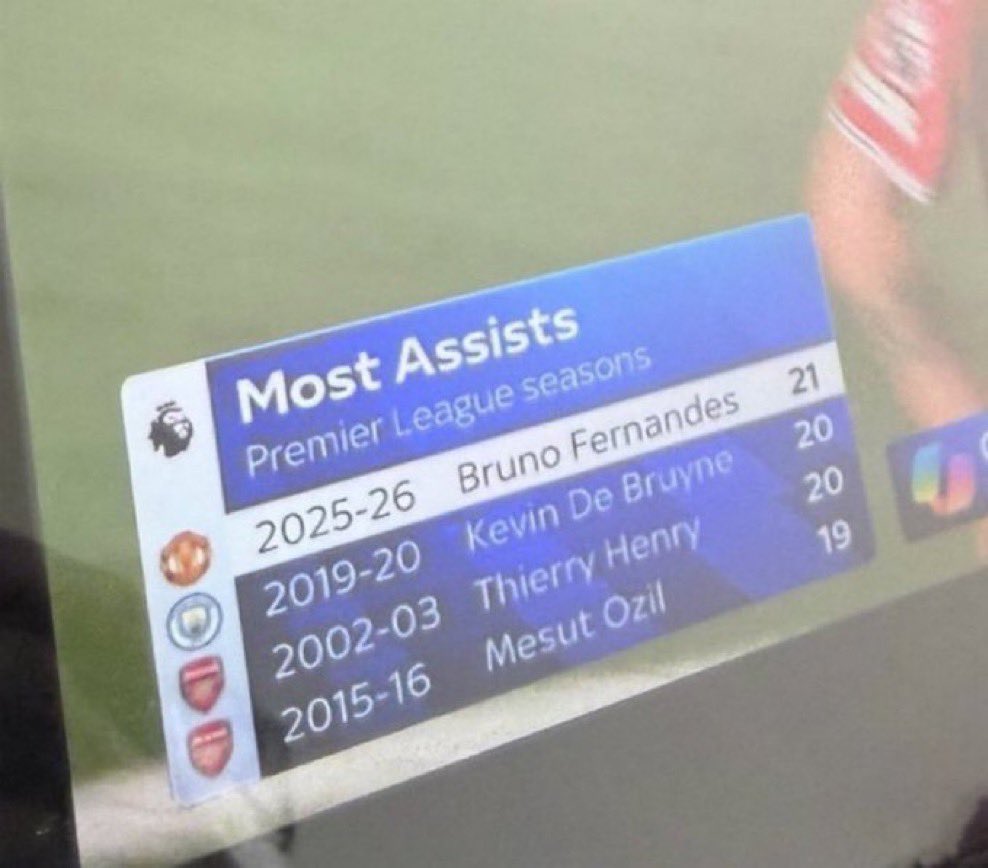
lets give a massive shoutout to the referee tonight
-didnt let saka take the corner after he was wasting time
-gave mosquera yellow card for time wasting
-didnt give madueke pen for a dive
-gave rice and arteta yellow card for CRYING
MASTERCLASS PERFORMANCE
Physical AI is shaping up to be the next major investing cycle.
Jensen Huang, the CEO of $NVDA and the most influential voice in tech right now, agrees.
The last few years were about digital AI. Training models, chatbots, data centers.
Now the capital is rotating into embodied AI. Robots and systems that see, move, manipulate, and work alongside humans in the physical world.
This could be one of the highest-conviction multi-year themes of the next 5 to 10 years.
Here’s why the pieces are lining up now.
Foundation models are finally good enough to handle real-world messiness. Object recognition, planning, adaptation. Edge compute and better sensors mean robots no longer need constant cloud hand-holding.
Hardware costs are crashing. Batteries, actuators, motors, lidar, vision sensors, and dexterous hands are all on cost-down curves. What cost millions five years ago is becoming viable at scale.
Demand is real. Aging populations, reshoring, e-commerce, elder care, dangerous jobs. Governments and large corporations are incentivized to automate FAST.
The trillions already poured into AI infrastructure now fund the physical deployment layer. Pilots are proving ROI. The next phase is units shipping from thousands into millions.
Better robots generate more data. More data trains better robots. Adoption accelerates. The companies that nail hardware, software, and deployment at scale are the ones that win.
Here are 4 names on my radar:
SYM Symbotic.
The warehouse automation powerhouse. They build full AI-powered robotic systems that handle pallets, cases, and items end-to-end. Walmart-scale deployments with a long-term backlog already locked in.
This is not a gadget. It is a turnkey platform deployable today.
$28B market cap. Sticky long-term contracts and real recurring support revenue. If logistics automation goes mainstream, this is the name that benefits first.
CGNX Cognex.
The undisputed eyes of the robot revolution. Leader in machine vision systems, sensors, and software that let robots and factories see, inspect, guide, and identify with high accuracy.
Factories, warehouses, automotive, electronics. All of them need vision to make physical AI actually work reliably.
~$11B market cap. Strong margins expanding with AI upgrades. Forward multiples reasonable for 20%+ growth. A blue-chip in the space still flying under retail radar.
NDSN Nordson.
The quiet precision dispense king for robotic manufacturing. They make the specialized equipment robots use to apply adhesives, coatings, sealants, and fluids across electronics, automotive, packaging, and medical.
As robots get more dexterous and lines get smarter, demand for their tools surges.
~$16B market cap. Niche dominance. High margins. Diversified end-markets. The boring industrial that benefits from the automation wave without the froth.
OUST Ouster.
The perception layer of physical AI. High-resolution digital lidar plus enhanced AI vision that gives robots and machines 3D mapping and sight in tough environments.
Industrial robotics, smart infrastructure, autonomous systems. Growing fast. Smaller cap, more room to run.
Still early on profitability. Cash position is solid. Deal flow is accelerating. Higher-risk sleeve of the thesis. Every embodied AI needs great sensors, and Ouster is positioned without being the overhyped name.
The risks are real though.
But directionally, this feels like being early on EVs or cloud in the 2010s.
The Assembly is a team of 8 with one mission: helping you spot great stocks at the earliest stage.
In the last two weeks alone, we caught FLY, NOW, TE, PL and much more before their moves.
Follow us and turn on notifications so you don’t miss the next one. This is extremely important.
A lot of people will wish they followed us sooner.
🚨 MICHAEL BURRY WARNS THREE UPCOMING IPOs COULD COMPLETELY CRASH THE STOCK MARKET.
Michael Burry reported that the upcoming public listings for SpaceX, OpenAI, and Anthropic are going to pull more capital out of the market than the entire dot-com wave of 2000.
Adjusted for inflation, just these three companies will raise more money than the hundreds of tech firms that flooded the market at the peak of the 2000 bubble.
The historical data from 2000 shows exactly why this is dangerous for stocks.
That year, the market saw 446 IPOs raise a record $108.15 billion. The Nasdaq peaked on March 10, 2000, at the exact moment this massive supply of new shares hit the market, right before crashing 80%.
The crash happened because of a simple liquidity drain.
When giant companies go public, big institutional funds need cash to buy the new shares.
To get that cash, they have to sell their existing stock positions. This creates immediate selling pressure on the most expensive tech stocks.
Today, the setup is identical but much more concentrated. Instead of hundreds of small startups spreading out the drain, just three mega companies are absorbing the market's capital.
This directly impacts current market leaders.
Microsoft has 49% of its $627 billion cloud backlog tied to OpenAI, and Oracle has 54% of its pipeline dependent on it.
The same big funds that need to buy the new IPOs are the ones currently holding these tech giants.
In the first quarter of 2000, the average IPO nearly doubled on its first trading day because cash was easily available.
By the fourth quarter, capital markets dried up.
Gross IPO proceeds collapsed 63% in a single quarter, and average first-day gains dropped to just 14% as companies rushed into layoffs and bankruptcies.
When an unprecedented amount of money is pulled out of existing stocks to fund a single massive IPO wave, the broader market historically runs out of the liquidity needed to sustain its peak.