BBC: Olympian Dobbin writes to Prime Minister over ME funding
Former British sprinter Beth Dobbin has called on Prime Minister Andy Burnham to fund more research into the "life-decimating" condition that has resulted in her spending 22 hours a day in bed
https://t.co/zXN9ffHYnR
We’ve been blown away by the response to my interview with @BBCSport & @KatieFalkingham , thank you so much to everyone who has taken the time to read and engage with it ❤️ millions of views across multiple platforms really is immense.
We have since written to @andyburnham , calling on the @UKLabour government to fund research into this horrific illness. I know there’s so much more we could say, but with limited capacity, we’ve tried to focus on the lack of funding, resources in the NHS and how much it’s actually costing the government.
As you can see on the slides, it has been drastically underfunded compared to other illnesses and it is currently costing the UK Government far more than it would cost to fund research. ME is most often a post-viral illness. Therefore, since the start of the Covid pandemic, we’ve seen cases increase drastically and they will continue to increase. We need funding into research urgently. With estimates of people with ME being around 1.35 million, this is a lot of lives destroyed.
I’ve had thousands of messages on multiple platforms since sharing my story so please bear with me ❤️
Thanks to @ThereForME_UK and @wecrunchme for the stats.
Sjogrens is a wildly heterogeneous systemic auto immune disease. I know a woman who presented at age 18 with hypokalemic paralysis from. They told her it was psychosomatic, related to stress, from until the labs came back.
It's rare that an article about #MyalgicEncephalomyelitis trends on Twitter, so thanks to @KatieFalkingham for writing it and @BethDobbin for agreeing to be interviewed. Let's hope this leads to better understanding among doctors and the friends and families of patients. #r4today
You shouldn't have to be an Olympian to be believed by doctors or the State... Many ordinary people have had their lives upended for decades without help or support. Even worse their disease has not been taken seriously by far too many scientists and medical doctors.
https://t.co/Y8cRETGlW9 I feel so sorry for Beth Dobbin, and of course the millions of others like her. Reading her story, made me remember that deterioration in my running was the first thing I noticed in 1989, the first thing that ‘went’. I hope she can get her life back.
This can happen to anyone. And when you have it, to people who don’t understand, you can seem paranoid about resting and not pushing through fatigue.
But you aren’t, because the risk is real.
And thank you to Beth for articulating it so well. I’m so sorry it has happened to you.
"There is nothing out there. There is nowhere to go. You go to the GP and there's nowhere for them to send you to. It's really at the back of the queue as far as research, knowledge, expertise, funding."
Thank you for talking so honestly about #ME Beth. I’m so sorry 🫂
Beth Dobbin is so determined to raise awareness of the illness that has decimated her life that she is speaking out, despite knowing it could trigger a brutal deterioration in her health - 🙏Beth #ME#LongCovid
https://t.co/6mVwO12lZB
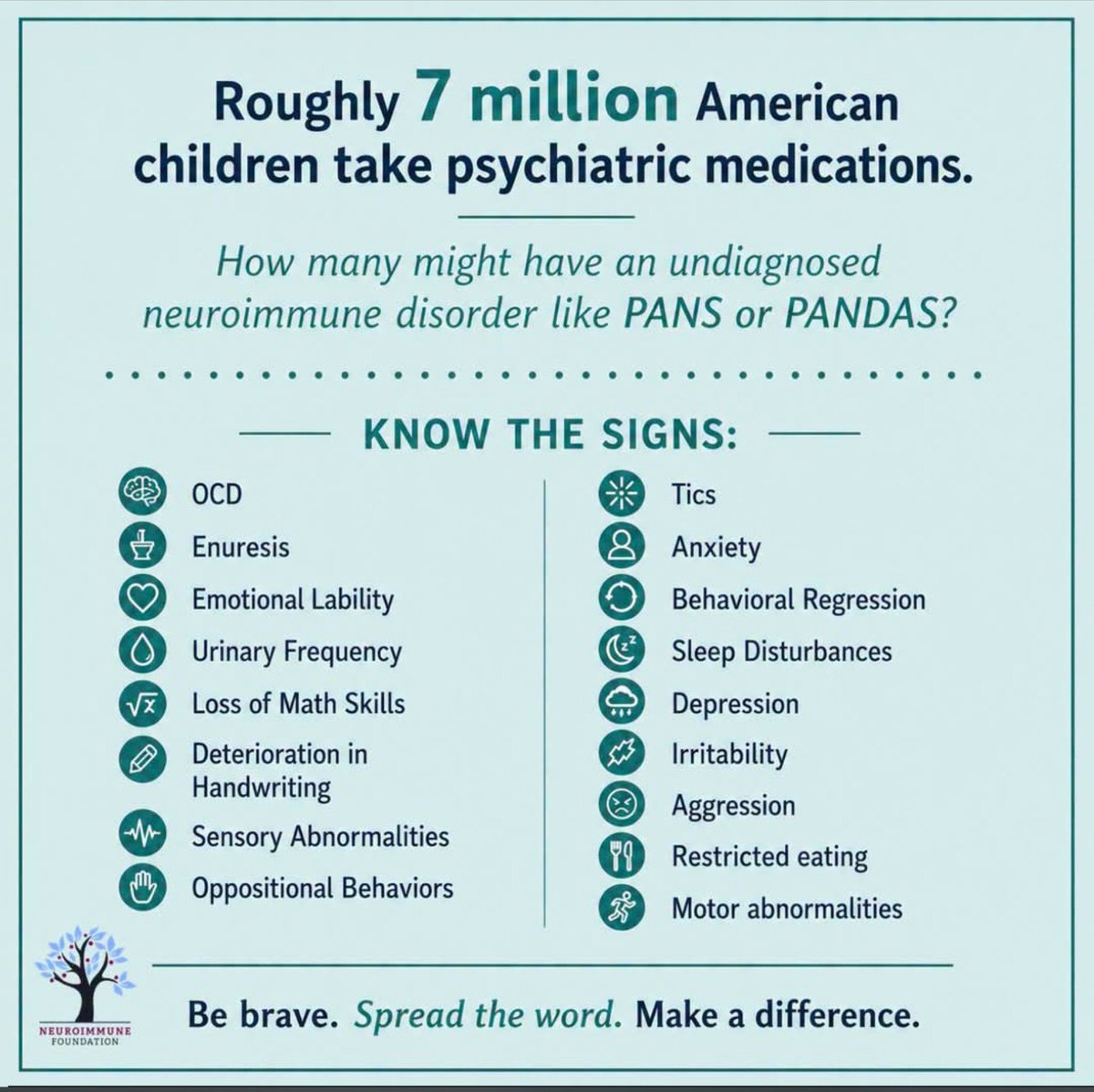
HOW IS IT THAT CHILDREN CAN HAVE SEVERE OCD AND NOBODY EVEN LOOKS AT THEIR IMMUNE SYSTEM?
I still meet families where this has never been investigated. Not once.
Back in 2005, researchers examined 50 children with OCD.
42% had antibodies reacting with the basal ganglia, an area of the brain involved in movement, habits and behaviour.
In the comparison groups, the figure was just 2–10%.
A subsequent review of 7 studies found that people with OCD had almost 5 times the odds of having these antibodies compared with controls.
I’ve spent years investigating the immune system’s role in childhood OCD, and I’ve seen remarkable changes when underlying immune dysfunction is identified and addressed.
Yet I still meet children whose OCD has completely taken over their lives without anyone having investigated infections or immune dysfunction.
So I want to ask parents something.
Has anyone EVER investigated your child’s immune system?
Or was it straight to anxiety, medication and therapy?
I’d genuinely like to know how many families are still experiencing this.
Please share this. There are parents who need to know that the immune system may be part of their child’s OCD.
Studies and my blog below 👇
#OCDAwarenessWeek #OCD #PANS #PANDAS
“It’s always been like this”.
Before COVID arrived, doctors were already warning of pressure in the NHS.
But since 2021, it’s not just a little different. It’s a LOT different.
Patients waiting over 12 hours after decision to admit:
▪️Sept 2019: 458
▪️Sept 2026: >50,000! 🤯
Exclusive from @benclatworthy
Screen time in classrooms should be slashed as there are fears it is fuelling a “crisis” in pupils’ speech and language development, ministers have been urged
Leading clinicians have written to Lucy Powell, the education secretary, to warn that they are witnessing a “crisis unfold with children presenting earlier and more severely” with physical and developmental health issues, including language and eyesight problems
The letter, which was also sent to Yvette Cooper, the health secretary, was signed by 150 clinicians inlcuding Dr Louise Milne, consultant paediatrician at Portsmouth Hospitals University Trust, and Dr Sanjiv Nichani, a senior consultant paediatrician and co-founder of the Children’s Intensive Care Unit at Leicester Children’s Hospital
Experts said the use of tablets, laptops, interactive whiteboards and headphones “exploded” during the pandemic and has “never been rolled back”. Recent research found that many pupils now spend longer on screens in the classroom than they are recommended to spend across an entire day.
They warn: “A generation is being taught on devices and platforms that have never been subject to systematic, child‑focused testing for their cumulative impact on children’s eyes, ears or speech, and we are the clinicians who will spend the rest of our careers treating the consequences.”
https://t.co/NhCIW67HOI
My new article exposes the staggering false economy of pretending that "contested" biomedical diseases (which are currently incapacitating millions in the UK alone) are psychosomatic. 💸🔥
Tackling this crisis isn't just in the interest of the sick. It's in the interest of the well.
⬇️ Link in first comment (voiceover available)!
#LongCovid #MECFS #PwME #Dysautonomia #NHS #ChronicIllness
@BBCNews Misdiagnosis is an issue. On #PansPandasAwarenessDay#LightUp4Pans any abrupt severe sudden onset changes in a child Pans Pandas should be considered rather than straight to assumed autism or mental health.
Almost 9 in 10 parents in a study of 680 children with PANS reported giftedness in their child.
We’ve seen this pattern repeatedly in clinic.
Could the neurobiology behind exceptional abilities also influence vulnerability to immune dysfunction?
#PANSPANDASAwarenessDay
This says that not many NHS staff know about B6 deficiency and Parkinson’s disease . Not many GPs are bothered about telling LC , ME , FND , Lyme that B12 results do not flag up malabsorption or that B12 repairs nerves so is beneficial by injections , sublingually or patches ?!