Started a BRAF Colorectal Cancer Public Library group on Facebook. So many significant trials, research findings, changes to NCCN guidelines, etc. in the last 2 years. Gathering high level research/interviews into 1 place seems wise and useful. #BRAFCRC https://t.co/1FjFjY9AOU
⭐️💜Following World Pancreatic Cancer Day, I'm pleased to share our comment in @NatRevClinOncol@Dr_R_Kurzrock : "An imprecise label in the era of precision medicine."
👉🏻The FDA approved daraxonrasib, the first pan-RAS inhibitor, for metastatic pancreatic adenocarcinoma in two groups of patients: those who have had at least one prior systemic therapy, and those who are not candidates for multiagent systemic therapy.
👉🏻Critics say the second clause isn't evidence based. They have a point about the trial data. But trials mostly enroll patients with good performance status, and that isn't what metastatic pancreatic cancer looks like in clinic. Most of our patients never get to second-line therapy because their condition declines first.
👉🏻So the imprecision in the label is what gives those patients access. A tighter label would have shut out the people who need the drug most, and they would have had to wait for evidence that may never come from a conventional trial.
Real-world evidence should settle the remaining uncertainty. Until then, I think this is a case where an imprecise label serves precision medicine well @OncoAlert@Nature@NaturePortfolio
#WorldPancreaticCancerDay #PancreaticCancerAwareness
https://t.co/kQFRMQE7Uk
It is still almost unbelievable to read that 5 of 61 patients have had complete remission in stage 4 pancreatic cancer.
We know daraxonrasib works in patients already on treatment, now this small trial looked into patients, who haven't had any treatment yet.
6 in 10 tumors shrank significantly. 5 patients had no detectable cancer left on scans. The median time before the disease progressed was a bit more than 1 year, and >75% of patients were alive at 1 year.
The numbers this replaces: roughly 2 in 10 tumors shrinking, 6 months before progression, about a third alive at 12 months.
Caveats: yes, this is a small trial and we need to wait for the results of the big randomised one with placebo as control, which will report next year, but 2026 really has been a hell of a year for pancreatic cancer patients.
https://t.co/0Yk49NS68O
If youre reading all these headlines about pancreatic cancer and think “nothing like that for mine", hear me out:
Drugs like daraxonrasib are the result of work of 40+ years. Most of prior versions were failing, trials were negative, us GI oncologists left conferences empty handed again.
Your cancer has a version of that. Somewhere there are labs working on the exact fault driving your disease, and right now they're failing at it, because that's what the early part always looks like from the inside.
Unfortunately many people are diagnosed in the years before the answer comes, which is one of the cruellest parts of my job. I receive mails from relatives of died patients who are genuinely happy for patients now, who might benefit from these drugs.
But every disease we can treat properly today was once the one with nothing: Diseases like childhood leukaemia, testicular cancer, some forms of refractory lymphoma or advanced stage melanoma/lung cancer. Until a revolution like immunotherapy, CAR-T cells, any rare targeted drug or like in this case KRAS-inhibitors entered the stage.
Cancer research is unfortunately a marathon, not a sprint, but there will be someone working on your disease trying to create the same post for you one day.
Last night, San Francisco City Hall glowed purple for World Pancreatic Cancer Day. 💜✨
We extend a special thank you to our Leading National Partner, @RevolutionMedicines, for joining us and for their continued commitment to the pancreatic cancer community. All together, we can raise awareness!
This Lung Cancer and Pancreatic Cancer Awareness Month, share hope for those affected by RAS-addicted cancers.
For each message submitted this month, Revolution Medicines will donate $50 to @KRASKickers, up to $30,000.
Add yours: https://t.co/cSkoeLfGez
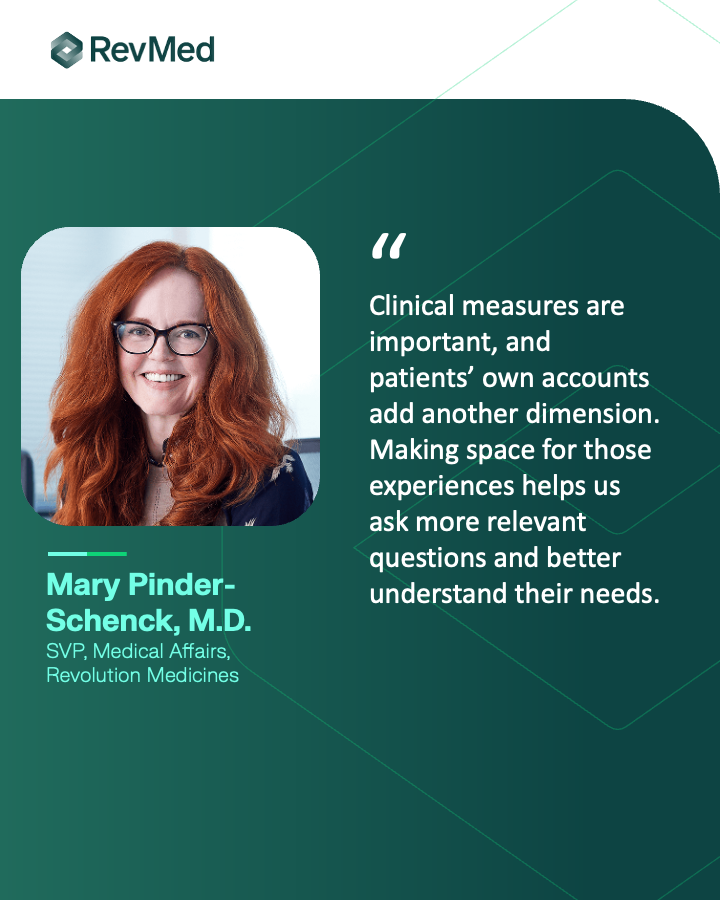
Listening to patients and advocates helps us understand what matters most. Kip Cross and Mary Pinder-Schenck discuss how those perspectives inform our work.
Read more: https://t.co/U6t86xWWh6
#RevolutionRAS
We’re partnering with @Incyte on a new interventional phase II study in early stage colorectal cancer (CRC), designed to treat patients at high risk of recurrence before disease appears on imaging.
The trial will evaluate INCA33890, Incyte’s investigational bispecific immunotherapy, in patients with stage 2/3 CRC who have completed surgery and adjuvant chemotherapy (ACT). Following ACT, patients will undergo longitudinal testing with our Signatera™ MRD test for up to 12 months. Those who test MRD-positive and have no evidence of radiographic disease may be eligible for treatment.
Thank you to our collaborators at Incyte for their vision and partnership. Read the full press release: https://t.co/AjrwinwpdM
✨ A major announcement. A new Phase III trial. A potential turning point for MSS colon cancer.
During OncoDaily’s exclusive webinar, Precision Medicine in Colorectal Cancer – MRD Surveillance & Emerging Guidelines, Dr. Robert Lentz publicly announced for the first time that Natera is partnering with Agenus to incorporate Signatera ctDNA testing into the Phase III ROBIN trial.
The trial will investigate neoadjuvant botensilimab plus balstilimab versus upfront surgery in patients with high-risk stage II and III microsatellite-stable (MSS) colon cancer.
With event-free survival as the primary endpoint and ctDNA negativity at 12 months as a key secondary endpoint, ROBIN could provide important evidence on the role of neoadjuvant immunotherapy and molecular response in MSS colon cancer.
First patient enrollment is anticipated in early 2027.
👇 Read the full story on @oncodaily
https://t.co/inryB00VZl
What a Phenomenal Presentation on the latest data by Cytodyn and Natera
The presentation will be posted tomorrow if you have not joined today.
Natera to complete processing the rest of the data in the next few weeks.
Tomorrow more mature phase 1/2 data of $RVMD's daraxonrasib in combination with GnP in 1L metastatic pancreatic cancer (mPDAC) is planned to be presented at ENA 2026 in Barcelona.
The AACR update in April reported that 84% of patients were progression free at 6m (n=40, median follow-up 9.7m, median PFS not mature). So what to expect for PFS at 12m?
As far as I know there is no other clinical data available for daraxonrasib + GnP in mPDAC. We do not know the shape of the survival curve on this combination therapy.
We could look at the PFS curve of GnP monotherapy in 1L mPDAC from the control group of the NAPOLI 3 trial and at the PFS data of daraxonrasib monotherapy from the 2L phase 1/2 cohort.
However, this comparison is probably of low informative value as we do not know how resistance to daraxonrasib develops in combination with GnP and how long the combination is tolerable.
GnP monotherapy in 1L mPDAC (NAPOLI 3): 6m PFS 43.2%, 12m PFS 13.9%, 18m PFS 3.6% (no plateau, patients progressed about a third faster between 6m and 12m than in the first 6m)
Daraxonrasib monotherapy in 2L mPDAC (phase 1/2, 300 mg, n=38): 6m PFS 66%, 9m PFS 38%, median PFS 8.1m (patients progressed about 2.7 times as fast between 6m and 9m as in the first 6m)
Let's just assume that patients on daraxonrasib + GnP also progressed about a third faster after 6m than in their first 6m as it was reported on GnP monotherapy.
Based on the 6m data we have, this would imply that roughly two thirds of the patients on daraxonrasib + GnP could be still progression free at 12m. The median PFS would then be around 18m to 19m. Given the 95% confidence interval around the 84% at 6m (68% to 93%), the 12m PFS would range from roughly 40% to 85% and the median PFS from roughly 10m to not reached.
However, a median PFS of 18m to 19m in mPDAC sounds highly unrealistic to me.
In the 2L phase 1/2 cohort on daraxonrasib monotherapy, progression sped up more than on GnP monotherapy. With the same speed-up after 6m, roughly 53% of the patients on daraxonrasib + GnP would still be progression free at 12m. The median PFS would then be around 12m to 13m. Given the 95% confidence interval from the 6m data we have, the 12m PFS would range from roughly 25% to 75% and the median PFS from roughly 8m to not reached.
Disclosure: I am long $RVMD. This is not financial advice. I cannot guarantee that the numbers and estimates in this post are correct. Do your own research.
Same mutation, different organ, different story.
KRAS G12C leads in lung cancer, G12D leads in colorectal cancer, and the same G12C inhibitor behaves very differently in each tissue.
The allele alone does not define the strategy. Tissue context does.
Which part surprised you most?
#KRAS #KRASG12C #KRASG12D #RAS #NSCLC #LungCancer #ColorectalCancer #ColonCancer #CRC #Oncology #PrecisionOncology #PrecisionMedicine #TargetedTherapy #MolecularOncology #CancerResearch #Biomarkers #Genomics #TumorBiology #EGFR #MAPK #Sotorasib #Adagrasib #MedEd #OncologyEducation #MedTwitter #ScienceCommunication #Infographic #HealthcareProfessionals #CancerScience #Oncologist
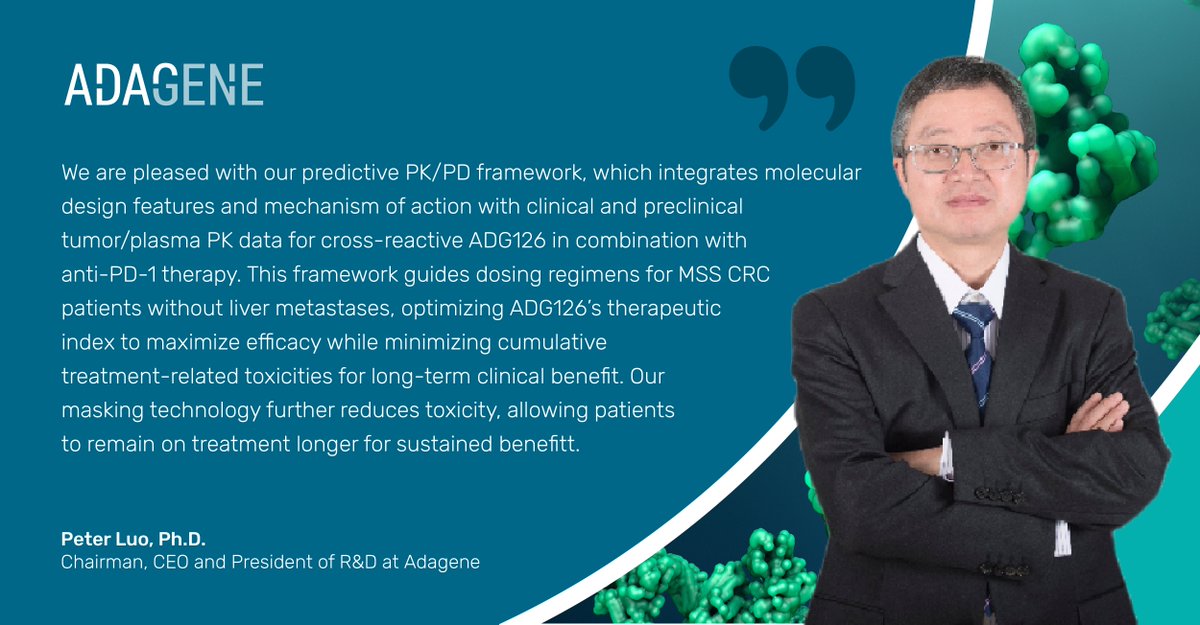
We announced updated data being presented at #ASCO25 from our Phase 1b/2 study in advanced microsatellite stable #colorectalcancer, with muzastotug (ADG126) showing a 29% confirmed ORR when added to pembrolizumab (KEYTRUDA®).
Learn more:https://t.co/hBbaGpQkbo
$ADAG Adagene and City of Hope Open Clinical Trial to Test New Therapy Hard-to-Treat Colorectal Cancer
- Adagene and City of Hope launched a Phase 1 combination-therapy trial for patients with advanced colorectal cancer resistant to standard treatments.
- The investigator-initiated study will enroll up to 36 patients with microsatellite stable disease to evaluate ivonescimab and muzastotug (ADG126), both experimental drugs.
- Initial testing will involve patients whose cancer progressed on prior systemic therapy, assessing safety and preliminary antitumor activity to identify an optimal dosing combination.
- Once that dose is identified, investigators plan to test the combination earlier in treatment, first adding 5-FU chemotherapyand subsequently irinotecan.
- The study will also assess how long the combinations control cancer growth.
- This is Adagene’s third clinical program combining ADG126 with a next-generation PD-1 bispecific antibody, which targets PD-1 and another target.
https://t.co/Ej44aZvw0p
City of Hope and Adagene Open Clinical Trial to Test New Therapy for Patients with Hard-to-Treat Colorectal Cancer https://t.co/YJfv6J6b5q #news#biotech