To preprocess or not to preprocess your #EEG (when building #ML models) 🔮? 💫We are thrilled to share our latest #preprint, studying the challenge of learning brain-specific biomarkers from EEG 🧠📶 using #ML ⚙️🖥️: https://t.co/1mAgqSzg0o
We compile arguments and evidence from benchmarking age- & sex-prediction on > 2600 EEGs from two large public datasets.
We found that basic artifact rejection consistently led to better model performance, whereas removal of ocular and muscle artifacts hampered performance. As it turns out that those peripheral signals are predictive themselves!
Our results therefore argue in favor of the need to diligently process EEG data, if the goal is to have brain-specific biomarkers (and if prediction is not the only objective).
Our efforts to build more interpretable #ML models for EEG led us to extending the established Morlet wavelet methodology for spectral analysis of EEG to accommodate state-of-the-art ML models based on covariance matrices. This allowed us to perform head-to-head comparisons between classical EEG features and frequency-specific model predictions for, both, brain and artifact signals.
Compared to classical band-pass filtering, wavelets even led to improvements in prediction performance.
Joint work with Philipp Bomatter, @JP4illard, Pilar Garces & Jörg F Hipp.
📢 New article: Effect of head-mounted #VR and vibrotactile feedback in ERD during motor imagery #BCI training: https://t.co/WfyTwHvncF 🧠 @DBioengineering @laseeb_isr@ISR_Lisboa
Super happy that our paper describing the NeuXus open-source tool for real-time artifact reduction in simultaneous EEG-fMRI is now out! @avourvopoulos@laseeb_isr@ISR_Lisboa
https://t.co/lR5q6PPv9b
Find the code here: https://t.co/4vF5TtjZw2
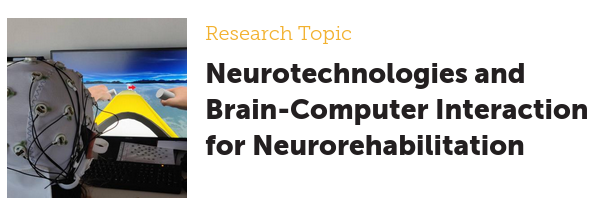
📢Our new editorial on the Research Topic on "Neurotechnologies and Brain-Computer Interaction for Neurorehabilitation" is now out in @FrontiersIn Neuroergonomics 🧠 https://t.co/rSEAhmAWc0 #BCI#EEG#FNIRS#FES#tDCS#robotics
This is a landmark achievement. 25 yrs ago, I watched Superman in a wheelchair after falling from a horse tell me that one day neuroscientists would fix spinal cord damage. Today, a digital bridge over the broken spinal cord enabled this guy to walk again https://t.co/50E8uA3e6v
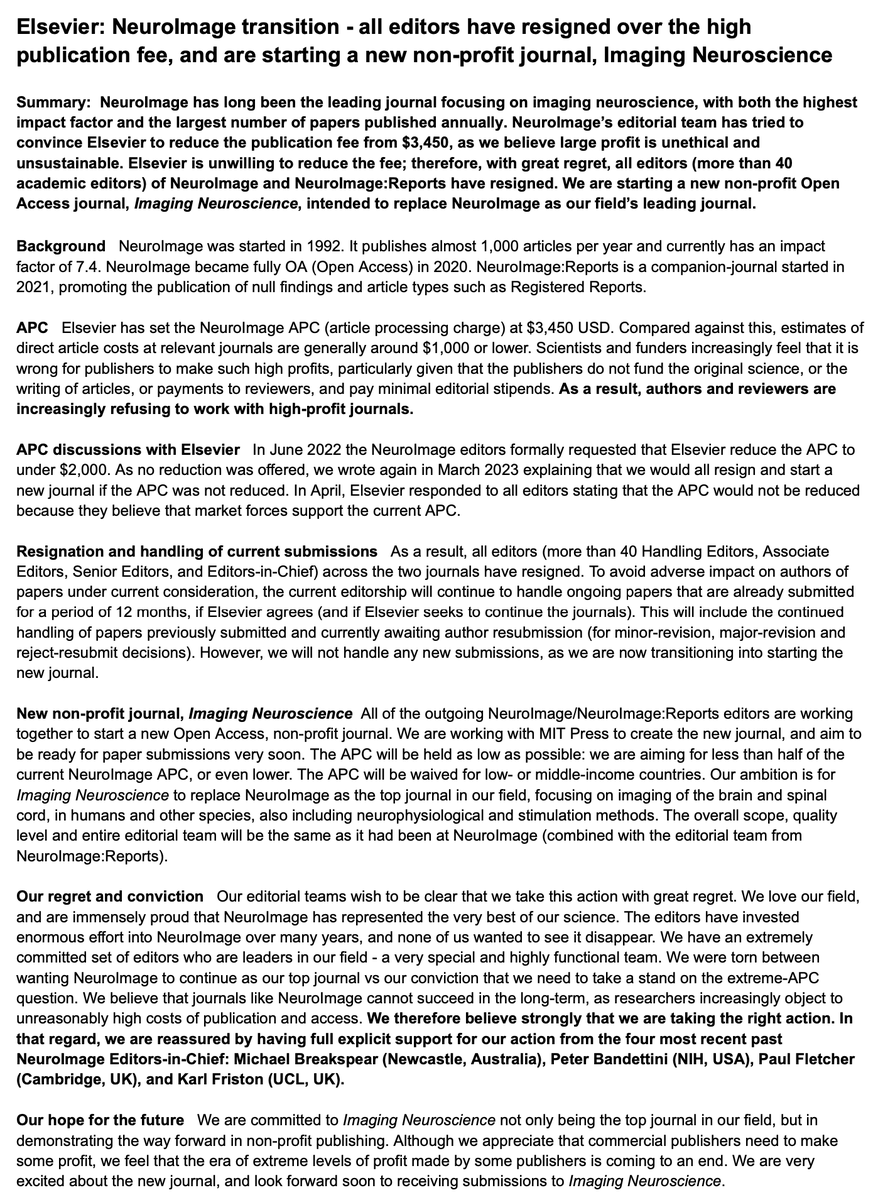
All NeuroImage and NeuroImage:Reports editors have resigned over the high publication fee, and are starting a new non-profit journal
https://t.co/DmnwDKVCK7
This comes with great regret, and a huge amount of thought and discussion- please read announcement to get more details.
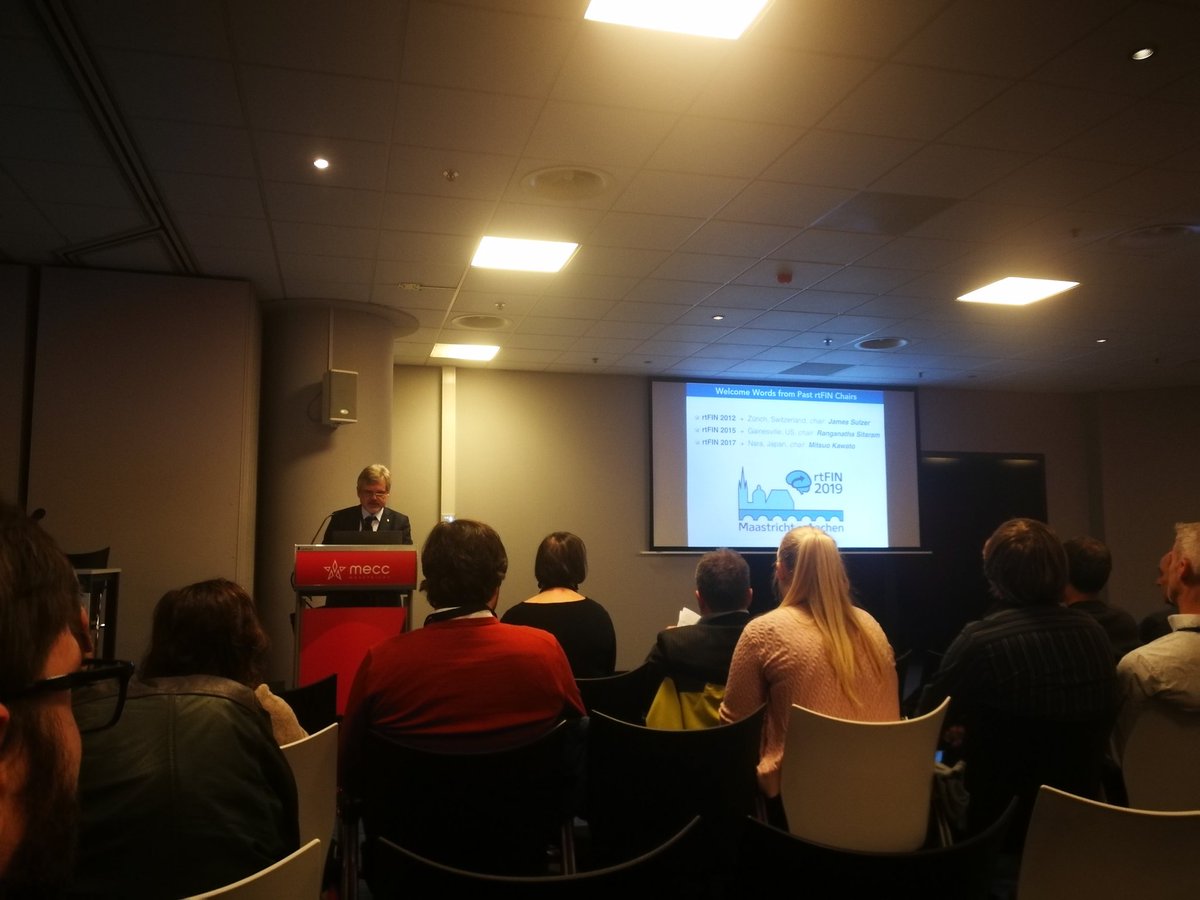
Tomorrow I will be presenting the comparison of alpha power obtained with our new and open-source online artifact correction vs offline correction for real-time #EEGfMRI NF/BCI. If you are interested and attending #rtfin2022, come to see my poster (#TH39) ! @rtFIN2022 @laseeb_isr
We are pleased to announce that the next Real-time Functional Imaging and Neurofeedback Conference #rtFIN2022 will be held at Yale University in New Haven, Connecticut in October 2022.
Tentative dates: October 17th-21st.
@rtFIN2022 is our new tag, help spreading the news!
📄Congratulations 👏 to Caroline, @fleury_mathis and @PiMaurel for their paper "Deep Learning-Based Localization of EEG Electrodes Within MRI Acquisitions" https://t.co/T15GvRFr5v
📢We are hiring!
-a PhD student to work on few-shot learning for BCI (https://t.co/KSm9JXfazS )
-a Post-Doc for a project on Graph Signal Processing and DL for Multimodal Neuroimaging (https://t.co/gi7hJzuL1e)
Please RT!
New preprint! "A Survey on the Use of Haptic Feedback for Brain-Computer Interfaces and Neurofeedback" by @fleury_mathis Giulia Lioi @c_barillot in collaboration with @AnatoleLecuyer
https://t.co/QpR8NjcKy3
Are you looking for a simple way to reduce subject head motion in the scanner? Apply a strip of medical tape over their forehead to provide them with tactile feedback! Check out the details in a new preprint by Krause et al @fladd https://t.co/YlfLsxd6uL
"A critical examination of real-time fMRI neurofeedback" - amazing line up of speakers and workshops next week https://t.co/OugdM4MKjl co-organized by Michal Ramot, Luke Stoeckel, Javier Gonzalez-Castillo, and Alex Martin @NIH. #neurofeedback




![fleury_mathis's tweet photo. [#BrainAwarenessWeek] Atelier Neurofeedback 🧠
La plateforme de recherche Neurinfo a ouvert ses portes à des lycéens collégiens !
@Inria_Rennes @irisa_lab @SemCerveau35 @CHURennes https://t.co/UeCwF7MVQq](https://pbs.twimg.com/media/D1i4UgxWwAEawJS.jpg)




![fleury_mathis's tweet photo. [#BrainAwarenessWeek] Atelier Neurofeedback 🧠
La plateforme de recherche Neurinfo a ouvert ses portes à des lycéens collégiens !
@Inria_Rennes @irisa_lab @SemCerveau35 @CHURennes https://t.co/UeCwF7MVQq](https://pbs.twimg.com/media/D1i4UhPXQAIKRmA.jpg)


