When there is crystal clear understanding about life in general and the human mind or your own mind in particular, the mind chatter will slow down by itself.
This is the one and only way to silence and peace.
Nude protest as a measure to delegitimize state power is not common in African history.
Alake Adedamola, during the colonial period, was removed from office when Egba women staged a naked protest against him.
Ekiti women staged a naked protest to demonstrate their abhor
rence of the electoral malfeasances that characterized the April 2003
Governorship elections.
Nude protests are such a taboo that no state is able to withstand the shame associated with it.
A woman’s nakedness is regarded as a virtue reflective not only of the woman but also of her community. As such, nude protest is synonymous to sexual violence, an assault on both the woman and her community.
The undressing of the female body in Yorubaland under abnormal circumstances is regarded as such a heinous aberration that, if another group is involved, wars are usually declared.
What you are raising is a real historiographical debate (the critique of "Nagô-centrism" in Bahian ethnography), but explaining Yoruba prominence in Brazil as an invention of "20th-century white, racist academics" is a complete denial of Black agency in this process of cultural change.
First, the idea that early white scholars invented Nagô prestige ex nihilo is an anti-essentialist ethnographic narrative championed by scholars like Roberto Motta and Beatriz Góis Dantas, and it has already been refuted by historians like Luis Nicolau Parés and J. Lorand Matory. In Black Atlantic Religion, Matory shows that as early as the late 1800s, freed Afro-Brazilian returnees (Agudás) and Black Lagosian elites ran a thriving transatlantic circuit between Lagos and Bahia, actively cultivating ties to West Africa and championing Yoruba traditionalism decades before 1930s anthropologists showed up. This circuit produced a number of influential Black leaders. A prime example is Martiniano Eliseu do Bonfim, born in Bahia in 1859 to freed African parents. In 1875, his father took him to Lagos, where he attended the Presbyterian Faji School and underwent initiation as a babaláwo (Ifá diviner) during an eleven-year stay ending in 1886. Another key figure in this Brazilian-Lagosian circuit was the babaláwo Felisberto Sowzer (anglicized as "Souza"), grandson of the Oyo diviner Manoel Rodolfo Bamgbose,the progenitor of many important Ifa-Babalawo families in Lagos, Bahia, and Rio.
Second, nobody in serious scholarship claims Bahian Candomblé is "100% pure" Yoruba. Even the most traditional "pure Nagô" terreiros still use Jeje (Gbe) terms for their core ritual functions: dofona (initiate), peji (shrine room), hunco (initiation room), and hun (drums). It was an internal African synthesis, not a white intellectual sorting exercise.
Third, the modern "re-Africanization" and "purity" push did not come from racist white professors. As Parés documents, Black Brazilian activists (Movimento Negro Unificado, SECNEB) drove it in the 1970s and 1980s, inspired by Pan-Africanism and the US Civil Rights movement as an anti-colonial strategy.
Fourth, within Bahia, "Nagô" functioned as an initiatory religious identity rather than biological bloodline gatekeeping. As Parés notes, Mãe Aninha, the fiercest champion of "pure Nagô" orthodoxy at Axé Opô Afonjá, was the daughter of Grunci, parents from Ghana with zero Yoruba ancestry.
Finally, Bantu-Kongo heritage is hardly in the shadows in Brazil. Because West-Central Africans arrived earlier and dispersed widely across the country, they provided Brazil's foundational cultural bedrock, with Kimbundu and Kikongo dominating Portuguese loanwords while producing Brazil's most globally famous cultural exports, such Samba, Capoeira, and Congada.
So, yes, early ethnographers like Nina Rodrigues and Arthur Ramos did construct an artificial hierarchy of "purity" that favored Yoruba (Nagô) traditions over Bantu-Kongo ones. And yes, West-Central Africans made up roughly 70% of captives brought to Brazil across the entire trade. But calling modern diaspora reverence "Yoruba ancestral supremacy politics" casts Afro-Brazilians as passive participants in culture-making while erasing how Nagô priestesses (Iyalorixás like Mãe Aninha, Mãe Menininha, and Mãe Senhora) strategically leveraged alliances with intellectuals, artists, and politicians from the 1930s to 1950s to shield their communities from brutal police repression and state persecution.
Your reposts and likes will go a long way towards me dedicating my life in building a Geopolitical school of thoughts and institute built on Yorubanism, Yoruba civilisation,Africa and its relationship with global history.
It’s a painful and laborious process and work that needs a lot of resources.
Your likes and reposts to a larger audience is critical to the success of this project.
@asemota I encourage everyone to watch the full video
Very deep and knowledge takes on various topics
There is indeed hope for Nigeria,all round topics with straight answers
https://t.co/gbPjzHA2j9
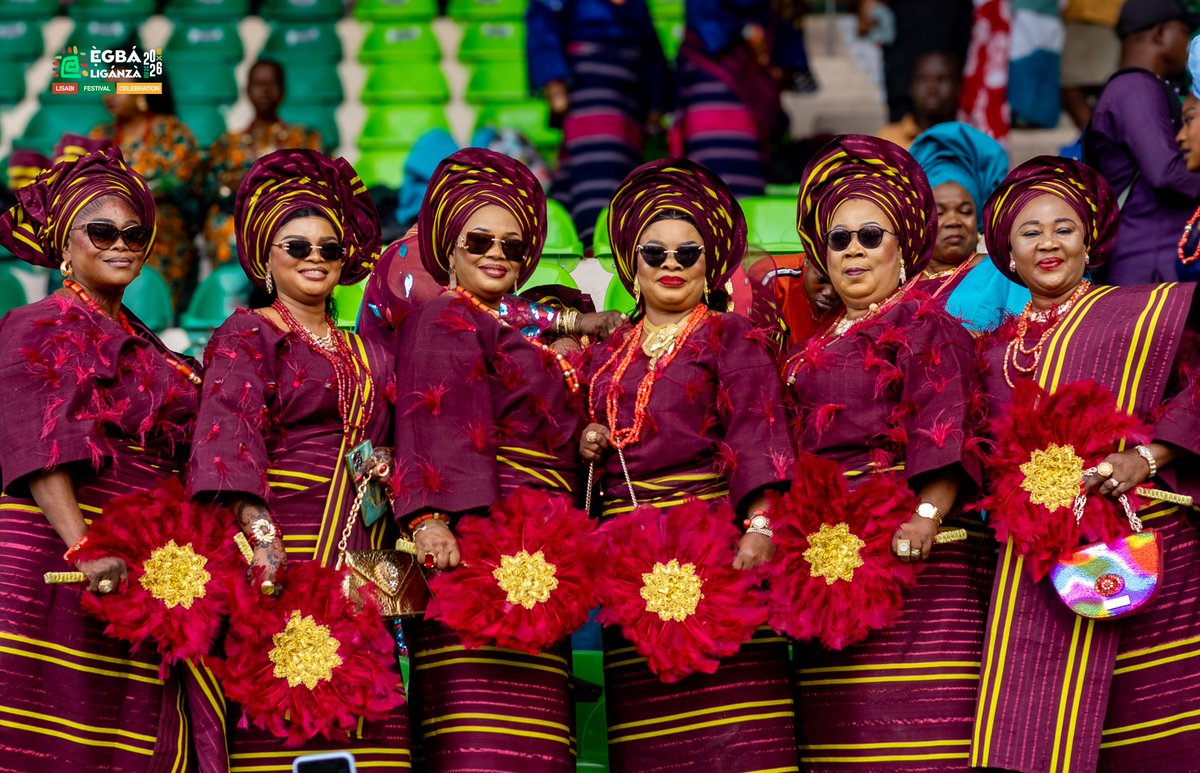
The Yoruba ethnic group of Nigeria celebrates #Lisabi Day today in Abeokuta a proud and powerful tribute to the Egba people’s history, resilience, and unity.
Yorubas are known for their unmatched fashion, effortless steeze, and undeniable composure. From richly woven aso-oke to regal cultural expressions of their GELE, everything about them speaks elegance, confidence, and presence.
They are widely regarded as one of the most influential and globally visible ethnic groups in Nigeria with strong footprints in business, politics, education, and the creative industry. Many of Nigeria’s prominent figures, wealth creators, and cultural exporters come from Yoruba land, reflecting a legacy of excellence, enterprise, and leadership.
Beyond style, they carry deep heritage, structured traditions, and a strong sense of identity that continues to shape narratives across Africa and the diaspora.
Bold. Cultured. Influential.
The Yoruba spirit is not just seen. it’s felt. 🔥🔥🔥🔥
Baisi ooo dede, ọmọ Ẹ̀gbá!!! 🔥
First time experiencing LISABI DAY and honestly… it’s beyond words — this is not just an event, it’s culture, it’s history, it’s pride!
Stepped out with my people — a powerful circle of creatives: filmmakers, musicians & broadcasters repping strong under one name:
EGBA’MOLISABI ENTERTAINMENT ICON! 💫
Lisabi Agbongbo Akala ⚔️ l
Grateful for moments like this… this is who we are! ✊🏾
Shot & Chopped by @OloyoAuthentic1 🎥📍
#LisabiDay #EgbaPride #CultureAndHeritage #AuthenticMuyiwa
YORÙBÁ! YOÒBÁ!! ARÁ Ẹ̀GBÁ!!!
Our people say, Ìran Ẹ̀gbá méjì kì í jara wọn níyàn. And we all understand that.
Egbaliganza today has been absolutely top tier. Our beauty, hard work, and culture are being beamed across the world with a deep sense of pride.
So I have to ask, why were some people hiding behind subtle attacks and coded criticism to undermine what Aare Lai Labode has built with Egbaliganza in propelling the Lisabi Festival into a global symbol of cultural pride?
This is a man who, through clear vision and execution, transformed the Lisabi Festival from what was largely seen as a celebration for older Egba people into a global cultural event that young people across the world now want to be part of. This year alone, over 50 nations are already here paying homage to the Alake of Egbaland.
For the first time, the world will witness the unveiling of the Drum of Unity, a project running into hundreds of millions of naira, funded entirely by contributions from ordinary people across the world. Not corporations. People.
But beyond all of that, what stands out most to me is how productivity has been deliberately brought back home to Abeokuta. Every single fabric seen at this year’s Egbaliganza was produced in Abeokuta. From Aṣọ Òkè to Adìrẹ, all made locally by Yorubas. The designs were created and brought to life by our own tailors.
This is not just culture, this is economic direction. This is what it means to build something that directly empowers people.
The ultimate marker of cultural success is when our wealthy and accomplished sons and daughters return home and commit themselves to strengthening their heritage while economically empowering the next generation. That is exactly what Aare Lai Labode has done.
Those who latch onto trivial points and noise are not driven by substance, they are reacting to the fact that he dared to act, and it has worked.
I have never seen anything like this; the level of coordination, the scale, the intentionality. The Egba Nation has not had it this good in a long time. And with what is coming, all of Yorubaland and indeed Nigeria will feel it.
So at this point, if anyone still chooses to tear this down or join in speaking against Aare Lai Labode despite everything being done for culture and for people, then one must question what truly drives that stance.
We cannot allow small minded agendas to undermine something with the potential to outlive all of us.
Some foundations are not built for today, they are built for generations. And this is one of them.
I respectfully appeal to Aare Lai Labode to continue forging ahead. The people see what he is doing, we appreciate it, and we are proud.
As our forebears would say, Ìjà ìlara kì í tán bọ̀rọ̀. The noise and attacks often come from a place of envy, not strength.
BÁA WÀ!!!
As the Egba people are known for their Adire production, they came out looking stunning with vibrant colors of beautiful gorgeous looking Adire 🌸🥰
So beautiful 😍
#Egbaliganza2026#LisabiFestival2026