Ever seen a full protocol explained as a rap?
This is TapeOut on BNB Chain & XLayer — the first real on-chain CPU.
One token = one transistor.
Design circuits in your browser.
Tape them out as immutable NFTs.
Mine $BEM with Proof of Design.
Slowest CPU in the universe.
Never shuts down.
English version just dropped.
Made for the global side of crypto, not just CN.
Watch. RT. Then go build your own chip.
https://t.co/CPuoByiAwU
#TapeOut #BEM
@Blonskr
More chains.
More users.
More circuits and containers.
More protocol revenue.
More $BEM bought back and burned.
That is the larger picture behind this expansion.
Tapeout is the new HTTP.
After reading this announcement, I was impressed but I also had an important question.
The advantages were immediately clear.
DeWEB is no longer being presented as only a website storage experiment. TapeOut is attempting to build a verifiable network layer across multiple public blockchains.
TapeKit provides serverless and DNS independent access to on chain frontends. TapeSend adds end to end encrypted, bridge free messaging between circuit containers on different chains. Deployment on the X Layer mainnet also shows that this multi chain vision has already moved beyond a simple concept.
However, as a major $BEM holder, I initially had some concerns.
TapeOut is already developing V2, TapeHub, the https://t.co/u1EU4QkZuR integration, circuit containers, DeWEB, TapeKit, and now TapeSend. Could this expansion be interpreted as the project moving in too many directions at once?
More importantly, how would activity on X Layer and other future chains create value for $BEM?
If TapeOut’s technology continued expanding while BEM remained economically isolated on BNB Chain, the protocol could succeed without that success necessarily flowing back to BEM holders. I was also concerned that expanding beyond BNB Chain might weaken TapeOut’s identity as a unique BNB ecosystem project.
Because I did not want these questions to create unnecessary public misunderstanding, I asked the developer privately.
His explanation made the full economic logic much clearer.
The long term goal is to have both Binance Wallet and OKX Wallet integrate the underlying TapeOut Protocol, while their browsers incorporate TapeKit and TapeSend. Users would then be able to enter a circuit container ID and directly access verifiable network services.
As more users and developers enter the network, more circuits will be taped out and more containers will be activated.
That creates two primary sources of protocol revenue:
• Tapeout fees
• Circuit container activation fees
A percentage of those revenues would then be used to buy back and burn $BEM.
The complete economic flow is therefore:
Wallet integration
→ More users accessing DeWEB services
→ More developers creating circuits and containers
→ More tapeout and container activation fees
→ $BEM buybacks and burns
This answered my biggest concern.
DeWEB, TapeKit, TapeSend, and the expansion to X Layer are not intended to become disconnected side projects. They are designed as additional entry points that bring more developers, users, and economic activity into the TapeOut ecosystem—with part of that activity ultimately flowing back to BEM through buybacks and burns.
In other words, the multi chain expansion broadens the top of the funnel, while $BEM is intended to remain at the center of the economic value capture model.
Of course, execution will still matter. Binance Wallet and OKX Wallet integration represent the goal, not an announced partnership at this stage. The exact buyback percentage, implementation schedule, and mechanism will also need to become clearer over time.
But the underlying direction now makes much more sense to me.
My original concern was that TapeOut might be expanding away from $BEM. After hearing the complete economic logic, I now understand that the expansion is intended to generate more usage, more protocol revenue, and ultimately more BEM buybacks and burns.
If this vision is successfully implemented, TapeOut will not simply be another application on a blockchain. It could become an open standard and infrastructure layer for verifiable network services across multiple public chains.
@XLayerOfficial@zakk_okx@bitcoin2themars@wallet@cz_binance@Blonskr@BNBCHAIN
DeWEB: A Website That Lives Where the Contract Lives
TapeKit is not a new https://t.co/ymwdlbfLLs is a way to open a website straight from BNB Chain. Type tape://4246.0 or #4246@0. No DNS. No server belonging to the site owner.
4246.0 is not a domain name. It is a coordinate: circuit 4246 on processor 0. TapeKit finds the TapeOut / HashPort container. It reads the files from several independent nodes. It checks the hash. Match — the page appears. Mismatch — nothing appears. There is no third state. No fake page wearing the old https://t.co/nsWxXsNYMJ is the part that matters.
DeFi contracts already live on-chain. The interface usually does not. Most wallet drains do not break Solidity. They break a fake frontend. TapeKit pulls the HTML down to the same layer as the state. Only the wallet that holds the circuit-container NFT can change the site. HashPort cannot. Binance cannot. Once written, the bytes do not vanish unless the chain itself is rolled back.This is not entirely new.
IPFS, Arweave, and ENS have offered content-addressed web for years. TapeKit changes the anchor. Same L1 as the money and the contracts. The name is a circuit index — not a rented domain.The limits should be said plainly.
The spec is still a draft. It has not had an independent audit. “No server” is true of the data path. The current gateway still serves a bootstrap page. “Unblockable” holds only if you can still reach BNB Chain nodes. L1 cannot host a large website. It fits a thin DeFi frontend. It does not fit the whole internet. On-chain verification means this is the copy the owner published. It does not mean that copy is safe to sign.The point.
TapeKit does not replace the World Wide Web. It closes a hole in TapeOut and in dapps: there was no URL with the same trust as the contract. If the chain remains, the bytes remain.Whether users will trust 4246.0.tape more than a pretty name — that is what decides if this leaves the demo.
#tapeout #Tapehub #Tapekit #BSC $BEM @cz_binance
Qubic has zero transaction fees.
Every transfer, every interaction with the base layer, costs nothing.
The obvious question: if nobody is paying fees, how does the network sustain itself?
Fair question.
Here is the answer 🧵
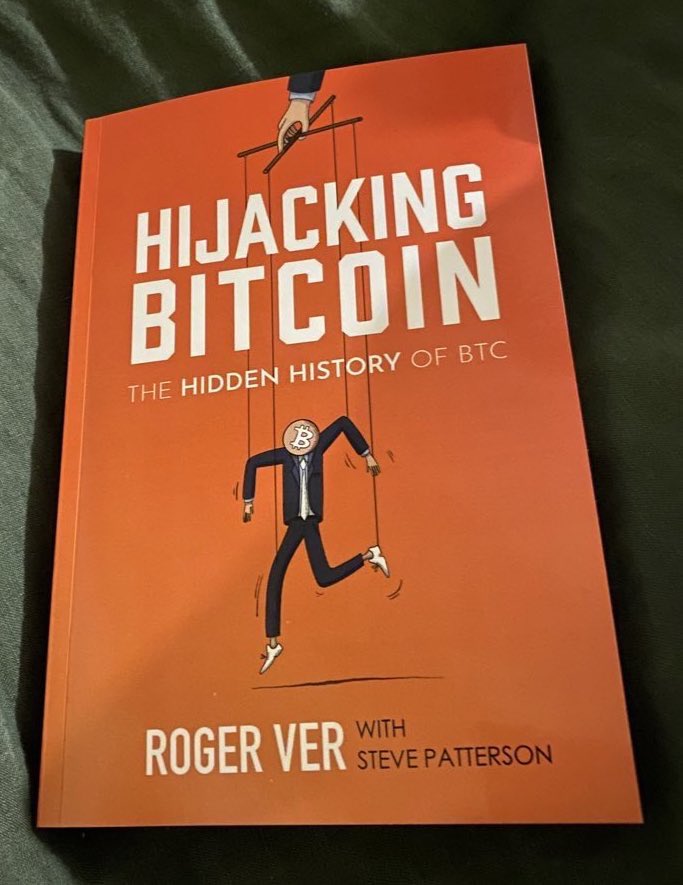
Bitcoin was hijacked. A group of bad actors betrayed Satoshi and corrupted the rise of Bitcoin as a cheap and instant payment tool for the masses to sabotage the rise of crypto as digital money and to install an insecure and custodial second layer to control Bitcoin. Read this: