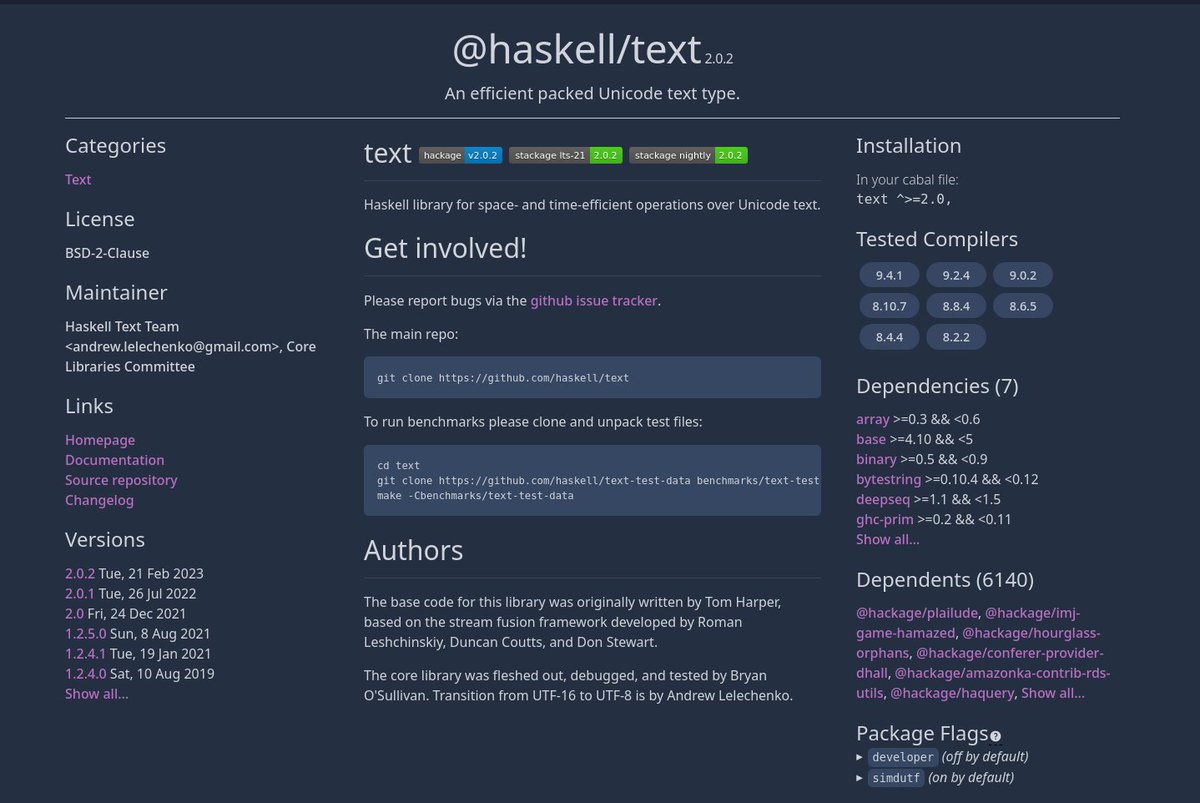
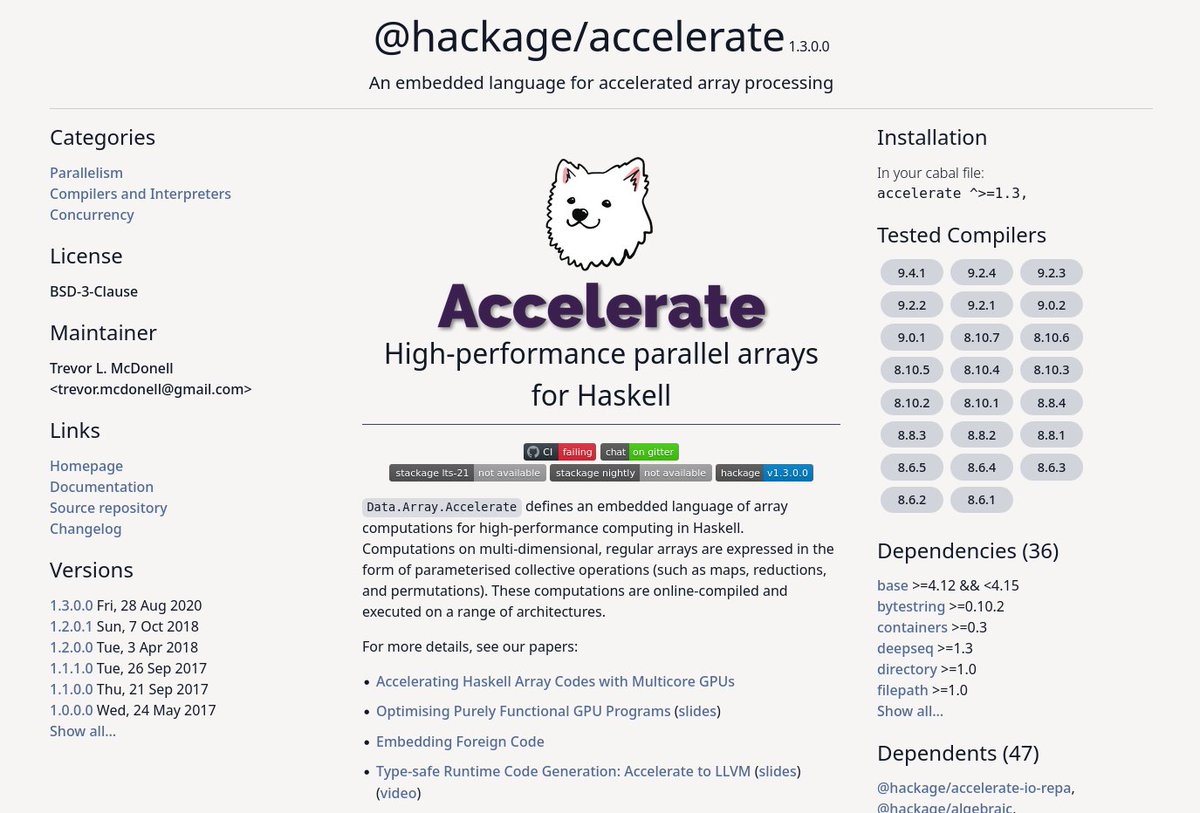
https://t.co/qmlztKHgdb is a meta-index for the #Haskell ecosystem. It aims to index, present and offer insights into the package ecosystem.
The wheel keeps turning.
Worked on @flora_haskell today!
With the goal of simplifying the CSS architecture and tooling process. Still a long way to go but some progress have been made 😤
Hear hear! The Flora project will be present at @MuniHac!
Come work with us on Accessibility, integration with the @HaskellOrg Security Database and suggest your ideas to improve the quality of life of daily users!
See you in October!
#Haskell#MuniHac2024
Flora 1.0.19 Released 🎉!
This is mostly a quality-of-development release, with the most interesting addition being Zipkin integration.
https://t.co/hsA5mlibJT
Flora 1.0.18 Released 🎉 !
* Horizon project is now indexed on Flora: https://t.co/bZgXY3OeIJ
* Better signalling of deprecations and revision dates in the version listing page
Only very few breakages from Flora's #Haskell dependencies with GHC 9.10.1-alpha3. We may be able to adopt it as soon as HLS supports it (and a nice dose of "allow-newer" in cabal.project configuration)
You asked for it, and it's here!
Flora v1.0.17 now allows you to look up executable names to find their package! No more wondering which package exposes gen-hie, apply-refact, or pandoc (it's pandoc-cli).
#Haskell
Accessibility takes many forms: Today we'd like to share a recording of https://t.co/Kb9RzXDfhz being used with the w3m textual browser, by Francesco Ariis
Despite not having tested w3m at all during development, we can see that the navigation is quite smooth!
#haskell
Flora 1.0.15 released, with the major highlight being that we display 3 digits in the install string of packages that are under the 0.0 epoch and major version numbers.
https://t.co/1apQ5Xf9bG
#haskell