Assistant professor @TGenResearch | Postdoc @jacksonlab @MDAndersonNews | Evolutionary cancer genomics | Glioma | Telomere dysfunction | Tweets are my own
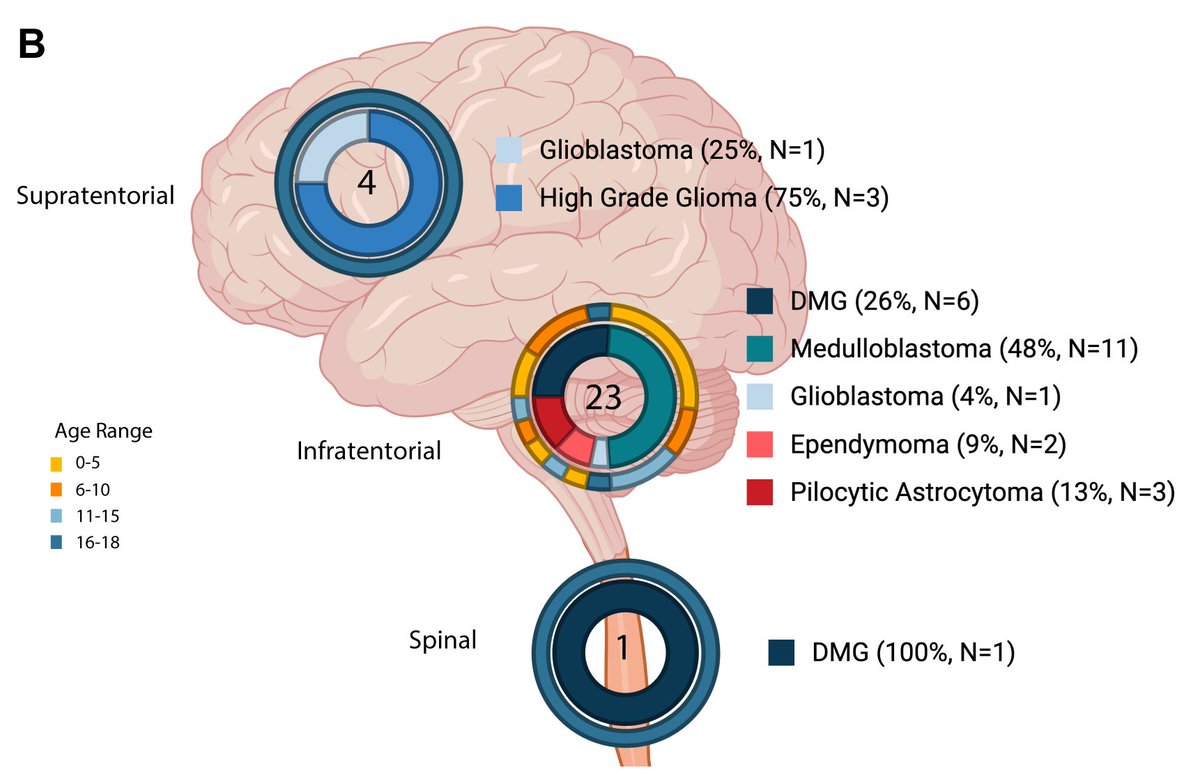
Children with brain tumors are monitored mostly by MRI. Tumor DNA in blood and CSF (ctDNA) could add a molecular readout but is hard to detect.
New preprint with Phoenix Children's, led by Shea Gallus and @SharvariMankame 🧵
https://t.co/big5hifwfk
@SharvariMankame This is a single-center pilot and the thresholds need prospective validation. Huge credit to Shea and Sharvari, to co-senior author Ross Mangum, and to the families at Phoenix Children's. Supported by the Ivy Foundation and Students Supporting Brain Tumor Research.
Children with brain tumors are monitored mostly by MRI. Tumor DNA in blood and CSF (ctDNA) could add a molecular readout but is hard to detect.
New preprint with Phoenix Children's, led by Shea Gallus and @SharvariMankame 🧵
https://t.co/big5hifwfk
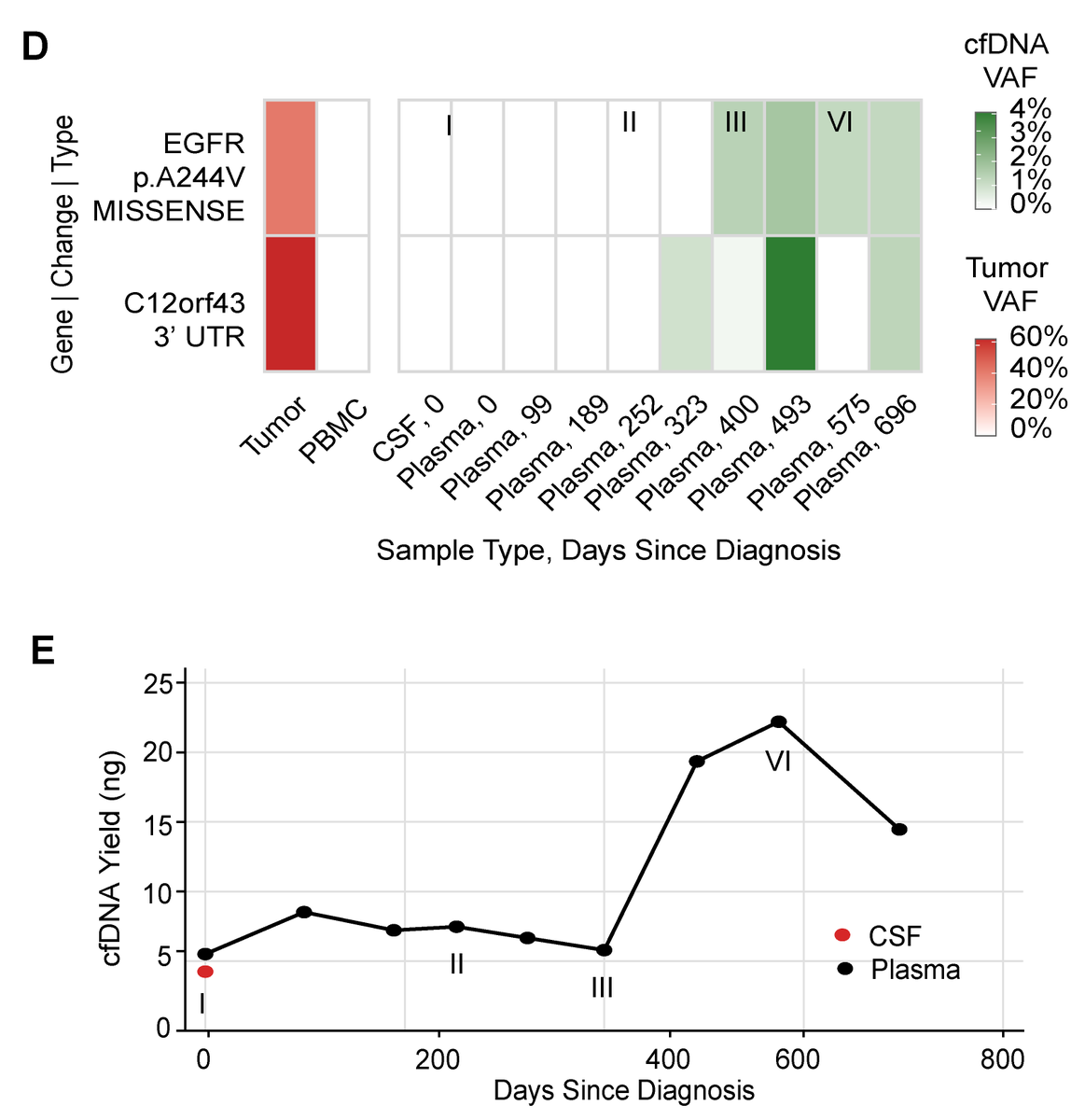
@SharvariMankame In one patient with high-grade glioma, tumor variants appeared in plasma as the tumor progressed on MRI. In a patient with diffuse midline glioma, the plasma fragment signal rose when leptomeningeal spread became visible on imaging.
Today is an emotional day for me. Together with Prof. John McCutcheon lab @ASU we have visualized by cryoEM what looks like a very funky ribosome from an insect endosymbiont.
We believe there are important evolutionary implications.
Here the pre-print:
https://t.co/H5qZ9CUGib
@PathologyPat@SharvariMankame Precisely why we got into this. Started following patients on treatment and realized the difficulty of recognizing patients responding to therapy versus those with growing tumors. More on that later, stay tuned…
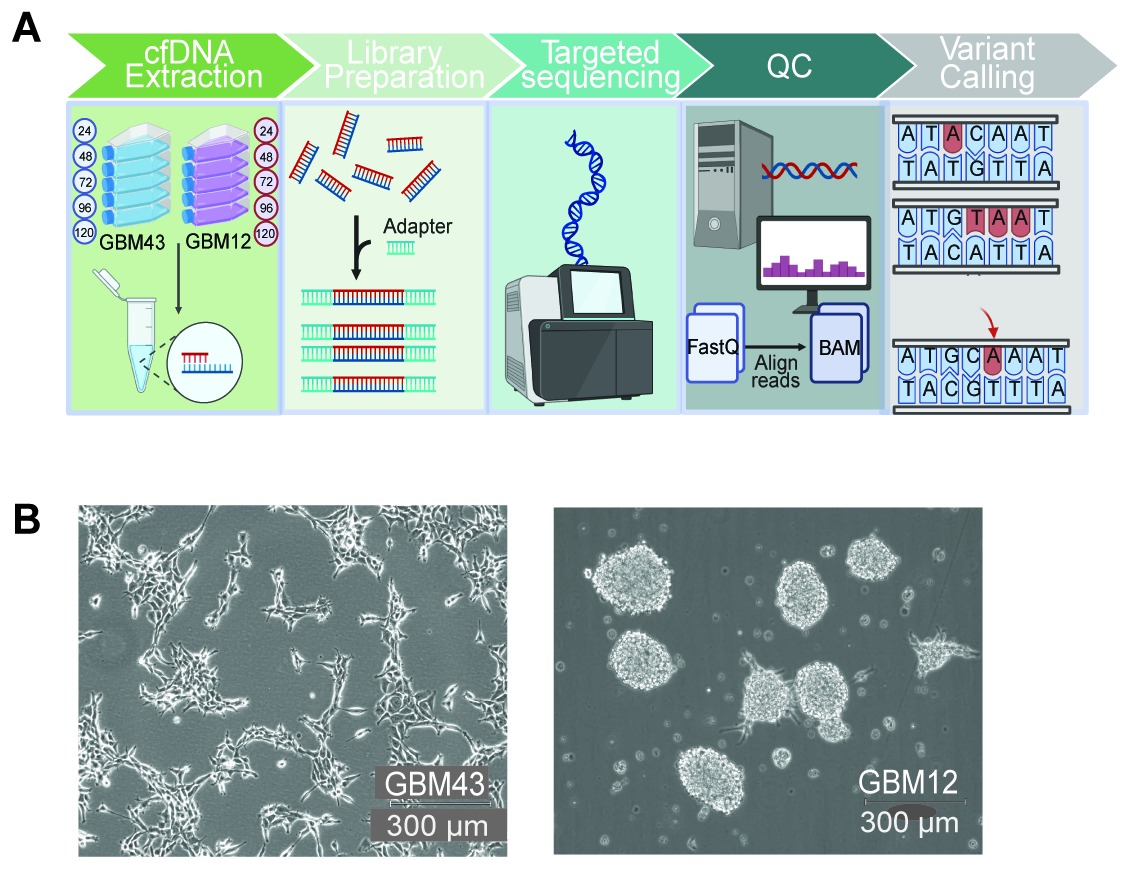
Glioblastoma is monitored mostly by MRI, which can miss early changes. Cell-free DNA (cfDNA) in blood is a promising alternative, but we know little about what governs its release. Our new paper in Neuro-Oncology, led by @SharvariMankame, dissects it. 🧵
https://t.co/Ln1Ubv0DEa
@SharvariMankame@MayoClinic Supported by a @theABTA Discovery Award, the Ivy Foundation, the Lane Spyrow GBM Fellowship and Students Supporting Brain Tumor Research.
📄 Open access in Neuro-Oncology (@NeuroOnc): https://t.co/Ln1Ubv0DEa
@SharvariMankame Huge credit to @SharvariMankame, who led this work, and to Hersh Nanda, Maria Kyriakidou, Mimi Mbegbu, Nanyun Tang and Michael Berens at @TGen. Angad Beniwal, Matthew Dufault and Nhan Tran ran the mouse studies at @MayoClinic Arizona.