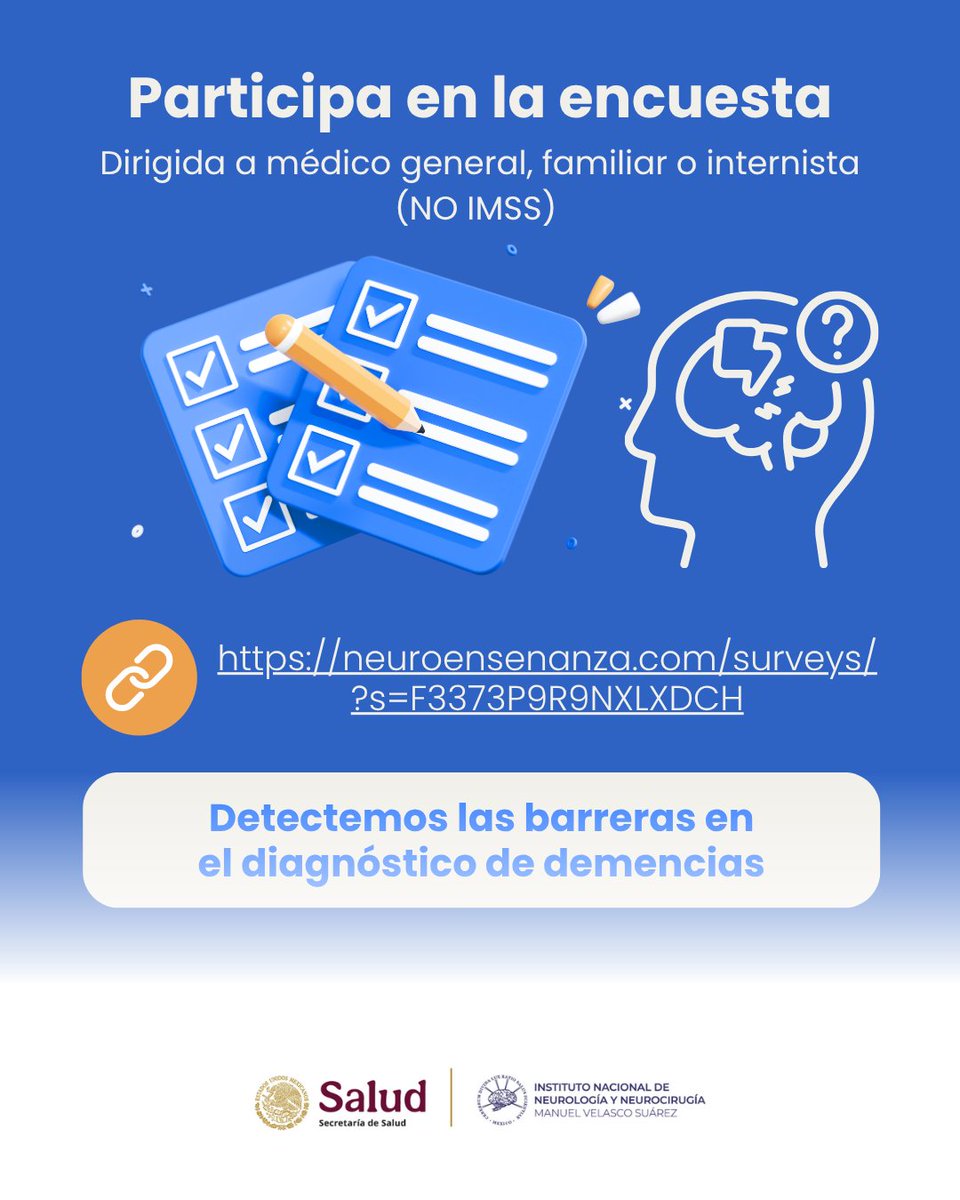
👩⚕️👨⚕️Si eres médico general, médico familiar o internista que trabaje en centros de 1er o 2o nivel, participa en la encuesta para identificar elementos que retrasan el diagnóstico en los pacientes con demencia y generar estrategias de atención oportunas.
🔗https://t.co/LwPWeCmP6C
Hay algo que está cambiando silenciosamente en neurología.
Y probablemente estamos infravalorando su magnitud.
Durante décadas, hablar de Alzheimer era hablar de acompañar el deterioro.
Gestionar síntomas.
Ganar algo de tiempo.
Poco más.
Pero el informe 2026 del Dr. Jeffrey Cummings dibuja un escenario distinto:
158 fármacos activos en investigación clínica.
192 ensayos en marcha.
Y, lo más relevante, un cambio radical en el objetivo terapéutico.
Hoy, el 73% de los tratamientos en desarrollo ya no buscan únicamente aliviar síntomas.
Buscan modificar el curso de la enfermedad.
Ese matiz lo cambia todo.
Porque significa que estamos entrando, por primera vez, en una etapa de madurez terapéutica real en salud cerebral.
Y además, el cambio no es solo cuantitativo.
También es conceptual.
Estamos viendo:
• Más terapias dirigidas a inflamación cerebral y metabolismo energético.
• Más medicina de precisión basada en biomarcadores.
• Más moléculas pequeñas vía oral, capaces de facilitar la administración y mejorar la penetración cerebral.
La neurología empieza a dejar atrás la idea simplista de “una única causa” para asumir algo mucho más realista:
el Alzheimer es un proceso biológico complejo y multifactorial.
Y eso exige tratamientos igual de sofisticados.
Ahora bien, hay una idea importante que no deberíamos perder entre tanto optimismo:
Ningún fármaco sustituirá al diagnóstico precoz.
De poco sirve disponer de terapias avanzadas si seguimos detectando el deterioro cuando el daño cerebral lleva años instaurado.
Por eso, probablemente, el verdadero cambio de paradigma no será solo farmacológico.
Será cultural.
Pasar de reaccionar al deterioro…
a preservar el capital cognitivo antes de que aparezca.
Porque el futuro de la neurología no será únicamente tratar enfermedades.
Será adelantarse a ellas.
👩🏫👨🏫#EducaciónContinua El @INNNMVS presenta la 1er edición de la Escuela de Otoño de Neurología Cognitiva, Demencias y Enfermedades Neurodegenerativas.
🧐Consulta el temario y regístrate en los Qr.
📋Para más información: [email protected]
☝️Cupo limitado.
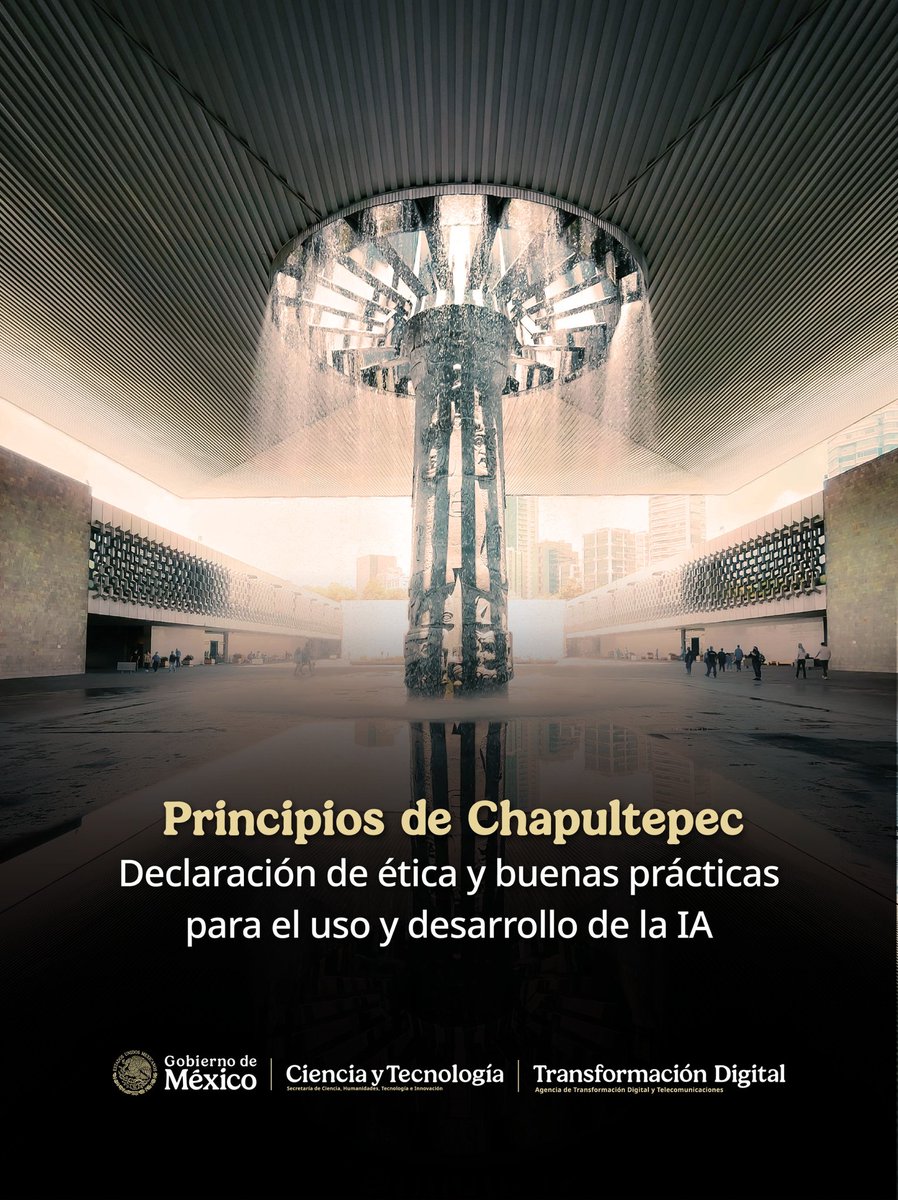
🤖 ¡Construyamos una #IA ética! La #Secihti y la @AgenciaGobMX te invitan a conocer los #PrincipiosdeChapultepec. Descubre nuestra hoja de ruta para un desarrollo tecnológico de la inteligencia artificial con responsabilidad social.
✅ Consúltalos aquí: https://t.co/m2TFhguGy3
I'm glad to share our new article! 😏🪡🧶
The spectrum of psychosis in people with neurological disease | BJPsych Advances | Cambridge Core - https://t.co/0i39abUKLj
We study #psychosis at the intersection of #neurology & #psychiatry. We identify clinical “red flags” that (1/9)
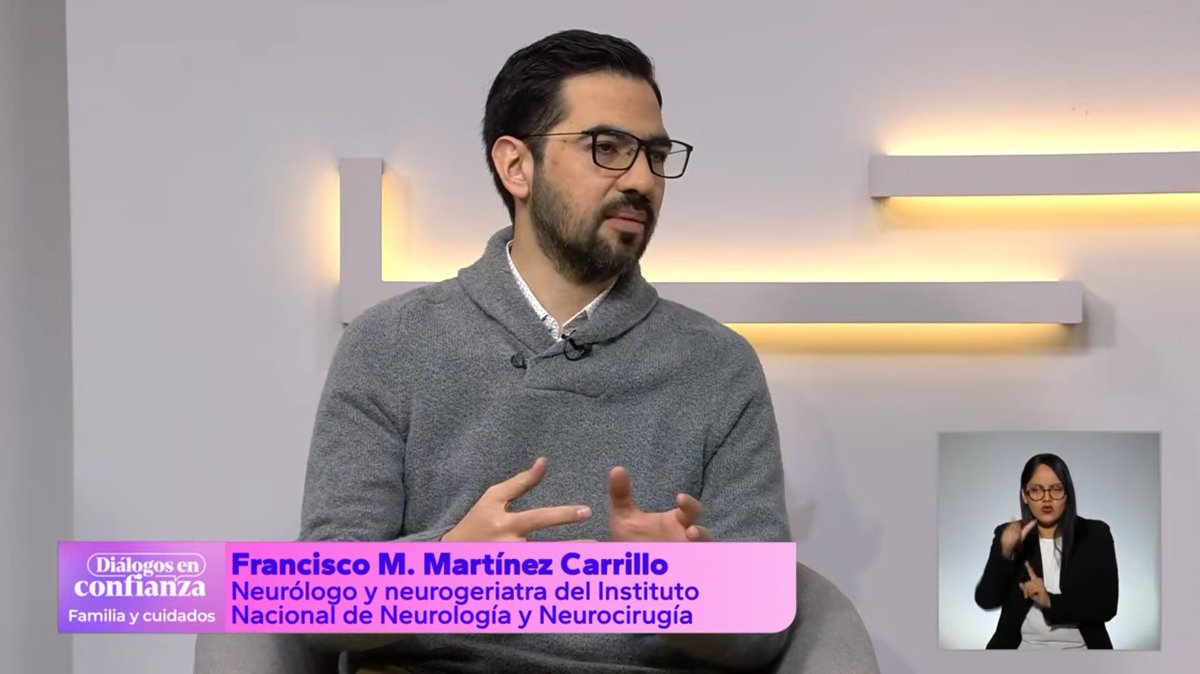
📺Te invitamos a revisar la participación de nuestro especialista, el Dr. Francisco M. Martínez Carrillo, quien asistió el día de hoy al programa @DialogosCanal11 transmitido a través de @CanalOnceTV.
🖥Tema: "Alzheimer y el cuidado cotidiano".
▶️ https://t.co/okVUjH0gSK
🧠🩸Advances in Alzheimer’s blood tests in 2025 and what’s coming in 2026!
Blood tests for Alzheimer’s disease pathology picked up steam in 2025 and are set to make further advances in transforming the diagnosis and care of patients with cognitive impairment in 2026. Here are my highlights from 2025 and predictions for 2026:
1️⃣ New blood tests
2025: New blood tests including eMTBR-tau243 showed stronger associations with tau neurofibrillary tangles and cognitive symptoms: https://t.co/als4uYTPBe
2026: Studies will examine how to use plasma eMTBR-tau243 and similar analytes to stage Alzheimer’s and refine clinical diagnosis
2️⃣ Improved detection of Alzheimer’s pathology in asymptomatic individuals
2025: Plasma p-tau217 identified cognitively unimpaired individuals with amyloid pathology (https://t.co/vzHyVvVgPE) and those at risk of cognitive decline (https://t.co/58AVEHrdHv)
2026: Models that incorporate plasma biomarkers including p-tau217 will improve prediction of risk for cognitive impairment with applications in clinical trials
3️⃣ Blood test performance
2025: Meta-analyses demonstrated that p-tau217 measures best classified Alzheimer’s pathology: https://t.co/1KK9HEbY5R; https://t.co/Yw7LQvkvZB
2026: Larger and “real world” datasets will examine the performance of many Alzheimer’s blood tests; tools will improve interpretation by considering multiple cut-off approaches and continuous biomarker levels
4️⃣ Clinician education
2025: Many groups worked to educate specialists on the appropriate use of Alzheimer’s blood tests, including the Alzheimer’s Association, which developed clinical practice guidelines: https://t.co/1zixenL41h
2026: Efforts will intensify to educate specialists and primary care clinicians on the appropriate integration of Alzheimer’s blood tests into holistic clinical care
5️⃣ FDA clearance of Alzheimer’s blood tests
2025: Two tests were cleared by the FDA to support clinical diagnosis of Alzheimer’s: Fujirebio p-tau217/Aβ42 in secondary care (https://t.co/YAAuE4XtQL); Roche p-tau181 for rule-out of Alzheimer’s in primary care (https://t.co/JZhvI0caVH)
2026: More tests will achieve regulatory clearances in the US and globally, especially high-performing p-tau217-based tests; legislation and advocacy like the ASAP Act (https://t.co/3hFXJVIKCM) will broaden access to cleared blood tests
#ENDALZ #AlzheimersDisease #Biomarkers
Feel free to add your highlights from 2025 and predictions for 2026. Let’s keep our progress going!
1/11 🧵
If a clinician works like a chatbot, then chatbots will indeed become better at diagnosis. But some of us do not work like chatbots. Let me share a few scenes from my clinical practice that differ fundamentally from the kind of assessments currently performed by chatbots.
¿Y si te dijera que América Latina necesita su propia neuropsiquiatría?
Ni importada de EE.UU. ni calcada de Europa.
Una neuropsiquiatría latinoamericana, hecha para nuestros pacientes, nuestras realidades y nuestros desafíos.
Te cuento
👇🧵
What can clusters of parkinsonism teach us about our environment? Endemic parkinsonism refers to parkinsonian syndromes that appear only in specific geographic areas or populations, frequently due to unique environmental or genetic factors that drive local clusters of disease. Ray Rosales from the Phillipines presented a beautiful plenary talk at MDS Hawaii based on his paper w/ Menšíková, John Steele and colleagues in Nature Reviews Neurology. They tackled how clusters of parkinsonism around the world, from Guam to Guadeloupe, and from Japan to France, reveal to us striking lessons about the interplay between environmental toxins, genetics and neurodegeneration.
Key Points:
- Ten distinct forms of endemic parkinsonism have been identified globally.
- Many have been tied to specific environmental exposures such as cycad toxins or annonacin from tropical fruits.
- Several clusters have disappeared, as lifestyles, diets and water systems modernized suggesting environmental toxins rather than genetics drove many cases.
- The study of these diseases provides a living laboratory for understanding how environment and genes jointly trigger neurodegeneration in Parkinson’s and related disorders.
My take: We must be courageous and remove unnecessary toxins from our environment and test the hypotheses that certain diseases will fade. Here are 5 points about this article that resonated w/ me: 1- Studying parkinsonism in places like Guam, Japan and Guadeloupe aided us in revealing how toxins in food, soil and plants can damage the brain. 2- Clean water, safer food practices and reduced toxin exposure have made some of these once common diseases almost vanish. 3- Genes still play a role, however environment frequently acts as the spark that lights the fire of degeneration. 4- Learning from these clusters could help us prevent Parkinson’s disease everywhere by identifying and removing hidden environmental risks. 5- Protecting brain health means paying attention to what we eat, drink and breathe. These lessons can reach far beyond these endemic regions if we allow them to. We need a plan: https://t.co/e9eKnkH0n7
https://t.co/ZgwfW4xdEz @ParkinsonDotOrg@FixelInstitute@movedisorder@RayDorseyMD@SfNtweets@Nature
🧠👨⚕️¿Tiene sentido hacer una exploración neurológica a nuestros pacientes psiquiátricos?
Un systematic review reciente (Schizophrenia Research, 2025) revisó todas las propuestas de examen neurológico adaptado a psiquiatría.
Lo que encontraron es clave para nuestra práctica 👇🧵
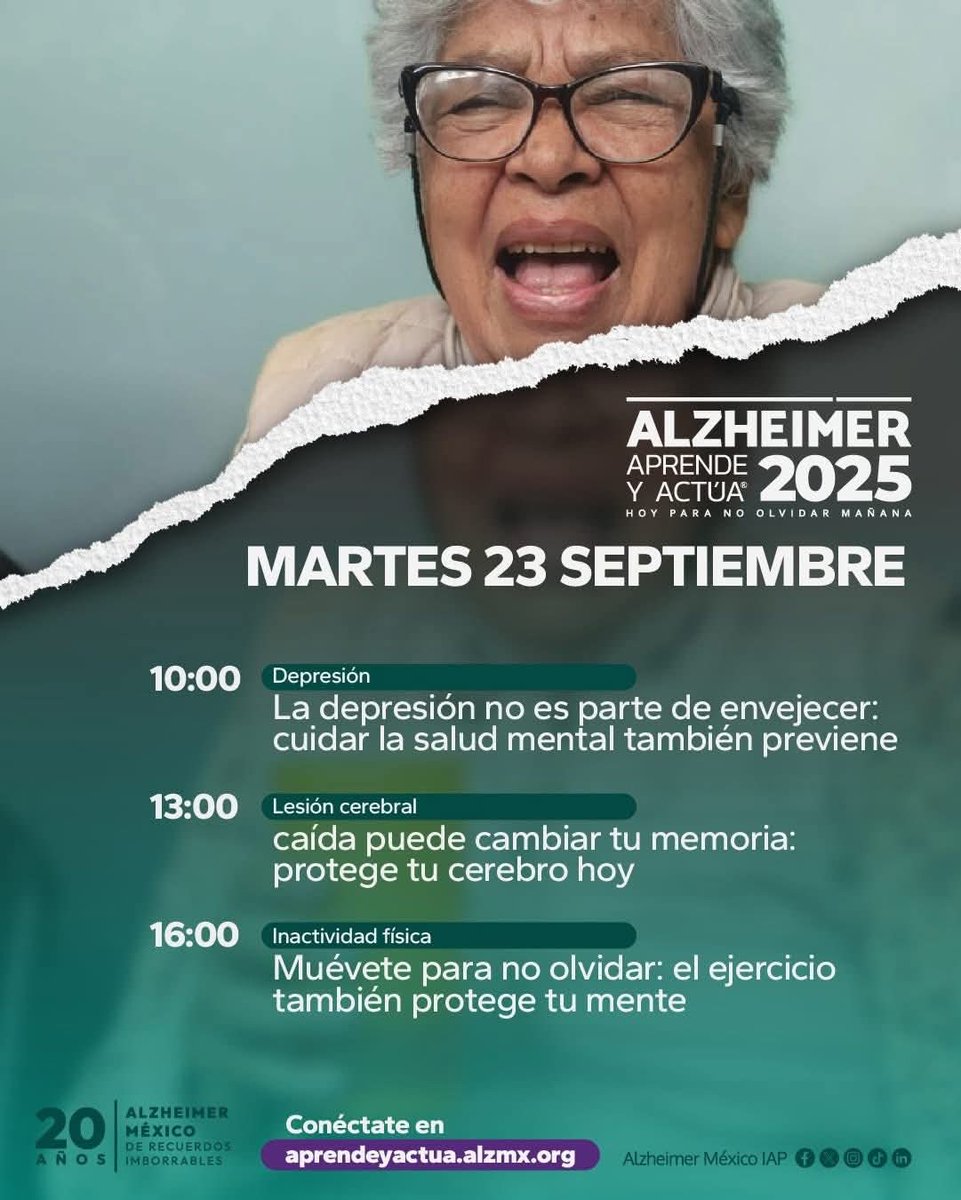
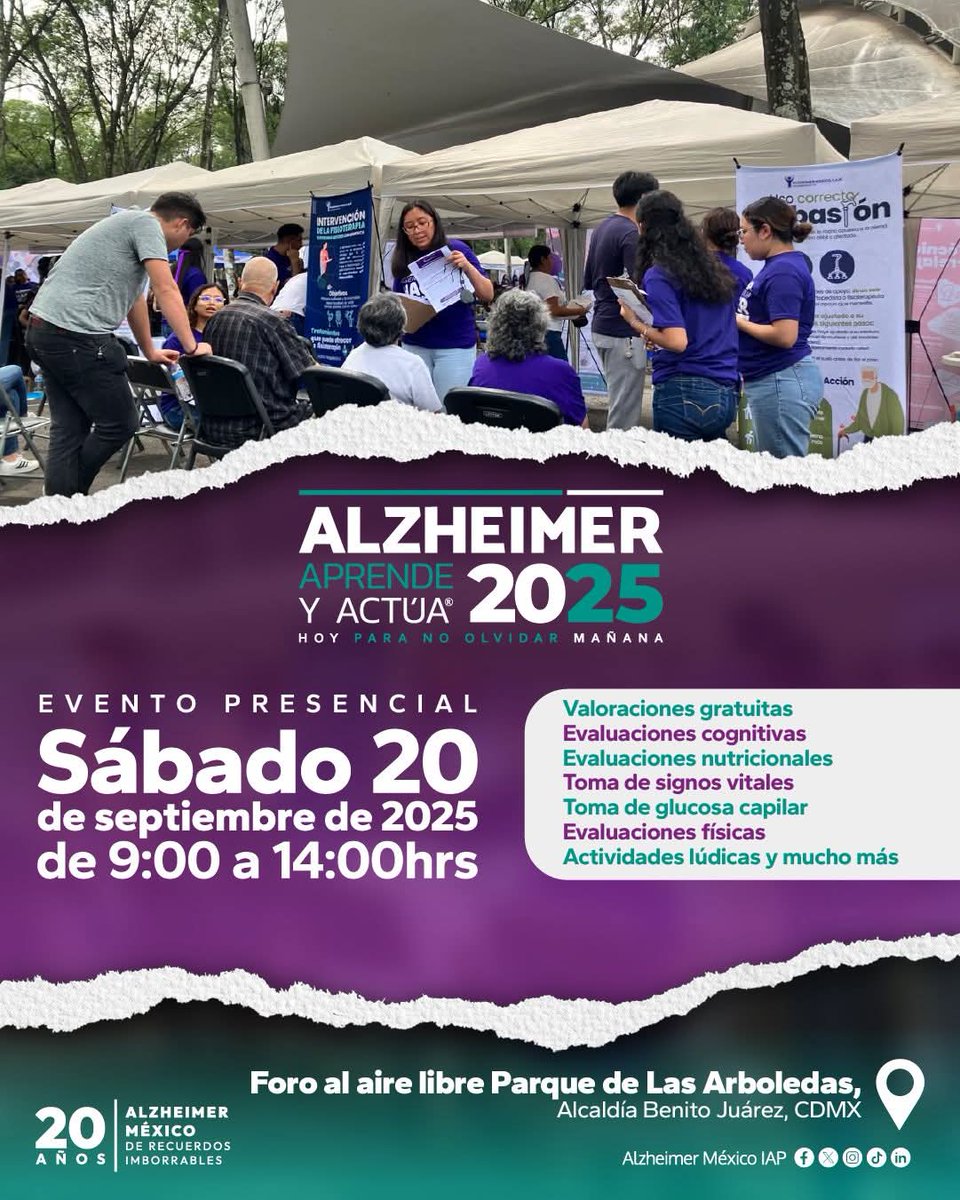
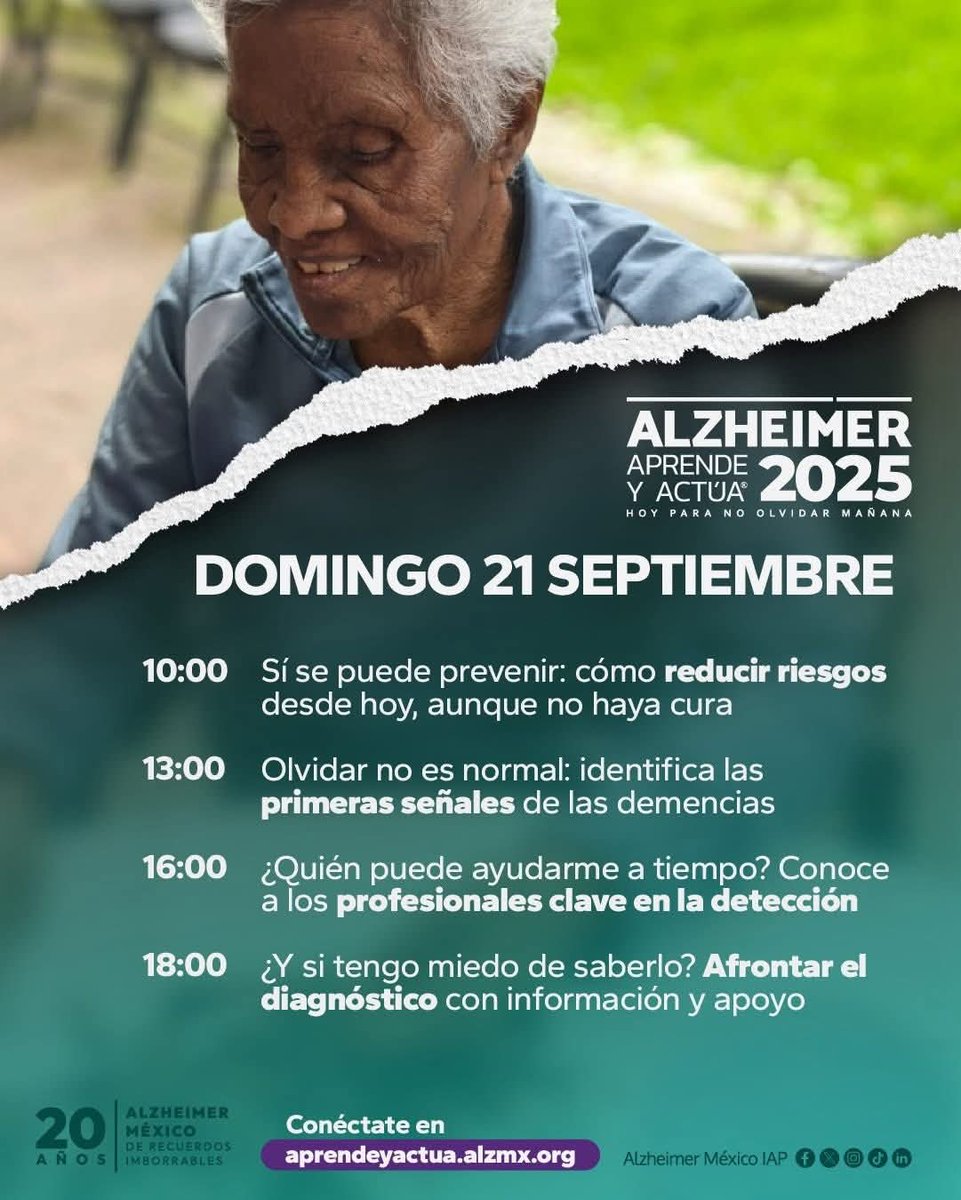
Te invitamos a ser parte de Alzheimer Aprende y Actúa 2025 🧠✨
Esto es lo que podrás aprender del 20 al 26 de septiembre
Acompáñanos en valoraciones gratuitas, video charlas para cuidar tu memoria y prevenir riesgos.
#AlzheimerMéxico#HoyParaNoOlvidarMañana#AAA2025
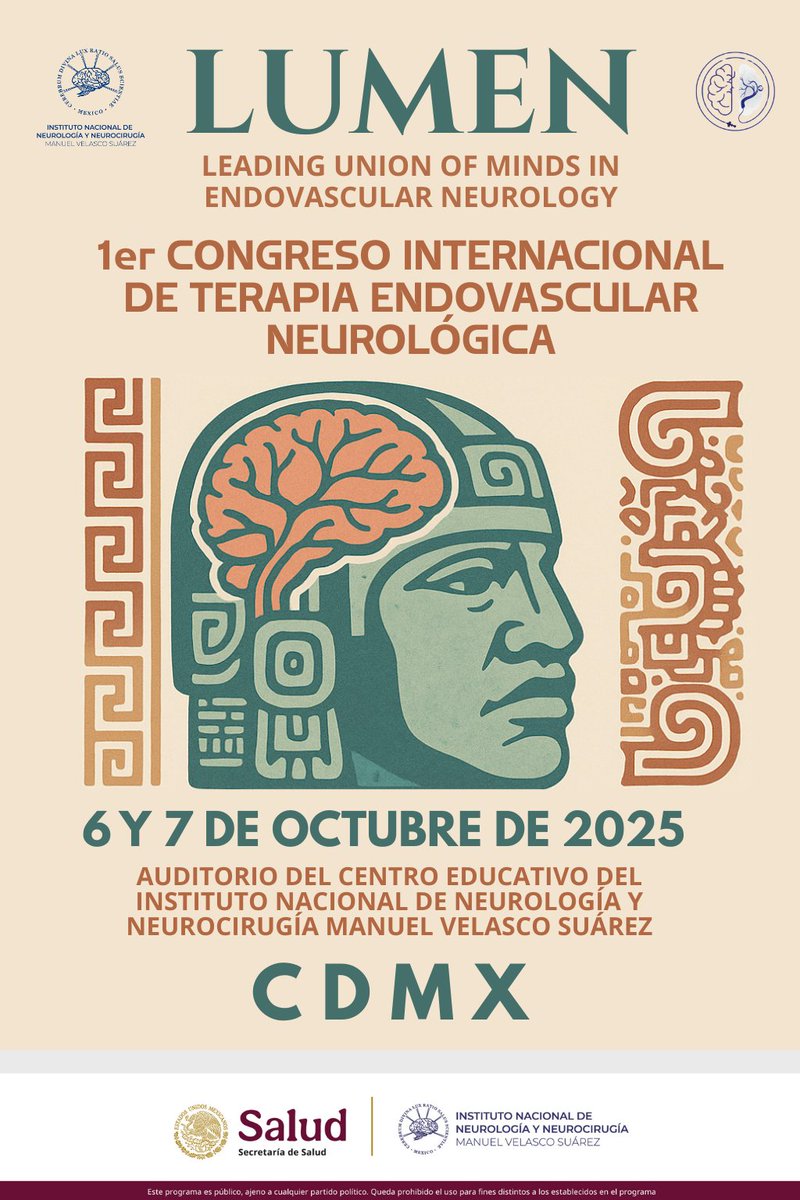
🌎 Expertos internacionales compartiendo lo último en Terapia Endovascular Neurológica.
👩🏫 Aval académico de las principales sociedades en Enfermedad Vascular Cerebral y Neurología.
🧠Temáticas de alto impacto clínico: EVC isquémico, aneurismas, malformaciones, fístulas y más.
👇
🚨 La IA no va a sustituir a los médicos… pero sí puede impedir que aprendan a pensar.
🧠 Según el New England Journal of Medicine, si se introduce demasiado pronto, atrofia el razonamiento clínico.
✅ Al buen médico lo potencia
❌ Al malo lo empeora
Nada sustituirá el pensamiento crítico.
🗓️21 de agosto | Día Nacional de las y los Trabajadores Sociales.
Reconocemos la labor de los trabajadores sociales en la construcción de una sociedad más justa y equitativa.
Gracias a nuestros equipo de profesionales en Trabajo Social, por su entrega en beneficio de pacientes.
🚨#EducaciónContinua Nuestro Depto. de Terapia Endovascular Neurológica te recuerda participar en el 1er Congreso Internacional @LUMEN_INNN
Este evento académico, será punta de lanza para enfocar los avances en ciencia y tecnología que son actualidad en esta área de competencia.
🎖El @INNNMVS extiende una felicitación al equipo de residentes en Neurología, quienes obtuvieron el 1er lugar en el "Neurodesafio" del Congreso del Capítulo Mexicano de la Liga Internacional Contra la Epilepsia (@camelice).
👏Enhorabuena