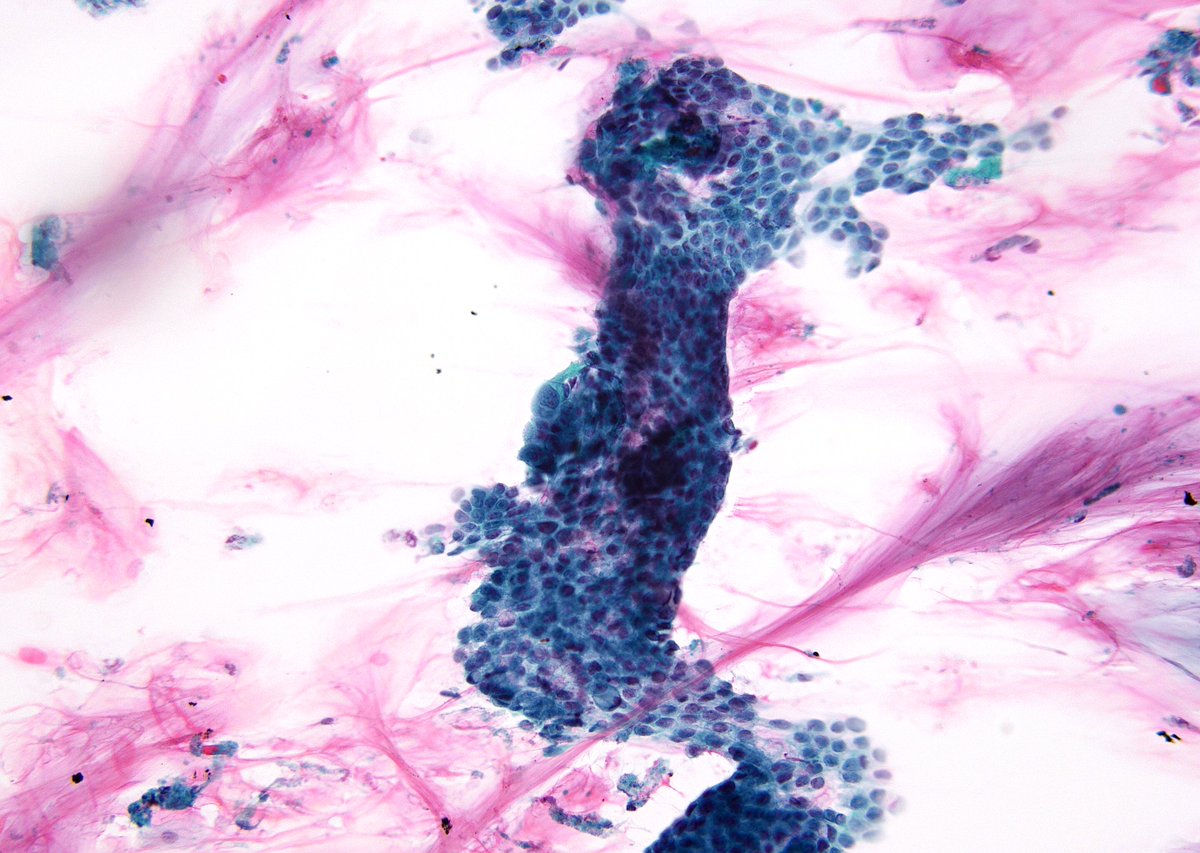
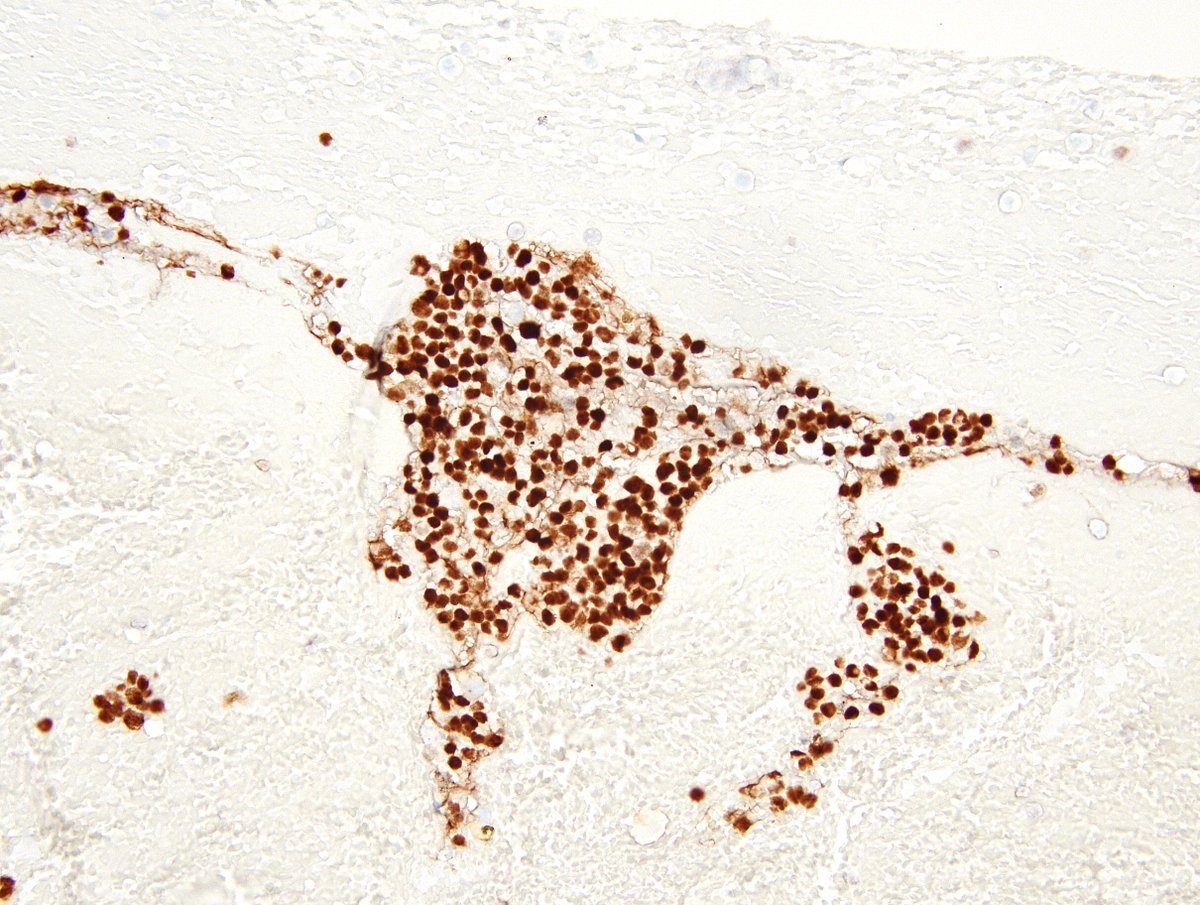
"Wild Case" - Reiterating the importance of clinical history, this Thyroid FNA would have been IMPOSSIBLE to diagnose without the known history of a "Breast Lobular Carcinoma" in the patient. IHCs confirmed "metastasis". Shown here are ER and GATA-3 stains (done on the CB).
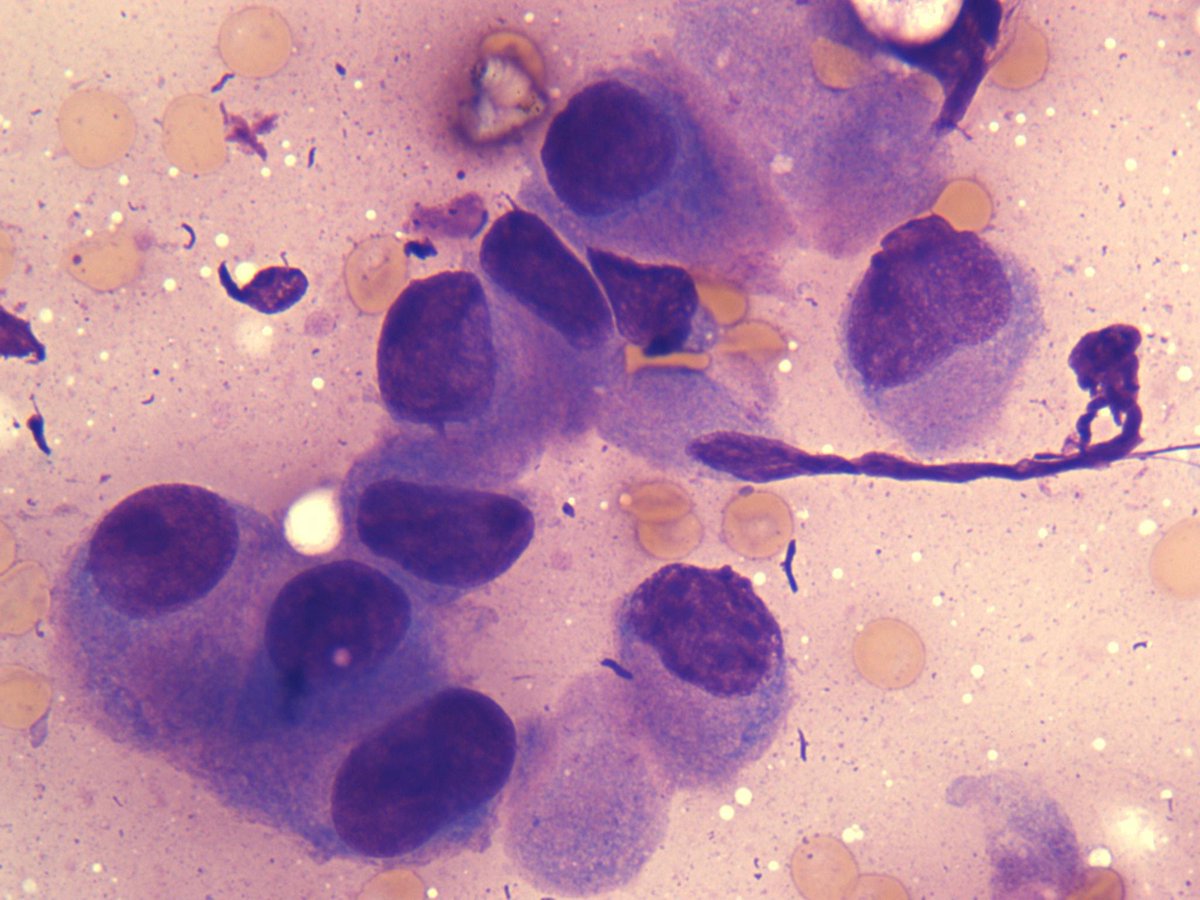
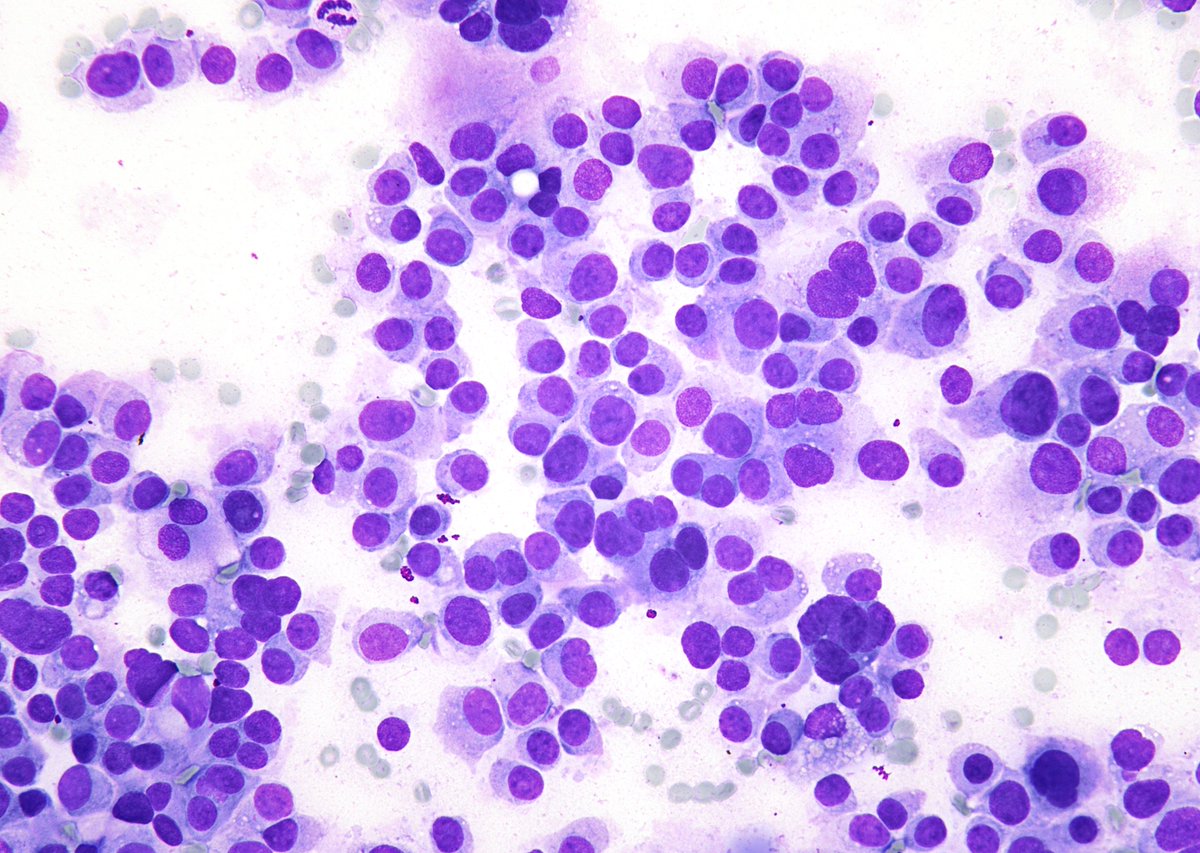
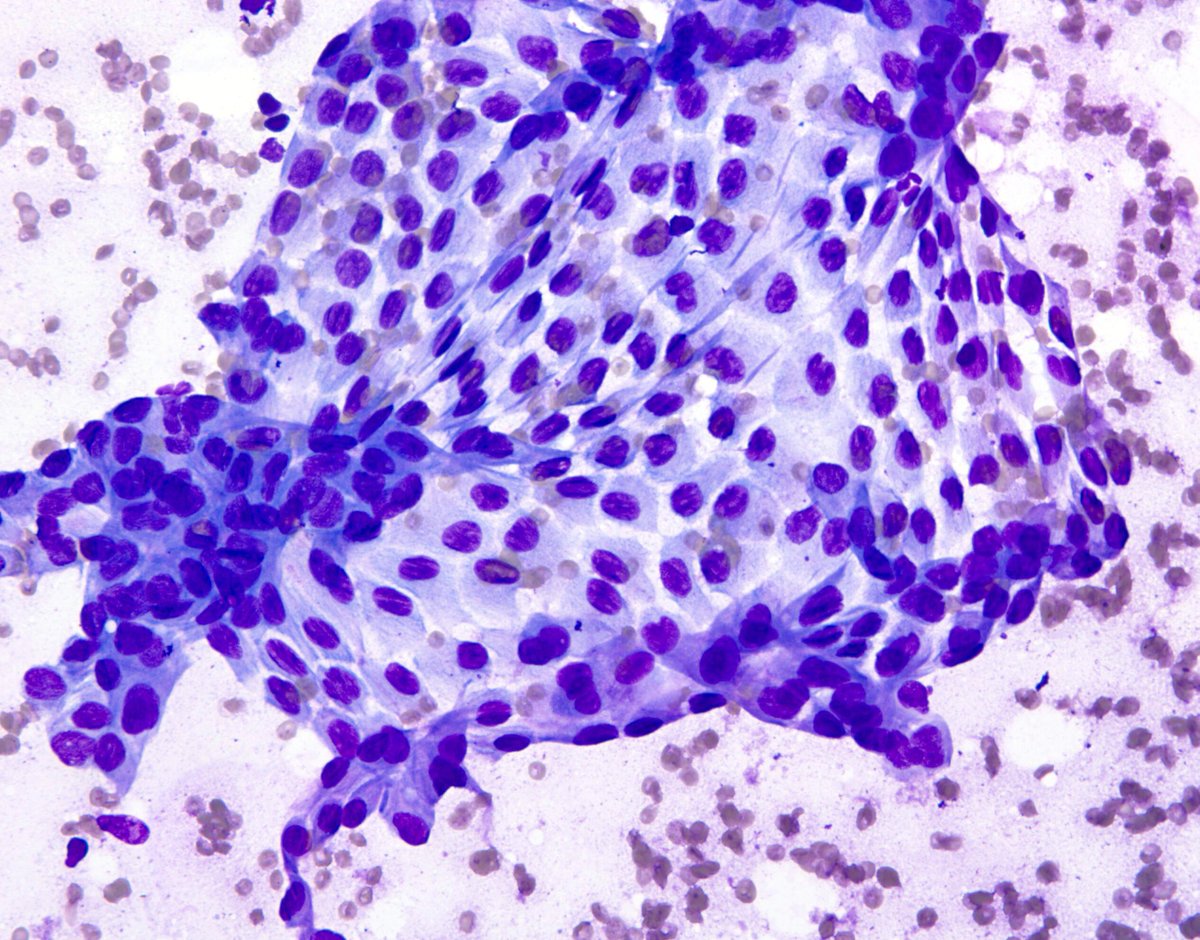
FNA of parotid mass in an elderly man: this shows characteristic cytologic features of salivary duct carcinoma. IHC for androgen receptor can be used to confirm the dx.
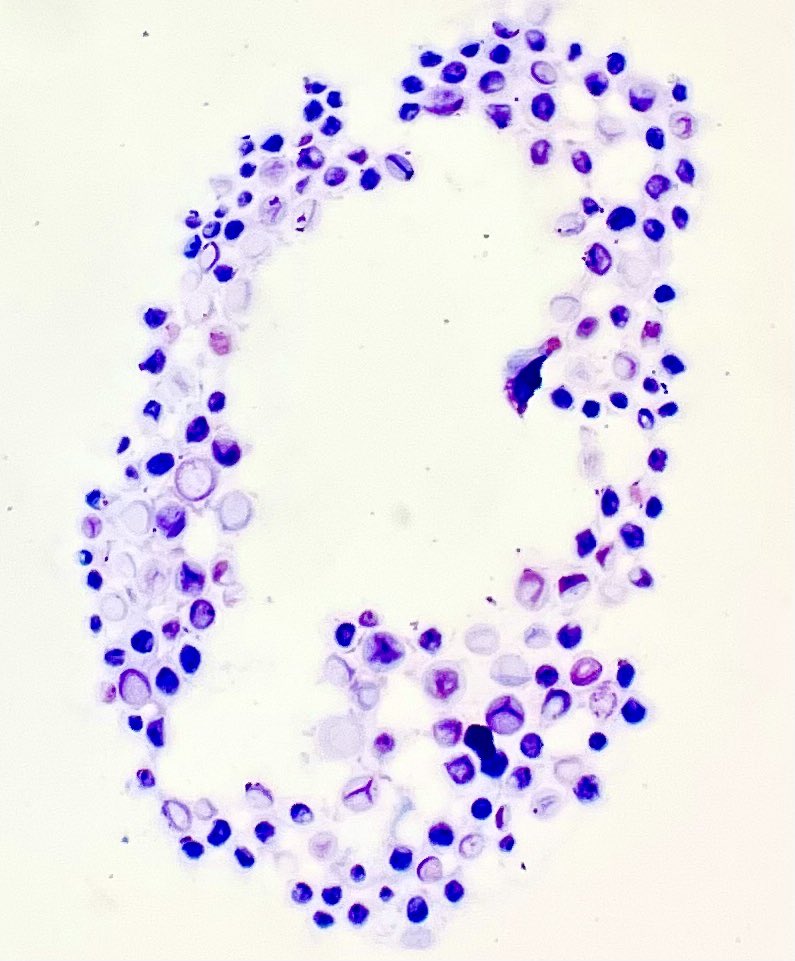
Beautiful guar bean cells in an ileal conduit urine specimen. Guar gum is used as an adhesive for some ostomy collection systems. Most were present singly, but few were in larger clusters in this case.
"YES", benign mesothelial cells can have "intranuclear inclusions" (INCIs) and nuclear grooves. (Contaminating mesothelium in a transabdominal FNA from a case of sclerosing mesenteritis).
Fun case for #FluidsFriday: Urine with polyomavirus cytopathic effect. Infected cells w/ tails are affectionately known as 'comet cells' ☄️
#CytoPath#PathTwitter
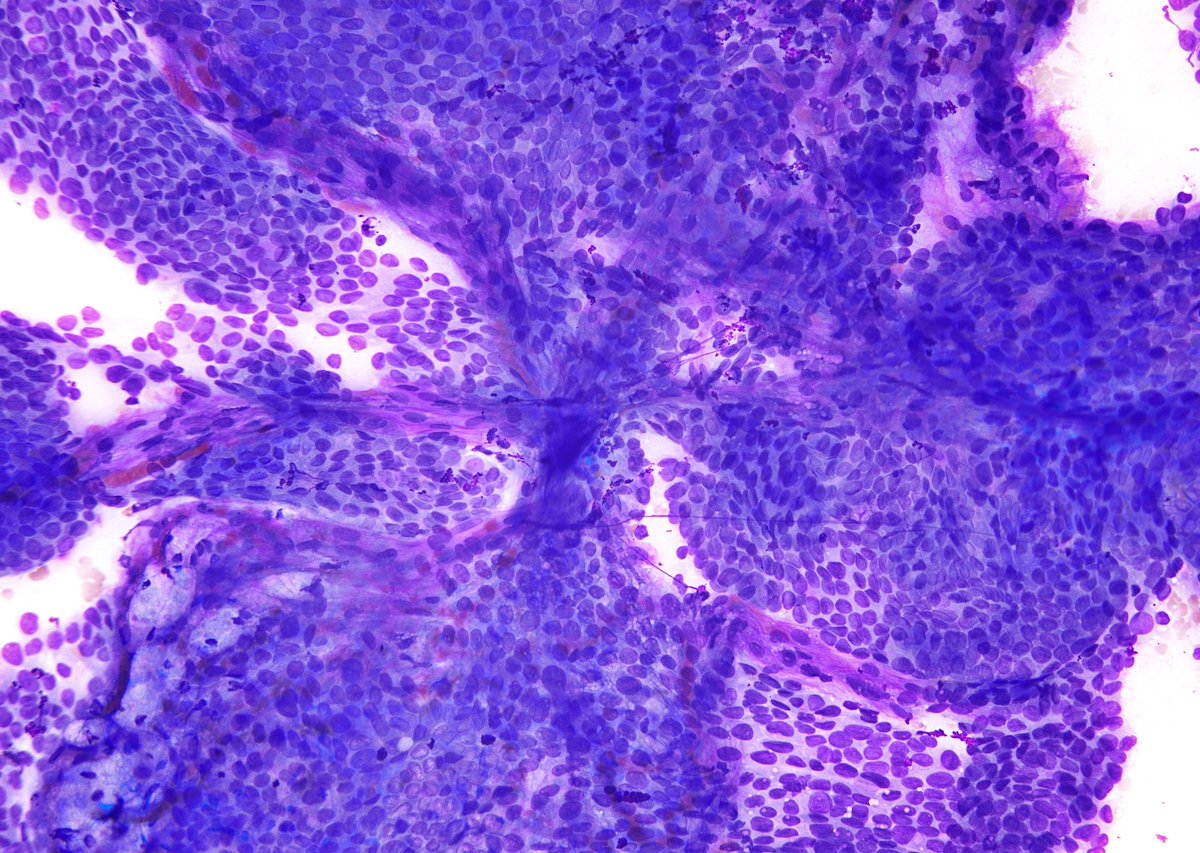
"Be Careful" when evaluating transrectal FNAs for recurrent Colon CA. One could aspirate abundant luminal mucin with benign epithelium, which could be overinterpreted. In this case, however, the ACA fragment was clearly identifiable in patient with a history of "Colloid CA".
What fungal infection is seen in this biopsy of the small intestine of an immunocompromised patient? Answer & additional stain: https://t.co/Va3IynqHeT
#PathArt#PathTwitter#IDTwitter#MedTwitter
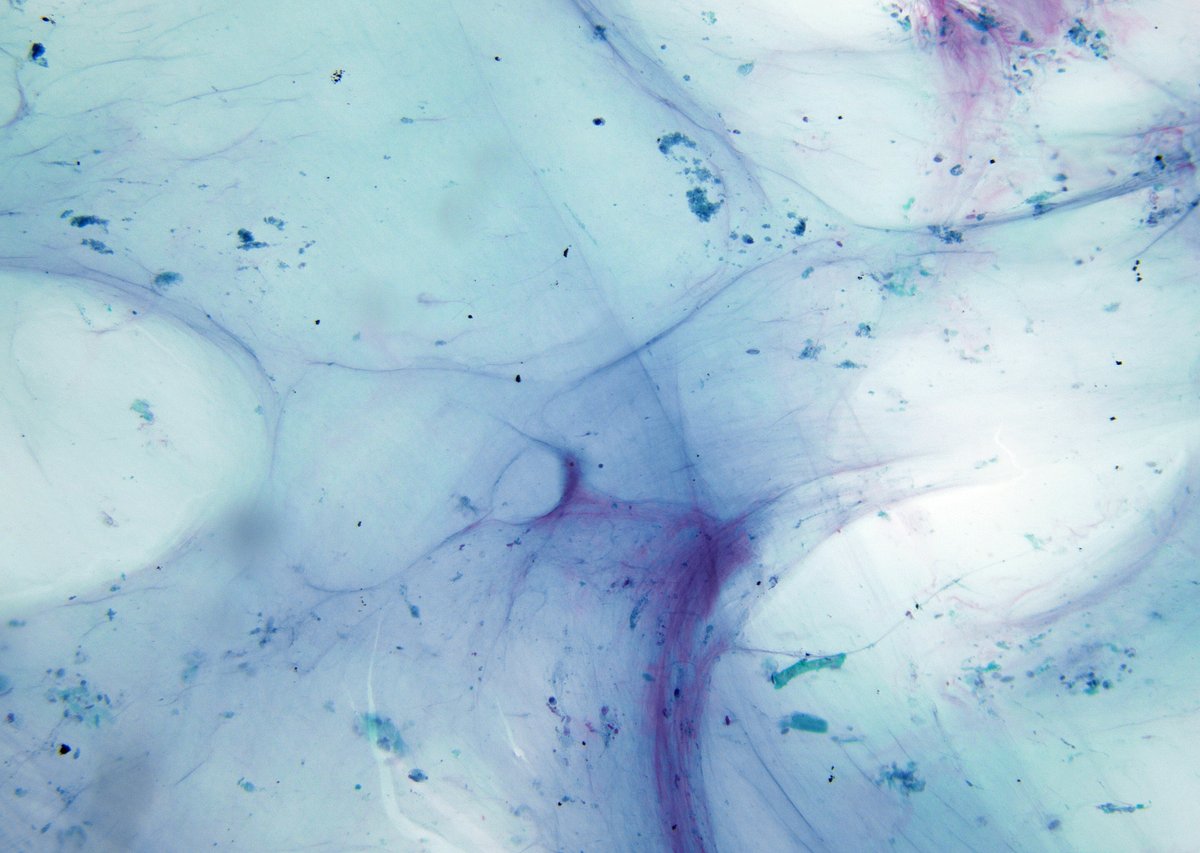
"Same case, almost similar fields" - The case proves as to why a Giemsa stain (DiffQuik, in this case) is so desirable in soft tissue and salivary gland ("matrix-producing") tumors - In this case, a lower back mass (Chordoma).