This is a hard article to read, but I hope you'll do so. I've spent some time reporting on widespread rape and other sexual violence of Palestinian male and female prisoners by Israeli authorities, and the article is now published. The assault victims were warned not to give speak of what they endured -- they were sometimes told they would be killed or raped if they gave interviews -- but they found the courage to do so. One man described being raped three times in a single day in Israeli prison, the third time after he tried to protest. A young woman said the guards would come in at the beginning of each shift and strip her naked and abuse her. Another reported that she was shown photos of herself being raped and warned they would be released unless she cooperated with Israeli intelligence. Even three children who had been detained told me they had been sexually abused. Look, whatever our position on the Middle East, we should be able to agree on being anti-rape. Sexual assaults were horrific when Israeli women were targeted on Oct. 7, and they're equally horrific when Israeli authorities use them against Palestinians day after day after day. We should be able to find common ground in opposing rape. Here's a gift link to the article: https://t.co/aMMHId49OO
Let’s break this down.
- Hormuz reopening was part of a two-week ceasefire deal, contingent on the cessation of hostilities in Lebanon.
- Following the Lebanon deal, Iran reciprocated by announcing the reopening of the SoH.
- This is only valid for the ceasefire period unless an extension is mutually agreed upon. This will keep shipowners hesitant. Since most have already redeployed to the Atlantic, the availability of ballast tankers in the Middle East is severely limited.
- The Strait remains under Iranian control; only vessels cleared by the IRGC and Iranian authorities can transit through designated lanes.
- The US maritime blockade on Iran continues.
Now, looking at the recent leaks and Trump’s posts:
- $20B payout to Iran. The US won't pay directly; it’ll likely come from frozen assets in Qatar and Iraq’s debts to Iran. Ironically this is exactly what Trump used to criticize :)
- Full reopening of Hormuz (though Iran has yet to confirm this).
- Ban on Israeli strikes in Lebanon.
- Unfettered nuclear program.
- No mention of missile programs or proxies.
What is this? Is he just a bad version of Barack Obama? It was Trump himself who endlessly slammed sunset clauses and financial aid to Iran.
Whether it’s a direct payment from the US or funneled through a third party, it’s still financial support at the end of the day.
Is a permanent deal even remotely possible? How will the GCC and Israel react? Can they really just sit back and let Iran become the dominant power shaping the regional paradigm?
It feels like I’m left with more questions than answers.
#oott #iran
Ok so.. they left their CDN exposed.
If you ping the domain, you get this ip:
151.101.129.49
It turns out this is a https://t.co/wqDjtIZMEy IP . I had never heard of fastly but it looked to be something similar to vercel, so I figured maybe they had custom deployment links like vercel does.
Tried a few different combos and BINGO:
https://t.co/VUGl0CQFJm
This took me to this:
https://t.co/EaQKYxNtOy
That’s their CDN bucket on AWS. They currently have it setup so that any invalid endpoints redirect back to index.html
I went on a hunch and figured that they’d probably already have their production app stored somewhere in the CDN ready for deployment
I used SECLISTs (https://t.co/gafGrACoMC )and ffuf to try out over 20k different combinations on this URL.
After some sleuthing, BINGO!! I found these two files:
> live.html
> .DS_STORE
The important one here that immediately caught my eye was “live.html”. That sounded like a prod deployment.
And sure enough, it was!
This is what the https://t.co/eY5zWkX10Z site will look like on the day the faucet goes live:
https://t.co/vXn9H24Gvj
https://t.co/M7ExI8pQym
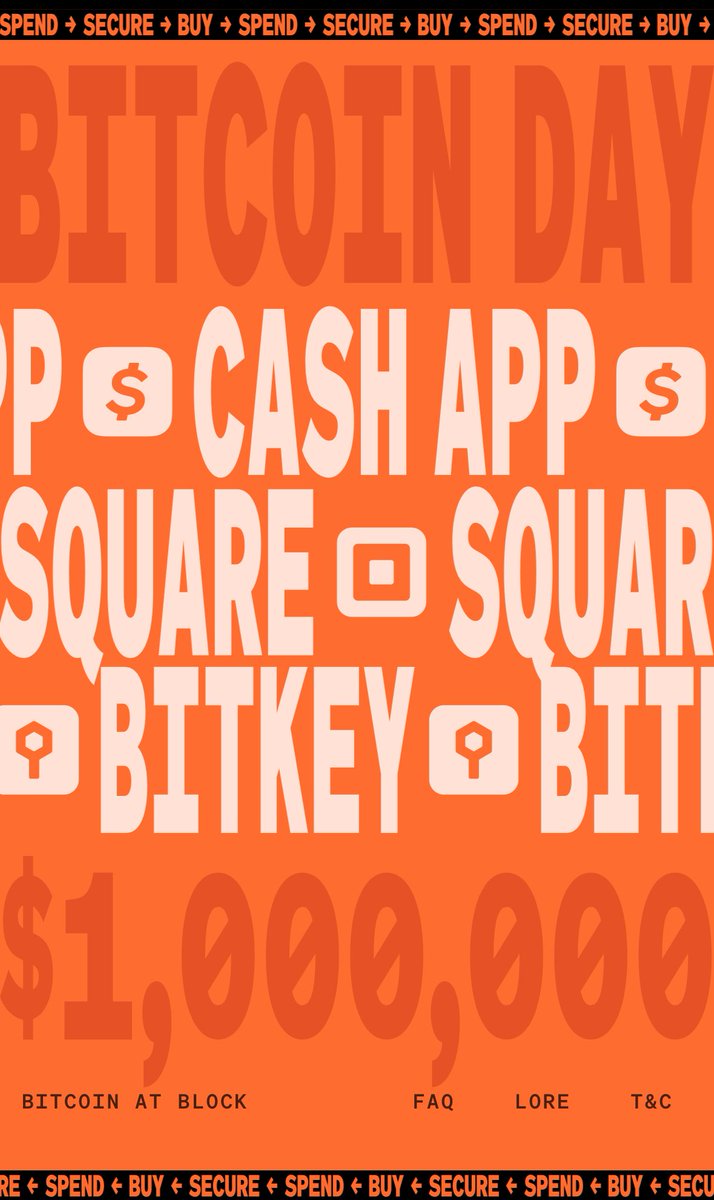
It turns out the entire faucet will be revealed to just be a promotion scheme to get you to buy a bitkey and use cash app.
There is no faucet - at least in the sense most were expecting.
The United States has spent EIGHT TRILLION DOLLARS fighting and policing in the Middle East. Thousands of our Great Soldiers have died or been badly wounded. Millions of people have died on the other side. GOING INTO THE MIDDLE EAST IS THE WORST DECISION EVER MADE.....
Trump is casually proposing one of the biggest strategic own-goals imaginable: NATO more or less done, and any country that wants Persian Gulf crude can go secure it for itself. That is a spectacularly reckless thing for an American president to say. It is a half-drunken invitation to roll the clock back toward the old colonial game, where every great power armed itself around resource access and shipping lanes.
The whole reason the U.S.-led order worked is that Washington took the military question off the table for its allies. Europe and East Asia could think about trade, industry, growth, supply chains, and cheap energy. They did not need to wake up every morning thinking about convoy protection, choke points, naval escorts, forward bases, and who might try to cut their oil line. That was the deal, and for all its flaws it was an unbelievably powerful one.
Put that burden back on every importing state and you do not get some elegant new realism. You get the old imperial logic creeping back in. The barrel is no longer just a barrel. It comes with freight risk, insurance risk, naval risk, basing risk, and eventually war risk. The whole achievement of the postwar order was that America suppressed a lot of that rivalry by sitting on top of the system and making the security decisions for the wider alliance.
The Gulf is particularly ugly terrain for this kind of thinking. The infrastructure is concentrated, the sea lanes are narrow, and much of the population depends on fragile physical systems like desalination. Once states decide energy security is too important to leave to markets, they start looking at places like this in very hard terms. Somewhere in Paris, one of the old colonial ghosts is probably already unfolding a map of the Gulf and reminiscing about protectorates in embarrassingly enthusiastic detail.
History is full of great powers making exactly this kind of mistake. The cleanest analogy is Germany after Bismarck. Bismarck built a diplomatic architecture that kept Germany secure and prevented hostile coalitions from forming. Kaiser Wilhelm II inherited that system, got impatient with its constraints, started freelancing, and slowly turned a position of strength into encirclement. He did not lose Germany in one move. He set in motion a process that made Germany less secure with every passing year.
There is also an interwar British echo here. Britain remained enormously important, but it no longer wanted to fully bear the burden of policing the wider order it depended on. That did not produce a neat handoff. It produced opportunism, rearmament, and eventually a much nastier bill. And if you want the broadest analogy, it is the breakdown of the old European concert system: once the central restraining architecture weakens, states go back to fleets, blocs, balancing, and military planning around economic survival.
What is so deranged about this is that it weakens the U.S. first. America’s edge was never just the size of the Navy. It was that nearly every major industrial power operated inside an American security architecture. Tear that up and over time you get fewer reliable bases, fewer aligned allies, larger independent militaries, more hedging against Washington, and much more room for China and every ambitious regional power. That is how dominant positions are squandered in history: not all at once, but by dismantling the very order that made you dominant in the first place.
Trump’s speech does not resolve the fundamental dilemma surrounding the continuation of the conflict.
Given the low probability of reaching an agreement with Iran under the current conditions, since the regime is neither likely to capitulate nor agree to far-reaching concessions then the administration faces a stark choice: escalate the campaign, whether through ground operations or strikes on critical energy infrastructure, or disengage without an agreement, leaving Iran in control of key maritime chokepoints and in possession of roughly 440 kg of uranium enriched to 60%.
At the root of the problem reflected again in the speech is a deep misunderstanding of Iran as a system, both strategically and in the context of wartime behavior. Iran’s leadership is more hardline and more decentralized than often assumed, and it has no intention of surrendering or agreeing to significant concessions it was unwilling to make even before the conflict.
These gaps are unlikely to be bridged in the coming weeks. Moreover, if President Trump believes he can strike Iranian infrastructure and simply walk away, he is overlooking the likely Iranian response. Such actions would almost certainly trigger retaliation targeting critical infrastructure across the Gulf and drive a sharp spike in global oil prices.
At the same time, no limited strike would realistically reopen the Strait of Hormuz, regardless of the pressure applied, Iran is unlikely to allow free passage.
Ultimately, the speech reflects not only a misunderstanding of current developments inside Iran, but also of the nature of the conflict itself. Iran has never relied on conventional air or naval superiority. Instead, it operates through an asymmetric doctrine one that, from Tehran’s perspective, is proving effective in this confrontation.
The operational achievements of Israel and the United States in this campaign are significant. However, they do not bring us closer and may even push us further away from creating the conditions for meaningful internal change within Iran. The assumption that degrading infrastructure will translate into political pressure on the regime is questionable. For example, does destroying Iran’s electrical grid actually drive people into the streets? The answer is likely no.
As for the repeated use of the phrase “back to the Stone Age,” President Trump would be wise to take a lesson from Israeli political discourse. That rhetoric has been used many times in the context of Lebanon, yet Hezbollah remains intact. Such language may signal resolve, but it does not necessarily translate into strategic success.
There is no doubt that Israel and the United States hold clear operational advantages. The challenge is recognizing when those advantages reach the point of diminishing returns, when additional military action produces progressively less strategic value. This conflict is unlikely to end with an Iranian capitulation, nor through sheer military pressure. Even with battlefield successes, the Iranian regime is unlikely to collapse, and the Strait of Hormuz is unlikely to be forcibly reopened in a sustainable way.
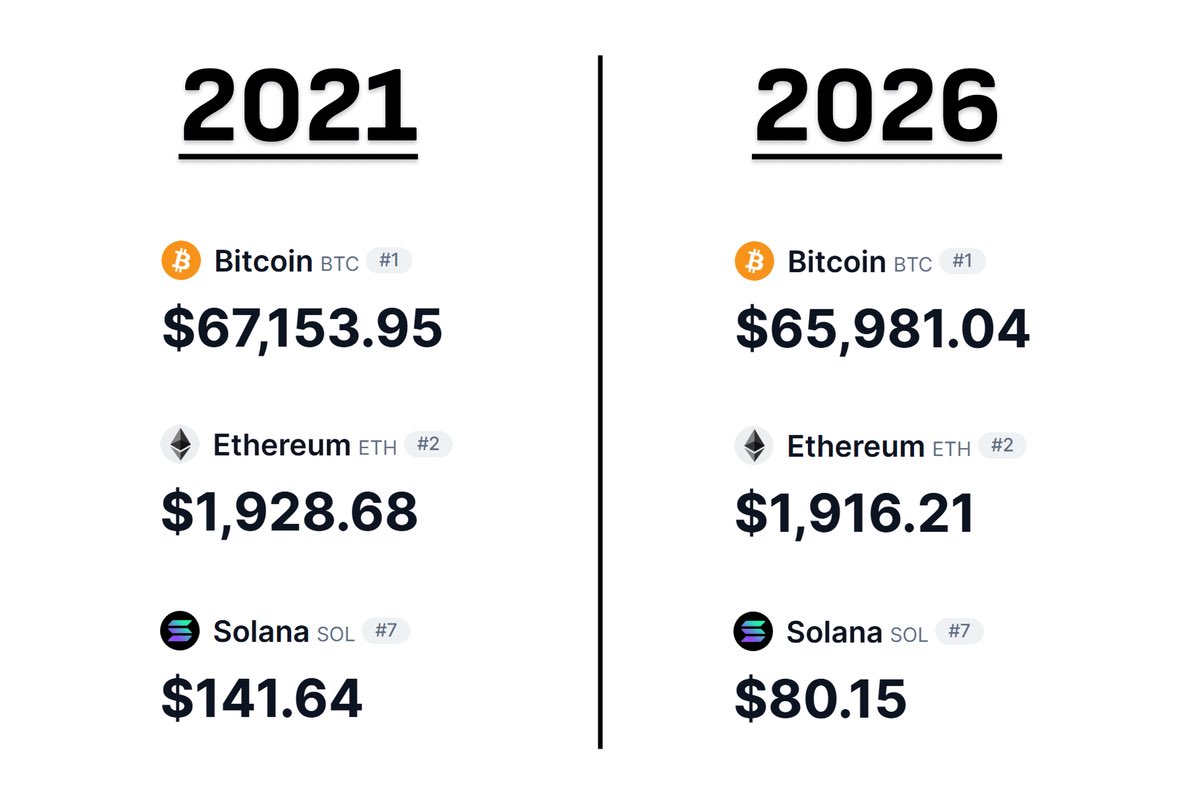
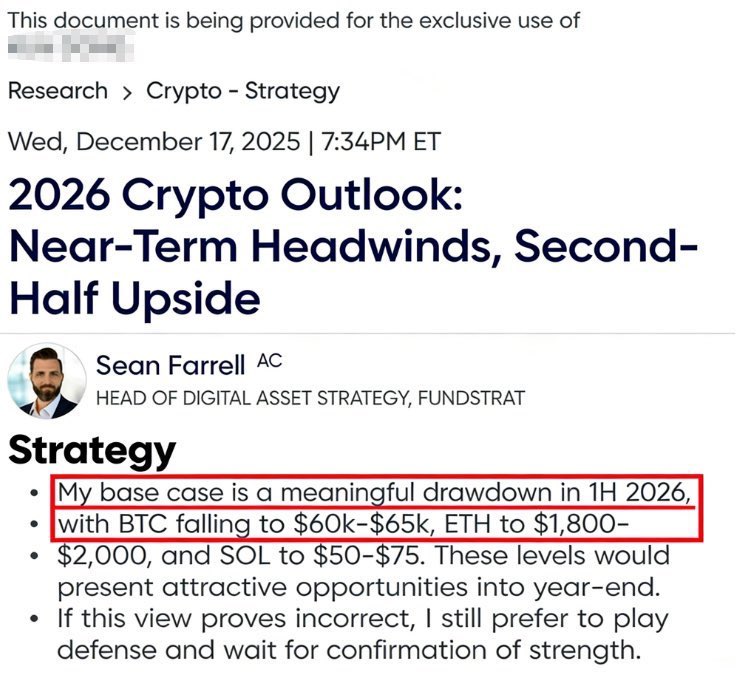
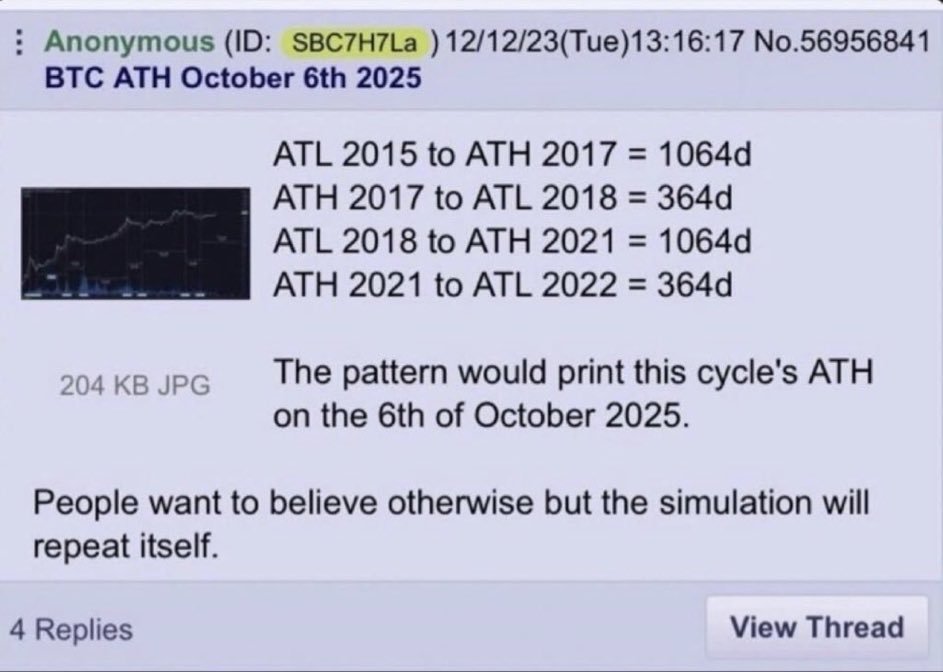
I’ve been waiting last few months for signs that 3.5 year cycle has topped. We’ve been buyers of dips as models were bullish. It has changed in Feb when I posted that I went mostly cash and now all models I track are now on a weekly sell signal / bear regime.
-The last time we had a similar set up was Dec 2021 and we went defensive before the bear market which positioned us well to be buyers of stocks at bargain prices later in 2022. Now current 3.5Y cycle is peaking/rolling over - time to pay attention.
-I don’t like playing Monday morning quarterback so I try to give you my actionable primary roadmap a few months out and adjust along the way based on cycles, models, technicals etc. Saying something was obvious after the fact doesn’t help anyone.
-Below is my experimental $SPX composite leading indicator which I’ve been working on for several years combining various cross-asset signals. Not meant to perfectly time every micro move but can be used as a confluence for larger trend changes
-In Dec ‘25 I saw upside headfake move (UTAD in Wyckoff terms) in Q1 2026 and then rollover; now with more data coming in it’s suggesting a bigger decline in Mar-Apr - in line cycles/ models / TA
- $SPX is still only -3.4% below ATH so real correction hasn’t even started. When talking heads on CNBC start panicking it will be too late. Not trying to fear monger, just calling it what models are showing. Capital preservation is key.
-I take time out of my weekend to post this to open people’s eyes to a potential significant downside in the market and consider contingency plans. If you find it helpful and want to get more updates - please retweet.
I know that most of you are shipping and conflict virgins
I myself on the other hand, have traded through a number of these scenarios
So let me tell you how this plays out
If Trump is going to individually escort tankers through the strait, you're talking about an enormously expensive operation which requires many ships as well as tight air support
Even a single inexpensive aerial or naval drone can cause extensive damage to a tanker worth tens or hundreds of millions of dollars. Protecting these ships requires overkill. The Houthis during the Red Sea conflict were able to dramatically reduce the number of ships sailing through. Unlike the Red Sea conflict, where ships could take the longer route around the South Africa, there are few other paths to exporting oil and petrochemical products from the Persian Gulf.
The US Navy and Air Force attempted to suppress Houthi interference in Red Sea shipping. In the several years that the Red Sea has been partially blocked, throughput has remained at less than half of pre-conflict levels, with many episodes where throughput dropped to near zero. The houthis were able to score direct hits on many ships. Us soldiers and assets were also lost. And this was not against Iran, this was against the Houthis, who do not have the indigenous weapons platform production that Iran has. The Houthis were completely dependent on their pre-conflict storage of weapons and whatever Iran could smuggle to them. And yet, even this faction in one of the poorest countries on earth was able to dramatically impact global maritime flows.
The setup with Iran is exponentially more dangerous. Iran doesn't simply need to attack tankers. And the United States doesn't just need to protect tankers. The United States has to protect all of the upstream energy producing assets that fill those tankers as well. They need to protect the pipelines, the refineries, the petrochemical plants, the storage tanks. And these assets need not only be attacked by drones and missiles. They are easily sabotaged with even a simple wrench. A hand grenade or shoulder-fired weapon at close proximity in exactly the right location can take out an entire oil refinery. Not to mention much more vulnerable assets such as gas production. Thousands of miles of desert pipelines can be sabotaged with a tool as simple as a drill, obtainable from any hardware store.
The cost of protecting each cargo coming out of the Persian Gulf may exceed the total value of the cargo. Not to mention that it puts us ships directly within close proximity of Iranian weapons that can destroy them. The US largely abandoned this escort strategy during the Red Sea conflict. In fact, an entire coalition of US and European naval forces along with Gulf States attempted this against the houthis. The campaign was an utter failure and the ultimate conclusion from US military leadership was that it was much better risk reward to focus on suppressing strike capability. Yet after months of airstrikes Red Sea traffic never fully returned. Attacks continued.
The Trump administration has expressed its intent in not only protecting these cargos but also in artificially manipulating their prices lower. Trump is working against the laws of physics, sound military doctrine, and fundamental economics.
This entire adventure was poorly thought out and calls the entire Islamic world to jihad against America. Trump's attempts to protect the Persian Gulf will result in failure.
When Rothschild said "Buy when there's blood in the streets" he didn't mean "buy every single -2% dip"
When Buffett said "Buy & hold" he didn't mean "baghold unprofitable shitcos"
When Druckenmiller said "Diversification is overrated" he didn't mean "full-port a meme stock"
Not a SINGLE CEO of a major SAAS corp has bought stock in their company, even after all this bloodbath.
Yet the monkeys are trying to call the low in SAAS every single day.
Bless 🥹🙏
also while everyone is drooling over the value $PYPL is, its not, the real financial undervalued gem is $FISV and very few people discuss it. I bet in 24 months it has materially outperformed painpal
Greenland is shaping up to be another masterclass in self-fulfilling prophecy and stunningly incompetent Western foreign policy.
That's the sequence:
1) Trump says he wants to annex it because otherwise "Russia or China will take over Greenland", which is entirely bullshit (see https://t.co/On4Dif3UF4).
2) Trump says Greenland needs to be "in the hands of the UNITED STATES" because "NATO would not be an effective force or deterrent - Not even close!" (https://t.co/VZGoCEkSwP). Which is also objectively bullshit given that the U.S. is in NATO... Unless he implies article 5 is now null and void.
3) In response, to nominally convince Trump that Greenland can be defended from Russia and China (when it obviously needs to be defended from the U.S., the only ones who actually issued threats of annexation), the ever pliant and meek EU leaders have started “Operation Arctic Endurance.” The goal being to “establish a more permanent military presence” there (https://t.co/xINUxgOJYb).
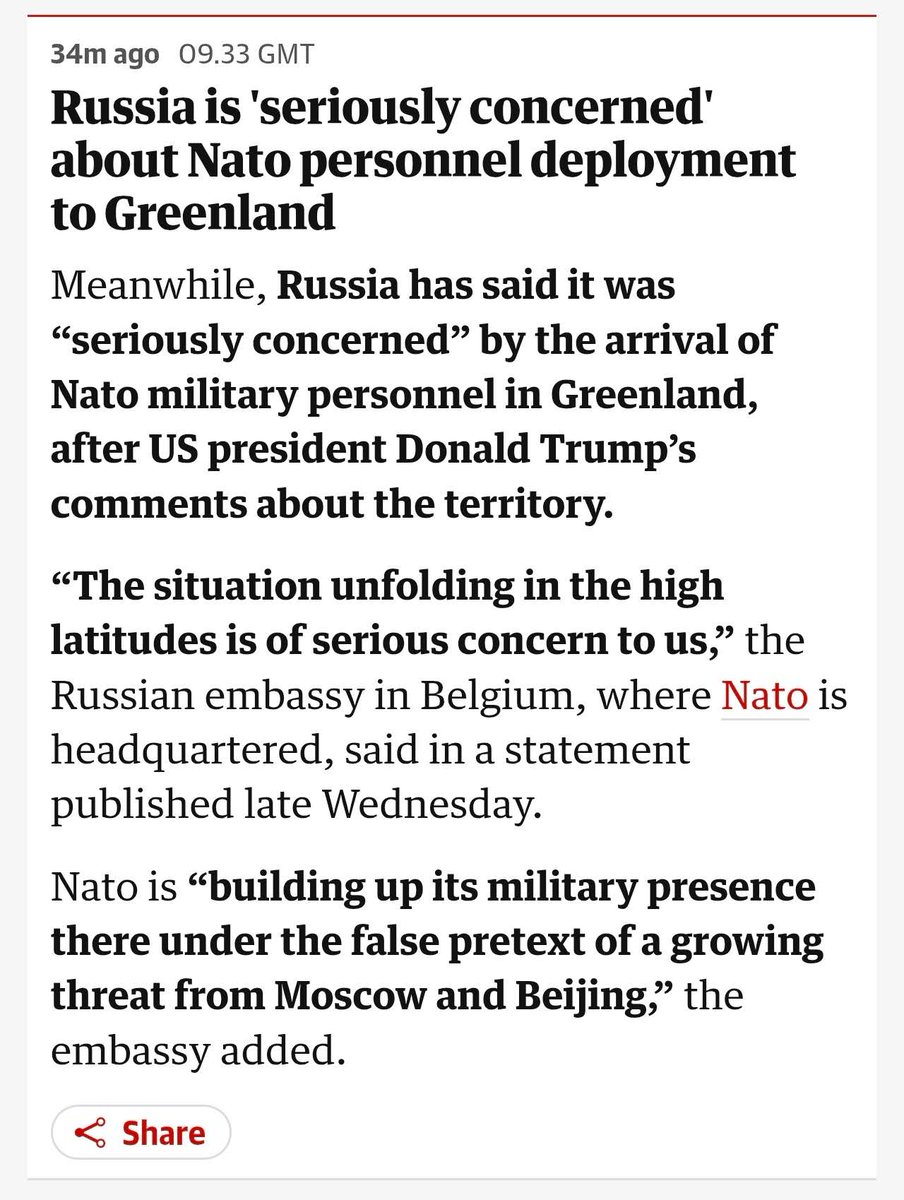
4) And now Russia is saying 👇 that it is "seriously concerned" about the heightened NATO military presence in Greenland. Which is honestly fair: additional NATO deployment on their northern border is objectively a security concern for them.
The end result is this sad irony: Greenland is now a legitimate point of Russian-NATO tension where none existed before Trump started his threats of annexation.
By responding to a fictional Russian danger with actual NATO military buildup, NATO leaders have created the very security concern they claimed to be addressing.
It's almost impressively incompetent. Or maybe deliberately manufactured, which is just as bad.