God created the cosmos. God gave limits to our seasons and habitat. God is now calling everyone to turn to him through his Messiah Jesus before judgment day.
What if “faith in Jesus” means more than believing certain things about him? What if it means giving our allegiance to him as King?
This idea is gaining traction in theological conversations, thanks in large part to the work of people like @scotmcknight and @MatthewWBates I made this short animation to explore what it means and how it helps explain the connection between faith and obedience.
@PiusGroyper@DF_UniatePapist@ScriptureAlone2 you missed that it's a participle structure:
'the water 👉was receding👈 until the tenth month'
so it's not really the same as an imperfect structure. but it's a nice try really.
@imadshield@ScriptureAlone2 it depends on the verb before. if the heos is preceded by a verb in imperfect tense, that means the event changes after the point marked by heos. your 2sam6.23 example doesn't work because the verb is an aorist, so the event is over, there's no change after heos.
@DF_UniatePapist@ScriptureAlone2 the key is in the tenses:
- matt1.25 is in imperfect.
- 2sam6.23 is an aorist.
- matt28.20 is in present.
an imperfect verb followed by heos means the event changes after the point marked by heos.
God told Israel to pick their Passover lamb four days early. Not to fatten it. To watch it.
"On the tenth day of this month... take a lamb... without blemish... and you shall keep it until the fourteenth day" (Exodus 12:3–6). For four days they watched it for any flaw.
Now watch Jesus. John says that six days before Passover He came to Bethany, and the next day He rode into Jerusalem (John 12:1, 12). Counting from there lands His entry close to the tenth, the day the lambs were chosen. That timing is a traditional reading, not something the text spells out, but look at what happened next.
For the next few days, Jerusalem inspected Him.
The chief priests and elders demanded to know by what authority He acted (Matthew 21:23). The Pharisees and Herodians tried to trap Him over taxes (22:15–17). The Sadducees came at Him over the resurrection (22:23). A lawyer tested Him on the greatest commandment (22:35–36). He answered every one, and from that day no one dared to ask Him any more questions (22:46).
Then came the final inspections. Annas, Caiaphas, Herod, and Pilate all examined Him. Three times Pilate declared Him innocent: "I find no guilt in this man" (Luke 23:4; see 23:14–15, 22). Even Herod found nothing (23:15).
The Lamb was examined by His enemies, and they couldn't find a single blemish.
Peter saw it. We were ransomed "with the precious blood of Christ, like that of a lamb without blemish or spot" (1 Peter 1:19).
Israel's lamb was inspected so a family could be passed over. Jesus was inspected so the whole world could be.
Every accusation against Him failed, so that every accusation against you could be nailed to His cross.
"Behold, the Lamb of God, who takes away the sin of the world!" (John 1:29).
thank you for being as clear as possible, bro.
now, i knew about this reading. but seeing the whole paraphrase left me speechless... i mean, wow! no wonder a big chunk of jews are such megalomaniacs!
I’m often asked how Jewish people understand Isaiah 53 and why they don’t see Jesus in it.
What follows is my own paraphrase of the chapter, based on traditional Jewish interpretation.
I have attempted to represent the Jewish understanding as faithfully as possible, verse by verse.
I want to be clear that I do not agree with every aspect of this interpretation. I am presenting it for informational purposes so that people can better understand how this passage is traditionally understood in Judaism.
The characters:
▶️ The servant is Israel, not the Messiah.
▶️ The narrator is the nations of the world. They are astonished as they witness God redeeming Israel.
Here is how the interpretation reads: 👇
Isaiah 53:
1. Who could possibly believe what we are witnessing? Who could have imagined that the Lord would redeem Israel in this way?
2. Israel grew up before God like a tender shoot, like a root emerging from dry ground. There was nothing about Israel that appeared attractive or desirable to us.
3. Israel was despised and rejected by the nations, regarded as sorrowful, broken, and pathetic. We turned our faces away from them. We despised them and considered them worthless.
4. Yet it was our actions that brought Israel so much suffering. We mistakenly assumed that Israel was being punished and afflicted by God.
5. But it was our transgressions that pierced Israel, and our iniquities that crushed them. Israel was chastised while we enjoyed peace. Israel was wounded while we experienced healing.
6. We, all the nations, like sheep have gone astray. Each of us turned to our own way. Yet the Lord allowed the burden of our sins to fall upon Israel.
7. Israel’s righteous ones were afflicted and oppressed, yet they did not protest. Like a lamb led to slaughter, or a sheep silent before its shearers, they endured their suffering.
8. We oppressed and killed the people of Israel. But we were the transgressors, not them.
9. We assigned their deaths to be among those who got wealthy from their wickedness, even though they had committed no violence and there was no deceit in their mouths.
10. Yet the Lord allowed Israel to suffer at our hands. Nevertheless, Israel will continue to flourish through the generations, and God’s ultimate purpose for His people will be accomplished.
11. After all the suffering Israel endured, God will be satisfied with His work of redemption. Israel will once again teach the nations the ways of God, and we will recognize our iniquities.
12. Ultimately, Israel will be exalted, like a victor receiving the spoils of war. This is because Israel poured out its soul unto death and was counted among the transgressors, even though it bore the consequences of our sins. And despite everything we did to Israel, they interceded on our behalf.
Friends, Protestants and Catholics should make common cause against a very powerful enemy: a rampant, aggressive secularism.
So often we Christians approach the skeptical culture hat in hand, when in fact we possess a treasure: great religious truths that constitute the linchpin of the democratic system.
We must boldly articulate and defend these truths! That does not mean muttering our convictions to one another against a wall. It means telling people, in the public square, who we are, what we believe, and why it matters.
Together, we must recover this boldness!
Create in me a clean heart, O God, and renew a steadfast spirit within me.
Do not cast me away from Your presence and do not take Your Holy Spirit from me.
Restore to me the joy of Your salvation and sustain me with a willing spirit.
Then I will teach transgressors Your ways, and sinners will [c]be converted to You.
Psalm 51:10-13
I am the good shepherd; the good shepherd lays down His life for the sheep.
He who is a hired hand, and not a shepherd, who is not the owner of the sheep, sees the wolf coming, and leaves the sheep and flees, and the wolf snatches them and scatters them. He flees because he is a hired hand and is not concerned about the sheep.
John 10:11–13
@rabbriansamuel@EvanAKilgore if you haven't checked the revisionists' claims, you're also propagating propaganda. just like we know the narratives an numbers on oct7 were fudged, we also know they were fudged on ww2.
i'm thankful with the jews who have come forward with the little piece of truth they found.
the sons of israel won't see joseph's face *again* until they bring benjamin to him (gen44.23).
i.e.
they won't see the Messiah *again* until they declare him as the 'son at the right hand'
i.e.
they won't see him again until they say 'baruch haba beshem Jah' (mt23.39).
@Kennimrod@rabbriansamuel not one of those passages mention mary; and some not only state who is the woman (mother zion/the new jerusalem), but are the key to understand who is the apocalyptic woman; except matthew19.26-29, which seems unrelated to the topic. so it is you who really doesn't understand.
One of the most puzzling stories in the Gospels happens in Mark chapter 5, when Jesus casts demons into a herd of about two thousand pigs that then rush down a steep bank and drown in the sea. Many readers wonder why Jesus did not simply banish the spirits outright instead of involving the pigs. Yet the moment you look at first century Roman military history alongside the original Greek text, you uncover one of the sharpest political and theological subtexts in the entire New Testament!
The event takes place in the Gentile region of the Decapolis. When Jesus asks the unclean spirit for its name, the answer is a blunt Latin military term: Legion. A Roman legion was an occupying force of roughly five to six thousand heavily armed soldiers. To any first century reader living under Roman rule, that single word immediately brought imperial troops to mind.
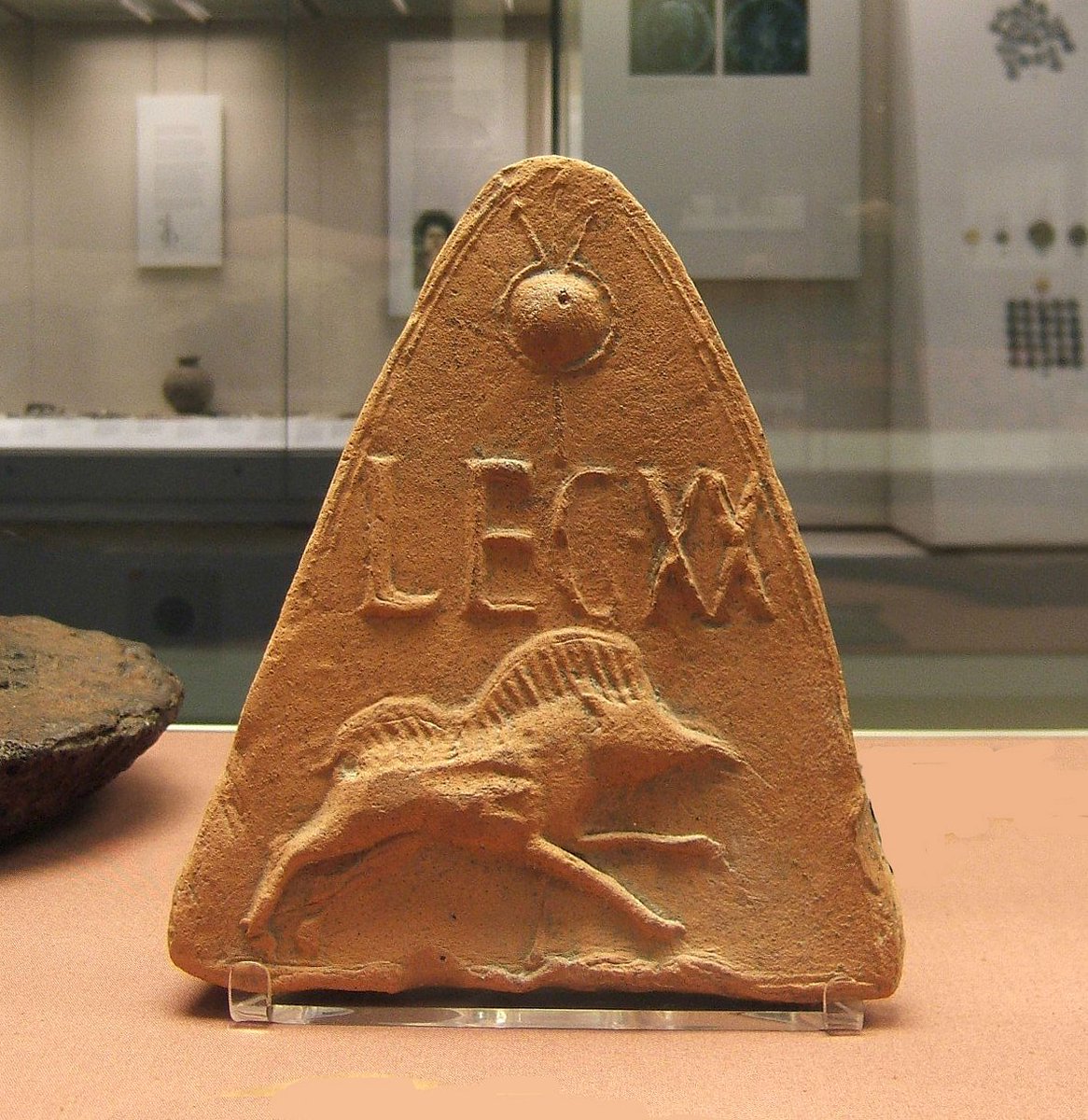
Now comes the stunning historical detail. The famous Roman unit operating across Syria and Judea, the very force that crushed the Jewish revolt and destroyed Jerusalem right around the time Mark was writing his Gospel, was the Tenth Legion, known as Legio X Fretensis. Archaeological finds of stamped roof tiles and military standards confirm beyond doubt that the official emblem of this legion was a wild boar!
On top of that, Mark narrates the entire encounter using a cluster of Greek military terms. The plea not to be dispatched out of the territory, Jesus issuing the command of permission, and the herd charging down the slope all mirror the exact vocabulary ancient historians used to describe soldiers rushing into battle.
And the final scene completes the picture. A force named Legion plunging to its destruction in the sea directly echoes the Exodus, when God drowned Pharaoh's pursuing army in the Red Sea.
Through this miracle, Jesus does more than show that a single broken human being is worth far more than a massive economic herd. He delivers an unmistakable message to first century readers without lifting a sword: whether against spiritual evil or the mightiest empire on earth, true sovereignty does not belong to the legions of Rome, but to God alone.
“My sheep hear My voice, and I know them, and they follow Me. And I give them eternal life, and they shall never perish; neither shall anyone snatch them out of My hand.”
— John 10:27-28 NKJV