Gaza is a city of saints and the Christ of this era. It has endured the unimaginable to show the world the path of salvation, to “separate what is evil from what is good,” and to reveal what is righteous and what is wicked. Gaza’s survival has been nothing short of a miracle and a blessing for the world. In the years to come, as humanity rids itself of the filth and corruption that Gaza helped expose, people will remember Gaza as the place that sacrificed itself for humanity’s collective liberation and salvation from the Epstein class.
And Gaza will rise again, the beautiful city it has always been. Its beauty is not rooted in luxury, skyscrapers, or the false promises of the dajjals of this era, but in the steadfastness of its people in the face of its trials. They refused to be corrupted by greed, individualism, empty consumerism, and selfishness imposed upon humanity, values that turn people into easily controlled and disposable cattle and strip them of their collective dignity. Gaza has stood as the opposite of that and will continue to do so.
I know some people will see this as romanticizing a difficult time, but these words are not meant for today, tomorrow, or even next year. They are meant for the next generation, or perhaps the one that comes after.
May Gaza’s mosques and churches, streets and alleys, continue to show us the way.
This was a t-shirt given out to Israelis who completed their basic training in 2009. As a parent you have a moral duty to raise your kids to hate Zionists. It's not complicated
“I’m the man of the house.” A little boy in Gaza explains to his father why he shouted at his mother that morning: he saw her carrying water again. Her hand is broken, he says, from carrying his baby brother and lugging heavy water containers day after day, and whenever the water arrives, he yells at her to stop so he can carry it himself. In Gaza, where the Israeli occupation destroyed water networks and wells and families queue at distribution points to fill whatever containers they have, hauling water is part of every day. It falls on mothers, on fathers, and on children far too small for it. This one has decided his mother has carried enough. “May God bless you this morning, son,” his father tells him. “There will be no real men left after you.”
doqmosh1 (IG)
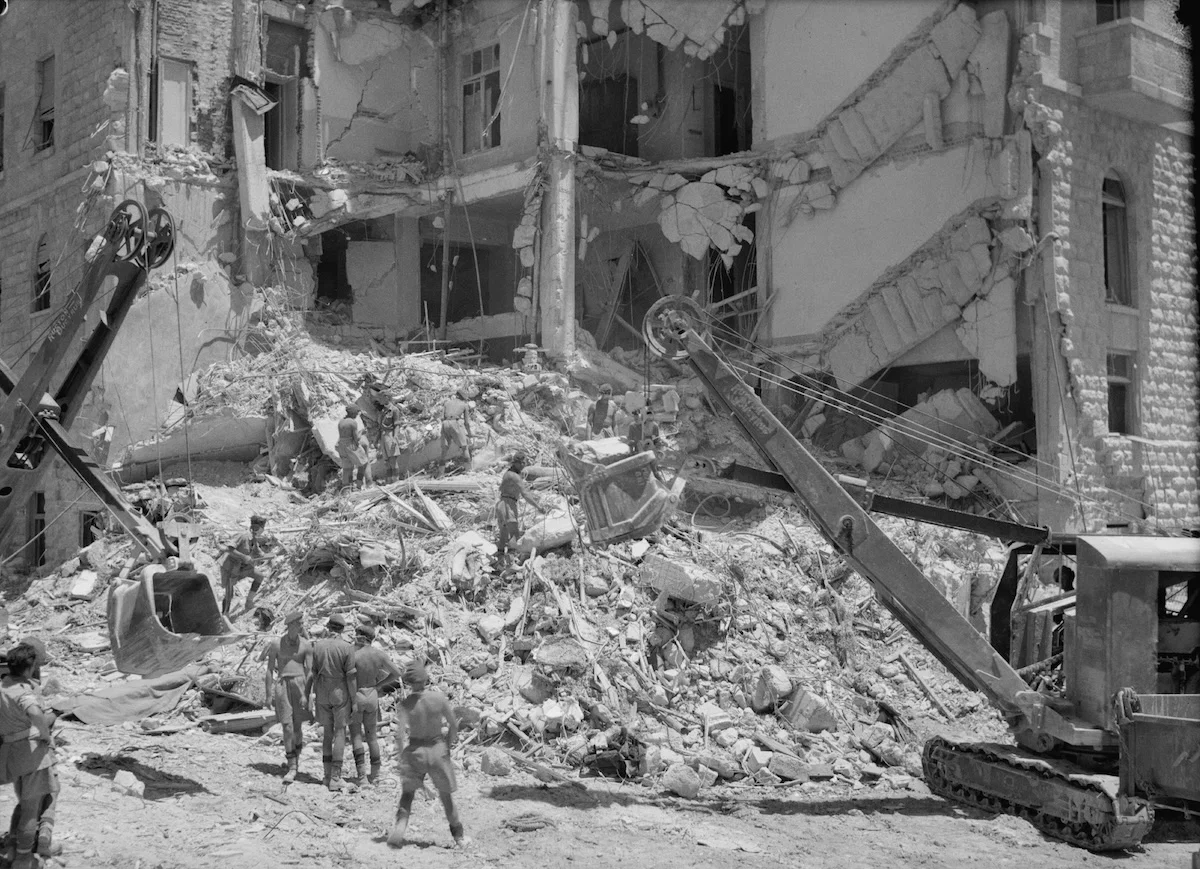
That's literally how Israel was created.
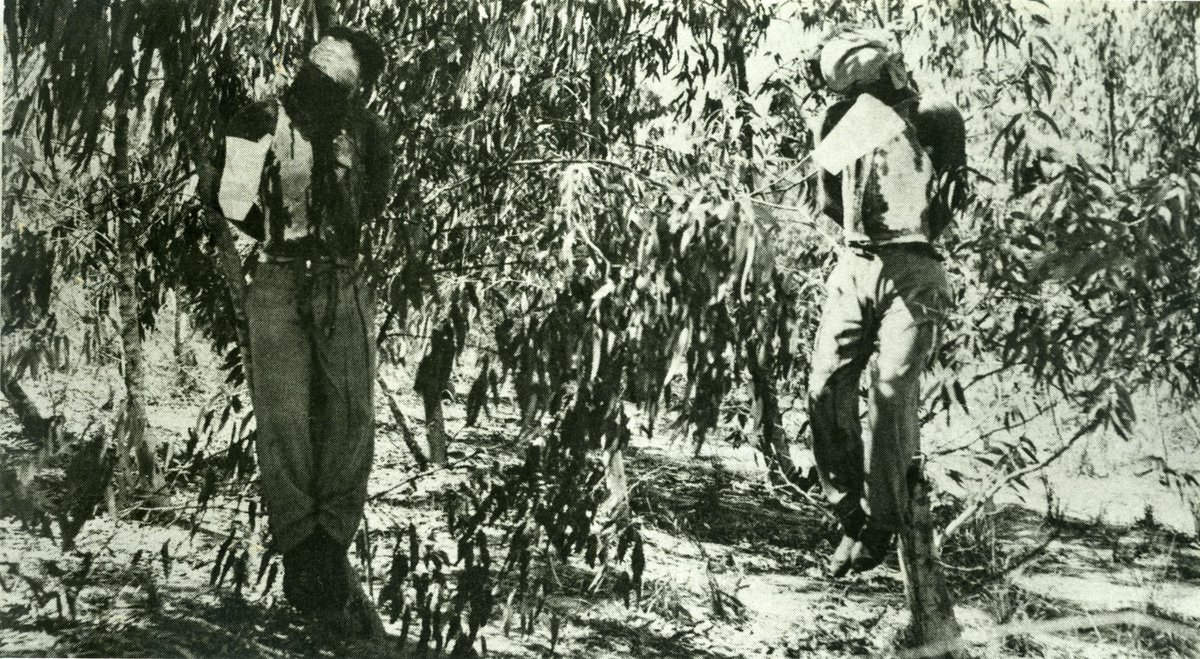
Here's two British policemen they murdered, hung publicly, and placed hidden bombs on their bodies in order to kill those that tried to bury them.
At around 2 a.m. local time, Israeli forces bombed an apartment where the Yassin family was sheltering near Al-Shifa Hospital in Gaza City, killing Akram and his wife.
“I wish I had slept between you, so I would have been killed alongside you and Dad,” the couple’s daughter said as she bid farewell to her parents.
I have a confession to make...
For a long time now, I’ve been feeling something strange. It isn’t depression or sadness. It’s something I can’t explain, and I don’t know when it began.
When I told a friend about it, they said they felt exactly the same way. I thought it was a coincidence, until I realized that we were all carrying the same bitterness.
You see them wandering the streets, walking as though they’re going somewhere, but you can’t tell whether they’re thinking about something or simply walking because they have to. Nothing sparks their curiosity anymore. Nothing surprises them. Someone might read the first line of a news story about an entire family being killed, put their phone away, and ask how much a kilo of tomatoes costs.
There is nothing surprising about that anymore.
I think about everything we’ve witnessed over the past three years, the faces we memorized before losing the people behind them, the images we’ve learned to scroll past, and the news stories we no longer bother to finish reading. I remember how we once mourned tragedies that had nothing to do with us, like the tragedy of Rayan, the Moroccan child.
How did we become so accustomed to the news of our own deaths?
My God, what has happened to us?
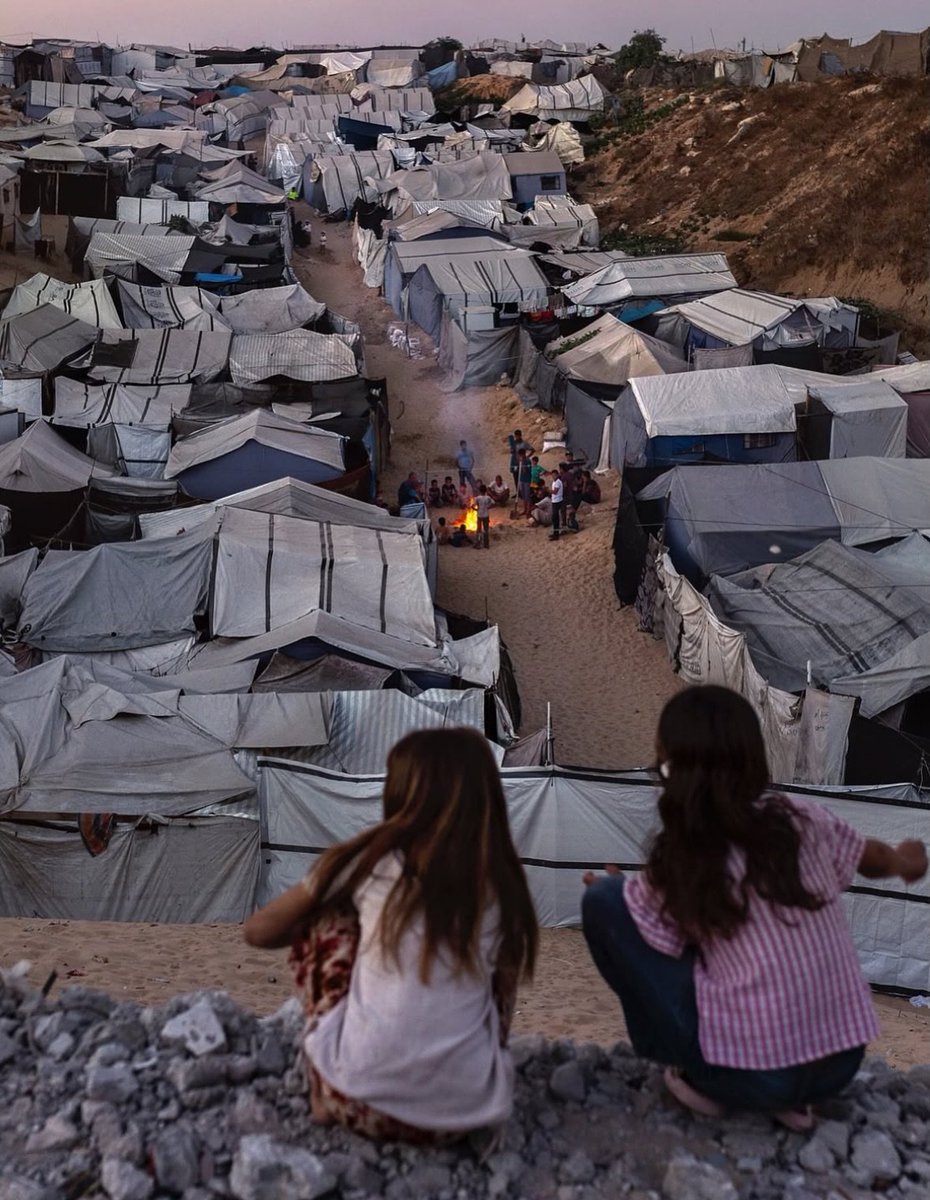
In the tents, people don’t have the luxury of stopping. They must search for water in the morning, find a way to afford food, count what little money remains, and worry about what they’ll do if one of their children falls ill tomorrow.
A grief that never ends.
We’ve grown tired of complaining, too. We already know what others will say, and we know we’ll repeat the same words tomorrow. The tents will remain tents, and what we’ve lost won’t return simply because we talk about it. So silence feels like the lesser harm to our hearts.
Two weeks ago, I asked an eleven-year-old boy selling tissues in the market why he wasn’t going to school.
He looked at me and said:
“And even if I went to school, what would change, sir? My mother and I wouldn’t find anyone to feed us. How would you and your education help me then?”
I didn’t know what to say. Damn it, he was right.
At eleven, he had already learned that feeding his bedridden mother, the only person he had left, mattered more than school, his future, or his dreams.
But there’s something else we rarely talk about.
Even when you decide to speak about your pain, you hesitate. You begin telling your story, then remember that the person listening has lost their home and family, or endured something worse than you have. So you shorten your story and say you’re fine.
Everyone wants to talk, but who has any room left to listen?
Two friends might sit together, each desperate to speak, only to exchange the same familiar question: “How are you?” They give the answers they’ve grown accustomed to giving and leave, while the words they came to share remain trapped in their chests.
I’ve given this phenomenon a name: **“Herd Numbness.”**
I don’t know if the name is accurate, or when all this began. I only know that we’ve seen too much, lost too much, and been forced to keep living, even on days when we weren’t sure we’d make it through.
For a long time, I’ve felt something strange. And whenever I try to understand it, I look around and realize that everyone else feels it, too.
I don’t know whether we’ve grown accustomed to what happened to us, or whether we simply no longer have the strength to feel it as deeply as we should. I don’t know if this unsettling silence brings relief, or if words themselves have nowhere left to go.
All I know is that we are no longer who we used to be.
And the strangest part is that when I look around, no one seems surprised.
Because we live in a completely disgusting and unjust world, half a million Palestinians in Gaza are about to lose monthly food assistance via the WFP due to a lack of funding, which makes Palestinian-run projects like this even more essential. Please please keep donating
I don't care about the whataboutism but the bombing of the Omari Mosque by Israel was a crime with all its elements complete against the Gazan people, their history and identity. Considering that they destroyed its library as well which was Palestine’s oldest and-
the idea antisemitism is on the rise is always anecdotal, forever a moving target. what is fact is that these “feelings” of persecution in the U.S. have mobilized millions of dollars to launder a genocide. money and institutional power unavailable to most other protected groups
What’s happening in France is a wake-up call to the entire world. 🌍 The cost of living keeps rising while everyday people struggle to survive. People are tired of working hard just to barely get by. Governments need to start listening to the people before frustration turns into chaos. 💯🙏🏽
Y’all remember when Israel bombed Church of Saint Porphyrius in Gaza, 1 of the oldest churches in the world, w a history dating back to the 5th century?
Palestinians, including children, were sheltering there. At least 18 were killed.
Spare us the fake outrage, baby killers